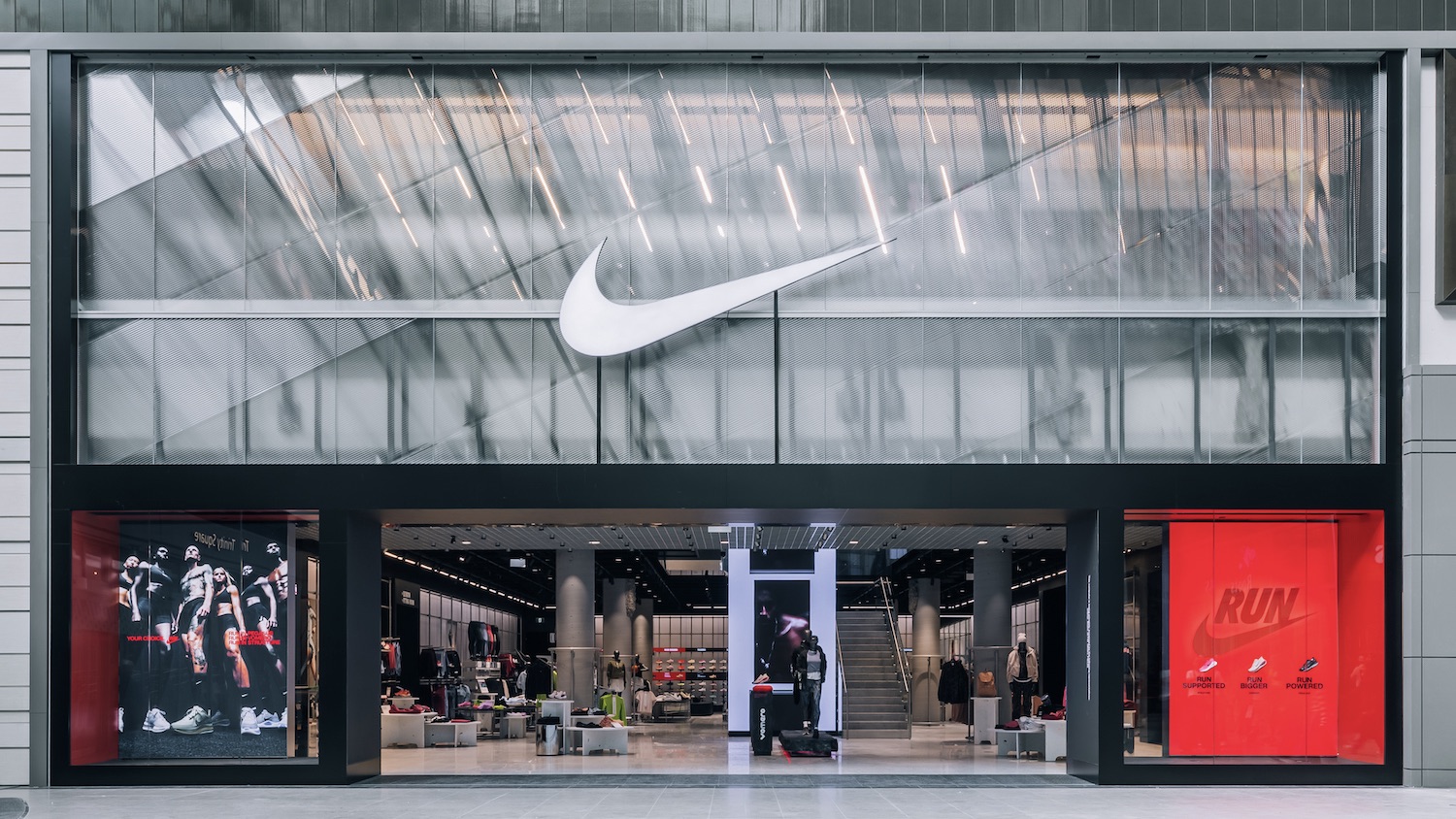
For decades, the Nike sportswear brand has symbolized winning.
But this once “blue-chip” stock has become one of the market’s biggest losers of late and is scheduled to fall out of the Dow Jones’ S&P 100 on Sept. 21. The end of an 18-year run as one of the top 100 companies in the U.S. has industry experts and investors alike second-guessing a company whose “Just Do It” motto no longer seems to resonate.
Critics say the brand identity of the iconic “Swoosh” is in freefall because the company has lost its way like others who have alienated their fanbase—also known as customers—while pursuing sideline issues, including supporting radical LGBTQ anti-Biblical causes like the inclusion of men in women’s spaces.
Historically, Nike has championed girls’ and women’s participation in sports from its inspiring “Play Like a Girl” campaign to its current “Get Her in the Game” initiative.
But three years ago, Nike’s longstanding advocacy for females in sports seemed to make a noticeable pivot when the company hired trans activist, model and onetime Bud Light spokesperson Dylan Mulvaney to promote a line of their sports bras. The impact of Mulvaney’s 2023 Nike endorsements should have been predictable based on his previous Bud Light debacle.
Nike stock was at $55 a share 10 years ago, soaring to more than $170 five years ago before plunging to under $39. Since hitting its peak of about $179 per share in 2021, Nike’s shares fell nearly 80% to a 52-week low of $36.85 in September. Translated into market cap, that’s a loss of more than $200 billion.
As industry gurus and savvy investors try to explain Nike’s precipitous fall from sportswear dominance, could it be that the “Go Woke-Go Broke” mantra is equally prescriptive and descriptive for the fallen sports apparel and shoe giant?
The same year Nike—an ardent ally of the Human Rights Campaign (HRC), the nation’s largest LGBTQ activist organization—started marketing sports bras for transwomen, it also teamed up with Tucker Center for Research on Girls & Women in Sport at the University of Minnesota to create a free digital resource called “CoachingHER.” The program claims to help coaches recognize unconscious gender biases and stereotypes that negatively affect girls’ experiences in sports.
CoachingHER’s current FAQ, however, defines girls as someone under 18 “who was assigned female at birth or who identifies as a girl” and says the program is “inclusive of gender-expansive identities.”
Sarah Barker, a former coach and creator of The Female Category, has spent months reviewing CoachingHER, its training modules and the research cited to support them. She told OutKick that the actual training does not match how she believes the program is being marketed to coaches.
Barker said the training resource’s definition of a girl becomes especially critical in a module addressing bodies and identities. “They exhort coaches in one of the training modules to accept all, and all is in capital letters, all bodies and identities,” she said.
Barker believes coaches are being taught to view biological sex differences through the lens of gender bias while being told disingenuously that the program’s purpose is to protect girls’ opportunities in sports.
“This is a group of people that’s going to need a lot of re-education, a lot of heavy-duty indoctrination,” Barker said of coaches who maintain sex-based distinctions in girls’ sports.
While CoachingHER claims its mission is to reduce gender inequalities in sports by helping coaches challenge unconscious gender biases and stereotypes, Barker said that the training is laden with transgender ideology.
“It is an indoctrination program for coaches … to normalize boys in girls’ sports,” she said. “It is not about girls, it is not about keeping girls in sports at all. What’s really galling is that they’re lying about it and getting away with it by calling this beneficial.”
Meanwhile, Nike’s shareholders are being forced to reckon their virtue signaling with the cost of picking sides. No longer is the company’s win-win strategy of simply suiting up consumers for fair sports competition in play. Instead, Nike’s alliance with HRC’s agenda to eliminate biological distinctions for male and female sports is facing intense scrutiny.
At a recent annual shareholders meeting, Sophia Lorey, a former collegiate athlete and current outreach director for California Family Council, challenged Nike’s corporate support for trans ideology, while citing the company’s 100% score on the 2026 HRC Corporate Equality Index.
That perfect score, she continued, “means the company likely pays for permanent and harmful cross-sex hormones, irreversible puberty blockers, and surgical procedures for dependent children under its healthcare plan.”
Citing HRC’s 65% drop in participation among Fortune 500 companies in the last year, Lorey said Nike should also abandon HRC’s agenda and truly value and protect female sports opportunities.
“Will you continue to participate in the destructive lie of gender ideology that permanently harms children?” Lorey asked. “Will you kowtow to a radical group whose primary goal will result in the elimination of women’s sports? Will you keep on supporting policies that sideline girls like me in our own sports? Or will you take the truly courageous step to follow through on your promises to women and girls? The choice is yours.”