
(Queensland, Australia) — According to Australia’s Bureau of Statistics, in 2025 there were 4,160,918 students enrolled across 9,673 schools. The majority of those students were enrolled in government schools (62.8%), followed by Catholic schools (20.0%) and independent schools (17.2%). Although the government does not keep detailed statistics on homeschooling rates, it is estimated that there are approximately 45,000 to 48,000 children being homeschooled across the nation. The biggest rise in homeschooling occurred in my home state of Queensland, where, in the last five years, homeschooling registrations have risen 232%.
While the statistics show that Australian parents are increasingly considering homeschooling to be a viable option for their children, some government officials are less than pleased with the latest statistics.
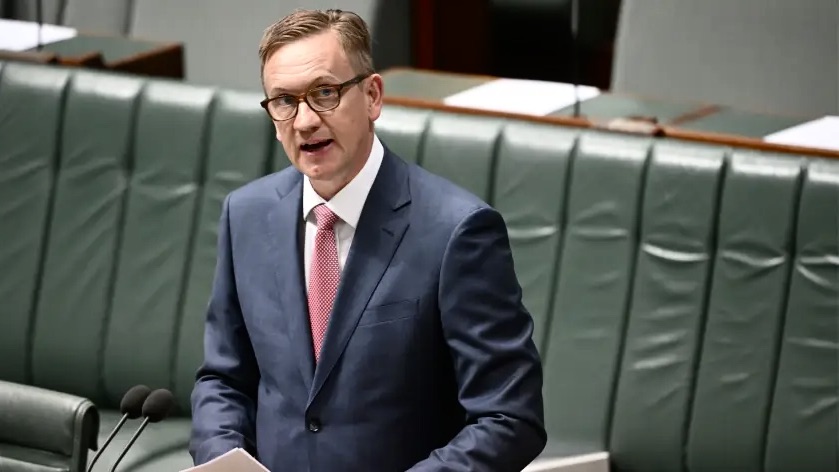
Julian Hill is part of the current Albanese Labor Government and acts as Assistant Minister for Citizenship, Customs and Multicultural Affairs and Assistant Minister for International Education. In a speech earlier this year, Mr Hill implied that an increase in homeschooling rates was contributing to the lack of social cohesion in Australia by saying, “In some areas though, our society’s institutions and systems militate against intercultural connections and deeper social cohesion. A big question is the growth in faith-based schools and home-schooling which mean that it is increasingly possible to grow up in Australia from Prep to Year 12 without ever really mixing outside your faith or even ethnic group.”
Mr Hill is essentially parroting some of the findings from the 2025 UNESCO report, “Homeschooling through a Human Rights Lens.” According to UNESCO (with emphasis added), “The Convention on the Rights of the Child emphasizes that education should promote socialization, critical thinking, and participation in social life. While studies show that many homeschooled children engage in social activities and possess adequate social skills, concerns persist about the lack of exposure to diverse perspectives and potential effects on social cohesion. Homeschooling may therefore impact children’s socialization and broader development by limiting structured opportunities for interaction and civic engagement that formal education can provide.”
The socialisation of homeschooled children has been a topic of debate for many years, and there is a large body of research available on that subject. Most of this research finds that being homeschooled does not harm the child’s development of social skills. In fact, some research finds that homeschooled children score higher than children who attend school on key metrics related to socialisation. With that in view, although the government is ostensibly concerned about social cohesion, their underlying concern appears to be that those who choose to homeschool are deviating from mainstream expectations and are placing themselves outside of the reach of the government to indoctrinate their children via the public education system.
In returning to Mr Hill’s speech, he then went on to say (with emphasis added), “There are reports of quite extreme or conservative curricula being used which gives cause for pause and reflection if this trend continues. What is being taught to these kids?”
Mr Hill made no effort to explain what he meant by “extreme or conservative curricula” but I think we know enough about modern politics (particularly from a leftist government) to know it is a veiled reference to traditional values, usually Christian values. It demonstrates that the hypocrisy of government officials really knows no bounds. Aren’t Australian parents entitled to ask the same question about government schools? What is being taught to our children!? They are sent into the government education system and 13 years later (more if they attend university) they come out of it ideologically unrecognisable.
Homeschooling parents are simply exercising their parental right, and it is clear the government is losing patience with parents who wish to be the dominant voice in their children’s lives. In short, Mr Hill’s speech demonstrates increasing political anxiety that if children are allowed to grow inside communities that reinforce moral frameworks distinct from government propaganda, the state risks inheriting a society in which people are not sharing the same civic vocabulary. And that is a deeply uncomfortable proposition to this current government.
Mr Hill would do well to reflect on the fact that the Australian education system is the entity who is pushing “extreme curricula,” particularly in the areas of environmentalism and gender ideology. In recent years Australia’s education system has moved from the position of teaching children “how” to think, to teaching them “what” to think. Instead of implying that parents are to blame for the rise in social tension in Australia, perhaps he should seek to understand that progressive education agendas are considered so socially and spiritually harmful to children that many parents are prepared to sacrifice other parts of their lifestyle in order to provide an education which accords with their own values and worldview.
What the government must come to grips with is the fact that it is failing this nation in the area of education. Instead of ensuring the classroom remains a space dedicated to the transmission of knowledge, it has been replaced by a system which concerns itself with social management—an apparatus of control. The trouble is, through the lens of social management, its obvious aim is to conform impressionable minds to adopt civic attitudes which support the government’s socially progressive agenda. If education is tasked with producing particular social attitudes, dissent, in the eyes of the government, demonstrates rebellion against the preferred social order of the day.
Homeschooling parents aren’t failing in the transmission of knowledge. They are challenging the government’s ability to indoctrinate their children, and it is clear from the language adopted in Mr Hill’s speech that the government intends to treat that type of behaviour with contempt.