September 22, 2026

September, 22, 2026
September 22, 2026

give

untitled artwork

untitled artwork

World news biblically understood

TRENDING:

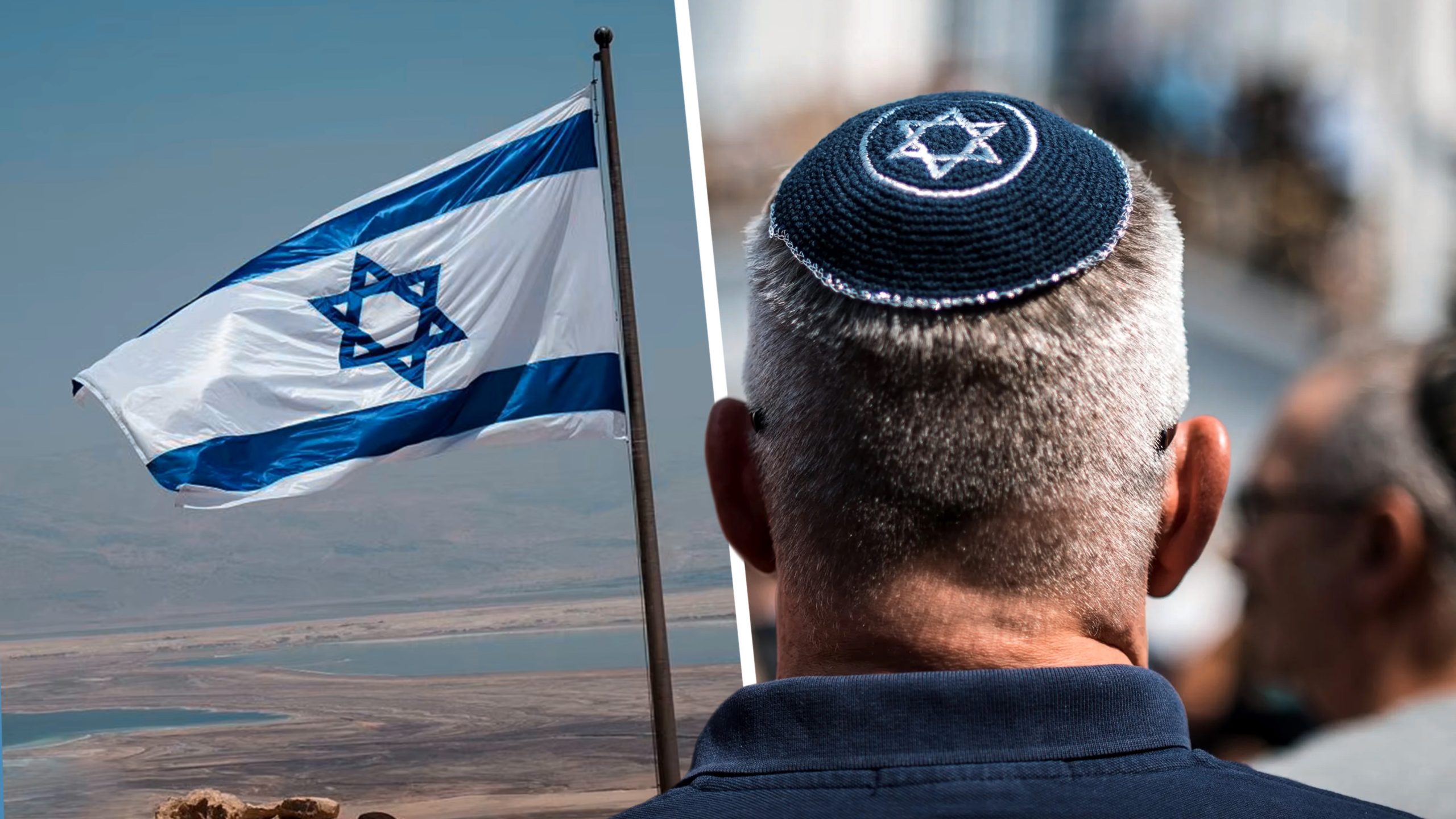
The Bible Demands A Future For National Israel

Dispensational Premillennialism distinctly holds that God has a positive future for the nation of Israel yet to be realized in the Millennium, the 1,000-year reign of Jesus Christ on Earth. The church has not replaced Israel. God’s promises to Abraham and David still hold. They were not fulfilled in the Old Testament era, nor spiritually in the church. This view uses a consistent, literal interpretive method, which allows for non-literal elements, but only when justifiable in the context.

Here are five reasons why I am a dispensational premillennialist:

1. A consistent literal interpretation of Scripture demands the covenants made to Abraham and David, as well as the New Covenant to Israel, be fulfilled in their entirety for the nation of Israel.

The Abrahamic Covenant is unconditional, based solely on God’s performance. In Genesis 12, this covenant includes the creation of a nation, blessing, and a great name, with blessing for those who bless Abraham and cursing for those who curse him, and blessing for all the families of the earth in Abraham. In Genesis 15, the covenant specifically focuses on land and includes an innumerable progeny.

The Davidic Covenant is also unconditional and focuses on a royal dynasty, including a throne and kingdom. The Lord promises “your house and your kingdom shall be made sure forever before me. Your throne shall be established forever” (2 Samuel 7:16).

The New Covenant is specifically made with the houses of Israel and Judah (Jeremiah 31:31–37) and focuses on spiritual life in writing God’s law on the heart (Ezekiel 36:22–29). God’s commitment to the nation of Israel is permanent, in the same way the “fixed order of the moon and the stars” is permanent (Jeremiah 31:35–36). Jeremiah also compares casting off Israel with the possibility of measuring the heavens above or the earth below (31:37).

Jesus the Messiah enables these covenants to be fulfilled. He is the faithful servant Israel failed to be: He does not displace Israel, but rather opens the way for Israel to be restored in God’s time, which is yet future.

Only the dispensational, premillennial view gives sufficient weight to these covenants and interprets them as they were understood by the Jewish people both when they were given and subsequently.

2. The 70 weeks prophecy of Daniel supports a future for national Israel.

Gabriel’s revelation to Daniel in response to Daniel’s prayer concerning the return of the exiles to Israel focuses on the Jewish people and Jerusalem (Daniel 9:24–27). These 70 weeks, best understood as 70 lots of seven years, summarize Israel’s history from the physical restoration of Jerusalem to the spiritual restoration of the nation. This unit of 490 years in duration will deal with Israel’s sin and bring in everlasting righteousness for the nation. 

The final week, seven years, has not yet been fulfilled, despite attempts to fit its description into history. At a time when Israel was in captivity, the promise of a positive future involving restoration of relationship with God and an anointed holy place (the Temple) provided hope for despairing exiles, including Daniel.

Only a dispensational, premillennial chronology makes sense of each aspect, including the seven-week, 62-week, and one-week segments.

3. Scripture is building toward the restoration of the Kingdom for Israel.

Despite Israel’s rejection of its Messiah, Jesus’ apostles expected the Kingdom to be inaugurated for Israel (Acts 1:1–7; cf. 3:19–26). Jesus taught them about the Kingdom of God for 40 days between His resurrection and ascension (Acts 1:3). In response, they asked Him if He would then restore the Kingdom to Israel, to which He responded the timing was not for them to know, rather they would receive the Spirit’s empowerment to proclaim the gospel (Acts 1:6-8). 

Jesus did not correct the question; and this was a perfect time to do so if it was erroneous. Peter’s sermon in Acts 3 continues a focus on the future of Israel, rather than dismissing the nation as rejected because of its treatment of Jesus.

The restoration of the Kingdom for Israel is held only by dispensational Premillennialism.

4. Romans 9—11 demands a future for national Israel.

Romans 1—8 teaches humanity’s need for spiritual salvation and God’s provision of it in the work of Jesus Christ. Chapter 8 emphasizes no condemnation for believers and concludes with no separation for them based on God’s faithfulness to His promises.

This raises a significant theological question: What about the Jewish people? Will God fulfill His promises to them? If not, God’s character or capacity is called into question. Paul answered this question in these three chapters.

He opened with his personal anguish over the salvation of Jewish people and emphasized their rightful possession of adoption, the glory, covenants, giving of the law, the worship, and the promises (9:1–4). Paul said God’s Word had not failed, because inclusion as God’s people is not based on human performance but rather divine choice (9:6–13).

In chapter 10, Paul reiterated his desire for his people to be saved and taught that salvation is available to all, Jews and Gentiles. Yet, the nation of Israel has not responded to this Good News, which raises another question: Has God rejected the Jewish people? The response is emphatic—“By no means!” (11:1). Paul explained the presence of a remnant of Jewish people, chosen by grace, both in the past and present (v. 5).

He went even further in asking if they stumbled in order that they might fall, which is also answered emphatically with “By no means!” (v. 11). Paul did not limit his teaching to individual Jews; he considered the Jewish people as a whole, the nation of Israel (vv. 7, 11, 25–26). Jewish rejection of Jesus as their Messiah resulted in salvation opening up to Gentiles as equally included as God’s people (v. 11). Gentile salvation is purposed to make Israel jealous.

Paul then compared the benefit arising from their failure, being riches for the world/Gentiles, with their full inclusion being even greater riches (v. 12). Now, the world enjoys the riches of salvation for all ethnicities, but when Israel is redeemed at the return of Jesus (vv. 25–27), His reign over the earth will bring greater riches. Paul reminded his Gentile readers of the basis of their inclusion in God’s family (vv. 13–24) and then warned them not to be arrogant, “wise in your own conceits” (v. 25).

Israel is subject to a partial hardening, which is why so few Jewish people are responding to the gospel, but it is limited in duration. This mystery will end when “the fullness of the Gentiles has come in” (v. 25). When this Gentile era completes, that hardening will be removed, which will occur at the return of Jesus. All Israel will be saved by “The Deliverer,” who will “banish ungodliness from Jacob” (v. 26). God will by covenant take away their sins, because “the gifts and the calling of God are irrevocable” (vv. 27—29).

5. Revelation demands a future for national Israel and the establishment of the 1,000-year reign of Jesus Christ on Earth.

The books of Daniel and Revelation are complementary in prophetic material, especially Daniel’s 70 weeks prophecy. The alignment of timeframes and events reinforces the future fulfillment of the 70th week in Daniel, which matches with the division into two halves (Revelation 11:2–3; 12:6, 14).

The focus on Jewish people is evident in the 144,000 sealed in 7:4–8, the two witnesses in the Temple area in 11:1–14, and the reference to Israel in 12:1–6 and 12:13–17. This is not to ignore the presence of Gentiles and salvation available to them during this period but to recognize that God is working with Jewish people.

Perhaps the book’s most telling teaching for Premillennialism is the repeated reference to 1,000 years (20:1–7). At face value, this reference describes a period of 1,000 years when Satan is bound, and Christ returns to Earth to defeat the Antichrist and his army and rescue the Jewish people; and Christ reigns with His resurrected saints over the earth (19:11–21). At the conclusion of the 1,000 years, Satan is released, recruits an army, and attacks Jerusalem; but he is defeated and cast into the Lake of Fire (20:7–10).

Only dispensational Premillennialism includes both a future for national Israel and the 1,000-year reign of Christ over the earth prior to the eternal state, the new heavens and earth (Rev. 21—22).

By interpreting Scripture literally as it was intended, I am convinced that premillennial Dispensationalism best helps us faithfully understand God’s Word.



Millions Are Understanding The News Through A Biblical Worldview

THANKS TO YOUR PRAYER AND SUPPORT

The Firewall Defending Judeo-Christian Western Civilization Could Crumble On November 3rd

Over the next six weeks, decisions will be made that will determine the future course of the entire free world. That is no exaggeration. Will the West choose faith, family, freedom, and common sense, or will it choose socialism, secularism, separation, and a large dose of Islam mixed in? The United States, under President Trump, has been the firewall, an outpost of sanity, and a lone defender of Judeo-Christian Western civilization. That is all on the line on November 3rd, when Americans head to the polls and vote in the midterm elections.

‘Not Welcome’: In A Muslim-Majority Michigan City, Christians And Jews Are No Longer Being Treated As Equal Citizens, Lawsuit Warns

“What makes this case especially troubling is that City officials, up to and including the Mayor, responded to a citizen’s respectful request for equal treatment with silence, stonewalling, and outright hostility—including the Mayor’s own words telling a Christian resident he is ‘not welcome’ in his own city,” David Yerushalmi, an attorney on the case, said. “Our client is simply asking the City to treat Christians and Jews as equal citizens.”

sign up

This Is Not Political—This Is Biblical: What’s Really At Stake In The Virginia Elections?

According to Pew Research and First Liberty, 90 million self-identified evangelical Christians in America are eligible to vote. We are the largest voting bloc in America, but tragically, of the 90 million eligible to vote, 40 million do not vote, and 15 million are not even registered. The majority of Christians sit it out, and as a result, we allow evil and are ceding ground to Satan. When evil policies are enacted and Christians sit it out, we have no one to blame but ourselves. Christians need to let their voices be heard and stand up for God's definition of marriage and sanctity of life from the womb to the tomb.

ABC's of Salvation

Decision

christ in prophecy

UTT

untitled artwork

Israel My Glory

Dispensational Premillennialism distinctly holds that God has a positive future for the nation of Israel yet to be realized in the Millennium, the 1,000-year reign of Jesus Christ on Earth. The church has not replaced Israel. God’s promises to Abraham and David still hold. They were not fulfilled in the Old Testament era, nor spiritually in the church. This view uses a consistent, literal interpretive method, which allows for non-literal elements, but only when justifiable in the context.

Here are five reasons why I am a dispensational premillennialist:

1. A consistent literal interpretation of Scripture demands the covenants made to Abraham and David, as well as the New Covenant to Israel, be fulfilled in their entirety for the nation of Israel.

The Abrahamic Covenant is unconditional, based solely on God’s performance. In Genesis 12, this covenant includes the creation of a nation, blessing, and a great name, with blessing for those who bless Abraham and cursing for those who curse him, and blessing for all the families of the earth in Abraham. In Genesis 15, the covenant specifically focuses on land and includes an innumerable progeny.

The Davidic Covenant is also unconditional and focuses on a royal dynasty, including a throne and kingdom. The Lord promises “your house and your kingdom shall be made sure forever before me. Your throne shall be established forever” (2 Samuel 7:16).

The New Covenant is specifically made with the houses of Israel and Judah (Jeremiah 31:31–37) and focuses on spiritual life in writing God’s law on the heart (Ezekiel 36:22–29). God’s commitment to the nation of Israel is permanent, in the same way the “fixed order of the moon and the stars” is permanent (Jeremiah 31:35–36). Jeremiah also compares casting off Israel with the possibility of measuring the heavens above or the earth below (31:37).

Jesus the Messiah enables these covenants to be fulfilled. He is the faithful servant Israel failed to be: He does not displace Israel, but rather opens the way for Israel to be restored in God’s time, which is yet future.

Only the dispensational, premillennial view gives sufficient weight to these covenants and interprets them as they were understood by the Jewish people both when they were given and subsequently.

2. The 70 weeks prophecy of Daniel supports a future for national Israel.

Gabriel’s revelation to Daniel in response to Daniel’s prayer concerning the return of the exiles to Israel focuses on the Jewish people and Jerusalem (Daniel 9:24–27). These 70 weeks, best understood as 70 lots of seven years, summarize Israel’s history from the physical restoration of Jerusalem to the spiritual restoration of the nation. This unit of 490 years in duration will deal with Israel’s sin and bring in everlasting righteousness for the nation. 

The final week, seven years, has not yet been fulfilled, despite attempts to fit its description into history. At a time when Israel was in captivity, the promise of a positive future involving restoration of relationship with God and an anointed holy place (the Temple) provided hope for despairing exiles, including Daniel.

Only a dispensational, premillennial chronology makes sense of each aspect, including the seven-week, 62-week, and one-week segments.

3. Scripture is building toward the restoration of the Kingdom for Israel.

Despite Israel’s rejection of its Messiah, Jesus’ apostles expected the Kingdom to be inaugurated for Israel (Acts 1:1–7; cf. 3:19–26). Jesus taught them about the Kingdom of God for 40 days between His resurrection and ascension (Acts 1:3). In response, they asked Him if He would then restore the Kingdom to Israel, to which He responded the timing was not for them to know, rather they would receive the Spirit’s empowerment to proclaim the gospel (Acts 1:6-8). 

Jesus did not correct the question; and this was a perfect time to do so if it was erroneous. Peter’s sermon in Acts 3 continues a focus on the future of Israel, rather than dismissing the nation as rejected because of its treatment of Jesus.

The restoration of the Kingdom for Israel is held only by dispensational Premillennialism.

4. Romans 9—11 demands a future for national Israel.

Romans 1—8 teaches humanity’s need for spiritual salvation and God’s provision of it in the work of Jesus Christ. Chapter 8 emphasizes no condemnation for believers and concludes with no separation for them based on God’s faithfulness to His promises.

This raises a significant theological question: What about the Jewish people? Will God fulfill His promises to them? If not, God’s character or capacity is called into question. Paul answered this question in these three chapters.

He opened with his personal anguish over the salvation of Jewish people and emphasized their rightful possession of adoption, the glory, covenants, giving of the law, the worship, and the promises (9:1–4). Paul said God’s Word had not failed, because inclusion as God’s people is not based on human performance but rather divine choice (9:6–13).

In chapter 10, Paul reiterated his desire for his people to be saved and taught that salvation is available to all, Jews and Gentiles. Yet, the nation of Israel has not responded to this Good News, which raises another question: Has God rejected the Jewish people? The response is emphatic—“By no means!” (11:1). Paul explained the presence of a remnant of Jewish people, chosen by grace, both in the past and present (v. 5).

He went even further in asking if they stumbled in order that they might fall, which is also answered emphatically with “By no means!” (v. 11). Paul did not limit his teaching to individual Jews; he considered the Jewish people as a whole, the nation of Israel (vv. 7, 11, 25–26). Jewish rejection of Jesus as their Messiah resulted in salvation opening up to Gentiles as equally included as God’s people (v. 11). Gentile salvation is purposed to make Israel jealous.

Paul then compared the benefit arising from their failure, being riches for the world/Gentiles, with their full inclusion being even greater riches (v. 12). Now, the world enjoys the riches of salvation for all ethnicities, but when Israel is redeemed at the return of Jesus (vv. 25–27), His reign over the earth will bring greater riches. Paul reminded his Gentile readers of the basis of their inclusion in God’s family (vv. 13–24) and then warned them not to be arrogant, “wise in your own conceits” (v. 25).

Israel is subject to a partial hardening, which is why so few Jewish people are responding to the gospel, but it is limited in duration. This mystery will end when “the fullness of the Gentiles has come in” (v. 25). When this Gentile era completes, that hardening will be removed, which will occur at the return of Jesus. All Israel will be saved by “The Deliverer,” who will “banish ungodliness from Jacob” (v. 26). God will by covenant take away their sins, because “the gifts and the calling of God are irrevocable” (vv. 27—29).

5. Revelation demands a future for national Israel and the establishment of the 1,000-year reign of Jesus Christ on Earth.

The books of Daniel and Revelation are complementary in prophetic material, especially Daniel’s 70 weeks prophecy. The alignment of timeframes and events reinforces the future fulfillment of the 70th week in Daniel, which matches with the division into two halves (Revelation 11:2–3; 12:6, 14).

The focus on Jewish people is evident in the 144,000 sealed in 7:4–8, the two witnesses in the Temple area in 11:1–14, and the reference to Israel in 12:1–6 and 12:13–17. This is not to ignore the presence of Gentiles and salvation available to them during this period but to recognize that God is working with Jewish people.

Perhaps the book’s most telling teaching for Premillennialism is the repeated reference to 1,000 years (20:1–7). At face value, this reference describes a period of 1,000 years when Satan is bound, and Christ returns to Earth to defeat the Antichrist and his army and rescue the Jewish people; and Christ reigns with His resurrected saints over the earth (19:11–21). At the conclusion of the 1,000 years, Satan is released, recruits an army, and attacks Jerusalem; but he is defeated and cast into the Lake of Fire (20:7–10).

Only dispensational Premillennialism includes both a future for national Israel and the 1,000-year reign of Christ over the earth prior to the eternal state, the new heavens and earth (Rev. 21—22).

By interpreting Scripture literally as it was intended, I am convinced that premillennial Dispensationalism best helps us faithfully understand God’s Word.

Trusted Analysis From A Biblical Worldview

Help reach the lost and equip the church with the living and active truth of God's Word in our world today.

YOU CARE ABOUT

BIBLICAL TRUTH. SO DO WE.


Together, We Can Deliver A Biblical Understanding

Of News Events Around The World.

The Firewall Defending Judeo-Christian Western Civilization Could Crumble On November 3rd

Over the next six weeks, decisions will be made that will determine the future course of the entire free world. That is no exaggeration. Will the West choose faith, family, freedom, and common sense, or will it choose socialism, secularism, separation, and a large dose of Islam mixed in? The United States, under President Trump, has been the firewall, an outpost of sanity, and a lone defender of Judeo-Christian Western civilization. That is all on the line on November 3rd, when Americans head to the polls and vote in the midterm elections.

‘Not Welcome’: In A Muslim-Majority Michigan City, Christians And Jews Are No Longer Being Treated As Equal Citizens, Lawsuit Warns

“What makes this case especially troubling is that City officials, up to and including the Mayor, responded to a citizen’s respectful request for equal treatment with silence, stonewalling, and outright hostility—including the Mayor’s own words telling a Christian resident he is ‘not welcome’ in his own city,” David Yerushalmi, an attorney on the case, said. “Our client is simply asking the City to treat Christians and Jews as equal citizens.”

untitled artwork 6391

This Is Not Political—This Is Biblical: What’s Really At Stake In The Virginia Elections?

According to Pew Research and First Liberty, 90 million self-identified evangelical Christians in America are eligible to vote. We are the largest voting bloc in America, but tragically, of the 90 million eligible to vote, 40 million do not vote, and 15 million are not even registered. The majority of Christians sit it out, and as a result, we allow evil and are ceding ground to Satan. When evil policies are enacted and Christians sit it out, we have no one to blame but ourselves. Christians need to let their voices be heard and stand up for God's definition of marriage and sanctity of life from the womb to the tomb.

ABC's of Salvation

TV AD

worldview matters

Decision Magazine V AD

Decision

Jan Markell

Israel My Glory

Erick Stakelbeck

untitled artwork

YOU CARE ABOUT

BIBLICAL TRUTH.

SO DO WE.

Together, We Can Deliver A Biblical Understanding Of News Events Around The World And Equip The Church To Stand With A Biblical Worldview.

untitled artwork

Israel My Glory

YOU CARE ABOUT

BIBLICAL TRUTH.

SO DO WE.


Together, We Can Deliver A Biblical Understanding Of News Events Around The World And Equip The Church To Stand With A Biblical Worldview.