May 22, 2026

May, 22, 2026
May 22, 2026

give

untitled artwork

untitled artwork

World news biblically understood

TRENDING:

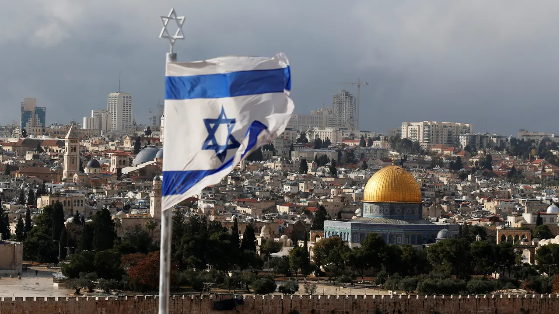
Denying The Jewish People’s Connection To Jerusalem Would Be Laughable… If So Many Nations Didn’t Believe It

Among the many things God cares about, three stand out: Israel, Jerusalem, and the Temple.

During my Hebrew-school days, I learned about these things in multiple ways. From the Jewish Scriptures, I learned God set Jerusalem in the midst of the nations (Ezek. 5:5). From the Midrash (rabbinic commentary), I read that this world is like an eyeball: The white of the eye is the world; the iris is Jerusalem; and the pupil is the Holy Temple.

I learned that when Jews pray, we face Jerusalem—unless we are in Jerusalem; then we pray toward the Temple. I learned that we always conclude the Passover seder meal by chanting in unison, “Next year in Jerusalem!”

At the conclusion of a Jewish wedding ceremony, the bridegroom breaks a glass. Some say it is a sign of mourning to commemorate the destruction of the Temple that once stood atop Mount Moriah. Afterward, the bridegroom recites Psalm 137:5–6: “If I forget you, O Jerusalem, let my right hand forget its skill! If I do not remember you, let my tongue cling to the roof of my mouth—if I do not exalt Jerusalem above my chief joy.”

From the holy writings to the traditions, the Jewish connection to Israel, Jerusalem, and the Temple is everywhere, extending back 3,000 years. Such history would seem enough to settle what is today an extremely controversial question: Was there a Jewish presence in Israel, Jerusalem, and the Temple Mount before the Dome of the Rock and al-Aqsa Mosque were built there? But apparently, it isn’t.

The United Nations and imam of Jerusalem both claim there was no Jewish presence. In fact, UNESCO (United Nations Educational, Scientific and Cultural Organization) denies all Jewish connections to Jerusalem. The grand mufti of Jerusalem, Sheikh Muhammad Ahmad Hussein, who oversees the Temple Mount, claims no Jewish Temple even stood there.

These lies would be laughable if not for the fact that so many countries believe them. In December 2017, U.S. President Donald Trump decided to implement the Jerusalem Embassy Act of 1995. He recognized Jerusalem as the official capital of the State of Israel, which calls for Jerusalem to remain an undivided city, and ordered the federal government to relocate the U.S. embassy from Tel Aviv to Jerusalem—a move timed to help celebrate Israel’s 70th birthday.

The UN General Assembly then countered with the “Status of Jerusalem” resolution—which passed 128 to 9, with 35 abstentions—denying the Jewish people’s connection to Jerusalem and the Temple Mount. Voting against the resolution were Guatemala, Honduras, Israel, the Marshall Islands, the Federated States of Micronesia, Nauru, Palau, Togo, and the United States.

Centuries of Mourning

For almost 2,000 years, Jewish people have mourned the loss of their Temple. They commemorate the tragedy annually on the holiday of Tisha B’Av (the ninth of Av). On Tisha B’Av, Jews mourn the destruction in 586 BC of their first Temple (built by King Solomon), as well as the demise of their second Temple in AD 70. The day requires fasting from food, music, bathing, and marital relations.

So important is Tisha B’Av that the only book of the Bible allowed to be read is Lamentations, which records five poetic laments of the weeping prophet, Jeremiah. It is here Jeremiah cried, “Is it nothing to you, all you who pass by? Behold and see if there is any sorrow like my sorrow, which has been brought on me, which the Lord has inflicted in the day of His fierce anger. For your ruin is spread wide as the sea; who can heal you?” (1:12; 2:13).

These Scriptures voice Jeremiah’s anguish at seeing his people’s disobedience and the resulting destruction of Jerusalem and the Temple.

The Babylonians destroyed Solomon’s Temple in 586 BC, around 1,000 years before Islam was born. A story is told of the 19th-century French leader Napoleon Bonaparte who learned a lesson from Tisha B’Av. When he passed a synagogue in Paris and heard the sounds of mourning and crying, he asked his aide, “What is this all about?”

His aide explained that the Jewish people were mourning the loss of their Temple. “When did this happen? Surely I would have heard such a thing from my military.”

The aide replied, “Sir, it occurred about 1,700 years ago.”

Napoleon reportedly declared, “Certainly a people which has mourned the loss of their Temple for so long will merit to see it rebuilt.”

Jews have mourned over their Temple since the second one fell at the hands of the Romans in AD 70. Throughout the Diaspora, wherever Jewish people were scattered, they grieved over their beloved city and Temple.

Undisputed Truth

Through the years, the Byzantines, Arab Muslims, Crusaders, Egyptian Mamluks, Ottoman Turks, and British have occupied Jewish land. At no time did any of them make Jerusalem the capital of any country. When Jordan controlled eastern Jerusalem, which included the Temple Mount, between 1948 and 1967, not once did anyone suggest making Jerusalem the capital instead of Amman.

Even the Muslims knew the truth. “A guide to the Haram al-Sharif, as the Temple Mount is known in Arabic, published by the Muslim Waqf in 1924, mentioned the presence of two Jewish temples atop the Jerusalem compound in antiquity,” reported The Times of Israel. The Jewish identity of Jerusalem was an undisputed, unchallenged truth until Israel united the city in 1967.

But there is yet another proof of the Jewishness of the Holy Land, Jerusalem, and the Temple Mount; and it comes not from Judaism, but from Christianity.

It surfaces regularly whenever Bible believers travel to Israel. I witnessed it on a previous Up to Jerusalem tour. When we left the Galilee and drove south, the sun began to set as we approached Jerusalem. Gazing out the bus windows, our people seemed to catch their breath collectively as they scanned the city’s ancient walls; saw the city’s hills; and smiled at the inhabitants, some of whom were dressed as if it were still the 18th century.

A familiar Christian hymn, written in the late 1800s—“The Holy City”—began to play: “Last night I lay a-sleeping/There came a dream so fair/I stood in old Jerusalem/Beside the temple there.” The refrain declares, “Jerusalem! Jerusalem!/Lift up your gates and sing/Hosanna in the highest!/Hosanna to your King!”

There was not a dry eye among us.

Christians know what many foolish nations refuse to admit: The Temple existed; and it, as well as Israel and Jerusalem, are Jewish. They know because their Savior is Jewish. The God-Man was born in Jewish Bethlehem, raised in Jewish Nazareth, taught in and around the Jewish Temple, died, and was buried and rose again in Jewish Jerusalem.

They know because these facts come from the Bible, a Book written long before Islam and the Qu’ran existed. They also know, as Jeremiah knew, that even though there is mourning, there is hope. (See Lamentations 3:21–34.)

After all, His mercies are new every morning. Great is His faithfulness.


Give

Give

Global Tensions Expose The Vast Contrast Between Human Hope And God’s Promises

In the Bible, hope is closely connected to waiting. Not waiting in the sense that we are still uncertain about the outcome, but steadfastly waiting because we fully expect the outcome God promised in His Word. In other words, man’s definition of hope carries doubt. God’s does not. As such, Biblical hope is a sure foundation upon which we may base our lives, believing that God always keeps His promises.

SPLC Was The Hub, But Many Spokes Made Up The Wheel Designed To Crush Christians And Conservatives

In America, citizens should not lose access to banking services, digital platforms, public credibility, or physical safety because they believe in biblical teaching on marriage and human sexuality. When government-regulated institutions can apply ideological labels in a coordinated fashion to silence, isolate, or financially cripple opponents, we allow political targeting by proxy, and freedom is at risk. SPLC was the hub, but there were many spokes that made up this wheel designed to crush Christians and conservatives — the congressional inquiry should not stop with SPLC.

sign up

Prophetic Pieces: As Putin Ups The Ante In The Arms Race, Russia Considers Providing Refuge To Top Iranian Leaders

Prophetic events in the end times right now are casting their shadows over the Middle East like never before. Preparations for the Gog Magog coalition prophesied in Ezekiel 38 and 39 are increasing and intensifying. Written 2,500 years ago by Ezekiel, these chapters prophesy an end-time invasion of Israel led by the nations of Russia, Iran, and Turkey. Two significant developments showcase that the prophetic pieces are falling perfectly into place.

ABC's of Salvation

Decision

UTT

FOI

untitled artwork

Israel My Glory

Among the many things God cares about, three stand out: Israel, Jerusalem, and the Temple.

During my Hebrew-school days, I learned about these things in multiple ways. From the Jewish Scriptures, I learned God set Jerusalem in the midst of the nations (Ezek. 5:5). From the Midrash (rabbinic commentary), I read that this world is like an eyeball: The white of the eye is the world; the iris is Jerusalem; and the pupil is the Holy Temple.

I learned that when Jews pray, we face Jerusalem—unless we are in Jerusalem; then we pray toward the Temple. I learned that we always conclude the Passover seder meal by chanting in unison, “Next year in Jerusalem!”

At the conclusion of a Jewish wedding ceremony, the bridegroom breaks a glass. Some say it is a sign of mourning to commemorate the destruction of the Temple that once stood atop Mount Moriah. Afterward, the bridegroom recites Psalm 137:5–6: “If I forget you, O Jerusalem, let my right hand forget its skill! If I do not remember you, let my tongue cling to the roof of my mouth—if I do not exalt Jerusalem above my chief joy.”

From the holy writings to the traditions, the Jewish connection to Israel, Jerusalem, and the Temple is everywhere, extending back 3,000 years. Such history would seem enough to settle what is today an extremely controversial question: Was there a Jewish presence in Israel, Jerusalem, and the Temple Mount before the Dome of the Rock and al-Aqsa Mosque were built there? But apparently, it isn’t.

The United Nations and imam of Jerusalem both claim there was no Jewish presence. In fact, UNESCO (United Nations Educational, Scientific and Cultural Organization) denies all Jewish connections to Jerusalem. The grand mufti of Jerusalem, Sheikh Muhammad Ahmad Hussein, who oversees the Temple Mount, claims no Jewish Temple even stood there.

These lies would be laughable if not for the fact that so many countries believe them. In December 2017, U.S. President Donald Trump decided to implement the Jerusalem Embassy Act of 1995. He recognized Jerusalem as the official capital of the State of Israel, which calls for Jerusalem to remain an undivided city, and ordered the federal government to relocate the U.S. embassy from Tel Aviv to Jerusalem—a move timed to help celebrate Israel’s 70th birthday.

The UN General Assembly then countered with the “Status of Jerusalem” resolution—which passed 128 to 9, with 35 abstentions—denying the Jewish people’s connection to Jerusalem and the Temple Mount. Voting against the resolution were Guatemala, Honduras, Israel, the Marshall Islands, the Federated States of Micronesia, Nauru, Palau, Togo, and the United States.

Centuries of Mourning

For almost 2,000 years, Jewish people have mourned the loss of their Temple. They commemorate the tragedy annually on the holiday of Tisha B’Av (the ninth of Av). On Tisha B’Av, Jews mourn the destruction in 586 BC of their first Temple (built by King Solomon), as well as the demise of their second Temple in AD 70. The day requires fasting from food, music, bathing, and marital relations.

So important is Tisha B’Av that the only book of the Bible allowed to be read is Lamentations, which records five poetic laments of the weeping prophet, Jeremiah. It is here Jeremiah cried, “Is it nothing to you, all you who pass by? Behold and see if there is any sorrow like my sorrow, which has been brought on me, which the Lord has inflicted in the day of His fierce anger. For your ruin is spread wide as the sea; who can heal you?” (1:12; 2:13).

These Scriptures voice Jeremiah’s anguish at seeing his people’s disobedience and the resulting destruction of Jerusalem and the Temple.

The Babylonians destroyed Solomon’s Temple in 586 BC, around 1,000 years before Islam was born. A story is told of the 19th-century French leader Napoleon Bonaparte who learned a lesson from Tisha B’Av. When he passed a synagogue in Paris and heard the sounds of mourning and crying, he asked his aide, “What is this all about?”

His aide explained that the Jewish people were mourning the loss of their Temple. “When did this happen? Surely I would have heard such a thing from my military.”

The aide replied, “Sir, it occurred about 1,700 years ago.”

Napoleon reportedly declared, “Certainly a people which has mourned the loss of their Temple for so long will merit to see it rebuilt.”

Jews have mourned over their Temple since the second one fell at the hands of the Romans in AD 70. Throughout the Diaspora, wherever Jewish people were scattered, they grieved over their beloved city and Temple.

Undisputed Truth

Through the years, the Byzantines, Arab Muslims, Crusaders, Egyptian Mamluks, Ottoman Turks, and British have occupied Jewish land. At no time did any of them make Jerusalem the capital of any country. When Jordan controlled eastern Jerusalem, which included the Temple Mount, between 1948 and 1967, not once did anyone suggest making Jerusalem the capital instead of Amman.

Even the Muslims knew the truth. “A guide to the Haram al-Sharif, as the Temple Mount is known in Arabic, published by the Muslim Waqf in 1924, mentioned the presence of two Jewish temples atop the Jerusalem compound in antiquity,” reported The Times of Israel. The Jewish identity of Jerusalem was an undisputed, unchallenged truth until Israel united the city in 1967.

But there is yet another proof of the Jewishness of the Holy Land, Jerusalem, and the Temple Mount; and it comes not from Judaism, but from Christianity.

It surfaces regularly whenever Bible believers travel to Israel. I witnessed it on a previous Up to Jerusalem tour. When we left the Galilee and drove south, the sun began to set as we approached Jerusalem. Gazing out the bus windows, our people seemed to catch their breath collectively as they scanned the city’s ancient walls; saw the city’s hills; and smiled at the inhabitants, some of whom were dressed as if it were still the 18th century.

A familiar Christian hymn, written in the late 1800s—“The Holy City”—began to play: “Last night I lay a-sleeping/There came a dream so fair/I stood in old Jerusalem/Beside the temple there.” The refrain declares, “Jerusalem! Jerusalem!/Lift up your gates and sing/Hosanna in the highest!/Hosanna to your King!”

There was not a dry eye among us.

Christians know what many foolish nations refuse to admit: The Temple existed; and it, as well as Israel and Jerusalem, are Jewish. They know because their Savior is Jewish. The God-Man was born in Jewish Bethlehem, raised in Jewish Nazareth, taught in and around the Jewish Temple, died, and was buried and rose again in Jewish Jerusalem.

They know because these facts come from the Bible, a Book written long before Islam and the Qu’ran existed. They also know, as Jeremiah knew, that even though there is mourning, there is hope. (See Lamentations 3:21–34.)

After all, His mercies are new every morning. Great is His faithfulness.


Trusted Analysis From A Biblical Worldview

Help reach the lost and equip the church with the living and active truth of God's Word in our world today.

YOU CARE ABOUT

BIBLICAL TRUTH. SO DO WE.


Together, We Can Deliver A Biblical Understanding

Of News Events Around The World.

Global Tensions Expose The Vast Contrast Between Human Hope And God’s Promises

In the Bible, hope is closely connected to waiting. Not waiting in the sense that we are still uncertain about the outcome, but steadfastly waiting because we fully expect the outcome God promised in His Word. In other words, man’s definition of hope carries doubt. God’s does not. As such, Biblical hope is a sure foundation upon which we may base our lives, believing that God always keeps His promises.

SPLC Was The Hub, But Many Spokes Made Up The Wheel Designed To Crush Christians And Conservatives

In America, citizens should not lose access to banking services, digital platforms, public credibility, or physical safety because they believe in biblical teaching on marriage and human sexuality. When government-regulated institutions can apply ideological labels in a coordinated fashion to silence, isolate, or financially cripple opponents, we allow political targeting by proxy, and freedom is at risk. SPLC was the hub, but there were many spokes that made up this wheel designed to crush Christians and conservatives — the congressional inquiry should not stop with SPLC.

untitled artwork 6391

Prophetic Pieces: As Putin Ups The Ante In The Arms Race, Russia Considers Providing Refuge To Top Iranian Leaders

Prophetic events in the end times right now are casting their shadows over the Middle East like never before. Preparations for the Gog Magog coalition prophesied in Ezekiel 38 and 39 are increasing and intensifying. Written 2,500 years ago by Ezekiel, these chapters prophesy an end-time invasion of Israel led by the nations of Russia, Iran, and Turkey. Two significant developments showcase that the prophetic pieces are falling perfectly into place.

ABC's of Salvation

TV AD

worldview matters

Decision Magazine V AD

Decision

Jan Markell

Israel My Glory

Erick Stakelbeck

untitled artwork

YOU CARE ABOUT

BIBLICAL TRUTH.

SO DO WE.

Together, We Can Deliver A Biblical Understanding Of News Events Around The World And Equip The Church To Stand With A Biblical Worldview.

untitled artwork

Israel My Glory

YOU CARE ABOUT

BIBLICAL TRUTH.

SO DO WE.


Together, We Can Deliver A Biblical Understanding Of News Events Around The World And Equip The Church To Stand With A Biblical Worldview.