
January 14, 2026

January, 14, 2026
January 14, 2026

give

untitled artwork

untitled artwork

World news biblically understood

TRENDING:

Why You Can’t Fit Millions Of Years Into The Days Of Creation

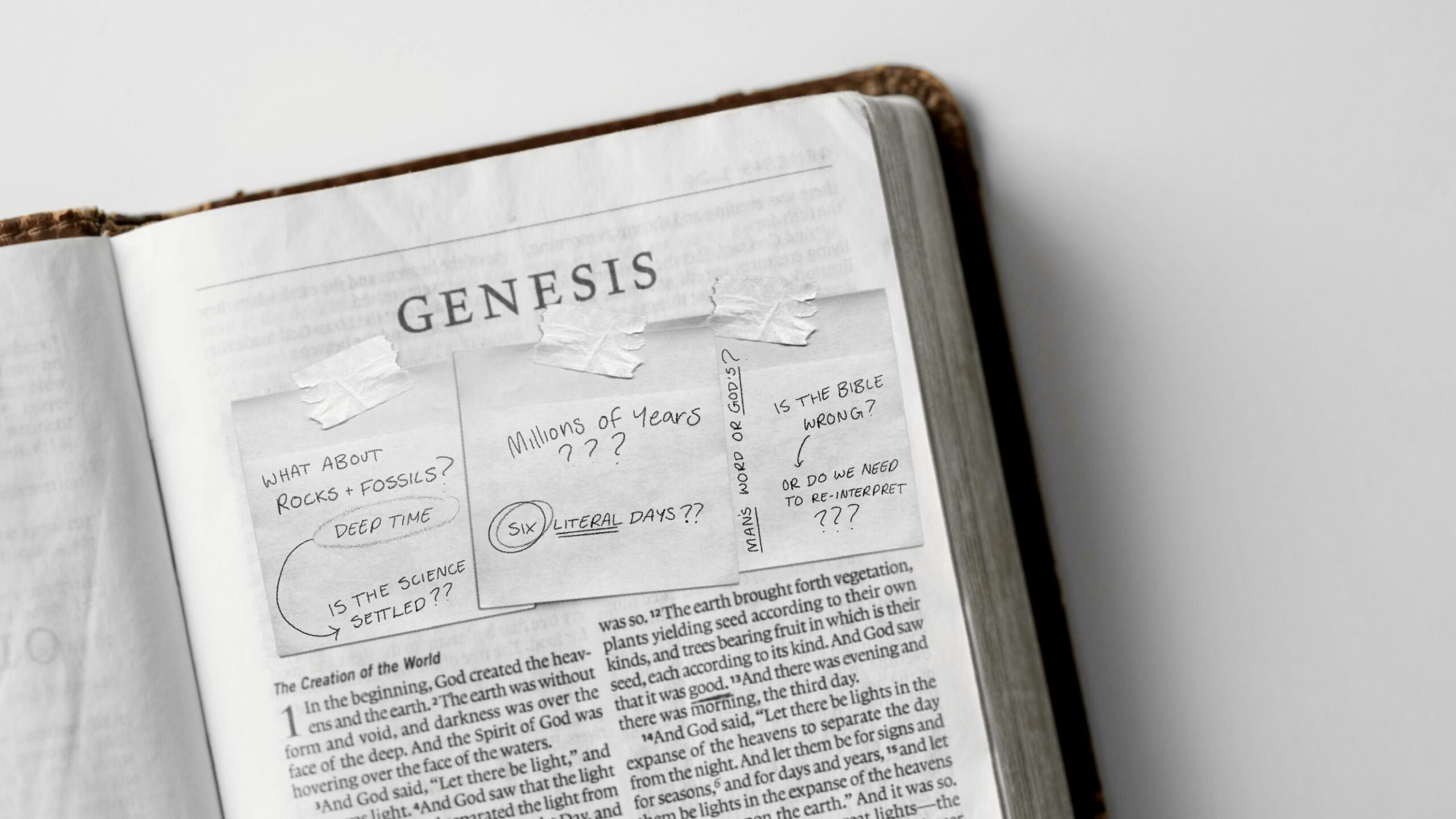
Did God really create everything in six 24-hour days? Is this what the Bible actually teaches? Were those days of Genesis 1 literal days? Or could there be allegory or metaphor involved here?

You know, I want you to think about these questions. I’ve met a lot of pastors and a lot of people in churches who say, “We don’t know what the word ‘day’ means in Genesis 1.”

But the Hebrew word for day, yom, is used hundreds of times in the Old Testament. And you know what’s interesting? We seem to know what it means everywhere else in the Old Testament, but not in Genesis 1. Why is there a problem with Genesis 1?

Well, I’ll tell you why. Because the idea of millions of years has permeated people’s thinking, and it’s permeated the church. And people recognize that if you’re going to try to fit millions of years into the Bible, you can’t fit them into the Genesis 5 genealogy.

That genealogy in Genesis 5 is very tight. In fact, the wording literally states about those listed, “He himself begat.” You can’t put gaps in there. There’s no way you can fit millions of years in there. So people say, “Well, if we’re going to fit millions of years into the Bible, somehow we have to do it before Adam,” which means somewhere within the six days of creation. And that is the reason I find that people don’t want to believe in six literal days—because ultimately they’re trying to fit the millions of years somewhere into the Bible.

Now, I’ve also had people tell me, “Okay, well, the word for ‘day’ in Genesis 1, the word used for each of the six days, is the word yom, but it can mean something other than an ordinary day.” And here’s my answer to that: That’s true. It can, but it can also mean an ordinary day. The question is not whether it can mean something other than an ordinary day. It’s what does it mean in the context of Genesis 1?

The Hebrew word for “day,” yom, has a range of meanings. For instance, in Genesis 2:4 where it says, “in the day that the Lord God made the earth and the heavens,” it’s not referring to a specific day. It means “time.” But for each of the six days in Genesis 1, the Hebrew word yom means an ordinary day because of the context. Whenever the Hebrew word yom is used with “evening,” “morning,” a number, or “night,” it always means an ordinary day.

And in the description of the first day, you have all of these—“evening,” “morning,” a number, and “night” (Genesis 1:5)—and it actually literally says, “and there was evening and morning, one day.” The “one” is a cardinal number; whereas for the other days, Scripture says second, third, fourth, fifth, or sixth. Why the difference? Because God was actually defining what a day is.

You know what? We need to believe God’s Word in context the way it’s written in the Hebrew language and according to the rules of Hebrew grammar. Yom means an ordinary day for each of the six days of creation.

And another aspect of this to remember is if you believe in millions of years, you have death and diseases (like cancer as found in fossil bones) millions of years before sin. In Genesis 1–2 (after God made man on day six but before sin entered the world), he said everything he made was very good. If the fossil record was laid down over millions of years before this, that would mean you have God calling cancer very good, because there’s cancer (and other diseases like abscesses, arthritis, and so on) in fossil bones.

Secularists, and those who dispute the meaning of “day” in Genesis 1 to make long ages “fit” into the Bible, believe the fossil record was laid down over millions of years before man. This doesn’t make sense in light of God’s declaration about his creation being “very good” on day six. However, if you take the Genesis accounts as the literal history they are, it’s easy to see how the fossil record is actually a record of the flood of Noah’s day. It’s a graveyard of the flood, not proof of millions of years.

No, you can’t have death and disease before sin. You can’t fit millions of years into the days of creation. God created everything in six literal days. Knowing those days are six literal days and that Adam was created on day six, we can take the genealogies and other historical information to calculate that it’s about 2,000 years from Adam to Abraham, 2,000 years from Abraham to Christ (who came as the God-man), and then approximately 2,000 years from Christ’s incarnation until now. That means the whole universe (and the earth) is only about 6,000 years old.

You can’t add millions of years into the Bible.

So does the language in Genesis 1 eliminate the possibility of long ages in Genesis? Yes, it certainly does!


Your support helps Harbinger's Daily propel the boldest and most sound Christian voices of our day—those unwavering in their defense of the truth and passionate about reaching the unsaved world—while engaging millions to stand courageously with a worldview grounded in God's Word. 

Will you defend the truth and equip others to do the same?

As Australia Pushes Christian Voices Out Of Public Debate, The Nation Is Reaching A Moral Flashpoint

Australia is reaching a moral flashpoint. Across the nation, laws governing life, death, family, sexuality, and religious expression are shifting at breakneck speed. The country is abandoning its ethical foundations and trampling on long-held freedoms. Legislation is increasingly secular, increasingly coercive, and increasingly hostile to the values that once guided public life. The result is an unprecedented assault on human dignity—and a growing attempt to push Christian voices out of public debate.

Targeting Biblical Beliefs: SPLC Continues To Dodge Consequences For Its ‘Hate Map’ Designations

Concerning the recent ruling, critics are sounding the alarm, as the outcome means the SPLC has managed to avoid facing direct legal consequences for its hate map designations, even as criticism continues over the map’s weaponization of labels to target opponents, silence dissent, and create a climate of hostility.

sign up

Wednesday, January 14th: A Call To Prayer And Repentance For America

If you think our nation is in trouble now, just wait… As our streets boil over with hate, anger, crime, drugs, and just sheer hopelessness, is there something we can do? You bet there is. I would like to call for a time of prayer and repentance this Wednesday, January 14, at 12:00 noon. As a nation our sins are so great. We have increasingly turned our backs on God and His commands, embracing godless secularism. We need to ask His forgiveness and seek His face.

ABC's of Salvation

Decision

UTT

untitled artwork

Israel My Glory

Did God really create everything in six 24-hour days? Is this what the Bible actually teaches? Were those days of Genesis 1 literal days? Or could there be allegory or metaphor involved here?

You know, I want you to think about these questions. I’ve met a lot of pastors and a lot of people in churches who say, “We don’t know what the word ‘day’ means in Genesis 1.”

But the Hebrew word for day, yom, is used hundreds of times in the Old Testament. And you know what’s interesting? We seem to know what it means everywhere else in the Old Testament, but not in Genesis 1. Why is there a problem with Genesis 1?

Well, I’ll tell you why. Because the idea of millions of years has permeated people’s thinking, and it’s permeated the church. And people recognize that if you’re going to try to fit millions of years into the Bible, you can’t fit them into the Genesis 5 genealogy.

That genealogy in Genesis 5 is very tight. In fact, the wording literally states about those listed, “He himself begat.” You can’t put gaps in there. There’s no way you can fit millions of years in there. So people say, “Well, if we’re going to fit millions of years into the Bible, somehow we have to do it before Adam,” which means somewhere within the six days of creation. And that is the reason I find that people don’t want to believe in six literal days—because ultimately they’re trying to fit the millions of years somewhere into the Bible.

Now, I’ve also had people tell me, “Okay, well, the word for ‘day’ in Genesis 1, the word used for each of the six days, is the word yom, but it can mean something other than an ordinary day.” And here’s my answer to that: That’s true. It can, but it can also mean an ordinary day. The question is not whether it can mean something other than an ordinary day. It’s what does it mean in the context of Genesis 1?

The Hebrew word for “day,” yom, has a range of meanings. For instance, in Genesis 2:4 where it says, “in the day that the Lord God made the earth and the heavens,” it’s not referring to a specific day. It means “time.” But for each of the six days in Genesis 1, the Hebrew word yom means an ordinary day because of the context. Whenever the Hebrew word yom is used with “evening,” “morning,” a number, or “night,” it always means an ordinary day.

And in the description of the first day, you have all of these—“evening,” “morning,” a number, and “night” (Genesis 1:5)—and it actually literally says, “and there was evening and morning, one day.” The “one” is a cardinal number; whereas for the other days, Scripture says second, third, fourth, fifth, or sixth. Why the difference? Because God was actually defining what a day is.

You know what? We need to believe God’s Word in context the way it’s written in the Hebrew language and according to the rules of Hebrew grammar. Yom means an ordinary day for each of the six days of creation.

And another aspect of this to remember is if you believe in millions of years, you have death and diseases (like cancer as found in fossil bones) millions of years before sin. In Genesis 1–2 (after God made man on day six but before sin entered the world), he said everything he made was very good. If the fossil record was laid down over millions of years before this, that would mean you have God calling cancer very good, because there’s cancer (and other diseases like abscesses, arthritis, and so on) in fossil bones.

Secularists, and those who dispute the meaning of “day” in Genesis 1 to make long ages “fit” into the Bible, believe the fossil record was laid down over millions of years before man. This doesn’t make sense in light of God’s declaration about his creation being “very good” on day six. However, if you take the Genesis accounts as the literal history they are, it’s easy to see how the fossil record is actually a record of the flood of Noah’s day. It’s a graveyard of the flood, not proof of millions of years.

No, you can’t have death and disease before sin. You can’t fit millions of years into the days of creation. God created everything in six literal days. Knowing those days are six literal days and that Adam was created on day six, we can take the genealogies and other historical information to calculate that it’s about 2,000 years from Adam to Abraham, 2,000 years from Abraham to Christ (who came as the God-man), and then approximately 2,000 years from Christ’s incarnation until now. That means the whole universe (and the earth) is only about 6,000 years old.

You can’t add millions of years into the Bible.

So does the language in Genesis 1 eliminate the possibility of long ages in Genesis? Yes, it certainly does!


Trusted Analysis From A Biblical Worldview

Help reach the lost and equip the church with the living and active truth of God's Word in our world today.

YOU CARE ABOUT

BIBLICAL TRUTH. SO DO WE.


Together, We Can Deliver A Biblical Understanding

Of News Events Around The World.

As Australia Pushes Christian Voices Out Of Public Debate, The Nation Is Reaching A Moral Flashpoint

Australia is reaching a moral flashpoint. Across the nation, laws governing life, death, family, sexuality, and religious expression are shifting at breakneck speed. The country is abandoning its ethical foundations and trampling on long-held freedoms. Legislation is increasingly secular, increasingly coercive, and increasingly hostile to the values that once guided public life. The result is an unprecedented assault on human dignity—and a growing attempt to push Christian voices out of public debate.

Targeting Biblical Beliefs: SPLC Continues To Dodge Consequences For Its ‘Hate Map’ Designations

Concerning the recent ruling, critics are sounding the alarm, as the outcome means the SPLC has managed to avoid facing direct legal consequences for its hate map designations, even as criticism continues over the map’s weaponization of labels to target opponents, silence dissent, and create a climate of hostility.

untitled artwork 6391

Wednesday, January 14th: A Call To Prayer And Repentance For America

If you think our nation is in trouble now, just wait… As our streets boil over with hate, anger, crime, drugs, and just sheer hopelessness, is there something we can do? You bet there is. I would like to call for a time of prayer and repentance this Wednesday, January 14, at 12:00 noon. As a nation our sins are so great. We have increasingly turned our backs on God and His commands, embracing godless secularism. We need to ask His forgiveness and seek His face.

ABC's of Salvation

TV AD

worldview matters

Decision Magazine V AD

Decision

Jan Markell

Israel My Glory

Erick Stakelbeck

untitled artwork

YOU CARE ABOUT

BIBLICAL TRUTH.

SO DO WE.

Together, We Can Deliver A Biblical Understanding Of News Events Around The World And Equip The Church To Stand With A Biblical Worldview.

Israel My Glory

untitled artwork

YOU CARE ABOUT

BIBLICAL TRUTH.

SO DO WE.


Together, We Can Deliver A Biblical Understanding Of News Events Around The World And Equip The Church To Stand With A Biblical Worldview.