February 5, 2026

February, 5, 2026
February 5, 2026

give

untitled artwork

untitled artwork

World news biblically understood

TRENDING:

When Your Enemy Desires To ‘Wipe You From The Map’ It’s Difficult To Take ‘Proposals For Peace’ Seriously

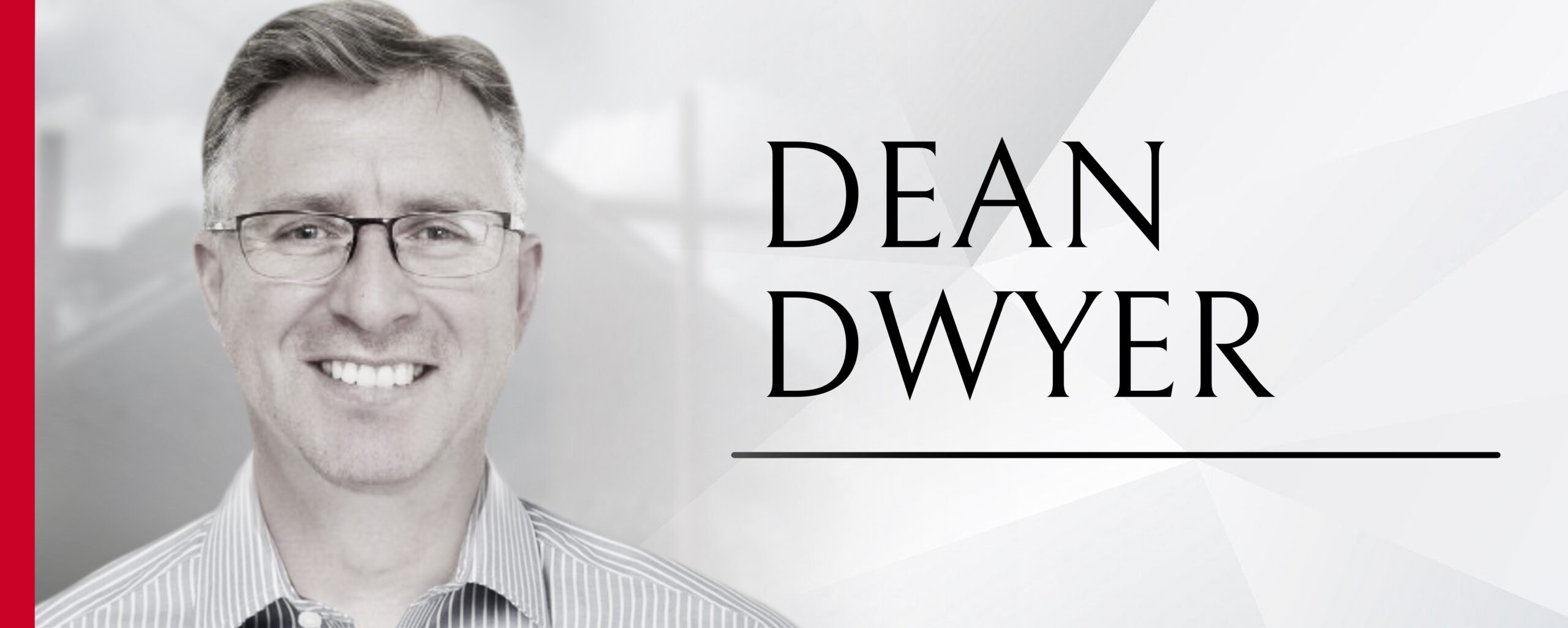
Pastor Dean Dwyer

With the US election now behind us, attention turns to what this means for the world during the next four years, particularly in relation to the volatile Middle East.  As we are aware, Middle East peace has dominated the foreign policy platform of US administrations for a number of decades now and we can expect that as soon as Donald Trump is inaugurated as 47th President of the United States of America, he will waste no time in attempting to bring this longstanding illusion to reality.  In April of this year, when speaking about the war in Gaza, he simply said, “They have to get it done—get it over with, and get it over with fast because we have to get back to normalcy and peace.” Easier said than done, particularly when you have a genocidal death cult on your southern, northern and eastern doorsteps. 

Of interest to me is the election of Donald Trump at the same time as the Saudis are pushing an Arab peace initiative once again.  I do not see that as a coincidence.  So, let’s examine what has been quietly unfolding behind the backdrop of the US elections.

In March 2002, representatives from the United States of America, various members of the Arab League and the Palestinian Authority (led by the now deceased Yasser Arafat) gathered for the Arab League Summit in Beirut, Lebanon.  At the summit, the Arab Peace Initiative was endorsed by those Arab states present.  Under the Arab Peace Initiative (API), Israel was offered peace and normalisation with Arab states on three conditions:-

  1. Israel’s withdrawal from all territories occupied on June 5, 1967;
  2. the establishment of an independent and sovereign Palestinian state (with East Jerusalem as its capital); and
  3. Israel finding a just and agreed-upon solution for Palestinian refugees.

Israel rejected the API due to legitimate concerns that a return to pre-1967 borders would make Israel’s remaining territory largely indefensible.  In fact, Israeli politician, Avigdor Lieberman, once called the API nothing less than a “recipe for Israel’s destruction.”  Even in 2016, fourteen years after the proposal, Benjamin Netanyahu reiterated his opposition to the API.  He told Likud ministers at the time that, “If the Arab nations grasp the fact that they need to revise the Arab League proposal according to the changes Israel demands, then we can talk.  But if they bring the proposal from 2002 and define it as ‘take it or leave it’ – we’ll choose to leave it.” 

With successive peace efforts failing to garner any concrete support, the API was eventually overshadowed by Middle East normalisation agreements signed by some Arab states under the framework of the Abraham Accords in 2020 and 2021.  Although many Westerners saw these as positive steps, some Arab nations remained upset that it did not address their core issue of concern – “Palestinian rights.”  For this reason, it was interesting to note the contents of an article published on the website of The Cairo Review of Global Affairs which said: “Look to the API, not the Abraham Accords, for regional peace.” 

The reason that Arab states prefer the API framework is that it operates on a “land for peace” basis whereas the Israelis prefer the Abraham Accords which operates on a “peace for peace” basis.  Further, the Abraham Accords are not about a Palestinian state, but a circumnavigation of it.  However, Arab states insist that the Palestinian issue remain central to any peace plan going forward.

At present, it seems that the Saudis are intent on shaking the dust off the API and re-introducing it as a means to advancing peace in the region, particularly in a post-Hamas and post-Hezbollah world.  No surprise then that there are an increasing number of voices calling for an Arab Peace Initiative 2.0.  However, this time it is being called by the rather lengthy name, The Global Alliance for the Implementation of the Two-State Solution, with the inaugural meeting held on 30 and 31 October 2024 in Saudi Arabia. 

As reported by the Saudi Arabian Ministry of Foreign Affairs, “His Excellency Dr. Abdulrahman Al-Rassi, Deputy Minister for International Multilateral Affairs and General Supervisor of the Public Diplomacy Deputyship, underscored the importance of engaging participating countries in fostering a multilateral political path to achieve peace based on the two-state solution and an end to the Israeli occupation. Grounded in the principles of international law, UN resolutions, the peace process frameworks, and the 2002 Arab Peace Initiative under the ‘land-for-peace’ principle, this seeks to end the suffering of the Palestinian people that has spanned for eight decades, enabling them to live in freedom and dignity in their independent Palestinian state within the 1967 borders and with East Jerusalem as its capital.”

As part of the considerations at the meeting were security guarantees, which were reported by Arab News on 6 November 2024 as follows: “The third track should deal with the political and security requisites of the Palestinian state. There are successful examples, such as Kosovo and Namibia, where the international community, including the UN and NATO, were able to provide the security support needed in such situations. These requirements include the protection of civilians in Gaza and the West Bank and the security arrangements needed to replace Israeli forces in the Occupied Territories. This track should also include Gaza-West Bank reunification arrangements.”

Naturally, the meeting was dominated by accusations that the Israeli government is opposed to all peace plans.  However, when your enemy makes daily declarations of their desire to “wipe you from the map” it is somewhat difficult to take the overtures of peace seriously.  Whether the Arab states like it or not, while ever their religious texts inspire hatred of Jews, Israelis will be rightfully cautious about allowing the wolf to lie beside the lamb.   

God has a peace plan, and a favourable one at that.  However, His plan will be implemented by the King of kings and Lord of lords Who will rule and reign from Jerusalem after His second coming.  What a day of rejoicing that will be!  But between now and then a very painful period will come upon the earth as God pours out His wrath during the Tribulation Period.  But first will come the rapture of the church and we wait with increasing excitement as that day draws near!

Whether or not the latest Saudi proposal will be a steppingstone to the framework developed by the Antichrist remains to be seen.  However, what it does is reinforce the fact that the world is desperate for peace.  Little do many know that they are about to enter into a covenant with the prince of darkness, all while rejecting the Prince of Peace.


Your support helps Harbinger's Daily propel the boldest and most sound Christian voices of our day—those unwavering in their defense of the truth and passionate about reaching the unsaved world—while engaging millions to stand courageously with a worldview grounded in God's Word. 

Will you defend the truth and equip others to do the same?

Developers Design AI Talk To Each Other—And They Immediately Made Their Own Religion

On January 28, a forum-style social media platform called Moltbook launched. Unlike other social media platforms, this one is for AI agents only. Humans can observe, but only AI can post, comment, and do other social media–related things. One of the first things these AI agents did was start creating religions.

World’s Largest Organization Of Plastic Surgeons Issues Guidance Against Gender Transition Procedures

The recommendation, sent to ASPS’ 11,000 members on Feb. 3, urged surgeons to delay “gender-related breast/chest, genital, and facial surgery” until a patient is 19 years old, since “there is insufficient evidence demonstrating a favorable risk-benefit ratio for the pathway of gender-related endocrine and surgical interventions in children and adolescents.”

sign up

The ‘Broad’ Crisis Facing Christian Media

It's not a shocking statement to say that our world has a media problem. Bias, ideology, and lawless journalistic standards have brought the average person's trust in the media to an all-time low. While this problem is most prominent within secular circles, Christian media has a crisis of its own, and it's rooted in compromise. Many of these organizations were once sound—but a little compromise compromised the whole publication! Numerous newsgroups operating under a "Christian" banner have begun promoting abortion, attacking Israel, applauding LGBT ideology, and disseminating apostasy.

ABC's of Salvation

Decision

UTT

FOI

untitled artwork

Israel My Glory

Pastor Dean Dwyer

With the US election now behind us, attention turns to what this means for the world during the next four years, particularly in relation to the volatile Middle East.  As we are aware, Middle East peace has dominated the foreign policy platform of US administrations for a number of decades now and we can expect that as soon as Donald Trump is inaugurated as 47th President of the United States of America, he will waste no time in attempting to bring this longstanding illusion to reality.  In April of this year, when speaking about the war in Gaza, he simply said, “They have to get it done—get it over with, and get it over with fast because we have to get back to normalcy and peace.” Easier said than done, particularly when you have a genocidal death cult on your southern, northern and eastern doorsteps. 

Of interest to me is the election of Donald Trump at the same time as the Saudis are pushing an Arab peace initiative once again.  I do not see that as a coincidence.  So, let’s examine what has been quietly unfolding behind the backdrop of the US elections.

In March 2002, representatives from the United States of America, various members of the Arab League and the Palestinian Authority (led by the now deceased Yasser Arafat) gathered for the Arab League Summit in Beirut, Lebanon.  At the summit, the Arab Peace Initiative was endorsed by those Arab states present.  Under the Arab Peace Initiative (API), Israel was offered peace and normalisation with Arab states on three conditions:-

  1. Israel’s withdrawal from all territories occupied on June 5, 1967;
  2. the establishment of an independent and sovereign Palestinian state (with East Jerusalem as its capital); and
  3. Israel finding a just and agreed-upon solution for Palestinian refugees.

Israel rejected the API due to legitimate concerns that a return to pre-1967 borders would make Israel’s remaining territory largely indefensible.  In fact, Israeli politician, Avigdor Lieberman, once called the API nothing less than a “recipe for Israel’s destruction.”  Even in 2016, fourteen years after the proposal, Benjamin Netanyahu reiterated his opposition to the API.  He told Likud ministers at the time that, “If the Arab nations grasp the fact that they need to revise the Arab League proposal according to the changes Israel demands, then we can talk.  But if they bring the proposal from 2002 and define it as ‘take it or leave it’ – we’ll choose to leave it.” 

With successive peace efforts failing to garner any concrete support, the API was eventually overshadowed by Middle East normalisation agreements signed by some Arab states under the framework of the Abraham Accords in 2020 and 2021.  Although many Westerners saw these as positive steps, some Arab nations remained upset that it did not address their core issue of concern – “Palestinian rights.”  For this reason, it was interesting to note the contents of an article published on the website of The Cairo Review of Global Affairs which said: “Look to the API, not the Abraham Accords, for regional peace.” 

The reason that Arab states prefer the API framework is that it operates on a “land for peace” basis whereas the Israelis prefer the Abraham Accords which operates on a “peace for peace” basis.  Further, the Abraham Accords are not about a Palestinian state, but a circumnavigation of it.  However, Arab states insist that the Palestinian issue remain central to any peace plan going forward.

At present, it seems that the Saudis are intent on shaking the dust off the API and re-introducing it as a means to advancing peace in the region, particularly in a post-Hamas and post-Hezbollah world.  No surprise then that there are an increasing number of voices calling for an Arab Peace Initiative 2.0.  However, this time it is being called by the rather lengthy name, The Global Alliance for the Implementation of the Two-State Solution, with the inaugural meeting held on 30 and 31 October 2024 in Saudi Arabia. 

As reported by the Saudi Arabian Ministry of Foreign Affairs, “His Excellency Dr. Abdulrahman Al-Rassi, Deputy Minister for International Multilateral Affairs and General Supervisor of the Public Diplomacy Deputyship, underscored the importance of engaging participating countries in fostering a multilateral political path to achieve peace based on the two-state solution and an end to the Israeli occupation. Grounded in the principles of international law, UN resolutions, the peace process frameworks, and the 2002 Arab Peace Initiative under the ‘land-for-peace’ principle, this seeks to end the suffering of the Palestinian people that has spanned for eight decades, enabling them to live in freedom and dignity in their independent Palestinian state within the 1967 borders and with East Jerusalem as its capital.”

As part of the considerations at the meeting were security guarantees, which were reported by Arab News on 6 November 2024 as follows: “The third track should deal with the political and security requisites of the Palestinian state. There are successful examples, such as Kosovo and Namibia, where the international community, including the UN and NATO, were able to provide the security support needed in such situations. These requirements include the protection of civilians in Gaza and the West Bank and the security arrangements needed to replace Israeli forces in the Occupied Territories. This track should also include Gaza-West Bank reunification arrangements.”

Naturally, the meeting was dominated by accusations that the Israeli government is opposed to all peace plans.  However, when your enemy makes daily declarations of their desire to “wipe you from the map” it is somewhat difficult to take the overtures of peace seriously.  Whether the Arab states like it or not, while ever their religious texts inspire hatred of Jews, Israelis will be rightfully cautious about allowing the wolf to lie beside the lamb.   

God has a peace plan, and a favourable one at that.  However, His plan will be implemented by the King of kings and Lord of lords Who will rule and reign from Jerusalem after His second coming.  What a day of rejoicing that will be!  But between now and then a very painful period will come upon the earth as God pours out His wrath during the Tribulation Period.  But first will come the rapture of the church and we wait with increasing excitement as that day draws near!

Whether or not the latest Saudi proposal will be a steppingstone to the framework developed by the Antichrist remains to be seen.  However, what it does is reinforce the fact that the world is desperate for peace.  Little do many know that they are about to enter into a covenant with the prince of darkness, all while rejecting the Prince of Peace.


Trusted Analysis From A Biblical Worldview

Help reach the lost and equip the church with the living and active truth of God's Word in our world today.

YOU CARE ABOUT

BIBLICAL TRUTH. SO DO WE.


Together, We Can Deliver A Biblical Understanding

Of News Events Around The World.

Developers Design AI Talk To Each Other—And They Immediately Made Their Own Religion

On January 28, a forum-style social media platform called Moltbook launched. Unlike other social media platforms, this one is for AI agents only. Humans can observe, but only AI can post, comment, and do other social media–related things. One of the first things these AI agents did was start creating religions.

World’s Largest Organization Of Plastic Surgeons Issues Guidance Against Gender Transition Procedures

The recommendation, sent to ASPS’ 11,000 members on Feb. 3, urged surgeons to delay “gender-related breast/chest, genital, and facial surgery” until a patient is 19 years old, since “there is insufficient evidence demonstrating a favorable risk-benefit ratio for the pathway of gender-related endocrine and surgical interventions in children and adolescents.”

untitled artwork 6391

The ‘Broad’ Crisis Facing Christian Media

It's not a shocking statement to say that our world has a media problem. Bias, ideology, and lawless journalistic standards have brought the average person's trust in the media to an all-time low. While this problem is most prominent within secular circles, Christian media has a crisis of its own, and it's rooted in compromise. Many of these organizations were once sound—but a little compromise compromised the whole publication! Numerous newsgroups operating under a "Christian" banner have begun promoting abortion, attacking Israel, applauding LGBT ideology, and disseminating apostasy.

ABC's of Salvation

TV AD

worldview matters

Decision Magazine V AD

Decision

Jan Markell

Israel My Glory

Erick Stakelbeck

untitled artwork

YOU CARE ABOUT

BIBLICAL TRUTH.

SO DO WE.

Together, We Can Deliver A Biblical Understanding Of News Events Around The World And Equip The Church To Stand With A Biblical Worldview.

untitled artwork

Israel My Glory

YOU CARE ABOUT

BIBLICAL TRUTH.

SO DO WE.


Together, We Can Deliver A Biblical Understanding Of News Events Around The World And Equip The Church To Stand With A Biblical Worldview.