May 15, 2026

May, 15, 2026
May 15, 2026

give

untitled artwork

untitled artwork

World news biblically understood

TRENDING:

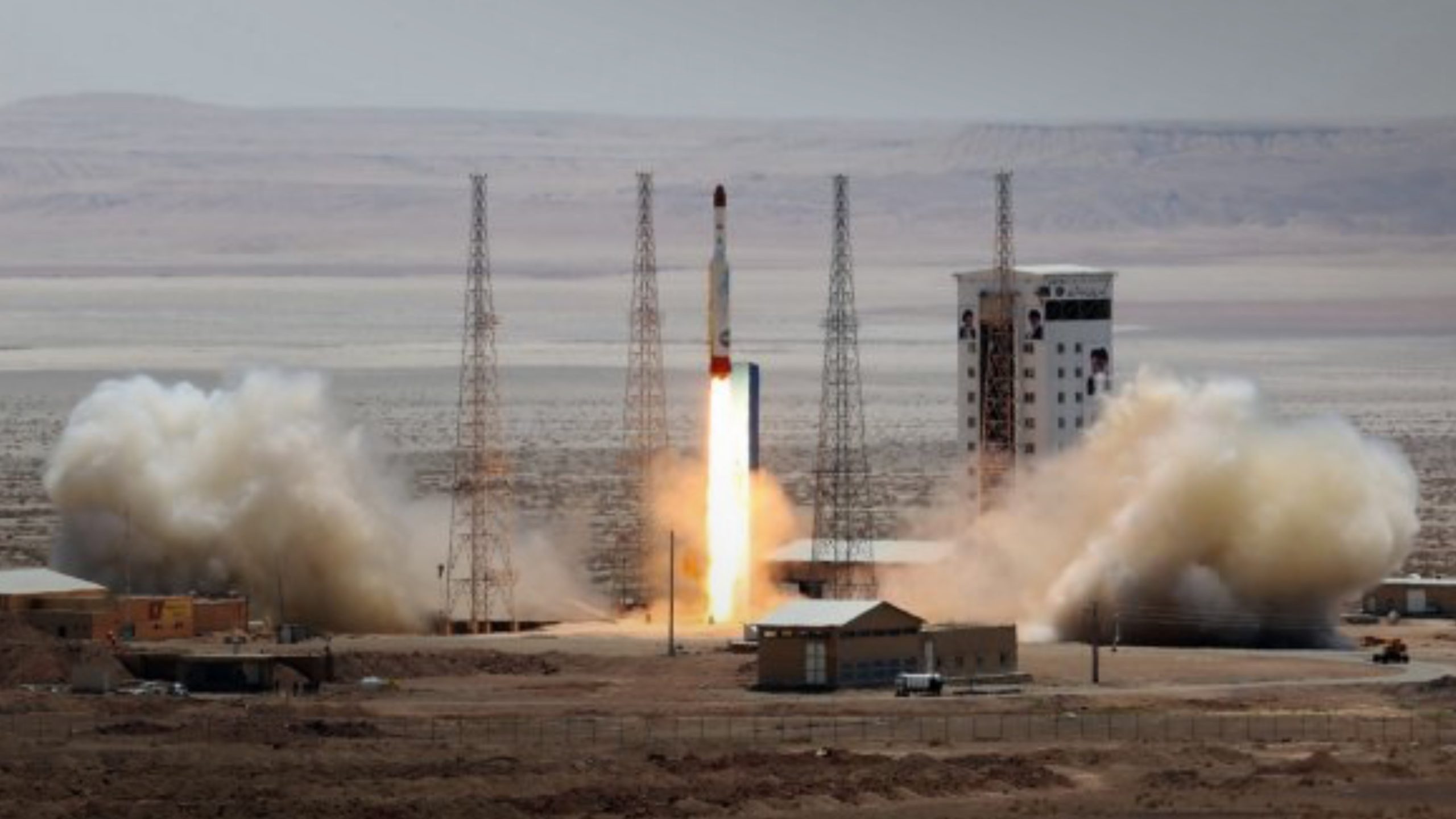
Iran Fails to Place Satellite into Orbit, Fourth Failure in a Row

Iran succeeded in launching a new satellite into outer space, but failed to place the satellite into orbit on Sunday, according to Iranian reports. All stages of the launch took place correctly, but the satellite did not reach the speed needed to inject the satellite into the desired orbit, according to the Iranian Fars news.

A government minister announced earlier thatย Iranย would be launching a new satellite on Sunday after the planned launch on Saturday was delayed for unknown reasons.

“The Zafar satellite will be placed in orbit today from Semnan at a speed of 7,400 kilometers,” Iranian Minister of Information and Communications Technology Mohammad Javad Azari-Jahromi said, according to the official IRIB news agency.

The first mission of the Zafar satellite will be to transmit an image of former IRGC Quds Force commander Qasem Soleimani, who was assassinated by the US in January, according to the Iranian Mehrs news agency.

The spokesperson of the Iranian Defense Ministry’s Space Department stated that the satellite will be launched “at the first opportunity when everything is prepared.” The spokesperson added that the launch process is complicated because of the need to test new technologies, according to the Iranian Tasnim news agency.

Barai stated that the satellite was scheduled to have launched last week, had passed all tests and there were “no issues for putting it in orbit,” but did not clarify why the launch was delayed.

On Saturday, Sadjad Bonabi, an official from Iran’s Telecommunications Infrastructures Company, announced that aย cyberattackย temporarily disrupted internet services in the country, but added that Iran’s DEZHFA firewall had repelled the attack. Internet watchdog Netblocks reported a disruption in internet service in Iran on Saturday as well after authorities reported activated that “Digital Fortress” isolation mechanism.

According to Bonabi, the disruption was caused by a DDoS attack in which attackers attempt to make a network unavailable by sending too many requests to the IP of a country, causing an overload which leads to disruptions or crashes the network. The attack originated in East Asia and North America but did not seem to be the work of another government, according to Bonabi.

Nariman Gharib, a UK-based journalist and activist, stated that the botnet attack was “massive,” according to Radio Farda, adding that the attack happened on the day that the Zafar satellite was supposed to be launched.


Benjamin Netanyahu also responded to the announcement that Iran has again failed to place a satellite in orbit: “Iran failed to launch a satellite today. They also fail to deliver weapons to Syria and Lebanon because we operate there all the time, including these days.”


In December, Iran was targeted by three cyberattacks in the span of week. At the time, Mohammad-Javad Azari Jahromi, Tehranโ€™s minister of communications and information technology, claimed the Islamic Republicโ€™s national cybersecurity wall โ€“ known as Digital Fortress, or Dezhfa โ€“ has helped thwart 33 million cyberattacks against the country in the past year, according to Fars.

Over 100 reporters and a large group of students were waiting at the Imam Khomeini Spaceport in Iran on Friday, according to a tweet by Barari.

Last week, Iranian officials reported that the Islamic Republic was planning on launched a new scientific observation satellite in the “coming days.”

Development of the “Zafar” (Victory) satellite began three years ago, said Morteza Barari, head of the country’s national space agency, on Saturday. The 113-kilogram satellite will be launched by a Simorgh rocket.

Iranian Minister of Information and Communications Technology Mohammad Javad Azari Jahromi had said that the satellite would be launched before February 11, the anniversary of the Islamic Revolution, according to the Iranian Tasnim news agency.

Two versions of the satellite have been produced, in case the first launch fails. Information about the satellite will be “clearly publicized,” according to Jahromi. Zafar will be used for telecommunications, imagery and “picking up space signals.” The lifespan of the satellite is one year and six months.

The primary mission of the satellite will be collecting imagery, according to Barari. Iran’s satellite program is for the “peaceful use of outer space. All our activities in the domain of outer space are transparent,” said Barari, according to AFP.

The spokesman for the Iranian Defense Ministryโ€™s Space Group announced on Monday that Iran is planning on revealing two new domestically made satellite carriers in “the near future,” according to Tasnim. The statements came shortly before Iran confirmed that it would be launching a satellite soon.

The Islamic Republic is attempting to build solid-fuel satellite carriers and will reveal the “Sarir” and “Soroush” soon, according to the spokesman.

The Iranian Space Agency (ISA) hoped to construct five more satellites by March 2021.

Iran launched its first satellite “Omid” (Hope) into orbit in February 2009, according to the Iranian Fars news agency. A second satellite, “Rasad” (Observation), was launched in June 2011. A third, “Navid” (Promise), launched in February 2012.

Development of the “Payam 2” telecommunications satellite will begin by late May, according to Barari. Building the satellite will take up to four years. In January of last year, a satellite named Payam was launched by Iran, but failed to reach the “necessary speed” in the third stage of its launch due to technical problems, according to Fars.

Barari told Fars on Saturday that Iran is among the top five countries with a space station and among the top nine countries in the field of designing and making satellites. Iran will launch four more satellites into orbit between March 2020 and March 2021, according to Barari. “These will include two satellites for measurement and imaging and two others for IT purposes,” said Barari.

Iran is also planning on sending astronauts to space with an “advanced country,” said Barari to Fars.”The talks are underway, and we hope to reach an agreement with one of the countries to commence the project,” said Barari, who declined to name the country with which the ISA is speaking.

Iran’s space aspirations suffered from three failed satellite launches in 2019: one in January, another in February and a third in August. The United States has warned Iran against rocket launches, fearing the technology used to put satellites into orbit could help it develop the ballistic missile capability needed to launch nuclear warheads, though Tehran denies its activity is a cover for such development.

CLICK HERE FOR
SOURCE

Give

Give

The UFO Phenomenon Is Not Proof Of Extraterrestrials, But Evidence Of A Larger Spiritual Deception

One important observation made by both secular researchers and Christians is the repeated connection between UFO encounters and occult involvement. Many researchers have noted that those deeply involved in spiritism, channeling, occult practices, and paranormal experimentation are those who frequently report UFO-related experiences. Academic studies examining UFO belief systems have also found overlap with mystical and paranormal beliefs.

Two Options Are Laid Before Every Person… And The Stakes Are Eternal

In some situations, the choices seem unlimited. Scripture simplifies our choices down to an either/or, A or B, black or white option: either accept Christ as Savior and Lord OR reject Godโ€™s gracious offer of forgiveness, salvation, and eternal life. The choice is yours, but the ramifications are everlasting.

sign up

We Really Are In A Raging War: University Professor Says He Is Waiting For Me To Die

The evolutionary worldview is a religion, one thatโ€™s practiced by those who attack Christianity. They have a nontheistic religion; in fact, evolution fits one of the Merriam-Webster dictionary definitions ofย religion: โ€œa cause, principle, or system of beliefs held to with ardor and faith.โ€ The dictionary definition of religion certainly describes the worldview of evolutionary naturalism. The beliefs of evolutionism purport to explain the entire worldโ€™s existence by means of evolutionary naturalism, and thus, it is an all-encompassing faithโ€”a religious worldview.

ABC's of Salvation

Decision

UTT

FOI

untitled artwork

Israel My Glory

Iran succeeded in launching a new satellite into outer space, but failed to place the satellite into orbit on Sunday, according to Iranian reports. All stages of the launch took place correctly, but the satellite did not reach the speed needed to inject the satellite into the desired orbit, according to the Iranian Fars news.

A government minister announced earlier thatย Iranย would be launching a new satellite on Sunday after the planned launch on Saturday was delayed for unknown reasons.

“The Zafar satellite will be placed in orbit today from Semnan at a speed of 7,400 kilometers,” Iranian Minister of Information and Communications Technology Mohammad Javad Azari-Jahromi said, according to the official IRIB news agency.

The first mission of the Zafar satellite will be to transmit an image of former IRGC Quds Force commander Qasem Soleimani, who was assassinated by the US in January, according to the Iranian Mehrs news agency.

The spokesperson of the Iranian Defense Ministry’s Space Department stated that the satellite will be launched “at the first opportunity when everything is prepared.” The spokesperson added that the launch process is complicated because of the need to test new technologies, according to the Iranian Tasnim news agency.

Barai stated that the satellite was scheduled to have launched last week, had passed all tests and there were “no issues for putting it in orbit,” but did not clarify why the launch was delayed.

On Saturday, Sadjad Bonabi, an official from Iran’s Telecommunications Infrastructures Company, announced that aย cyberattackย temporarily disrupted internet services in the country, but added that Iran’s DEZHFA firewall had repelled the attack. Internet watchdog Netblocks reported a disruption in internet service in Iran on Saturday as well after authorities reported activated that “Digital Fortress” isolation mechanism.

According to Bonabi, the disruption was caused by a DDoS attack in which attackers attempt to make a network unavailable by sending too many requests to the IP of a country, causing an overload which leads to disruptions or crashes the network. The attack originated in East Asia and North America but did not seem to be the work of another government, according to Bonabi.

Nariman Gharib, a UK-based journalist and activist, stated that the botnet attack was “massive,” according to Radio Farda, adding that the attack happened on the day that the Zafar satellite was supposed to be launched.


Benjamin Netanyahu also responded to the announcement that Iran has again failed to place a satellite in orbit: “Iran failed to launch a satellite today. They also fail to deliver weapons to Syria and Lebanon because we operate there all the time, including these days.”


In December, Iran was targeted by three cyberattacks in the span of week. At the time, Mohammad-Javad Azari Jahromi, Tehranโ€™s minister of communications and information technology, claimed the Islamic Republicโ€™s national cybersecurity wall โ€“ known as Digital Fortress, or Dezhfa โ€“ has helped thwart 33 million cyberattacks against the country in the past year, according to Fars.

Over 100 reporters and a large group of students were waiting at the Imam Khomeini Spaceport in Iran on Friday, according to a tweet by Barari.

Last week, Iranian officials reported that the Islamic Republic was planning on launched a new scientific observation satellite in the “coming days.”

Development of the “Zafar” (Victory) satellite began three years ago, said Morteza Barari, head of the country’s national space agency, on Saturday. The 113-kilogram satellite will be launched by a Simorgh rocket.

Iranian Minister of Information and Communications Technology Mohammad Javad Azari Jahromi had said that the satellite would be launched before February 11, the anniversary of the Islamic Revolution, according to the Iranian Tasnim news agency.

Two versions of the satellite have been produced, in case the first launch fails. Information about the satellite will be “clearly publicized,” according to Jahromi. Zafar will be used for telecommunications, imagery and “picking up space signals.” The lifespan of the satellite is one year and six months.

The primary mission of the satellite will be collecting imagery, according to Barari. Iran’s satellite program is for the “peaceful use of outer space. All our activities in the domain of outer space are transparent,” said Barari, according to AFP.

The spokesman for the Iranian Defense Ministryโ€™s Space Group announced on Monday that Iran is planning on revealing two new domestically made satellite carriers in “the near future,” according to Tasnim. The statements came shortly before Iran confirmed that it would be launching a satellite soon.

The Islamic Republic is attempting to build solid-fuel satellite carriers and will reveal the “Sarir” and “Soroush” soon, according to the spokesman.

The Iranian Space Agency (ISA) hoped to construct five more satellites by March 2021.

Iran launched its first satellite “Omid” (Hope) into orbit in February 2009, according to the Iranian Fars news agency. A second satellite, “Rasad” (Observation), was launched in June 2011. A third, “Navid” (Promise), launched in February 2012.

Development of the “Payam 2” telecommunications satellite will begin by late May, according to Barari. Building the satellite will take up to four years. In January of last year, a satellite named Payam was launched by Iran, but failed to reach the “necessary speed” in the third stage of its launch due to technical problems, according to Fars.

Barari told Fars on Saturday that Iran is among the top five countries with a space station and among the top nine countries in the field of designing and making satellites. Iran will launch four more satellites into orbit between March 2020 and March 2021, according to Barari. “These will include two satellites for measurement and imaging and two others for IT purposes,” said Barari.

Iran is also planning on sending astronauts to space with an “advanced country,” said Barari to Fars.”The talks are underway, and we hope to reach an agreement with one of the countries to commence the project,” said Barari, who declined to name the country with which the ISA is speaking.

Iran’s space aspirations suffered from three failed satellite launches in 2019: one in January, another in February and a third in August. The United States has warned Iran against rocket launches, fearing the technology used to put satellites into orbit could help it develop the ballistic missile capability needed to launch nuclear warheads, though Tehran denies its activity is a cover for such development.

CLICK HERE FOR
SOURCE

Trusted Analysis From A Biblical Worldview

Help reach the lost and equip the church with the living and active truth of God's Word in our world today.

YOU CARE ABOUT

BIBLICAL TRUTH. SO DO WE.

ย 

Together, We Can Deliver A Biblical Understanding

Of News Events Around The World.

The UFO Phenomenon Is Not Proof Of Extraterrestrials, But Evidence Of A Larger Spiritual Deception

One important observation made by both secular researchers and Christians is the repeated connection between UFO encounters and occult involvement. Many researchers have noted that those deeply involved in spiritism, channeling, occult practices, and paranormal experimentation are those who frequently report UFO-related experiences. Academic studies examining UFO belief systems have also found overlap with mystical and paranormal beliefs.

Two Options Are Laid Before Every Person… And The Stakes Are Eternal

In some situations, the choices seem unlimited. Scripture simplifies our choices down to an either/or, A or B, black or white option: either accept Christ as Savior and Lord OR reject Godโ€™s gracious offer of forgiveness, salvation, and eternal life. The choice is yours, but the ramifications are everlasting.

untitled artwork 6391

We Really Are In A Raging War: University Professor Says He Is Waiting For Me To Die

The evolutionary worldview is a religion, one thatโ€™s practiced by those who attack Christianity. They have a nontheistic religion; in fact, evolution fits one of the Merriam-Webster dictionary definitions ofย religion: โ€œa cause, principle, or system of beliefs held to with ardor and faith.โ€ The dictionary definition of religion certainly describes the worldview of evolutionary naturalism. The beliefs of evolutionism purport to explain the entire worldโ€™s existence by means of evolutionary naturalism, and thus, it is an all-encompassing faithโ€”a religious worldview.

ABC's of Salvation

TV AD

worldview matters

Decision Magazine V AD

Decision

Jan Markell

Israel My Glory

Erick Stakelbeck

untitled artwork

YOU CARE ABOUT

BIBLICAL TRUTH.

SO DO WE.

Together, We Can Deliver A Biblical Understanding Of News Events Around The World And Equip The Church To Stand With A Biblical Worldview.

untitled artwork

Israel My Glory

YOU CARE ABOUT

BIBLICAL TRUTH.

SO DO WE.

ย 

Together, We Can Deliver A Biblical Understanding Of News Events Around The World And Equip The Church To Stand With A Biblical Worldview.