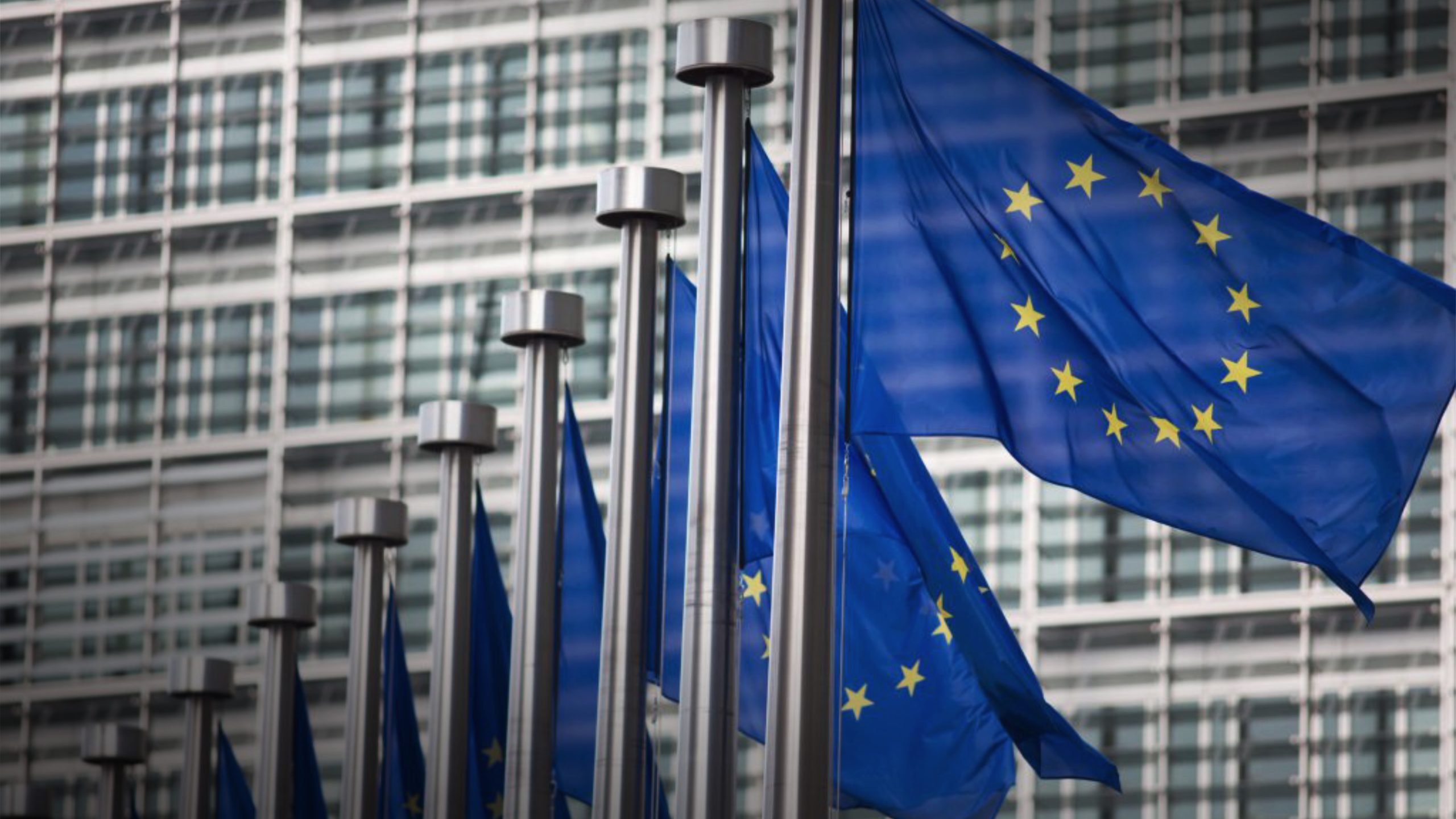
Hungary and Austria, the sole EU states that opposed sharp criticism of Israel by High Representative for Foreign Affairs Josep Borrell this week, warned against having a double standard against Israel on Wednesday.
Follow Harbingers Daily on Instagram, Twitter and Facebook
The EU sets its foreign policy by consensus, but Borrell has repeatedly disregarded a minority of member states’ opposition in his statements threatening or condemning Israel over the possibility that it may annex settlements in the coming months.
A Hungarian diplomatic source questioned the legality of statements that do not reflect a consensus in the EU, though EU officials have said the high representative may express his own position.
On Monday night, Borrell released the third such statement criticizing Israel in his own name. With the support of 25 out of 27 EU states, Borrell said: “We strongly urge Israel to refrain from any unilateral decision that would lead to the annexation of any occupied Palestinian territory and would be, as such, contrary to International Law.”
Austrian Foreign Minister Alexander Schallenberg said his country rejects “prejudice” against Israel and called to hold a dialogue with the new government, sworn in on Sunday, Austrian news site Kurier reported.
Austria and Hungary both called to invite Foreign Minister Gabi Ashkenazi to the EU Foreign Affairs Council’s meeting on Friday.
A Hungarian diplomatic source on Wednesday said no one knows if Israel will actually apply its laws to parts of the West Bank, which is why his country called to exercise caution in its messages toward Israel and focus on back-channel diplomacy rather than broadcasting public statements.
Similarly, Israel’s Foreign Ministry criticized Borrell’s “megaphone diplomacy” this week.
“We called for a gradual approach of caution, not rushing forward and certainly not alienating Israel,” the Hungarian source said. “We believe Israel is a really important strategic partner in the Mediterranean region.”
The diplomatic source warned that these are not the messages the EU should send if it wants to be taken seriously by Israel and the US as a player in the Middle East peace process.
Genesis 12:3 KJV – “And I will bless them that bless thee [Israel], and curse him that curseth thee: and in thee shall all families of the earth be blessed.”
The Trump administration’s peace plan allows for Israel to apply sovereignty to 30% of the West Bank, including all settlements and the Jordan Valley. The rest of the area would be designated for a Palestinian state that would be recognized and receive massive economic aid if it meets conditions such as demilitarization, stopping incitement and granting its citizens civil rights.
Hungary and Austria opposed Borrell’s previous statements against Israel, including one that said annexation “would not go unchallenged,” which Israel’s Foreign Ministry described as a threat. But they were joined by other member states the previous two times.
Borrell’s repeated statements and other member states’ push for him to delineate potential consequences of annexation for Israel raise questions as to whether the two smaller EU states’ vetoes will be respected when action is on the table.
Hungary, one of Israel’s most reliable defenders in the EU, is one of the more Euro-skeptic member states. It faced criticism from its fellow EU member states after its prime minister, Viktor Orban, took on broad emergency powers during the coronavirus crisis.
On Wednesday, the five European members of the UN Security Council – Germany, Estonia, Belgium, France and the United Kingdom – all expressed concern about Israeli annexation steps.
French Ambassador to the UN Nicolas de Rivière warned Israel that any such a move “would not be without consequences to the EU relationship with Israel.”
Annexation “would be detrimental to Israel’s role in the world, to its integration in its regional environment, as well as to Israel’s relationships with its partners,” he said.
In Paris, Meyer Habib, the French lawmaker who represents expats in the Eastern Mediterranean, including Israel, accused France of leading “a kind of diplomatic crusade against Israel.”
French Foreign Minister Jean-Yves Le Drian told Habib he “went too far” and that France supports Israel’s right to security.
Belgian Ambassador to the UN Marc Pecsteen told the UNSC his country remained “deeply concerned” about the portions of the Likud and Blue and White parties coalition agreement that would allow Israeli to apply sovereignty to Israeli settlements as early as July 2020.
“We call on the international community to exert all efforts to prevent any such steps,” he said.
The European ambassadors referenced 2016 UNSC Resolution 2334 that condemned Israeli settlement activity, noting that it called on countries to distinguish between sovereign Israel at the pre-1967 lines and territory outside of those lines.
US Ambassador to the UN Kelly Craft called on Israelis and Palestinians to return to the negotiating table.
“If both sides are serious about their talking, it is time for both sides to prove it,” she said.
Israel has already agreed in principle to hold talks with the Palestinians on the basis of US President Donald Trump’s peace plan, while the Palestinians have rejected it.
In fact, Israeli Ambassador to the UN Danny Danon had issued a call for negotiations earlier in the day: “As I have said for the past five years at the UN: All the Palestinians have to do is sit down and meet with us for direct negotiations. Instead, they want to scare the international community into pressuring Israel. This is not the way forward.”
Craft told the UNSC their statements of “concern” would not resolve the Israeli-Palestinian conflict.
“This council cannot dictate the end to this conflict,” she said. “We can only encourage the parties to sit down together to determine how they wish to make progress.”

SOURCE