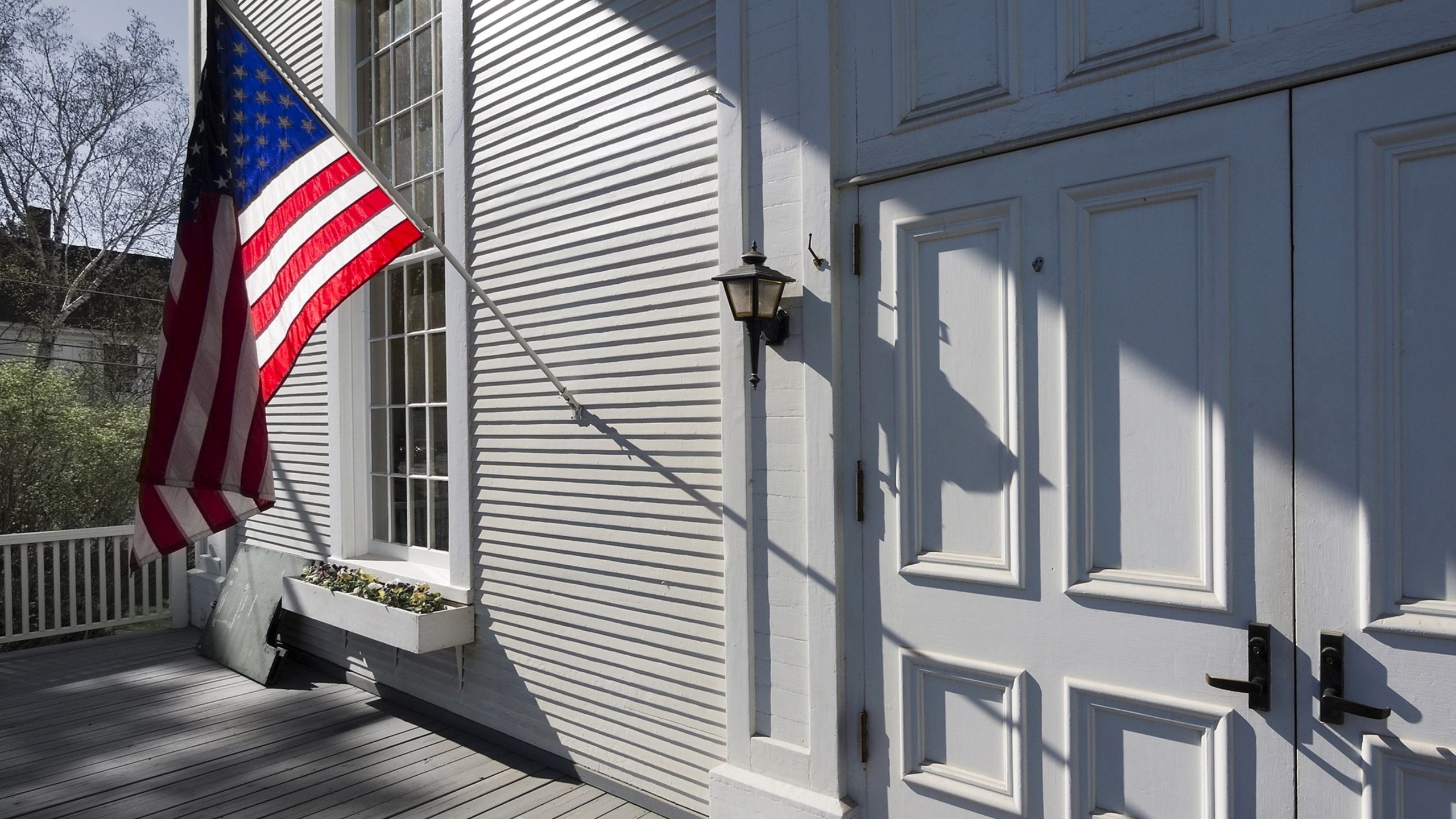
An evangelical church in Maine that was denied meeting space in a local public high school is finally having its case heard in federal district court.
According to court documents, attorneys for The Pines Church in Hermon, Maine, say the local school board questioned the church on its beliefs about marriage, sex education, abortion, birth control access for youth, and conversion therapy before denying its request for a lease.
A bench trial in the case—The Pines Church v. Hermon School Department—began Tuesday (Feb. 24) in the U.S. District Court for the District of Maine in Bangor, four years after the church sought to lease the school for its worship services.
Attorneys for the church allege that the school board violated the church’s civil rights under the First and 14th Amendments as well as the Maine Constitution’s rights of free speech, equal protection and right to assembly. The church is represented by the California-based Advocates for Faith & Freedom and the Conley & Wirick law firm.
“Access to a public facility was conditioned on theological agreement,” Advocates for Faith & Freedom said in a statement on its Facebook page. “‘Do your biblical beliefs align with the government’s’? That is a direct assault on the First Amendment and the free exercise of our faith.”
In court filings, the plaintiffs state that in 2020, “Pastor Matt [Gioia] uprooted his family from Colorado to establish TPC [The Pines Church] in central Maine. Pastor Matt chose the state of Maine to establish TPC, as the state ranks in the top ten for opioid addiction and overdoses, and there are few Christians in the state.
“Following its founding in 2021, TPC experienced rapid growth. The people of Maine were hungry for hope. In just shy of a year, the congregation outgrew its current meeting space at a local movie theater and needed a more accommodating facility.”
Gioia, who is also a plaintiff in the suit, said after a visit with the high school principal about using the school space for worship services seemed to go nowhere, he approached the district superintendent, who seemed friendly to the idea and even acknowledged that a consultation with the schools’ attorney indicated no legal barriers would prevent it.
But when Gioia made a formal presentation before a committee of the school board that approves public use that he believed would be a “formality,” he was met with unexpected resistance and pointed questions about the church’s beliefs. A few weeks later, the request for a six-month or one-year lease was rejected by the board.
“The Committee’s actions violate the Religious Land Use and Institutionalized Persons Act, Maine Public Accommodation Laws, as well as the Free Exercise Clause, Free Speech Clause, and Establishment Clause of the First Amendment to the United States Constitution,” the plaintiffs contend in court documents.
A decision by the federal district court judge could come a few days to several months following the four-day trial, a spokesperson for Advocates for Faith & Freedom told Decision.
“We know darkness cannot overcome light, but darkness will take any ground you give it,” Gioia said in a video posted to social media prior to the trial. “We have a moral responsibility to fight against the injustices of this world. So I want to invite you to pray for our church here in Maine [and] I want to invite you to pray for Advocates for Faith & Freedom.”