
It is nearly axiomatic in the American church to say that Jesus is not a Democrat or a Republican. Pastors say it from pulpits. Christians post it on social media. It serves as a kind of theological courtesy—a way of signaling that one’s faith transcends partisan affiliation. And it’s true that God transcends politics.
But somewhere along the way, a caution against political idolatry became a conviction that Jesus hovers above it all, equally at ease and equally uncomfortable with everyone; that all platforms are flawed enough to be equivalent, and that sincerity is sufficient to resolve whatever tension exists between your faith and your politics.
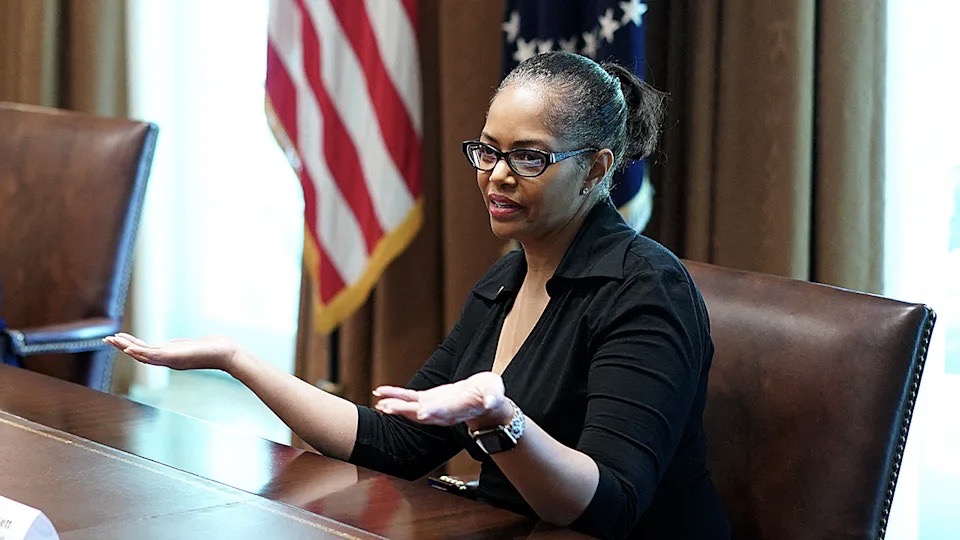
Michigan State Rep. Karen Whitsett, a lifelong Democrat from Detroit, now says that’s not true. On March 2, she announced she will not seek re-election and will never run for public office again. The reason, she said, has nothing to do with polling or political strategy.
“This is not a political calculation—it’s a spiritual decision,” Whitsett said.
She then went further, naming the Democratic Party itself as incompatible with her Christian faith—not a particular candidate, not a single vote, but the platform.
“For me, it is impossible to be a faithful follower of Jesus Christ while remaining a member of the Democratic Party as it exists today,” Whitsett said. “I cannot reconcile that platform with Scripture.”
The reflex when someone claims progressive political priorities are incompatible with the Christian faith is to shoot the messenger, but that’s more difficult to do in this case. She is not a conservative commentator, Fox News regular, or Jerry Falwell acolyte. She’s a black, female Democrat. By every demographic measure, she is precisely the kind of voter the Democratic Party has long claimed and counted on.
But now she says she can’t be a Christian and a Democrat, and she explained why.
“That conviction includes the issues I cannot reconcile with Scripture: abortion, the normalization of the gay lifestyle, and the push to redefine gender,” Whitsett said. “I have compromised my relationship with Jesus for too long, and I’m grateful God did not give up on me. He gave me time to repent, turn, and be fully devoted to Him.”
The reaction from her party was swift. Michigan Democratic Party Chair Curtis Hertel offered a response that began simply: “Good riddance.”
It is worth pausing there. A legislator who served her Detroit district for eight years announces she is leaving out of spiritual conviction, and her party chairman responds with contempt. That response fits a pattern. For every Harris voter who attended church weekly in 2024, there were about four Harris voters who attended less than once a year. The Democratic Party has been shedding its religious coalition for decades and showing little sign of mourning the loss. What is harder to explain is the portion of the church that looks at all of this and still insists the tension isn’t real.
The non-partisan pieties of the American church will survive this story. But the idea that both parties are morally equivalent—that choosing between them requires no serious theological judgment—has become increasingly difficult to sustain. Karen Whitsett spent years trying to reconcile a lifelong relationship with the Democratic Party with her commitment to Jesus and, in the end, concluded she could not.
It is also worth noting what Whitsett did not do. She did not leave the Democratic Party and rush to a MAGA rally. Recognizing that one party has made itself hostile to Scripture does not require treating the other as the embodiment of the kingdom of God.
The goal for Christians is to be on the side of truth—as God has defined it. Some lies that are easy to recognize, and once we do, we have an obligation to oppose them, not justify them, minimize them, or change the subject by pointing out that other people do bad things too.
For a long time, those pointing out the tension between progressive political priorities and the Bible have been rejected out of hand because they were straight, white, Christian men. But now it’s coming from a lifelong black Democratic woman state legislator who says she can’t be a Democrat if she’s serious about being a Christian. Like everyone, she’s fallible, and just because she said it doesn’t make it true. But she’s making a serious argument against her own interest, so the least we can do is deal with it on the merits.
If she’s wrong, prove it. But I suspect a lot of Christians won’t deal with her arguments honestly, not because they know she’s wrong, but because they fear she’s right.