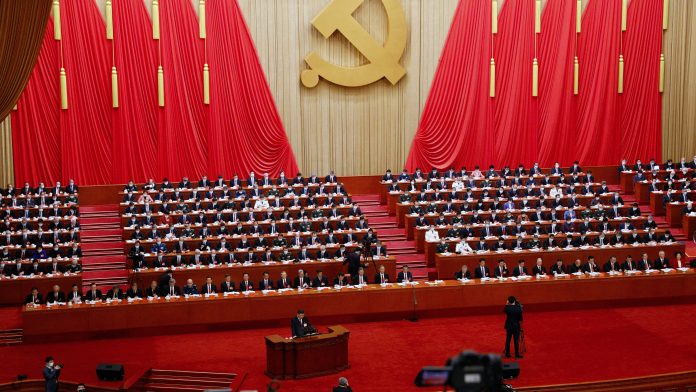
China’s National People’s Congress — a nearly 3,000-member legislative body that would be unwieldy if not for its near-unanimous voting record — is set to meet Thursday to kick off this year’s legislative session and unveil the country’s policy priorities for the next five years.
After a decade under President Xi Jinping’s rule, the event has become increasingly scripted, with no room for genuine debate or disagreement. In its current form, the Congress has become a tool of propaganda.
The event comes as preparations are underway for another major spectacle — an anticipated summit between Xi and U.S. President Donald Trump, currently scheduled for March 31 to April 2 in Beijing.
Despite Chinese criticism of a recent U.S. strike in Iran, reports indicate the summit is still going ahead, with high-level American and Chinese officials planning to meet in Paris next week to prepare for what is expected to be an economy-heavy meeting between the two geopolitical heavyweights.
While Beijing is eager to discuss trade relations and negotiate international economic deals, it has historically worked assiduously to avoid addressing religious freedom within its borders. Chinese officials regularly bristle at mention of the topic, insisting that their persecution of religious groups is an internal matter of national security, not one involving international human rights.
In the weeks leading up to the 2025 meeting, Xi’s administration detained dozens of leaders associated with Zion Church, the largest house church in the country. The purge included its lead pastor, Ezra Jin. Charges were confirmed in November, ensuring that — even if eventually cleared of the bogus charges against him — Jin will remain in prison for a long period of time.
Jin’s health, too, is suffering due to the negligence of his captors and their unwillingness to provide him with the care and medications he needs for certain medical conditions.
Many others are currently suffering for their faith in China. Religious life, even for those not in detention, is heavily restricted. Those seeking to practice their faith independently are automatically viewed as threats to national security and face constant surveillance, pressure, and intimidation.