January 9, 2026

January, 9, 2026
January 9, 2026

give

untitled artwork

untitled artwork

World news biblically understood

TRENDING:

Calling Evil Good And Good Evil: What In The World Is Happening On College Campuses?

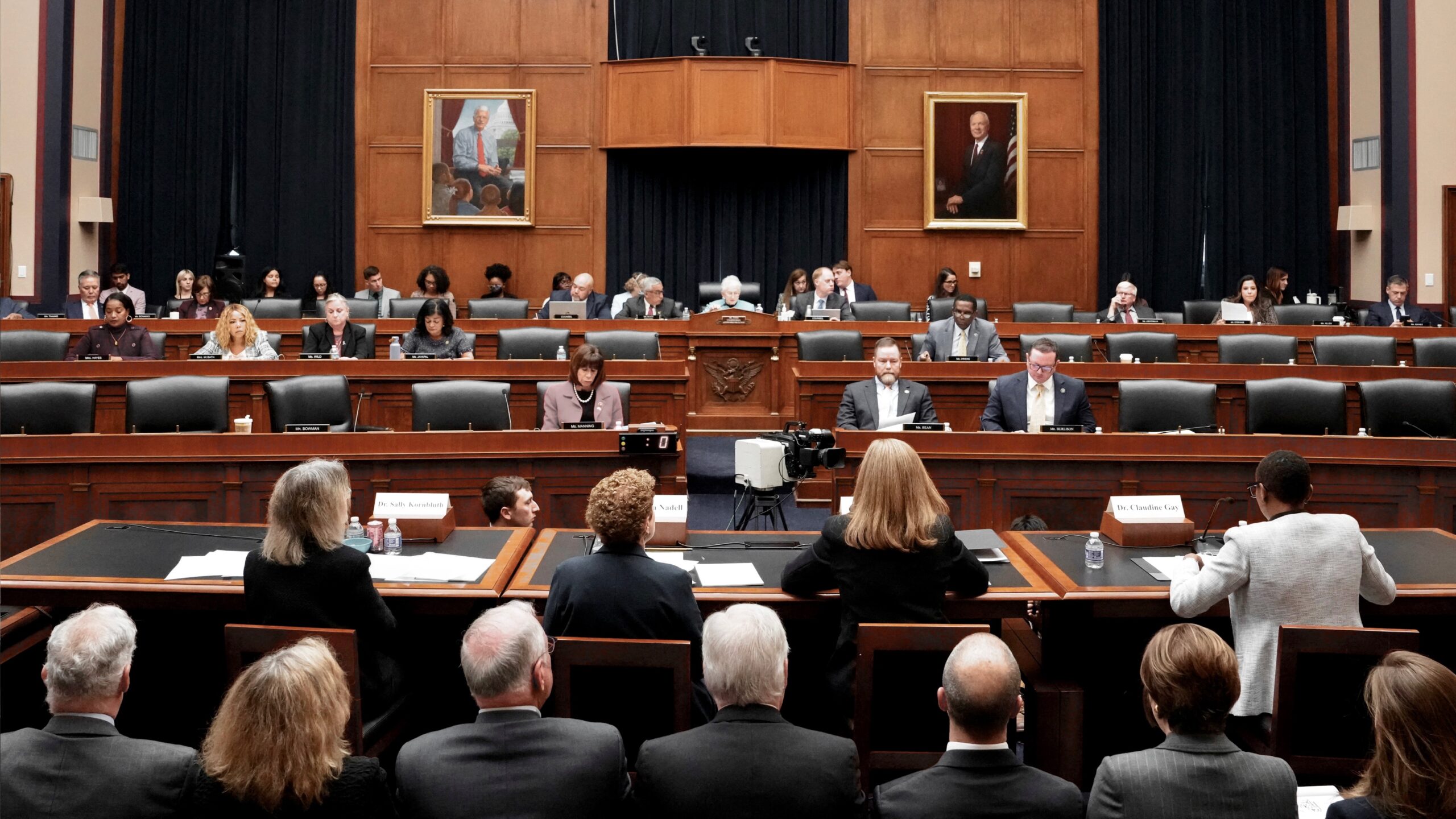
On Dec. 5, when the presidents of three of Americaโ€™s most prestigious universities appeared before Congress during a hearing on rising antisemitism, they refused to state clearly whether or not calls for the genocide of Jews on their campuses would constitute bullying or harassment. Across the country, jaws dropped.

More than one political pundit noted that the presidents of Harvard, MIT and the University of Pennsylvania appeared to have been coached by lawyers to speak cautiously. The result: They came off as morally detached from the world in which most Americans live. Or perhaps, as conservative author Rod Dreher put it, โ€œThey hemmed, they hawed, they tried to โ€˜contextualizeโ€™ the outbursts from left-wing students, so that they could stay on the right side of the woke narrative.โ€

Their inability to heartily condemn the idea of genocidal, antisemitic speech at their schools left many Americans to wonder:ย What in the world is happening on college campuses?

But those who have watched the state of higher education deteriorate to a level where left-wing activism is valued as much as critical thinking werenโ€™t shocked. In fact, at many colleges there are whole courses on activism.

The spectacle of rising antisemitism on campus, and these college presidentsโ€™ tepid response to it, is but a symptom of a more fundamental problem: Faulty philosophical foundations, which have been built over decades, have led to a culture at most schools where traditional, Judeo-Christian beliefs are not only dismissed but are vilified and often disallowed.

The examples are plentiful.

  • When former University of Kentucky standout swimmer Riley Gaines, a critic of biological males competing against females in womenโ€™s sports, tried to speak at San Francisco State University last April, radical activists held her in a room against her will for more than three hoursโ€”even demanding a monetary ransom at one point.
  • At Virginia Commonwealth University, the campus chapter of Students for Life sponsored an event that was supposed to be a dialogue between Kristan Hawkins (president of Students for Life of America/Students for Life Action) and another pro-life advocate. But when protesters showed up carrying signs and shouting obscenities to drown out the speakers, the event had to be canceled.
  • At the State University of New York at Albany, the Young Democratic Socialists of America chapter was among those who were able to prevent a conservative proponent of free speech from speaking on campus because he opposes the transgender movement. The disrupters said it was all in the name of โ€œjoy, positivity and support for LGBTQ+ students.โ€

For Christian believers, not only is it wise to understand the distressed culture at universities, itโ€™s vital for effectively offering Gospel hope to a generation for which despair and disenchantment is their logical landing place.

John Stonestreet, president of the Colson Center for Christian Worldview and host of the syndicated Breakpoint commentary, remembers a Christian speaker stating that the 9/11 terror attacks would prove to be the nail in the coffin for those who reject the existence of absolute truth. The attacks were so heinous, he reasoned, people would see the clear divide between good and evil and return to a belief in objective right and wrong.

โ€œObviously, he was proven to be wrong,โ€ Stonestreet recalls. โ€œHe thought relativism had been refuted in front of everyone. But the relativists looked at the events of 9/11 and essentially said, โ€˜People who believe in moral absolutes are the kinds of people who do these things.โ€™ He underestimated how deep-seated cultural relativism was.โ€

Two decades later, Stonestreet says, the postmodernistsโ€”with their claims that moral absolutes donโ€™t existโ€”have become more โ€œabsolutistโ€ in their demands and more culturally Marxist. On college campuses, this manifests as strictly enforced speech codes, safe zones where โ€œtriggeringโ€ ideas are disallowed, and an authoritarian approach to what constitutes correct thinking, dialogue and manners. 

In short, a revised Marxism has bloomed on Americaโ€™s campuses in the last two decades, even if most students wouldnโ€™t wear the label. 

Instead of the economic struggle prescribed by classical Marxism, todayโ€™s Marxists pit classes perceived as oppressedโ€”LGBTQ+ people, racial minorities, women, the irreligious, illegal immigrants, โ€œpregnant personsโ€โ€”against perceived oppressors in a struggle for cultural power. And the idea of a transcendent God, especially the God of Biblical Christianity, is anathema. 

The challenge for those few professors who are committed to a truth-seeking, classical education is that a majority of new students arrive on campus already immersed in the prevailing โ€œwoke-ism,โ€ secular progressivism, social justice activism, revisionist Marxismโ€”whatever label adherents are willing to wear. 

Professor Robert P. George sees it firsthand in teaching both undergraduate and graduate students at Princeton University. As the McCormick Professor of Jurisprudence and director of the James Madison Program in American Ideals and Institutions, George has observed the changes in the philosophical assumptions his students bring to class.

โ€œIn most cases,โ€ George says, โ€œstudents come in believing these doctrines or dogmas because theyโ€™ve been taught that they are true.โ€ As he puts it, theyโ€™ve been โ€œcatechizedโ€ for a religious-like adherence to cultural relativism.ย 

There are exceptions, George notesโ€”brave students who challenge prevailing groupthinkโ€”but they are rare.

โ€œI say โ€˜braveโ€™ because this is a very hard thing to do these days,โ€ he says. โ€œThere is genuine vilification, and often practical consequences, if you publicly dissent from these woke orthodoxies.โ€

A survey cited by the American Enterprise Institute says that by a margin of 71% to 57%, students with no religious faith are more likely to feel OK about shouting down a speaker with whom they disagree than those who identify as having a religious faith.

โ€œThat certainly squares with my experience,โ€ says George, adding that his โ€œreligiously well-formed studentsโ€ tend to have a sense of their own fallibility, which provides some margin for learning from mistakes.

How Did We Get Here?

Many people point to the radicalism of the โ€™60s as a significant marker on the road to our current culture, with the sexual revolution taking center stage as a wedge between Judeo-Christian beliefs and the call for sexual freedom. The rise of liberal theology in the 19th and 20th centuries certainly played a role in the decline of mainline Christian denominations, which contributed to the conditions that manifested in the 1960s. 

A German Marxist named Rudi Dutschke wrote in 1967 that the success of the new Marxism would require โ€œthe long march through the institutionsโ€ of cultural power. The idea stuck with the cultural relativists; the college campus became a breeding ground as โ€™60s radicals eventually became tenured professors.

Paraphrasing sociologist Todd Gitlin, Stonestreet says that in the 1960s the right marched on the Capitol while the left marched through the English departments. They each got what they wanted for a time. But decades later, the left had gained control of both political and cultural institutions.

Alex McFarland, a Christian apologist and director of Biblical Worldview at Charis Bible College, says he believes there is a connection between the decline of religious belief among the young and the rise of cultural Marxism. Nearly 50% of Gen Z  is either agnostic, atheist or โ€˜nothing in particular,โ€™ according to religion demographer Ryan Burge. And the trends are even more pronounced on the typical college campus.

โ€œThere was a time when Christianity and Judeo-Christian morals were like our national immune system, and our ability to fend off toxic ideologies like socialism were rooted in those convictions,โ€ McFarland says.

Amid this truth crisis, McFarland says the church must train young people to respond to bad ideas with the best of Christian apologetics and a thorough grasp of Godโ€™s Word as inspired and authoritative. And pastors must confront controversy with a โ€œThus sayeth the Lordโ€ from the Scripture, he says.

โ€œThe left thought if they got rid of the constraints of religion, they would make it a better world,โ€ McFarland says. โ€œBut better compared to what? Without God, their utopia is no better than a pigpen.โ€ Sadly, he says, the silence and lack of authoritative preaching in many pulpits has created a cultural vacuum for erroneous ideas to thrive.

Stonestreet says the empty promises of the Marxist, secular-progressive, relativistic, โ€˜wokeโ€™ view of the world will eventually leave its adherents disillusioned. Judging by the mental health crisis among the youngโ€”โ€œItโ€™s not only wider among this generation but their problems are deeper,โ€ he saysโ€”the church has an opportunity to offer hope, meaning, identity and belonging.

In the economy of radicalism, โ€œthereโ€™s absolutely no forgiveness and no redemption,โ€ remarks Stonestreet, who quickly notes how the lack of these virtues contrasts with the Christian message.

โ€œThese are not necessarily aspirations our political allies would appreciate, but when Christians encounter these disillusioned people, we have to figure out how to marshal our ability to be gracious and forgivingโ€”to bear peopleโ€™s burdens and show grace. When we do, there will be an opportunity for a profound future witness to the message of Christ.โ€


give

untitled artwork

The CCP Is Sending A Chilling Message To All Believers: Obedience To God Will Be Punished

โ€œThe impact on Chinaโ€™s Christian community is profound. When a faithful church like Early Rain is repeatedly targeted, the CCP is sending a chilling message to all believers: obedience to God will be punished, and conscience must bow to ideology. Yet history shows that persecution does not extinguish faith โ€” it refines it.โ€

Christians Are Not Called To ‘Self-Love,’ They Are Called To Self-Denial

Truth is, most of us are already pretty obsessed with ourselvesโ€”we love ourselvesย tooย much. Weโ€™re constantly thinking about our own needs, our own happiness, and we even live in a society that encourages us to do so. But Jesus completely flips the script on the worldโ€™s approach to self-focus and self-love. Jesus said, โ€œIf anyone desires to come after Me, let him deny himself, and take up his cross, and follow Me."

sign up

Bold Ambassadors For Christ Who Were Powerfully Used By God In 2025

In the case of some, it was God's sovereignty that permitted tragic events to unfold, knowing the impact of the Gospel would be worth the cost. In other instances, God raised individuals into higher positions of responsibility, knowing that their prioritizing of Jesus above all else would provide opportunities to proclaim Biblical truth in powerful ways. Here is a list of Christians who were used by God in 2025 to make a tremendous impact.

ABC's of Salvation

Decision

UTT

untitled artwork

Israel My Glory

On Dec. 5, when the presidents of three of Americaโ€™s most prestigious universities appeared before Congress during a hearing on rising antisemitism, they refused to state clearly whether or not calls for the genocide of Jews on their campuses would constitute bullying or harassment. Across the country, jaws dropped.

More than one political pundit noted that the presidents of Harvard, MIT and the University of Pennsylvania appeared to have been coached by lawyers to speak cautiously. The result: They came off as morally detached from the world in which most Americans live. Or perhaps, as conservative author Rod Dreher put it, โ€œThey hemmed, they hawed, they tried to โ€˜contextualizeโ€™ the outbursts from left-wing students, so that they could stay on the right side of the woke narrative.โ€

Their inability to heartily condemn the idea of genocidal, antisemitic speech at their schools left many Americans to wonder:ย What in the world is happening on college campuses?

But those who have watched the state of higher education deteriorate to a level where left-wing activism is valued as much as critical thinking werenโ€™t shocked. In fact, at many colleges there are whole courses on activism.

The spectacle of rising antisemitism on campus, and these college presidentsโ€™ tepid response to it, is but a symptom of a more fundamental problem: Faulty philosophical foundations, which have been built over decades, have led to a culture at most schools where traditional, Judeo-Christian beliefs are not only dismissed but are vilified and often disallowed.

The examples are plentiful.

  • When former University of Kentucky standout swimmer Riley Gaines, a critic of biological males competing against females in womenโ€™s sports, tried to speak at San Francisco State University last April, radical activists held her in a room against her will for more than three hoursโ€”even demanding a monetary ransom at one point.
  • At Virginia Commonwealth University, the campus chapter of Students for Life sponsored an event that was supposed to be a dialogue between Kristan Hawkins (president of Students for Life of America/Students for Life Action) and another pro-life advocate. But when protesters showed up carrying signs and shouting obscenities to drown out the speakers, the event had to be canceled.
  • At the State University of New York at Albany, the Young Democratic Socialists of America chapter was among those who were able to prevent a conservative proponent of free speech from speaking on campus because he opposes the transgender movement. The disrupters said it was all in the name of โ€œjoy, positivity and support for LGBTQ+ students.โ€

For Christian believers, not only is it wise to understand the distressed culture at universities, itโ€™s vital for effectively offering Gospel hope to a generation for which despair and disenchantment is their logical landing place.

John Stonestreet, president of the Colson Center for Christian Worldview and host of the syndicated Breakpoint commentary, remembers a Christian speaker stating that the 9/11 terror attacks would prove to be the nail in the coffin for those who reject the existence of absolute truth. The attacks were so heinous, he reasoned, people would see the clear divide between good and evil and return to a belief in objective right and wrong.

โ€œObviously, he was proven to be wrong,โ€ Stonestreet recalls. โ€œHe thought relativism had been refuted in front of everyone. But the relativists looked at the events of 9/11 and essentially said, โ€˜People who believe in moral absolutes are the kinds of people who do these things.โ€™ He underestimated how deep-seated cultural relativism was.โ€

Two decades later, Stonestreet says, the postmodernistsโ€”with their claims that moral absolutes donโ€™t existโ€”have become more โ€œabsolutistโ€ in their demands and more culturally Marxist. On college campuses, this manifests as strictly enforced speech codes, safe zones where โ€œtriggeringโ€ ideas are disallowed, and an authoritarian approach to what constitutes correct thinking, dialogue and manners. 

In short, a revised Marxism has bloomed on Americaโ€™s campuses in the last two decades, even if most students wouldnโ€™t wear the label. 

Instead of the economic struggle prescribed by classical Marxism, todayโ€™s Marxists pit classes perceived as oppressedโ€”LGBTQ+ people, racial minorities, women, the irreligious, illegal immigrants, โ€œpregnant personsโ€โ€”against perceived oppressors in a struggle for cultural power. And the idea of a transcendent God, especially the God of Biblical Christianity, is anathema. 

The challenge for those few professors who are committed to a truth-seeking, classical education is that a majority of new students arrive on campus already immersed in the prevailing โ€œwoke-ism,โ€ secular progressivism, social justice activism, revisionist Marxismโ€”whatever label adherents are willing to wear. 

Professor Robert P. George sees it firsthand in teaching both undergraduate and graduate students at Princeton University. As the McCormick Professor of Jurisprudence and director of the James Madison Program in American Ideals and Institutions, George has observed the changes in the philosophical assumptions his students bring to class.

โ€œIn most cases,โ€ George says, โ€œstudents come in believing these doctrines or dogmas because theyโ€™ve been taught that they are true.โ€ As he puts it, theyโ€™ve been โ€œcatechizedโ€ for a religious-like adherence to cultural relativism.ย 

There are exceptions, George notesโ€”brave students who challenge prevailing groupthinkโ€”but they are rare.

โ€œI say โ€˜braveโ€™ because this is a very hard thing to do these days,โ€ he says. โ€œThere is genuine vilification, and often practical consequences, if you publicly dissent from these woke orthodoxies.โ€

A survey cited by the American Enterprise Institute says that by a margin of 71% to 57%, students with no religious faith are more likely to feel OK about shouting down a speaker with whom they disagree than those who identify as having a religious faith.

โ€œThat certainly squares with my experience,โ€ says George, adding that his โ€œreligiously well-formed studentsโ€ tend to have a sense of their own fallibility, which provides some margin for learning from mistakes.

How Did We Get Here?

Many people point to the radicalism of the โ€™60s as a significant marker on the road to our current culture, with the sexual revolution taking center stage as a wedge between Judeo-Christian beliefs and the call for sexual freedom. The rise of liberal theology in the 19th and 20th centuries certainly played a role in the decline of mainline Christian denominations, which contributed to the conditions that manifested in the 1960s. 

A German Marxist named Rudi Dutschke wrote in 1967 that the success of the new Marxism would require โ€œthe long march through the institutionsโ€ of cultural power. The idea stuck with the cultural relativists; the college campus became a breeding ground as โ€™60s radicals eventually became tenured professors.

Paraphrasing sociologist Todd Gitlin, Stonestreet says that in the 1960s the right marched on the Capitol while the left marched through the English departments. They each got what they wanted for a time. But decades later, the left had gained control of both political and cultural institutions.

Alex McFarland, a Christian apologist and director of Biblical Worldview at Charis Bible College, says he believes there is a connection between the decline of religious belief among the young and the rise of cultural Marxism. Nearly 50% of Gen Z  is either agnostic, atheist or โ€˜nothing in particular,โ€™ according to religion demographer Ryan Burge. And the trends are even more pronounced on the typical college campus.

โ€œThere was a time when Christianity and Judeo-Christian morals were like our national immune system, and our ability to fend off toxic ideologies like socialism were rooted in those convictions,โ€ McFarland says.

Amid this truth crisis, McFarland says the church must train young people to respond to bad ideas with the best of Christian apologetics and a thorough grasp of Godโ€™s Word as inspired and authoritative. And pastors must confront controversy with a โ€œThus sayeth the Lordโ€ from the Scripture, he says.

โ€œThe left thought if they got rid of the constraints of religion, they would make it a better world,โ€ McFarland says. โ€œBut better compared to what? Without God, their utopia is no better than a pigpen.โ€ Sadly, he says, the silence and lack of authoritative preaching in many pulpits has created a cultural vacuum for erroneous ideas to thrive.

Stonestreet says the empty promises of the Marxist, secular-progressive, relativistic, โ€˜wokeโ€™ view of the world will eventually leave its adherents disillusioned. Judging by the mental health crisis among the youngโ€”โ€œItโ€™s not only wider among this generation but their problems are deeper,โ€ he saysโ€”the church has an opportunity to offer hope, meaning, identity and belonging.

In the economy of radicalism, โ€œthereโ€™s absolutely no forgiveness and no redemption,โ€ remarks Stonestreet, who quickly notes how the lack of these virtues contrasts with the Christian message.

โ€œThese are not necessarily aspirations our political allies would appreciate, but when Christians encounter these disillusioned people, we have to figure out how to marshal our ability to be gracious and forgivingโ€”to bear peopleโ€™s burdens and show grace. When we do, there will be an opportunity for a profound future witness to the message of Christ.โ€


Trusted Analysis From A Biblical Worldview

Help reach the lost and equip the church with the living and active truth of God's Word in our world today.

YOU CARE ABOUT

BIBLICAL TRUTH. SO DO WE.

ย 

Together, We Can Deliver A Biblical Understanding

Of News Events Around The World.

The CCP Is Sending A Chilling Message To All Believers: Obedience To God Will Be Punished

โ€œThe impact on Chinaโ€™s Christian community is profound. When a faithful church like Early Rain is repeatedly targeted, the CCP is sending a chilling message to all believers: obedience to God will be punished, and conscience must bow to ideology. Yet history shows that persecution does not extinguish faith โ€” it refines it.โ€

Christians Are Not Called To ‘Self-Love,’ They Are Called To Self-Denial

Truth is, most of us are already pretty obsessed with ourselvesโ€”we love ourselvesย tooย much. Weโ€™re constantly thinking about our own needs, our own happiness, and we even live in a society that encourages us to do so. But Jesus completely flips the script on the worldโ€™s approach to self-focus and self-love. Jesus said, โ€œIf anyone desires to come after Me, let him deny himself, and take up his cross, and follow Me."

untitled artwork 6391

Bold Ambassadors For Christ Who Were Powerfully Used By God In 2025

In the case of some, it was God's sovereignty that permitted tragic events to unfold, knowing the impact of the Gospel would be worth the cost. In other instances, God raised individuals into higher positions of responsibility, knowing that their prioritizing of Jesus above all else would provide opportunities to proclaim Biblical truth in powerful ways. Here is a list of Christians who were used by God in 2025 to make a tremendous impact.

ABC's of Salvation

TV AD

worldview matters

Decision Magazine V AD

Decision

Jan Markell

Israel My Glory

Erick Stakelbeck

untitled artwork

YOU CARE ABOUT

BIBLICAL TRUTH.

SO DO WE.

Together, We Can Deliver A Biblical Understanding Of News Events Around The World And Equip The Church To Stand With A Biblical Worldview.

Israel My Glory

untitled artwork

YOU CARE ABOUT

BIBLICAL TRUTH.

SO DO WE.

ย 

Together, We Can Deliver A Biblical Understanding Of News Events Around The World And Equip The Church To Stand With A Biblical Worldview.