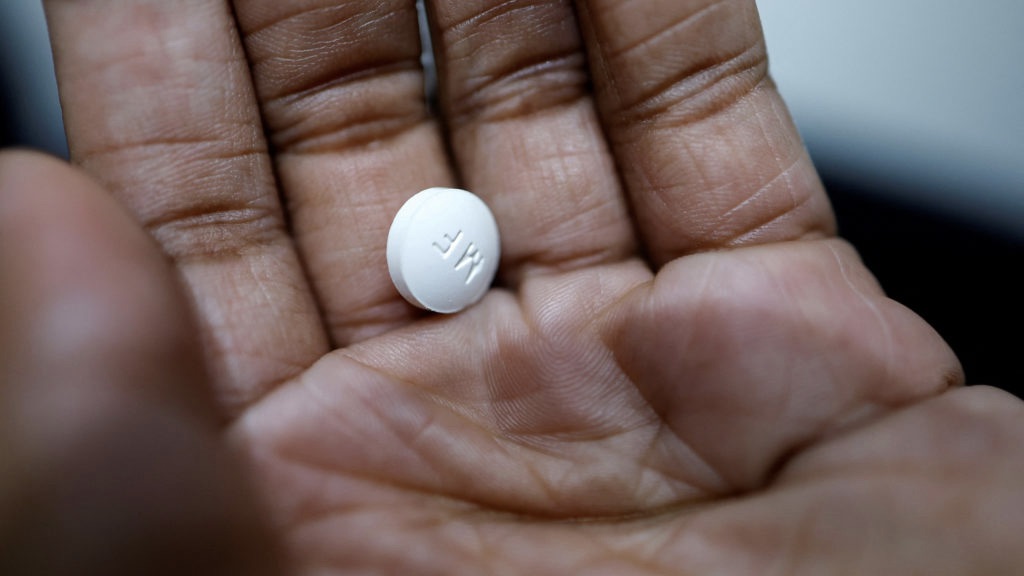
A study discovered that the abortion drug mifepristone has tainted the water supply in three major U.S. cities. Concerns mount as research shows an already declining fertility rate. In light of the discovery, Students for Life of America (SFLA) is urging the Environmental Protection Agency (EPA) to respond to the data by regulating the levels of mifepristone in drinking water.
The study was conducted by researchers Elise Rose and Michael Varveris who submitted the peer-reviewed study in the journal “Issues of Law & Medicine.” They found such drugs in tap water and in both treated and untreated city water. The report details the levels of mifepristone in Blacksburg, Virginia, Carbondale, Illinois, and Austin, Texas.
“We need the EPA to nationalize this examination, especially in light of so many struggling with infertility,” said Kristan Hawkins, CEO of SFLA. “You don’t have to be pro-life to want crystal clear drinking water.”
When women flush aborted baby parts, mifepristone can enter the water supply. According to the Guttmacher Institute, nearly two-thirds of all abortions in 2023 were done through the abortion pill, a 12% increase since 2020. Since aBiden-era decision allowed abortion pills by telehealth and mail-order access, abortion pills have become readily accessible.
The study was prompted by advocacy efforts calling for testing of drinking water for mifepristone. In early July, a letter was sent to the EPA by 14 Republican state attorneys general that urged the EPA to test drinking water for mifepristone contaminants as well as birth control pill contaminants.
Tina Whittington, SFLA executive vice president, explained what led SFLA to advocate for testing.
“We were told we had to prove mifepristone was in the water in the U.S. to get anyone to care,” Whittington said. “On our own we started to reach out to water testing companies only to have our business declined. Our frustration became inspiration for this group to find the path to test our drinking water and while we have been vindicated, I hope the larger response is urgency to clean up our water. The harm to endangered species and potentially the human harm is incalculable.”
Rose, also an associate scholar with the pro-life group Charlotte Lozier Institute, calls everyone to be “concerned that we are possibly being exposed to an endocrine-disrupting compound without our consent.”
“Because of the importance of progesterone for human and animal health, the presence of anti-progesterone in environmental and tap water poses potential health risks,” Rose said.
In an interview on “Washington Watch with Tony Perkins,” Kansas state Rep. Ron Bryce (R) expressed concern that there have been no studies analyzing mifepristone in the U.S. water supply for about three decades.
“The EPA relied on studies that were done … in 1996, which is 30 years ago, to make sure that the excreted chemicals in the wastewater and the thrown away pills … would not reach a level that would hinder U.S. fertility rates,” Bryce said. “Since then, that data has become obsolete because now we have up to 63% or more of abortions are done by chemical abortions. Maybe—who knows—a million a year. And so the levels of mifepristone in our wastewater have grown dramatically.”
Infertility has skyrocketed to 84% between 1990 and 2021 globally, according to a May 2025 report. The abortion pill was first approved in the U.S. in 2000 and approved in many European countries in the late 1980s and early ‘90s. In 2021, the study found that more than 110 million women faced infertility, and one in 10 women within the reproductive age range were infertile.
Bryce, who is vice chairman of the Committee on Health and Human Services in the Kansas House of Representatives, is calling for a study to be done that analyzes infertility in light of mifepristone in the U.S. water system.
“[A] study that was done about a year ago on female frogs [found that] when they were exposed to mifepristone that is considered the level that is in our drinking water today, they had half as many babies,” he said. “And so we’re looking at fertility rates that are very low in the United States and in the Western civilization. The genetics have not changed. The genetic pool is the same as it has been for generations. It’s either environmental factors or it’s behavioral factors. It’s probably a combination of the two. But it’s an existential crisis — the birth rate and the fertility rate that we’re looking at. We really need to get to the bottom of the environmental factors that might be contributing to this, and it’s just obvious that we need to look at the levels of mifepristone in our water.”