May 22, 2026

May, 22, 2026
May 22, 2026

give

untitled artwork

untitled artwork

World news biblically understood

TRENDING:

An Unconditional Covenant From Our Covenant-Making, Covenant-Keeping, God

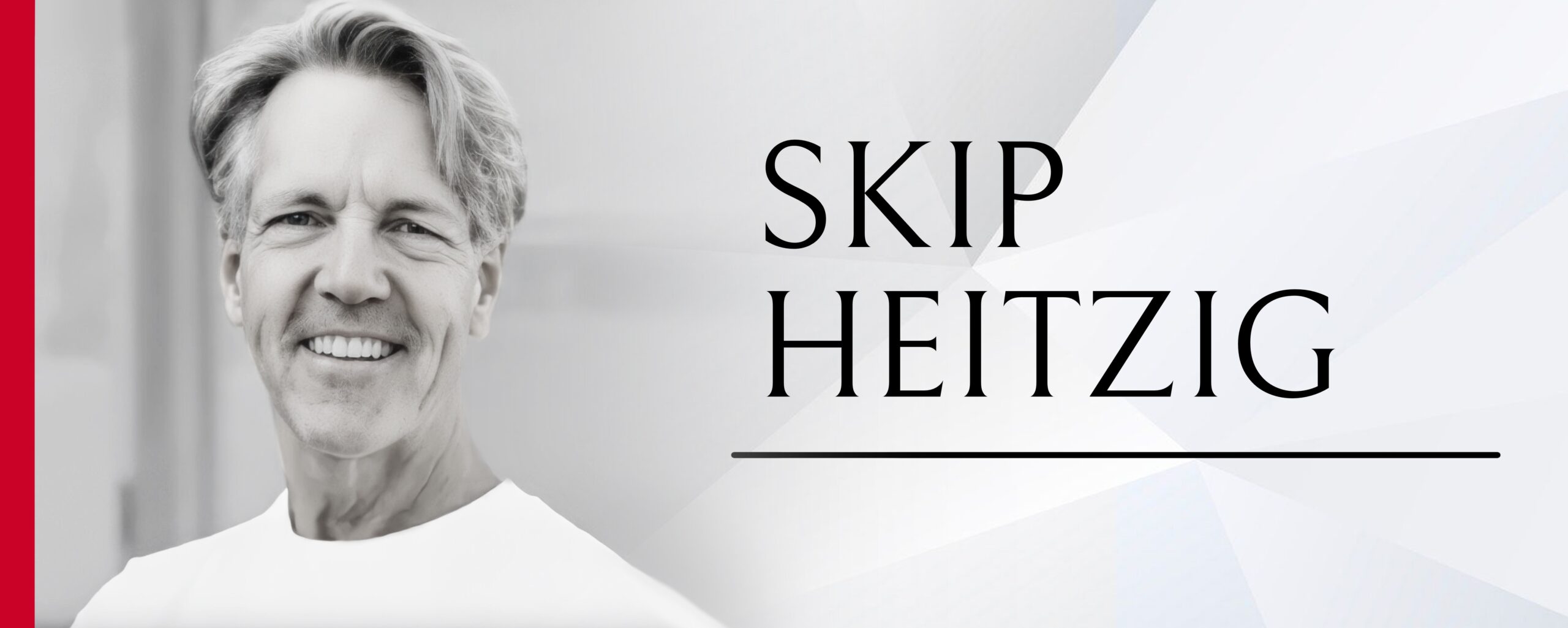
Skip Heitzig

In Genesis 9, God gave Noah an instruction that would be a perpetual and permanent ordinance for all: Life ought to be a partnership. God called it a covenant.

“Then God spoke to Noah and to his sons with him, saying: ‘And as for Me, behold’”—(behold is an attention-getter that says, “Everything I’m about to tell you is really important”)—”‘Behold, I establish My covenant with you and with your descendants after you’” (vv. 8-9).

It’s an all-important concept. How is it possible for the holy, infinite God and sinful, finite man to ever come together? How can they have fellowship? Only on the basis of a covenant. A covenant is a stipulated agreement of God’s promises. It’s the foundation by which Holy God and sinful mankind can have an agreement and relationship.

In the Bible, there are two kinds of covenants, conditional and unconditional. An unconditional covenant is when God makes a declaration or gives a unilateral promise, saying, “I’m going to do this. This is going to happen. Period.” A covenant is conditional when God and man both have a part to fulfill. “If you keep these conditions, then I will do this or that.”

In the garden of Eden, God made a conditional covenant when He said, “Eat anything you want, but don’t eat from that tree,” (see Genesis 2:16-17). That was the only condition: Don’t eat from one single tree. That’s pretty simple. But Adam and Eve failed. The covenant was broken.

In Genesis 12, God made a covenant with Abraham. He said, “I will bless you. I will multiply you. I will give you this land.” It was an unconditional covenant. He didn’t say, “If you’re perfect and upright and holy and everybody obeys perfectly, then I’ll give you this land.” God just said, “I’m giving this portion of land to Abraham and to his descendants forever.”

The covenant of the Law of Moses was conditional: “Make these sacrifices, obey these instructions, and I’ll bless you” (see Exodus 19:5-6 and 34:10-27). That covenant failed—not because God failed, but because man failed. Man was unable to keep the covenant. But God knew the outcome from the beginning.

God gave the prophet Jeremiah a hint of what was to come: “Behold, the days are coming, says the Lord, when I will make a new covenant with the house of Israel and with the house of Judah…. For I will forgive their iniquity, and their sin I will remember no more” (see 31:31, 33-34).

The covenant of the law demanded righteousness from man. The covenant of grace gives righteousness to man from God. Grace says, here is the work of Jesus Christ. It’s finished; it’s done. You can’t add to it or subtract from it. It’s not your works. It’s His work.

That’s an unconditional covenant from our covenant-making, covenant-keeping, God.


Give

Give

Denying The Jewish People’s Connection To Jerusalem Would Be Laughable… If So Many Nations Didn’t Believe It

In December 2017, U.S. President Donald Trump decided to implement the Jerusalem Embassy Act of 1995. He recognized Jerusalem as the official capital of the State of Israel, which calls for Jerusalem to remain an undivided city, and ordered the federal government to relocate the U.S. embassy from Tel Aviv to Jerusalem—a move timed to help celebrate Israel’s 70th birthday. The UN General Assembly then countered with the “Status of Jerusalem” resolution—which passed 128 to 9, with 35 abstentions—denying the Jewish people’s connection to Jerusalem and the Temple Mount.

Global Tensions Expose The Vast Contrast Between Human Hope And God’s Promises

In the Bible, hope is closely connected to waiting. Not waiting in the sense that we are still uncertain about the outcome, but steadfastly waiting because we fully expect the outcome God promised in His Word. In other words, man’s definition of hope carries doubt. God’s does not. As such, Biblical hope is a sure foundation upon which we may base our lives, believing that God always keeps His promises.

sign up

Prophetic Pieces: As Putin Ups The Ante In The Arms Race, Russia Considers Providing Refuge To Top Iranian Leaders

Prophetic events in the end times right now are casting their shadows over the Middle East like never before. Preparations for the Gog Magog coalition prophesied in Ezekiel 38 and 39 are increasing and intensifying. Written 2,500 years ago by Ezekiel, these chapters prophesy an end-time invasion of Israel led by the nations of Russia, Iran, and Turkey. Two significant developments showcase that the prophetic pieces are falling perfectly into place.

ABC's of Salvation

Decision

UTT

FOI

untitled artwork

Israel My Glory

Skip Heitzig

In Genesis 9, God gave Noah an instruction that would be a perpetual and permanent ordinance for all: Life ought to be a partnership. God called it a covenant.

“Then God spoke to Noah and to his sons with him, saying: ‘And as for Me, behold’”—(behold is an attention-getter that says, “Everything I’m about to tell you is really important”)—”‘Behold, I establish My covenant with you and with your descendants after you’” (vv. 8-9).

It’s an all-important concept. How is it possible for the holy, infinite God and sinful, finite man to ever come together? How can they have fellowship? Only on the basis of a covenant. A covenant is a stipulated agreement of God’s promises. It’s the foundation by which Holy God and sinful mankind can have an agreement and relationship.

In the Bible, there are two kinds of covenants, conditional and unconditional. An unconditional covenant is when God makes a declaration or gives a unilateral promise, saying, “I’m going to do this. This is going to happen. Period.” A covenant is conditional when God and man both have a part to fulfill. “If you keep these conditions, then I will do this or that.”

In the garden of Eden, God made a conditional covenant when He said, “Eat anything you want, but don’t eat from that tree,” (see Genesis 2:16-17). That was the only condition: Don’t eat from one single tree. That’s pretty simple. But Adam and Eve failed. The covenant was broken.

In Genesis 12, God made a covenant with Abraham. He said, “I will bless you. I will multiply you. I will give you this land.” It was an unconditional covenant. He didn’t say, “If you’re perfect and upright and holy and everybody obeys perfectly, then I’ll give you this land.” God just said, “I’m giving this portion of land to Abraham and to his descendants forever.”

The covenant of the Law of Moses was conditional: “Make these sacrifices, obey these instructions, and I’ll bless you” (see Exodus 19:5-6 and 34:10-27). That covenant failed—not because God failed, but because man failed. Man was unable to keep the covenant. But God knew the outcome from the beginning.

God gave the prophet Jeremiah a hint of what was to come: “Behold, the days are coming, says the Lord, when I will make a new covenant with the house of Israel and with the house of Judah…. For I will forgive their iniquity, and their sin I will remember no more” (see 31:31, 33-34).

The covenant of the law demanded righteousness from man. The covenant of grace gives righteousness to man from God. Grace says, here is the work of Jesus Christ. It’s finished; it’s done. You can’t add to it or subtract from it. It’s not your works. It’s His work.

That’s an unconditional covenant from our covenant-making, covenant-keeping, God.
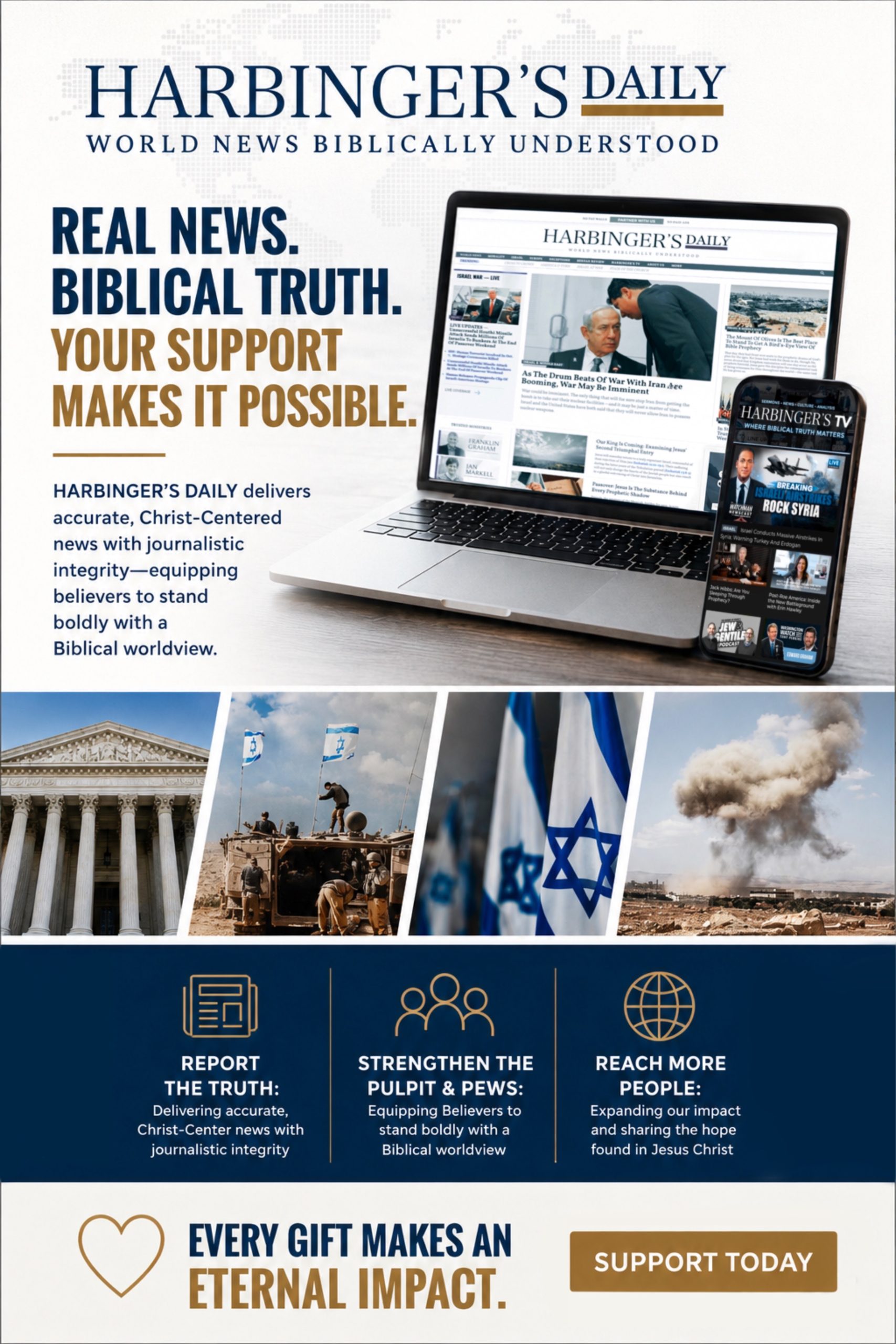

Trusted Analysis From A Biblical Worldview

Help reach the lost and equip the church with the living and active truth of God's Word in our world today.

YOU CARE ABOUT

BIBLICAL TRUTH. SO DO WE.


Together, We Can Deliver A Biblical Understanding

Of News Events Around The World.

Denying The Jewish People’s Connection To Jerusalem Would Be Laughable… If So Many Nations Didn’t Believe It

In December 2017, U.S. President Donald Trump decided to implement the Jerusalem Embassy Act of 1995. He recognized Jerusalem as the official capital of the State of Israel, which calls for Jerusalem to remain an undivided city, and ordered the federal government to relocate the U.S. embassy from Tel Aviv to Jerusalem—a move timed to help celebrate Israel’s 70th birthday. The UN General Assembly then countered with the “Status of Jerusalem” resolution—which passed 128 to 9, with 35 abstentions—denying the Jewish people’s connection to Jerusalem and the Temple Mount.

Global Tensions Expose The Vast Contrast Between Human Hope And God’s Promises

In the Bible, hope is closely connected to waiting. Not waiting in the sense that we are still uncertain about the outcome, but steadfastly waiting because we fully expect the outcome God promised in His Word. In other words, man’s definition of hope carries doubt. God’s does not. As such, Biblical hope is a sure foundation upon which we may base our lives, believing that God always keeps His promises.

untitled artwork 6391

Prophetic Pieces: As Putin Ups The Ante In The Arms Race, Russia Considers Providing Refuge To Top Iranian Leaders

Prophetic events in the end times right now are casting their shadows over the Middle East like never before. Preparations for the Gog Magog coalition prophesied in Ezekiel 38 and 39 are increasing and intensifying. Written 2,500 years ago by Ezekiel, these chapters prophesy an end-time invasion of Israel led by the nations of Russia, Iran, and Turkey. Two significant developments showcase that the prophetic pieces are falling perfectly into place.

ABC's of Salvation

TV AD

worldview matters

Decision Magazine V AD

Decision

Jan Markell

Israel My Glory

Erick Stakelbeck

untitled artwork

YOU CARE ABOUT

BIBLICAL TRUTH.

SO DO WE.

Together, We Can Deliver A Biblical Understanding Of News Events Around The World And Equip The Church To Stand With A Biblical Worldview.

untitled artwork

Israel My Glory

YOU CARE ABOUT

BIBLICAL TRUTH.

SO DO WE.


Together, We Can Deliver A Biblical Understanding Of News Events Around The World And Equip The Church To Stand With A Biblical Worldview.