February 7, 2026

February, 7, 2026
February 7, 2026

give

untitled artwork

untitled artwork

World news biblically understood

TRENDING:

Life Unworthy of Life: How a Holocaust Was Born For The Unborn

Lebensunwertes Leben” is a chilling German phrase that means “life unworthy of life.” It was coined in 1920 by German professors Karl Binding and Alfred Hoche, who thought that people with congenital, mental or developmental disabilities only burdened their families and the state. Hoche described such people as “human ballast” and “empty shells of human beings.” 

That argument was the seed that grew into the horrific fruit of the Holocaust. Before the Nazis built Auschwitz or perfected the gas chamber, there was Knauer, a baby born blind, missing a leg and part of an arm, and labeled an “idiot.” When a family member requested a “mercy killing” for Knauer, Hitler and his personal physician, Karl Brandt, directed doctors at the University of Leipzig to end Knauer’s life.

From 1939 to 1945, at least 5,000 other children would be killed in German hospitals. From killing children, the Nazi euthanasia program accelerated to killing adults, then prisoners, and finally Jews. Mass genocide was simply the logical conclusion following the premise that some human lives are unworthy of life.

Curing by Killing

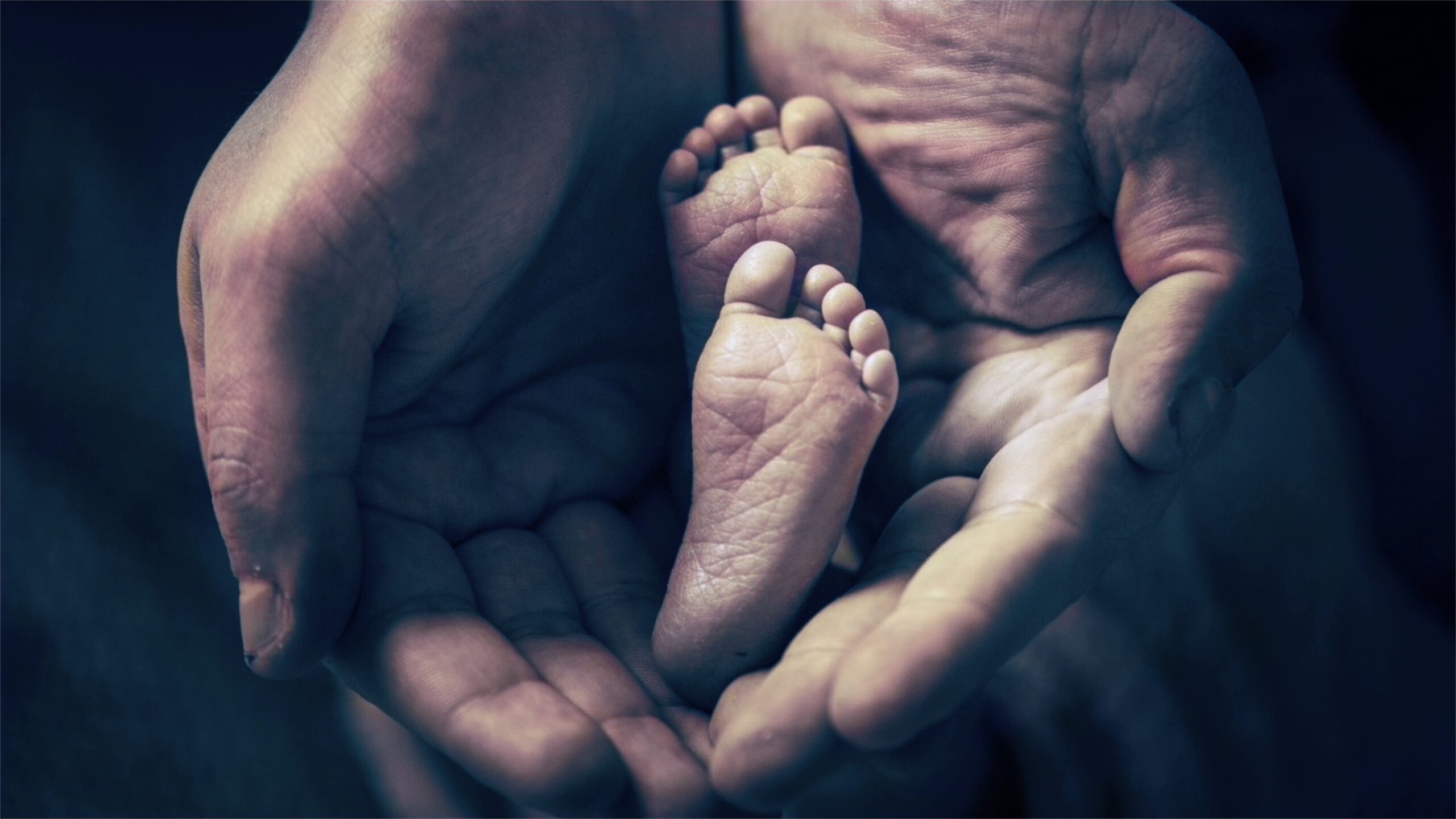
Imagine living in such a barbaric society. The awful reality is that we already do. In the United States, somewhere between 67% and 85% of babies diagnosed with Down syndrome are aborted. Babies with anencephaly and spina bifida face a similar fate (83% and 63%, respectively).

In our “civilized” society, it is simply assumed that a prenatal diagnosis of lethal, life-limiting or severely debilitating disorders justifies abortion. The medical euphemism used to describe those babies and their conditions is “incompatible with life”—America’s version of lebensunwertes leben.

How do doctors sworn to preserve life do the opposite? According to Dr. Robert Jay Lifton, who personally interviewed German physicians involved in mass killings, the fundamental shift happened when doctors convinced themselves that killing was healing.

Similarly, we live in a society that deems the murder of unborn babies to be medical care. In 2017, CBS News tweeted: “Iceland is on pace to virtually eliminate Down syndrome through abortion.” In 2019, a UK woman confessed, “I aborted my disabled baby girl after [the] 20-week scan to free her from a life of pain and suffering.” It sounds more civilized to reframe personal convenience as compassion, but killing babies with disabilities is not curing. “Woe to those who call evil good and good evil” (Isaiah 5:20). 

‘Wonderful Are Your Works’

A society shaped by atheistic materialism and Darwinian evolution can never account for the worth of persons with disabilities—because such a society does not account for God. Christians, however, are compelled to protect and care for babies with disabilities simply because they are humans made in the image of God.

For me, this issue transcends statistics or abstract moral dilemmas. I am the proud father of twin sons whose lives, some think, would not be worth living. They were born with a condition called nemaline myopathy, which causes extreme muscle weakness. One passed away at the age of 3; the other is now 8. Caring for such weak and dependent children has deepened my understanding of the image of God.

Because of my sons’ condition, I’ve wrestled with whether they could pray as the psalmist: “I praise you, for I am fearfully and wonderfully made. Wonderful are your works” (Psalm 139:14). Or does their disability make them defective? It’s one thing for armchair philosophers to contemplate such questions, but for wheelchair sufferers like my son, these questions are personal. 

Image of God

In Scripture, the first sanction against murder is explicitly grounded in the fact that “God made man in his own image” (Genesis 9:6). But what is the image of God? Is it human intellect, our moral reasoning, our relational capacity, or our physical ability to have dominion over animals and plants? If any of these apply, some people might possess more or less of the image of God than others. Then would some humans have more of a right to life than others?

Peter Singer, professor of bioethics at Princeton, believes that the value of human life depends on functions like rationality and autonomy. He argues that disabled infants lack these characteristics. “Killing them, therefore, cannot be equated with killing normal human beings or any other self-aware beings.” In Singer’s world, the most vulnerable among us are the most expendable.

But according to Scripture, the image of God is not merely something humans bear or possess; it is what we are as humans. The Dutch theologian Herman Bavinck said, “The essence of human nature is its being [created in] the image of God.” That is, to be human is to be in God’s image.

Our appearances, capabilities and experiences vary, but the one thing each one of us shares in common is our humanness. Again, Bavinck asserts that “the doctrine of human creation in the image of God extends to every stage of a person’s development. Nothing in a human being is excluded from the image of God. While all creatures display vestiges of God, only a human being bears the image of God. And he or she is such totally—in soul and body, in all his faculties and powers, in all conditions and relations.”

The most critical distortion to the image of God is not disability but sin. And even though Adam’s sin skewed the image of God in humanity, it did not erase it. Neither could sin thwart God’s purpose to fill the earth with humans made in His image. While the first man failed to image His glory—and we all too have fallen short of His glory—Christ is the perfect “image of the invisible God” (Colossians 1:15). Fully God and fully man, Christ came as the perfect human, and died for our sins so that we could be redeemed and begin being conformed to His image (Romans 8:29; 2 Corinthians 3:18). So, for Christians, humanness means even more—not only in imaging our God but also His Son.

That is gloriously true for my son and for all children with disabilities or life-limiting conditions, whether born or unborn. Christ is the image of God, and in Him, we who were made in God’s image, and have sinned, are invited into redemption. To judge any human as unworthy of life is to defame the image of our God and His Son. To put them to death—even in the name of mercy or medicine—is to desecrate the glory of Christ.

life unworthy of life
CLICK HERE FOR
SOURCE

Your support helps Harbinger's Daily propel the boldest and most sound Christian voices of our day—those unwavering in their defense of the truth and passionate about reaching the unsaved world—while engaging millions to stand courageously with a worldview grounded in God's Word. 

Will you defend the truth and equip others to do the same?

Fear Of Accountability Prompts Reversal From Medical Groups On Child Gender Procedures

For years, a growing body of international research has warned against these interventions. Finland, Sweden, and England all reevaluated and restricted pediatric gender treatments after reviewing outcomes data. In May of last year, even the U.S. Department of Health and Human Services acknowledged that the evidence supporting medical intervention for minors was weak at best. So why the change now? Was it the accumulation of research showing not only a lack of benefit, but demonstrable harm? That’s literally the two-million-dollar question.

Apocalyptic Islamic Ideology: The Most Important Factor In Iran’s Motivation Is Being Overlooked

One very important factor is being overlooked in all the calculus and strategy about dealing with the powers in Tehran. We have to remember what drives the Iranian regime: a Shiite apocalyptic theology and ideology. This ideology is the lens through which they view the world. For them, everything that is happening is being branded as a "holy war." They use their theology as a shield to justify their brutality, even against their own people.

sign up

Markell: Why I Am Paying Close Attention To President Trump’s ‘Board Of Peace’

President Trump will serve as chairman and wield considerable overall control. It will help resolve conflicts globally. He has the sole authority to invite new members and appoint a successor.  Global peace seems to be their goal, though they will participate in other global duties as well. The immediate focus of the Board of Peace will be Gaza, though there was no word about Gaza in the charter.  A lot of Godless people seem to be in charge, such as Steve Witkoff, Jared Kushner, Tony Blair, and almost 60 more movers and shakers. Most have a worldly view of the world and of “peace.”

ABC's of Salvation

Decision

UTT

FOI

untitled artwork

Israel My Glory

Lebensunwertes Leben” is a chilling German phrase that means “life unworthy of life.” It was coined in 1920 by German professors Karl Binding and Alfred Hoche, who thought that people with congenital, mental or developmental disabilities only burdened their families and the state. Hoche described such people as “human ballast” and “empty shells of human beings.” 

That argument was the seed that grew into the horrific fruit of the Holocaust. Before the Nazis built Auschwitz or perfected the gas chamber, there was Knauer, a baby born blind, missing a leg and part of an arm, and labeled an “idiot.” When a family member requested a “mercy killing” for Knauer, Hitler and his personal physician, Karl Brandt, directed doctors at the University of Leipzig to end Knauer’s life.

From 1939 to 1945, at least 5,000 other children would be killed in German hospitals. From killing children, the Nazi euthanasia program accelerated to killing adults, then prisoners, and finally Jews. Mass genocide was simply the logical conclusion following the premise that some human lives are unworthy of life.

Curing by Killing

Imagine living in such a barbaric society. The awful reality is that we already do. In the United States, somewhere between 67% and 85% of babies diagnosed with Down syndrome are aborted. Babies with anencephaly and spina bifida face a similar fate (83% and 63%, respectively).

In our “civilized” society, it is simply assumed that a prenatal diagnosis of lethal, life-limiting or severely debilitating disorders justifies abortion. The medical euphemism used to describe those babies and their conditions is “incompatible with life”—America’s version of lebensunwertes leben.

How do doctors sworn to preserve life do the opposite? According to Dr. Robert Jay Lifton, who personally interviewed German physicians involved in mass killings, the fundamental shift happened when doctors convinced themselves that killing was healing.

Similarly, we live in a society that deems the murder of unborn babies to be medical care. In 2017, CBS News tweeted: “Iceland is on pace to virtually eliminate Down syndrome through abortion.” In 2019, a UK woman confessed, “I aborted my disabled baby girl after [the] 20-week scan to free her from a life of pain and suffering.” It sounds more civilized to reframe personal convenience as compassion, but killing babies with disabilities is not curing. “Woe to those who call evil good and good evil” (Isaiah 5:20). 

‘Wonderful Are Your Works’

A society shaped by atheistic materialism and Darwinian evolution can never account for the worth of persons with disabilities—because such a society does not account for God. Christians, however, are compelled to protect and care for babies with disabilities simply because they are humans made in the image of God.

For me, this issue transcends statistics or abstract moral dilemmas. I am the proud father of twin sons whose lives, some think, would not be worth living. They were born with a condition called nemaline myopathy, which causes extreme muscle weakness. One passed away at the age of 3; the other is now 8. Caring for such weak and dependent children has deepened my understanding of the image of God.

Because of my sons’ condition, I’ve wrestled with whether they could pray as the psalmist: “I praise you, for I am fearfully and wonderfully made. Wonderful are your works” (Psalm 139:14). Or does their disability make them defective? It’s one thing for armchair philosophers to contemplate such questions, but for wheelchair sufferers like my son, these questions are personal. 

Image of God

In Scripture, the first sanction against murder is explicitly grounded in the fact that “God made man in his own image” (Genesis 9:6). But what is the image of God? Is it human intellect, our moral reasoning, our relational capacity, or our physical ability to have dominion over animals and plants? If any of these apply, some people might possess more or less of the image of God than others. Then would some humans have more of a right to life than others?

Peter Singer, professor of bioethics at Princeton, believes that the value of human life depends on functions like rationality and autonomy. He argues that disabled infants lack these characteristics. “Killing them, therefore, cannot be equated with killing normal human beings or any other self-aware beings.” In Singer’s world, the most vulnerable among us are the most expendable.

But according to Scripture, the image of God is not merely something humans bear or possess; it is what we are as humans. The Dutch theologian Herman Bavinck said, “The essence of human nature is its being [created in] the image of God.” That is, to be human is to be in God’s image.

Our appearances, capabilities and experiences vary, but the one thing each one of us shares in common is our humanness. Again, Bavinck asserts that “the doctrine of human creation in the image of God extends to every stage of a person’s development. Nothing in a human being is excluded from the image of God. While all creatures display vestiges of God, only a human being bears the image of God. And he or she is such totally—in soul and body, in all his faculties and powers, in all conditions and relations.”

The most critical distortion to the image of God is not disability but sin. And even though Adam’s sin skewed the image of God in humanity, it did not erase it. Neither could sin thwart God’s purpose to fill the earth with humans made in His image. While the first man failed to image His glory—and we all too have fallen short of His glory—Christ is the perfect “image of the invisible God” (Colossians 1:15). Fully God and fully man, Christ came as the perfect human, and died for our sins so that we could be redeemed and begin being conformed to His image (Romans 8:29; 2 Corinthians 3:18). So, for Christians, humanness means even more—not only in imaging our God but also His Son.

That is gloriously true for my son and for all children with disabilities or life-limiting conditions, whether born or unborn. Christ is the image of God, and in Him, we who were made in God’s image, and have sinned, are invited into redemption. To judge any human as unworthy of life is to defame the image of our God and His Son. To put them to death—even in the name of mercy or medicine—is to desecrate the glory of Christ.

life unworthy of life
CLICK HERE FOR
SOURCE

Trusted Analysis From A Biblical Worldview

Help reach the lost and equip the church with the living and active truth of God's Word in our world today.

YOU CARE ABOUT

BIBLICAL TRUTH. SO DO WE.


Together, We Can Deliver A Biblical Understanding

Of News Events Around The World.

Fear Of Accountability Prompts Reversal From Medical Groups On Child Gender Procedures

For years, a growing body of international research has warned against these interventions. Finland, Sweden, and England all reevaluated and restricted pediatric gender treatments after reviewing outcomes data. In May of last year, even the U.S. Department of Health and Human Services acknowledged that the evidence supporting medical intervention for minors was weak at best. So why the change now? Was it the accumulation of research showing not only a lack of benefit, but demonstrable harm? That’s literally the two-million-dollar question.

Apocalyptic Islamic Ideology: The Most Important Factor In Iran’s Motivation Is Being Overlooked

One very important factor is being overlooked in all the calculus and strategy about dealing with the powers in Tehran. We have to remember what drives the Iranian regime: a Shiite apocalyptic theology and ideology. This ideology is the lens through which they view the world. For them, everything that is happening is being branded as a "holy war." They use their theology as a shield to justify their brutality, even against their own people.

untitled artwork 6391

Markell: Why I Am Paying Close Attention To President Trump’s ‘Board Of Peace’

President Trump will serve as chairman and wield considerable overall control. It will help resolve conflicts globally. He has the sole authority to invite new members and appoint a successor.  Global peace seems to be their goal, though they will participate in other global duties as well. The immediate focus of the Board of Peace will be Gaza, though there was no word about Gaza in the charter.  A lot of Godless people seem to be in charge, such as Steve Witkoff, Jared Kushner, Tony Blair, and almost 60 more movers and shakers. Most have a worldly view of the world and of “peace.”

ABC's of Salvation

TV AD

worldview matters

Decision Magazine V AD

Decision

Jan Markell

Israel My Glory

Erick Stakelbeck

untitled artwork

YOU CARE ABOUT

BIBLICAL TRUTH.

SO DO WE.

Together, We Can Deliver A Biblical Understanding Of News Events Around The World And Equip The Church To Stand With A Biblical Worldview.

untitled artwork

Israel My Glory

YOU CARE ABOUT

BIBLICAL TRUTH.

SO DO WE.


Together, We Can Deliver A Biblical Understanding Of News Events Around The World And Equip The Church To Stand With A Biblical Worldview.