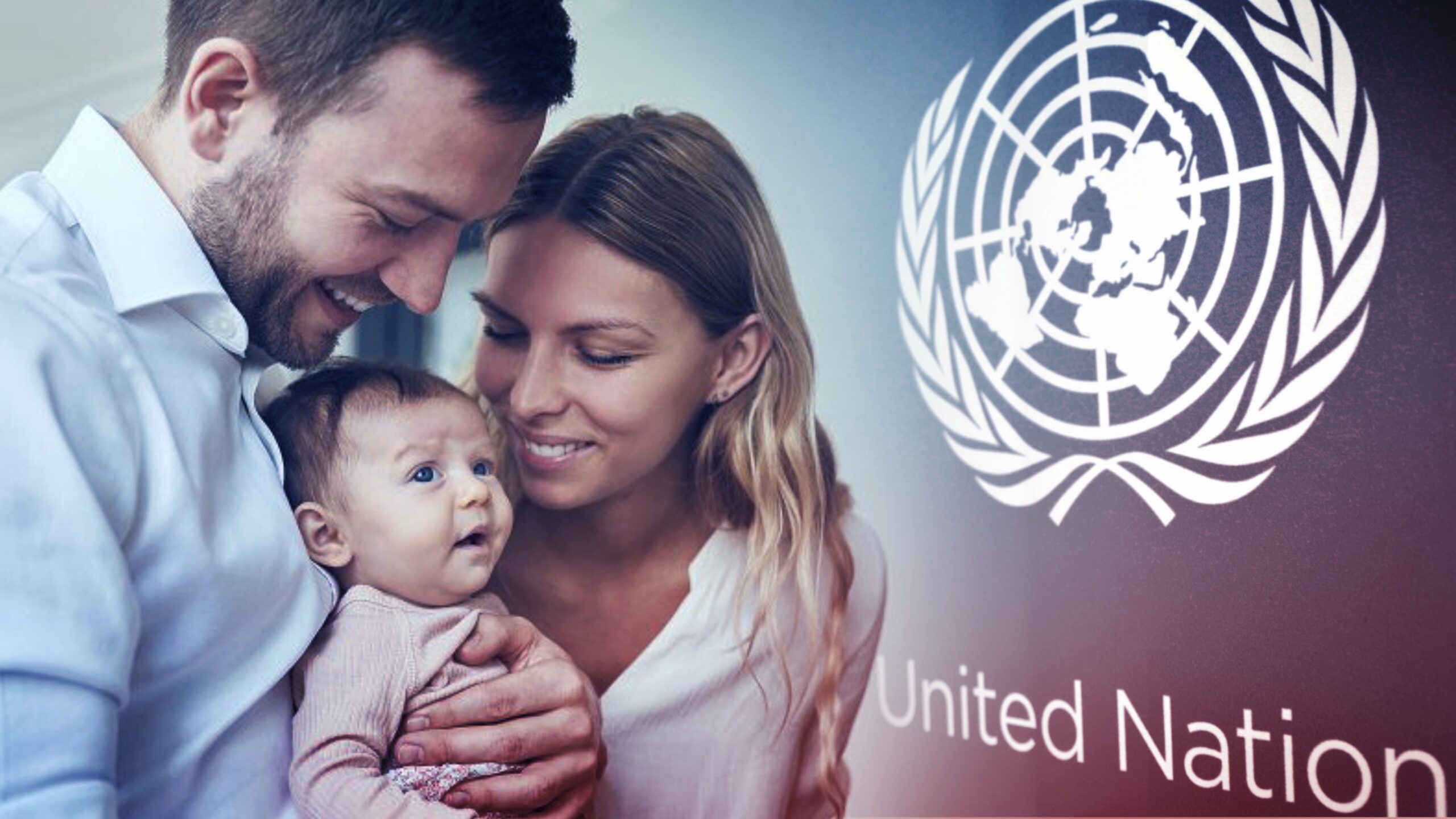
Kimberly Ells arrived at the United Nations excited to engage in work to strengthen families around the world. What she found was an agenda to dismantle the traditional family, promote sexuality to children, and reduce parenthood to a burdensome civil construct.
Kimberly Ells, a policy adviser for Family Watch International and author of the new book, “The Invincible Family: Why the Global Campaign to Crush Motherhood and Fatherhood Can’t Win,” joins the podcast to explain the anti-family agenda being promoted by the United Nations.
Podcast Transcript:
Virginia Allen: I am joined by Kimberly Ells, a policy adviser for Family Watch International and author of the new book “The Invincible Family: Why the Global Campaign to Crush Motherhood and Fatherhood Can’t Win.” Kimberly, welcome to the show.
Kimberly Ells: Thank you so much.
Allen: You have a really interesting background, which includes the work that you’ve done at the U.N. and work that really ultimately led you to write this book. Can you begin just by sharing a little bit about your background and how you came to be involved in issues pertaining to children in the family?
Ells: Sure. Several years ago, I think it was 2013, I found a document online in the course of just research and so forth, and it was a document all about children’s sexual rights and promoting sexual rights for children. Up to this point, I didn’t know that that existed in the mainstream. As a mom, I was very concerned about that, and just as a citizen, I was concerned about that. And so that’s what led me down the road to being involved with family advocacy as well as fighting the children’s sexual rights agenda.
What I mean by children’s sexual rights is this document that was published by International Planned Parenthood Federation presented sexuality to kids and to youth as if it was their human right, as if pursuing sexual pleasure in and of itself was a human right for everybody, including youth–not connected to childbearing, not connected to long-term commitment, not connected to family, really, in any way. And that … sexual pleasure is just a right for all people. Many people feel that that’s problematic as I did, and that led me down this road.
Allen: Then take us a little bit further down that road. You discover this agenda being pushed forward, of telling kids, “You can have sex, it’s your right to have sex.” And then as you continue to pursue this idea of, “Wait a second, no, that’s not right, that doesn’t line up with maybe my traditional values,” where does that road continue to take you?
Ells: Very soon, I was able to connect with like-minded people, and I discovered Family Watch International, who had already been fighting the children’s sexual rights agenda at the international level for some time. And so I immediately wanted to jump on board.
That’s when I became involved internationally at the United Nations and saw for myself that not only was this agenda being pushed by International Planned Parenthood and other organizations, but it seemed to be systemic at the United Nations. Many of the United Nation’s agencies, such as UNESCO, UNICEF, [and] UNFPA are all on board this, and it’s somewhat chilling to see it.
Allen: Now, that, I think, is one of the most fascinating things that you have highlighted so well in your book, is this agenda at an international level. That you went to the U.N. with this idea that “I’m going to work to protect children and families and guard them from sexual predators,” and what you actually found is that within the U.N., there’s this network of connection between socialists and feminists that are working with insiders at the U.N. to further this progressive message. Can you tell us a little bit more of that?
Ells: Sure. There’s a huge socialist presence at the United Nations. There’s a huge feminist presence at the United nations. Sexual activism is rampant. Now, I will say not everything that goes on at the United Nations is necessarily bad, and many people who work there have good intentions. But the problem is it appears that many of the agencies have been corrupted by these various agendas. International Planned Parenthood specifically has a huge presence at the United Nations and very frequently partners with U.N. agencies to sponsor events, to push forward programs, and so forth.
The current secretary-general of the United Nations, António Guterres, is the former president of Socialist International. I don’t think that’s widely known, and there are many other examples that I give in the book [of] open socialists who are in leadership positions at the United Nations. Those of us who value free markets and representative government and different things, that’s very concerning.
Allen: Could you just tell us in a nutshell what is the agenda here?
Ells: Well, the agenda, broadly, for the United Nations is to be the world governing body. That’s not very hidden. In fact, just last week, the head of the U.N., the secretary-general, said that a new model for global governance is on the way. Those are his words. He said that part of that is redistributing wealth and power, which is a very socialist idea. …
How does the sexual agenda fit into that? Well, it fits in in a huge way, because … there’s an inherent power in the family, which isn’t often given the recognition that it should be, but it’s there. And fathers and mothers in concert produce life, they produce their children, and then they raise their children. And they teach their children the values that they want them to live by.
If there’s an outside source, outside of the family, that wants to really take control and have more power, what do they need to do? They need to break down the unit of the family in order to usurp the power that the family naturally has. It makes sense because, as anyone knows, anyone who wants to have power in the world knows that you have to get to the young. Guess where the young begin? They begin in the family.
That puts the family, and often, particularly the mother as well as the father, in a great position of influence because if you influence one child at a time and their beliefs, you influence the world.
When you present sex to children that is not connected to family, even though sex is the very thing that creates people and creates families and family connection, then you win a huge victory for dismantling the family. If you can couch sex as something that is simply just a fun activity that’s not family-centric, then you’ve really gotten to the root of weakening the family and helping children focus on their own pleasure rather than on their responsibilities in society, seeking out stable commitments and seeking marriage and family. All these things are very much connected, but they all lead to weakening and even just trying to destroy the family so that the power that resides there can be usurped.
Allen: Another way that you talk about how the U.N. is trying to almost reframe the family and specifically motherhood is they have talked about motherhood as almost being like a burden. Like poor women, that they aren’t compensated financially for raising children. And isn’t that this travesty. Could you explain that a little bit further, because I just find that really bizarre.
Ells: When I first was involved with United Nations, there was a resolution put forward. … This was just several years ago … basically framing any work that is not done for money as a great travesty and as oppression. Of course, parenthood, both mother and father, had fallen under that umbrella. We’re not necessarily paid for doing that work. This document that was negotiated basically told women: “You are oppressed if you’re caring for your own children.”
The grand solution that was presented in the lines of this document is that nations should seek to establish national care centers for anyone that needed care: sick people, old people, and of course, children. To those of us who value the family and see that it is the linchpin of society, that’s very concerning. And especially the very idea that the only work done in the public sphere for money is valuable is just untrue. Anyone who has been a parent recognizes that.
Allen: How do you think we got to this place because obviously as a society as a whole, not just Americans but around the world, family has existed since the beginning of time. And we’ve seen throughout history that often the role of the mother was highly valued. During the Victorian era, there was this strong-rooted idea that women helped to instill values, often Judaeo-Christian values, into their children, and that was so critical for creating a strong society. What happened to get us off on this track to where now world leaders are saying: “Women, you’re essentially oppressed if someone’s not handing you a paycheck for changing your kids’ diapers.”
Ells: It really is quite amazing, isn’t it, because when most women give birth and they see their beautiful child before them, the first thought is not “Who’s going to pay me to take care of this?” Their first instinct is to want to care for the child. They love the child almost in every case, and so how do we get to this point?
I think it’s a very valid question. I think it’s intertwining links of socialism and feminism, and then more recently, sexual radicalism. Socialism is perennially appealing to people I think because it promises equality, which, of course, is a valid concept in itself. All men are created equal. There’s a certain inherent equality. But socialism corrupts that idea, and it has from the very start, framing the family as an enemy to equality because different situations exist in different families. And that’s OK, but if you’re going to take socialism to its full conclusion, you have to, in a sense, achieve equality by destroying the family so that there can’t be all these differences being taught.
I think the doctrine of equality has been corrupted, and that is still appealing to people. Also, women’s rights, of course; virtually everyone is on board with basic women’s rights that have largely been achieved. Basic human rights, legal rights, wearing pants, all these things are great. But again, feminism, modern feminism, has told women that there is no power in the family, which there is. And to many women, of course, if you’re told that, you’re going to look elsewhere.
These efforts have combined to convince society and particularly women that if they want to have influence and power that they need to look outside the family. And also convince people at large if we want to have equality, and if that is the grand goal, then we can’t have families. It’s a cooperative effort, and I think these movements are gaining steam, unfortunately, and it’s time to return to revering the family, seeing the power of the family, and taking it by the reins.
Allen: Who are the key players that are really promoting and pushing this anti-family agenda, whether they be leaders at the U.N. or within certain groups around the world?
Ells: I mentioned the International Planned Parenthood Federation. That continues to be a huge player. SIECUS [Sexuality Information and Education Council of the United States] is also heavily involved. UNFPA [United Nations Population Fund] … is heavily involved in population efforts, population control efforts. They’ve taken upon themselves to manage the population of the world.
That’s what they see as their job when, really, that responsibility resides in families with men and women together. There’s huge pressure from that angle, as well as other U.N. agencies. The World Health Organization has its hands in the pie as well.
Allen: You say in your book that you’re seeing this anti-family messaging make its way into schools and into education curriculum. Explain what exactly you mean by that and how and where we’re seeing that take place.
Ells: Really important. UNESCO [United Nations Educational, Scientific and Cultural Organization] sees itself as basically the czar of education for the whole world. And they’ve taken it upon themselves to manage the education efforts of the globe. They’ve been driving toward that goal for many, many years, and they have made great strides recently.
There’s U.N. agencies at the top. They’ve established the U.N. Sustainable Development Goals, [and] embedded in those are a lot of socialistic, feministic, sexually radical ideas, not overtly. You have to look carefully, but through interpretation, these things are there.
Then there’s the various organizations, including the Organization for Economic Cooperation and Development, and many other … I won’t go into all the details right here. It’s better to read it in the chapter in the book. But essentially, these big agencies partner with smaller organizations and agencies on the national and then the local level, and this is happening in my conservative state.
One of the key players there that’s specifically mentioned in the U.N. documents about education is the Global Partnership for Education. If you get looking closely into that as I did, it follows the communist model for education to a T. They have lovely graphics showing all of this. They want schools to be a full-service care center, essentially, for children. That they provide for their nutritional needs, their education needs, their medical needs, even they mentioned spiritual needs in some of the UN documents.
That’s concerning to those of us who are worried about local control and local curriculum. There’s many intertwining pieces of this that I explain in the book, but it’s largely driven by digital curriculum and digital learning.
One especially concerning thing is that through the … The OECD [Organization for Economic Cooperation and Development] sponsors these assessments for kids, and these have been ongoing for some time now, and they’ve gone more from being academic assessments to assessing what they call social and emotional skills.
But what they really mean by that is social and emotional attitudes, like children’s attitudes about social issues. It’s been very savvy the way they’ve put this into place, which I explain in more detail in the book. Many schools, even unknowingly at this point, are infiltrated with these U.N. ideologies, and if they’re not yet, it’s in the works.
Allen: Kimberly, right now, we are at a pivotal point in American history. Really, gosh, I don’t know what the history books are going to write about the year 2020, but I can only imagine. We’re seeing riots in the streets that are costing cities millions of dollars in damage, and statues are being torn down. And there just seems to be, in general, this complete disregard for authority, whether that’s law enforcement or political leaders or even parents. You draw a connection between the unrest that we’re seeing in our streets today and this mission to undo the traditional family. Can you explain that?
Ells: We’ve been talking about these global forces and things coming down, and those are very real, and we need to look into those and push back against them. But as you say, if we look closer to home, we see all this mayhem unraveling around us, and it’s alarming to watch. While there are many forces at play, I think the major force at play is the breakdown of the family.
I’ve often said that, back when things were normal even, we all sit and wait in lines at the grocery store, and we all learned those kinds of things because our mothers taught us too, because our dads taught us too. It used to be the expected place of parents to teach self-regulation, to teach patience, to teach self-control, to teach basic–to teach the lessons of history that support all of these good and positive, productive characteristics. And I think we have let go of that far too much.
Of course, I’m not the only one saying that. But I think we have to face the fact that the chaos we’re seeing around us springs largely from our abandonment of our families. I’m not just talking about deadbeat dads or something. I’m talking about ceding the power of parenthood to other places, to other sources, whether it be schools or care centers or other things.
How have we been paying attention at home? I think in some cases, the answer has been not enough. I think if we want to pull ourselves out from this scary place that we’re in, we absolutely have to refocus on the family, starting with our families. And then from there, making sure we’re teaching our kids what we think they need to know, not what somebody else thinks is politically correct for them to know, but what we believe and why.
Then … as a society and as a state, support the family. Even the United Nations documents themselves are peppered with references to the family. Even the [U.N.’s] Universal Declaration of Human Rights says that the family is the core unit of society and is entitled to protection by society and by the state. I think we’ve fallen too far away from that. We need to return to that and recognize that the family’s the building block of society, and if we’re not going to use that building block anymore, society is going to crumble.