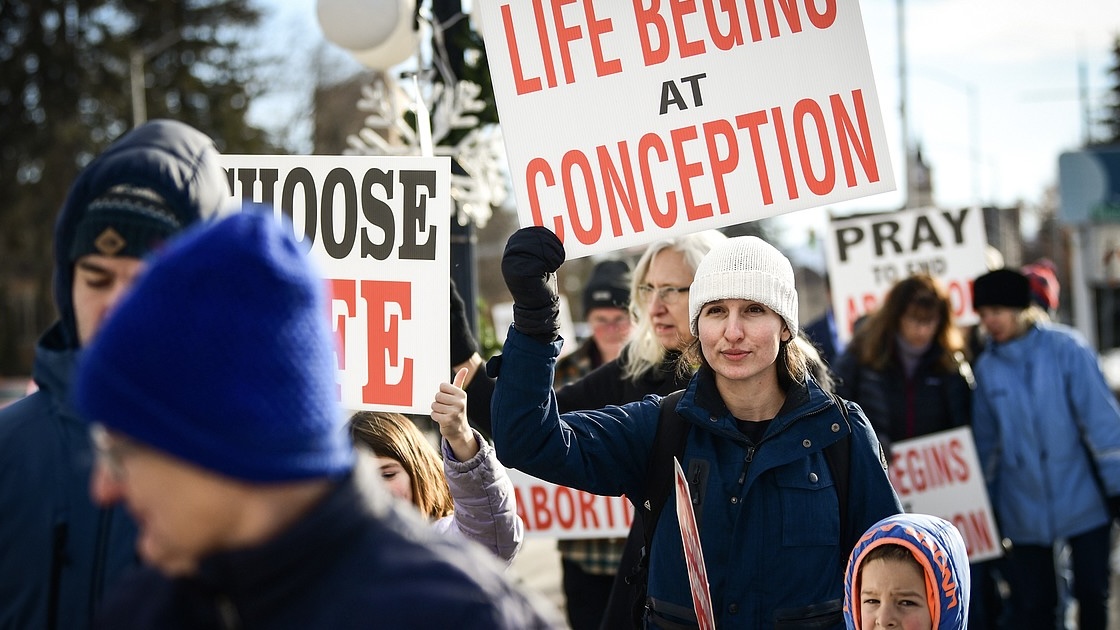
Gov. Mikie Sherrill, D-N.J., signed a law that could possibly outlaw prayer and protests outside abortion centers, according to pro-life activists.
Sherrill’s office says that under the new law, individuals cannot “injure, threaten, intimidate, or physically block patients or providers … to interfere with reproductive healthcare services.” The law also bars New Jersey state agencies, courts and law enforcement from cooperating with certain out-of-state investigations, such as in cases where abortionists mail abortion pills to people in states where abortion is illegal.
The law also expands the definition of “reproductive healthcare services” to include protections for transgender procedures by shielding doctors from lawsuits if they provide these procedures for minors traveling from states where they are illegal.
Pro-life leaders such as Marie Tasy, the executive director of New Jersey Right to Life, are warning that the law opens the floodgates to prosecute pro-life advocates.
“Because terms such as threat, intimidate and coerce are inherently subjective and rest on individual feelings, this language poses a serious danger to free speech,” Tasy cautioned.
Shawn Carney, CEO of 40 Days for Life, said that the law is “designed to scare people of faith off the sidewalks outside abortion facilities by creating the constant threat of prosecution and costly lawsuits,” because prayer, holding a sign, or offering a woman help could be seen as intimidation or coercion.
“We will not be intimidated,” Carney said. “If the state tries to weaponize this law against constitutionally protected speech, our Institute of Law & Justice will be there to defend them at no cost.”
Attorney Erin Mersino, vice president of Advocates for Faith & Freedom, told NTD Good Morning that the law is “very concerning.”
“The cases from the Supreme Court on this issue say that the sidewalks since time immemorial have been places where free speech is supposed to be exchanged.”
Steve Sigmund, spokesman for Sherrill’s office, countered the argument that the law would ban prayer, confirming that “peaceful prayer is protected.”
“Nothing in this law prevents lawful, peaceful protest or the exercise of constitutionally protected speech,” Sigmund said. “What is not protected is violence, threats, intimidation, physical obstruction, or property damage intended to interfere with someone receiving or providing reproductive healthcare.”
But Tasy warned that subjective terms could make standards for what is protected expressions murky.
“Peaceful sidewalk counseling, prayer, holding signs, or simply offering help and alternatives outside a facility can easily be labeled ‘intimidation’ by someone who claims to feel threatened, leaving pro-life advocates open to criminal charges that are difficult to disprove and chilling constitutionally protected expression,” Tasy said.
Those who violate the law could be imprisoned for up to 18 months and/or receive a $10,000 fine.
Relevant Scripture: 1 Thessalonians 5:17, Philippians 4:6, Job 31:15