
September 7, 2026

September, 7, 2026
September 7, 2026

give

untitled artwork

untitled artwork

World news biblically understood

TRENDING:

The War On Drugs: The Real Battle Is Not Merely On The Seas… Its In The Spiritual Condition Of America

Tony Perkins

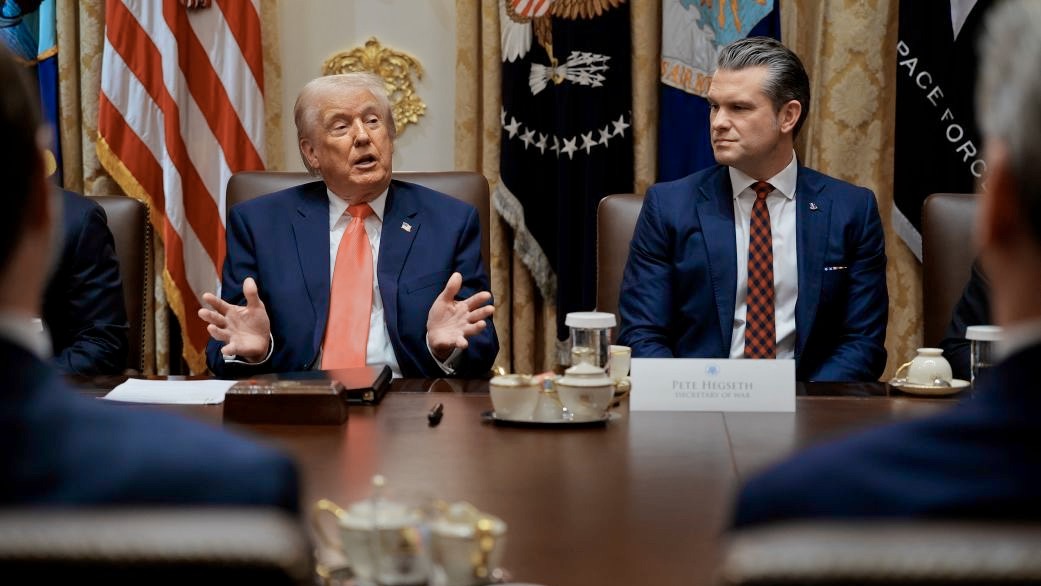
“There was no ‘kill them all’ order.” That is what Navy Admiral Frank “Mitch” Bradley told lawmakers this week in a classified briefing on the September 2 military strike on an alleged narco-terrorist boat in the Caribbean that killed 11 people. What set this incident apart from the roughly 20 other strikes that have reportedly killed about 80 people was the second round of fire, which killed two individuals who had survived the initial attack. The controversy centered on a Washington Post claim that Secretary of War Pete Hegseth ordered, “Kill them all.”

President Trump defended the campaign, saying, “Every boat we knock out, we save 25,000 American lives.” And while military airstrikes on drug boats are indeed new, the use of military power against narco-terrorists is not. The modern war on drugs began in June 1971 when President Richard Nixon declared drug abuse “public enemy number one” and launched a national campaign to confront it. Two years later, he created the Drug Enforcement Administration to choke off the supply entering the U.S. In the 1980s, under Presidents Reagan and Bush, the war intensified dramatically.

But has the war on drugs succeeded? And will eliminating the cargo and crew of drug boats bring victory? The evidence says something is missing.

For a president so skilled in business, President Trump should appreciate the basic law of supply and demand. After more than five decades of the War on Drugs, the risk of dying from overdose has not fallen; it has skyrocketed. In 1971, the U.S. recorded 3.3 overdose deaths per 100,000 people. By 2024, the number had risen to 24.3 per 100,000 — more than a sevenfold increase.

History and the inescapable law of supply and demand make clear that reducing supply alone does not eliminate the problem; it makes the trade more lucrative. The enterprise theory of crime holds that organized criminal groups arise only when there is a profitable demand for illegal goods or services. In other words, supply follows demand. One detailed study of darknet drug markets found that vendors cluster in high-consumption countries, not merely in producer nations. Their presence tracks where customers already are — demand pulls supply into place.

If the war on drugs is ever to succeed, its focus must move beyond the criminal suppliers to the broken users who sustain the market. Reducing demand is essential, and that responsibility extends far beyond government. Drug use is fueled by social breakdown — family instability, isolation, peer pressure, economic despair, glamorizing media, and weakened institutions — and most prominently, spiritual emptiness that leaves individuals without purpose and hope.

People without hope, purpose, a sense of identity, the freedom that comes from forgiveness, and a sense of God’s presence, which gives meaning to life, often turn to substances for escape. These social and spiritual deficits reinforce one another, meaning true recovery requires restoring relationships, addressing real-world pain, and confronting the spiritual void that leads people toward false comfort.

Failing to confront the demand side of the drug crisis will only escalate the costs — to families, communities, and the nation. The real battle is not merely on the seas but in the hearts, homes, and institutions that shape the character of our people.



Millions Are Understanding The News Through A Biblical Worldview

THANKS TO YOUR PRAYER AND SUPPORT

How A Nation Shaped By Biblical Truth Turned Into A Nation That Has Cast Aside The Influence Of The Church

From its founding, national leadership understood the critical need to recognize God and safeguard religious liberty; it was for this reason that America’s third President, Thomas Jefferson, wrote a letter to the Danbury Baptists, who were being persecuted by the state of Connecticut. It was from this letter that the words “building a wall of separation between Church & State” were first mentioned. Today, the words “separation between Church & State” have been stripped of all their original meaning. The phrase intended to prevent the government from stifling the church has been warped to insist that the church must be stifled from exerting any influence in government and the direction of political culture.

The Assertion That Bible Prophecy Is ‘Tertiary’ Has Caused Considerable Damage Within The Body Of Christ

The general assumption in many Bible-believing churches is that Bible prophecy is far too controversial and divisive for it to be taught. A few churches in my area openly state on their websites that the subject is “tertiary,” or less important than other matters of our faith. Sadly, most pastors and believers agree that Bible prophecy is tertiary, which Merriam-Webster defines as “of third rank, importance, or value.”

sign up

‘A Firm Reliance On The Protection Of Divine Providence’: Finding The Way Back As One Nation Under God

It is no secret that America has largely turned its back on God. Children are encouraged to find their own truth from a young age, and mentions of God in our public schools are brushed aside or removed. Church attendance is rapidly declining as self-help strategies promise the answers to life’s problems. We’ve traded Divine guidance for subjective truth—“it’s up to me decide what is right and wrong.” And even the concept of biological sex and gender is up to the preference of each individual. It is clear that secularism has infiltrated every aspect of society, and the results are catastrophic. The further we stray from God, the deeper we sink into hopelessness.

ABC's of Salvation

Decision

UTT

FOI

untitled artwork

Israel My Glory

Tony Perkins

“There was no ‘kill them all’ order.” That is what Navy Admiral Frank “Mitch” Bradley told lawmakers this week in a classified briefing on the September 2 military strike on an alleged narco-terrorist boat in the Caribbean that killed 11 people. What set this incident apart from the roughly 20 other strikes that have reportedly killed about 80 people was the second round of fire, which killed two individuals who had survived the initial attack. The controversy centered on a Washington Post claim that Secretary of War Pete Hegseth ordered, “Kill them all.”

President Trump defended the campaign, saying, “Every boat we knock out, we save 25,000 American lives.” And while military airstrikes on drug boats are indeed new, the use of military power against narco-terrorists is not. The modern war on drugs began in June 1971 when President Richard Nixon declared drug abuse “public enemy number one” and launched a national campaign to confront it. Two years later, he created the Drug Enforcement Administration to choke off the supply entering the U.S. In the 1980s, under Presidents Reagan and Bush, the war intensified dramatically.

But has the war on drugs succeeded? And will eliminating the cargo and crew of drug boats bring victory? The evidence says something is missing.

For a president so skilled in business, President Trump should appreciate the basic law of supply and demand. After more than five decades of the War on Drugs, the risk of dying from overdose has not fallen; it has skyrocketed. In 1971, the U.S. recorded 3.3 overdose deaths per 100,000 people. By 2024, the number had risen to 24.3 per 100,000 — more than a sevenfold increase.

History and the inescapable law of supply and demand make clear that reducing supply alone does not eliminate the problem; it makes the trade more lucrative. The enterprise theory of crime holds that organized criminal groups arise only when there is a profitable demand for illegal goods or services. In other words, supply follows demand. One detailed study of darknet drug markets found that vendors cluster in high-consumption countries, not merely in producer nations. Their presence tracks where customers already are — demand pulls supply into place.

If the war on drugs is ever to succeed, its focus must move beyond the criminal suppliers to the broken users who sustain the market. Reducing demand is essential, and that responsibility extends far beyond government. Drug use is fueled by social breakdown — family instability, isolation, peer pressure, economic despair, glamorizing media, and weakened institutions — and most prominently, spiritual emptiness that leaves individuals without purpose and hope.

People without hope, purpose, a sense of identity, the freedom that comes from forgiveness, and a sense of God’s presence, which gives meaning to life, often turn to substances for escape. These social and spiritual deficits reinforce one another, meaning true recovery requires restoring relationships, addressing real-world pain, and confronting the spiritual void that leads people toward false comfort.

Failing to confront the demand side of the drug crisis will only escalate the costs — to families, communities, and the nation. The real battle is not merely on the seas but in the hearts, homes, and institutions that shape the character of our people.


Trusted Analysis From A Biblical Worldview

Help reach the lost and equip the church with the living and active truth of God's Word in our world today.

YOU CARE ABOUT

BIBLICAL TRUTH. SO DO WE.


Together, We Can Deliver A Biblical Understanding

Of News Events Around The World.

How A Nation Shaped By Biblical Truth Turned Into A Nation That Has Cast Aside The Influence Of The Church

From its founding, national leadership understood the critical need to recognize God and safeguard religious liberty; it was for this reason that America’s third President, Thomas Jefferson, wrote a letter to the Danbury Baptists, who were being persecuted by the state of Connecticut. It was from this letter that the words “building a wall of separation between Church & State” were first mentioned. Today, the words “separation between Church & State” have been stripped of all their original meaning. The phrase intended to prevent the government from stifling the church has been warped to insist that the church must be stifled from exerting any influence in government and the direction of political culture.

The Assertion That Bible Prophecy Is ‘Tertiary’ Has Caused Considerable Damage Within The Body Of Christ

The general assumption in many Bible-believing churches is that Bible prophecy is far too controversial and divisive for it to be taught. A few churches in my area openly state on their websites that the subject is “tertiary,” or less important than other matters of our faith. Sadly, most pastors and believers agree that Bible prophecy is tertiary, which Merriam-Webster defines as “of third rank, importance, or value.”

untitled artwork 6391

‘A Firm Reliance On The Protection Of Divine Providence’: Finding The Way Back As One Nation Under God

It is no secret that America has largely turned its back on God. Children are encouraged to find their own truth from a young age, and mentions of God in our public schools are brushed aside or removed. Church attendance is rapidly declining as self-help strategies promise the answers to life’s problems. We’ve traded Divine guidance for subjective truth—“it’s up to me decide what is right and wrong.” And even the concept of biological sex and gender is up to the preference of each individual. It is clear that secularism has infiltrated every aspect of society, and the results are catastrophic. The further we stray from God, the deeper we sink into hopelessness.

ABC's of Salvation

TV AD

worldview matters

Decision Magazine V AD

Decision

Jan Markell

Israel My Glory

Erick Stakelbeck

untitled artwork

YOU CARE ABOUT

BIBLICAL TRUTH.

SO DO WE.

Together, We Can Deliver A Biblical Understanding Of News Events Around The World And Equip The Church To Stand With A Biblical Worldview.

untitled artwork

Israel My Glory

YOU CARE ABOUT

BIBLICAL TRUTH.

SO DO WE.


Together, We Can Deliver A Biblical Understanding Of News Events Around The World And Equip The Church To Stand With A Biblical Worldview.