
December 16, 2025

December, 16, 2025
December 16, 2025

give

untitled artwork

untitled artwork

World news biblically understood

TRENDING:

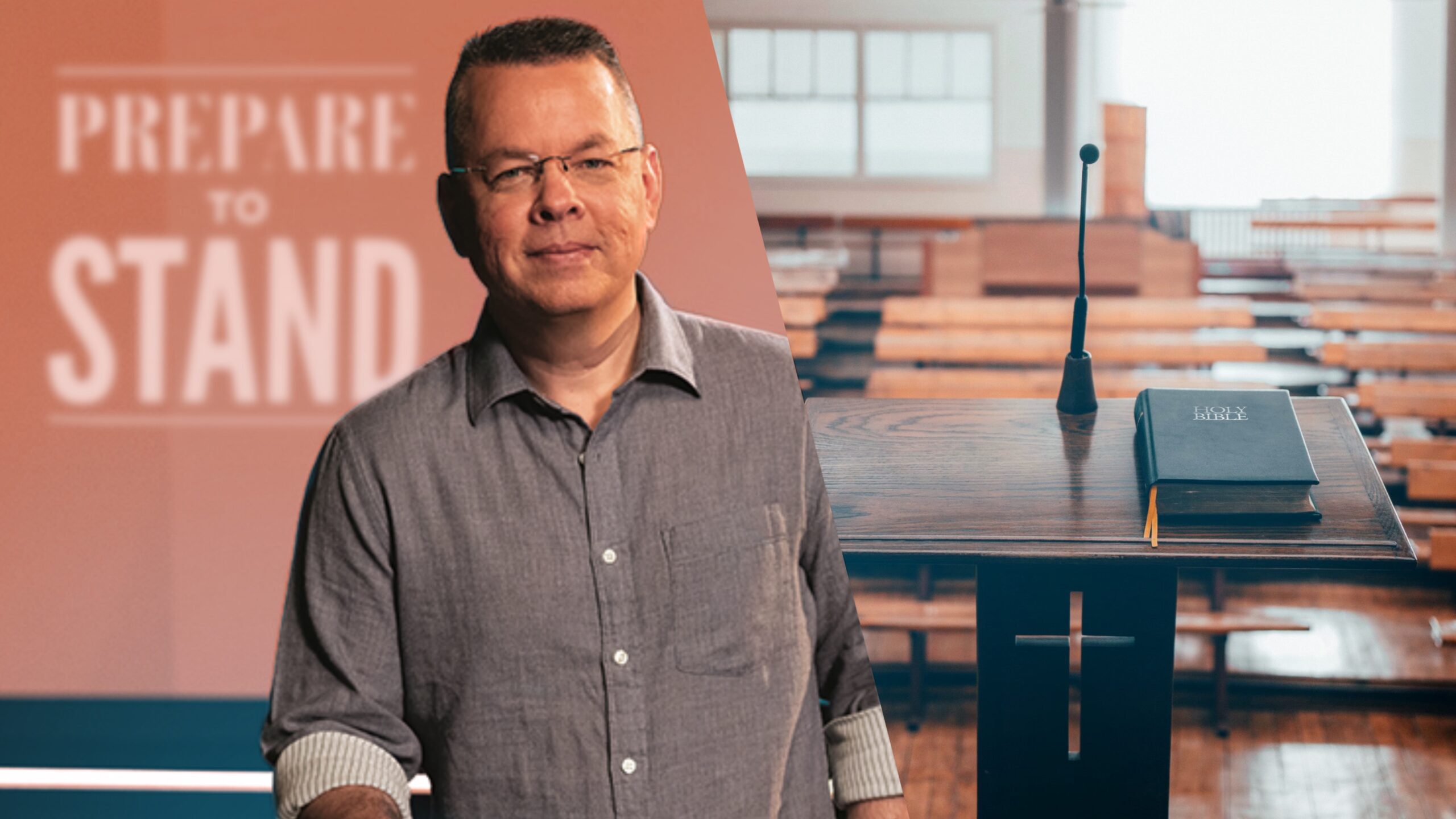
Prepare To Stand: Will Church Leaders Compromise To Avoid Persecution?

Many believers probably think they will never fall prey to deception. Yet when Jesus warns about deception, He’s talking specifically about the people of God, and especially in a context of persecution. He says, “See to it that no one deceives you. … They will deliver you over to be persecuted and killed, and you will be hated by all nations because of My name. At that time many will fall away and will betray and hate one another, and many false prophets will arise and mislead many” (Matthew 24:4, 9-10). 

How could deception creep into the church, and what could it look like?

As I mentioned in a previous article, I see two wedge issues that are going to drive persecution. One is the exclusivity of Jesus in salvation—that He’s the only way to God. The second is that Jesus demands obedience from us in a number of areas that are flashpoints in our current culture, such as marriage, gender identity, sexual morality, life and Biblical justice. Obeying these truths is part of being a faithful follower of Jesus.

In opposition to these truths are some ungodly American values. The messaging from our culture is that pleasure and self-fulfillment are the highest values: Follow your heart. Be authentic. Be true to yourself. In practice, this means that I do what makes me feel good. My feelings determine my own truth, and I live according to my truth.

The church has been marinating in these values to such a degree that many Christians have absorbed them. Many who identify as Christian deny the exclusivity of Jesus. They think there are multiple ways to God, and many don’t think Jesus’ demands for obedience apply to them. They’ve lost their sensitivity to sin and they justify all kinds of sinful behavior. So already there’s a level of deception that has spread among believers.

Many church leaders are now hesitant to teach on the wedge issues because it will cause division. Going forward, pastors will face tremendous external pressure to compromise, and those who do will be held up by society as examples of good and acceptable Christianity. Some leaders will compromise to avoid persecution. But there’s a more insidious reason because it comes from seemingly good motives—the desire to protect their ministry: If I avoid certain issues, then I’ll be able to continue my ministry, which is producing fruit and serving people. But in the end, those leaders will lose their purity and their witness.

So, we may end up with an approved church—one that aligns with progressive values—that’s pitted against those who remain faithful to Jesus. Our culture will applaud the one with progressive values as loving and inclusive and tolerant, and will condemn those who remain faithful to Jesus as “the church of hate.” 

This isn’t a new tactic. Communist governments have often allowed and propped up an approved church that they can control and that will serve the interests of the state. And this corrupted church ends up persecuting true Christians. Norine and I know this from the firsthand experience of many of our Hungarian relatives who remained faithful during the communist years. 

I think many believers will be confused by their leaders and by the loud messaging from our culture. Should they go to the inclusive, loving, approved church, or to the church that so many say is unloving, bigoted, ignorant, hateful? 

This is how many could drift away through deception. We will likely see an exodus from the church that remains faithful to God’s Word. And some, in the rush to distinguish themselves from the “people of hate,” will actually turn against the people they had considered their brothers and sisters.

Jesus warned about this. He said, “Many will fall away and will betray and hate one another” (Matthew 24:10). Deceived believers will attack faithful believers. It is going to become very messy and confusing.

How can we protect ourselves and our families from deception?

First, we need to build community with other believers. Over the years, I have taught about the importance of strengthening relationships in the church and building community, but I came to really believe it when I was in prison. I felt isolated in prison as the only American, but I was most isolated by my faith—I was the only Christian. All of my cellmates were committed Muslims, and the only contact I had with another Christian was when Norine was allowed to visit me. I was intensely lonely, even in an overcrowded cell. 

I had no fellow believer to encourage me, no one to pray with me, and when I was overwhelmed with doubt and became confused, I had no one to challenge my wrong thoughts and correct me. I gained a new appreciation for the church and for the fellowship I’d had with other believers. 

Even as I was learning how difficult it is to be alone in my faith, I could see the sharp contrast with my Muslim cellmates. When a new person was added to our cell, the others would quickly pull him into their Muslim prayers and chanting of the Quran. If he wasn’t a zealous Muslim when he came in, he became zealous within a few weeks.

I learned to survive without much contact with other Christians, but it was extremely difficult. I was desperate to know I was not forgotten, that people were praying for me, that I was still connected to the Body. 

When Peter writes about enduring persecution, he emphasizes, “Above all things have fervent love for one another” (1 Peter 4:8). Then he encourages his readers to offer hospitality to one another and also to minister to one another (see 1 Peter 4:9-10). In other words, build community. 

So this is a Biblical strategy. It’s especially important to build relationships now that will strengthen us in times of pressure. I’m not talking about the wider unity of the church. I’m talking about intentionally growing love, prayer, faithfulness and trust with a smaller circle of friends.

In our society, it takes effort to get close to people, but it is worth it. The New Testament talks of the church in family terms. Spiritual fathers and mothers, sons and daughters. These family relationships are going to be important in the years ahead.

Along with building community, a second step to protecting ourselves from deception is to guard the Word. Having community is not enough. Our community needs to be built around God’s Word. I’ve seen many people drift away from God because they chose the wrong circle of friends, people who were not committed to the authority of the Bible. And the Word needs guarding because many want to dilute it, misuse it and downgrade its authority. We must be committed to God’s truth as revealed in the Bible.

Here is a principle we should live by: Say what God says. That is, I must choose to say about everything what God says about it. I must say about myself what God says about me. I must say about others what God says about them. Whatever God says is good, I must call good, and whatever God says is sin, I must call sin.

If we do this, it will put us at odds with the mainstream of our culture, with the progressive church and even with many evangelical church leaders.

For example, the Bible says Jesus is the only way to salvation. Many will say this is offensive. But I must say about Jesus what He says about Himself. The Bible identifies certain behaviors as sin, and Jesus demands we avoid these sins. Many are going to say this is narrow-minded, bigoted, hateful. But I must say about sin what God says about it. The Bible says God is going to judge people and punish sin. Many will say this is a message of hate that twists God’s character because He’s a God of love who doesn’t judge. But I must say about God what God says about Himself. 

I don’t have to understand. I don’t have to defend God. What I have to do is come into agreement with Him. And this takes determination and courage.

For much of my life I’ve lived as a member of a spiritual minority under some pressure. In Turkey, we were a small group of Christians in a sea of Islam. I didn’t push our church members to go out to confront sinners. Instead, we focused on preparing them to be obedient disciples of Jesus, to remain faithful, to love God and others, and to share their faith.

However, anyone who desires to lead a godly life will face persecution (see 2 Timothy 3:12). And those who are hostile to God’s truth are often not content to leave us alone, even when we’re not challenging them directly. I think in the U.S., they will demand that we approve and celebrate behaviors that God calls sin, and they’ll punish those who refuse.

I don’t know what will happen to our country in the long run, but we do know that Jesus, whose Name is Faithful and True, wins in the end.

In summary, deception can easily derail us. It’s important to determine that you will say about God and yourself and the world what God says about it. Pledge allegiance to Jesus, and stand—without apology or shame.


give

untitled artwork

Even Hitler Knew When The War Was Lost—But Instead Of Accepting Defeat, Hamas Is Digging In

Before taking his own life on April 30, 1945, Adolf Hitler appointed Admiral Karl Dönitz, commander of Germany’s U-boat fleet, as his successor. Hitler knew that World War II was lost and betrayal among his leadership surrounded him. He turned to Dönitz, a man he regarded as disciplined, loyal, and untainted by the corruption of the Nazi inner circle, to defend what remained of the collapsing Reich. Instead, when Hitler died, Dönitz accepted reality: The Nazis were beaten.

Psychologists Argue That Belief In God Was Invented By Mankind, A Byproduct Of ‘Evolution’

Man can’t escape the fact that “that which is known about God is evident within them; for God made it evident to them. For since the creation of the world His invisible attributes, both His eternal power and divine nature, have been clearly seen, being understood through what has been made, so that they are without excuse” (Romans 1:19–20).

sign up

Christians Are Not Called To Fear The Future, They Are Called To Understand It

Indeed, it has become commonplace among many churches and Christian circles to avoid and even dismiss the subject of Bible prophecy. The rationale behind such a decision is often motivated by fear of teaching on matters that can be viewed as controversial or contentious. Instead of expounding on prophetic Scripture that may be viewed as difficult or having the potential for objections and debate, some churches choose to simply overlook, omit, and neglect these portions of God’s Word.

ABC's of Salvation

Decision

UTT

untitled artwork

Israel My Glory

Many believers probably think they will never fall prey to deception. Yet when Jesus warns about deception, He’s talking specifically about the people of God, and especially in a context of persecution. He says, “See to it that no one deceives you. … They will deliver you over to be persecuted and killed, and you will be hated by all nations because of My name. At that time many will fall away and will betray and hate one another, and many false prophets will arise and mislead many” (Matthew 24:4, 9-10). 

How could deception creep into the church, and what could it look like?

As I mentioned in a previous article, I see two wedge issues that are going to drive persecution. One is the exclusivity of Jesus in salvation—that He’s the only way to God. The second is that Jesus demands obedience from us in a number of areas that are flashpoints in our current culture, such as marriage, gender identity, sexual morality, life and Biblical justice. Obeying these truths is part of being a faithful follower of Jesus.

In opposition to these truths are some ungodly American values. The messaging from our culture is that pleasure and self-fulfillment are the highest values: Follow your heart. Be authentic. Be true to yourself. In practice, this means that I do what makes me feel good. My feelings determine my own truth, and I live according to my truth.

The church has been marinating in these values to such a degree that many Christians have absorbed them. Many who identify as Christian deny the exclusivity of Jesus. They think there are multiple ways to God, and many don’t think Jesus’ demands for obedience apply to them. They’ve lost their sensitivity to sin and they justify all kinds of sinful behavior. So already there’s a level of deception that has spread among believers.

Many church leaders are now hesitant to teach on the wedge issues because it will cause division. Going forward, pastors will face tremendous external pressure to compromise, and those who do will be held up by society as examples of good and acceptable Christianity. Some leaders will compromise to avoid persecution. But there’s a more insidious reason because it comes from seemingly good motives—the desire to protect their ministry: If I avoid certain issues, then I’ll be able to continue my ministry, which is producing fruit and serving people. But in the end, those leaders will lose their purity and their witness.

So, we may end up with an approved church—one that aligns with progressive values—that’s pitted against those who remain faithful to Jesus. Our culture will applaud the one with progressive values as loving and inclusive and tolerant, and will condemn those who remain faithful to Jesus as “the church of hate.” 

This isn’t a new tactic. Communist governments have often allowed and propped up an approved church that they can control and that will serve the interests of the state. And this corrupted church ends up persecuting true Christians. Norine and I know this from the firsthand experience of many of our Hungarian relatives who remained faithful during the communist years. 

I think many believers will be confused by their leaders and by the loud messaging from our culture. Should they go to the inclusive, loving, approved church, or to the church that so many say is unloving, bigoted, ignorant, hateful? 

This is how many could drift away through deception. We will likely see an exodus from the church that remains faithful to God’s Word. And some, in the rush to distinguish themselves from the “people of hate,” will actually turn against the people they had considered their brothers and sisters.

Jesus warned about this. He said, “Many will fall away and will betray and hate one another” (Matthew 24:10). Deceived believers will attack faithful believers. It is going to become very messy and confusing.

How can we protect ourselves and our families from deception?

First, we need to build community with other believers. Over the years, I have taught about the importance of strengthening relationships in the church and building community, but I came to really believe it when I was in prison. I felt isolated in prison as the only American, but I was most isolated by my faith—I was the only Christian. All of my cellmates were committed Muslims, and the only contact I had with another Christian was when Norine was allowed to visit me. I was intensely lonely, even in an overcrowded cell. 

I had no fellow believer to encourage me, no one to pray with me, and when I was overwhelmed with doubt and became confused, I had no one to challenge my wrong thoughts and correct me. I gained a new appreciation for the church and for the fellowship I’d had with other believers. 

Even as I was learning how difficult it is to be alone in my faith, I could see the sharp contrast with my Muslim cellmates. When a new person was added to our cell, the others would quickly pull him into their Muslim prayers and chanting of the Quran. If he wasn’t a zealous Muslim when he came in, he became zealous within a few weeks.

I learned to survive without much contact with other Christians, but it was extremely difficult. I was desperate to know I was not forgotten, that people were praying for me, that I was still connected to the Body. 

When Peter writes about enduring persecution, he emphasizes, “Above all things have fervent love for one another” (1 Peter 4:8). Then he encourages his readers to offer hospitality to one another and also to minister to one another (see 1 Peter 4:9-10). In other words, build community. 

So this is a Biblical strategy. It’s especially important to build relationships now that will strengthen us in times of pressure. I’m not talking about the wider unity of the church. I’m talking about intentionally growing love, prayer, faithfulness and trust with a smaller circle of friends.

In our society, it takes effort to get close to people, but it is worth it. The New Testament talks of the church in family terms. Spiritual fathers and mothers, sons and daughters. These family relationships are going to be important in the years ahead.

Along with building community, a second step to protecting ourselves from deception is to guard the Word. Having community is not enough. Our community needs to be built around God’s Word. I’ve seen many people drift away from God because they chose the wrong circle of friends, people who were not committed to the authority of the Bible. And the Word needs guarding because many want to dilute it, misuse it and downgrade its authority. We must be committed to God’s truth as revealed in the Bible.

Here is a principle we should live by: Say what God says. That is, I must choose to say about everything what God says about it. I must say about myself what God says about me. I must say about others what God says about them. Whatever God says is good, I must call good, and whatever God says is sin, I must call sin.

If we do this, it will put us at odds with the mainstream of our culture, with the progressive church and even with many evangelical church leaders.

For example, the Bible says Jesus is the only way to salvation. Many will say this is offensive. But I must say about Jesus what He says about Himself. The Bible identifies certain behaviors as sin, and Jesus demands we avoid these sins. Many are going to say this is narrow-minded, bigoted, hateful. But I must say about sin what God says about it. The Bible says God is going to judge people and punish sin. Many will say this is a message of hate that twists God’s character because He’s a God of love who doesn’t judge. But I must say about God what God says about Himself. 

I don’t have to understand. I don’t have to defend God. What I have to do is come into agreement with Him. And this takes determination and courage.

For much of my life I’ve lived as a member of a spiritual minority under some pressure. In Turkey, we were a small group of Christians in a sea of Islam. I didn’t push our church members to go out to confront sinners. Instead, we focused on preparing them to be obedient disciples of Jesus, to remain faithful, to love God and others, and to share their faith.

However, anyone who desires to lead a godly life will face persecution (see 2 Timothy 3:12). And those who are hostile to God’s truth are often not content to leave us alone, even when we’re not challenging them directly. I think in the U.S., they will demand that we approve and celebrate behaviors that God calls sin, and they’ll punish those who refuse.

I don’t know what will happen to our country in the long run, but we do know that Jesus, whose Name is Faithful and True, wins in the end.

In summary, deception can easily derail us. It’s important to determine that you will say about God and yourself and the world what God says about it. Pledge allegiance to Jesus, and stand—without apology or shame.

Trusted Analysis From A Biblical Worldview

Help reach the lost and equip the church with the living and active truth of God's Word in our world today.

YOU CARE ABOUT

BIBLICAL TRUTH. SO DO WE.


Together, We Can Deliver A Biblical Understanding

Of News Events Around The World.

Even Hitler Knew When The War Was Lost—But Instead Of Accepting Defeat, Hamas Is Digging In

Before taking his own life on April 30, 1945, Adolf Hitler appointed Admiral Karl Dönitz, commander of Germany’s U-boat fleet, as his successor. Hitler knew that World War II was lost and betrayal among his leadership surrounded him. He turned to Dönitz, a man he regarded as disciplined, loyal, and untainted by the corruption of the Nazi inner circle, to defend what remained of the collapsing Reich. Instead, when Hitler died, Dönitz accepted reality: The Nazis were beaten.

Psychologists Argue That Belief In God Was Invented By Mankind, A Byproduct Of ‘Evolution’

Man can’t escape the fact that “that which is known about God is evident within them; for God made it evident to them. For since the creation of the world His invisible attributes, both His eternal power and divine nature, have been clearly seen, being understood through what has been made, so that they are without excuse” (Romans 1:19–20).

untitled artwork 6391

Christians Are Not Called To Fear The Future, They Are Called To Understand It

Indeed, it has become commonplace among many churches and Christian circles to avoid and even dismiss the subject of Bible prophecy. The rationale behind such a decision is often motivated by fear of teaching on matters that can be viewed as controversial or contentious. Instead of expounding on prophetic Scripture that may be viewed as difficult or having the potential for objections and debate, some churches choose to simply overlook, omit, and neglect these portions of God’s Word.

ABC's of Salvation

TV AD

worldview matters

Decision Magazine V AD

Decision

Jan Markell

Israel My Glory

Erick Stakelbeck

untitled artwork

YOU CARE ABOUT

BIBLICAL TRUTH.

SO DO WE.

Together, We Can Deliver A Biblical Understanding Of News Events Around The World And Equip The Church To Stand With A Biblical Worldview.

Israel My Glory

untitled artwork

YOU CARE ABOUT

BIBLICAL TRUTH.

SO DO WE.


Together, We Can Deliver A Biblical Understanding Of News Events Around The World And Equip The Church To Stand With A Biblical Worldview.