August 20, 2026

August, 20, 2026
August 20, 2026

give

untitled artwork

untitled artwork

World news biblically understood

TRENDING:

Minnesota Is Not An Outlier; It Is A Case Study Of What Happens When Institutions Abondon Moral Restraints

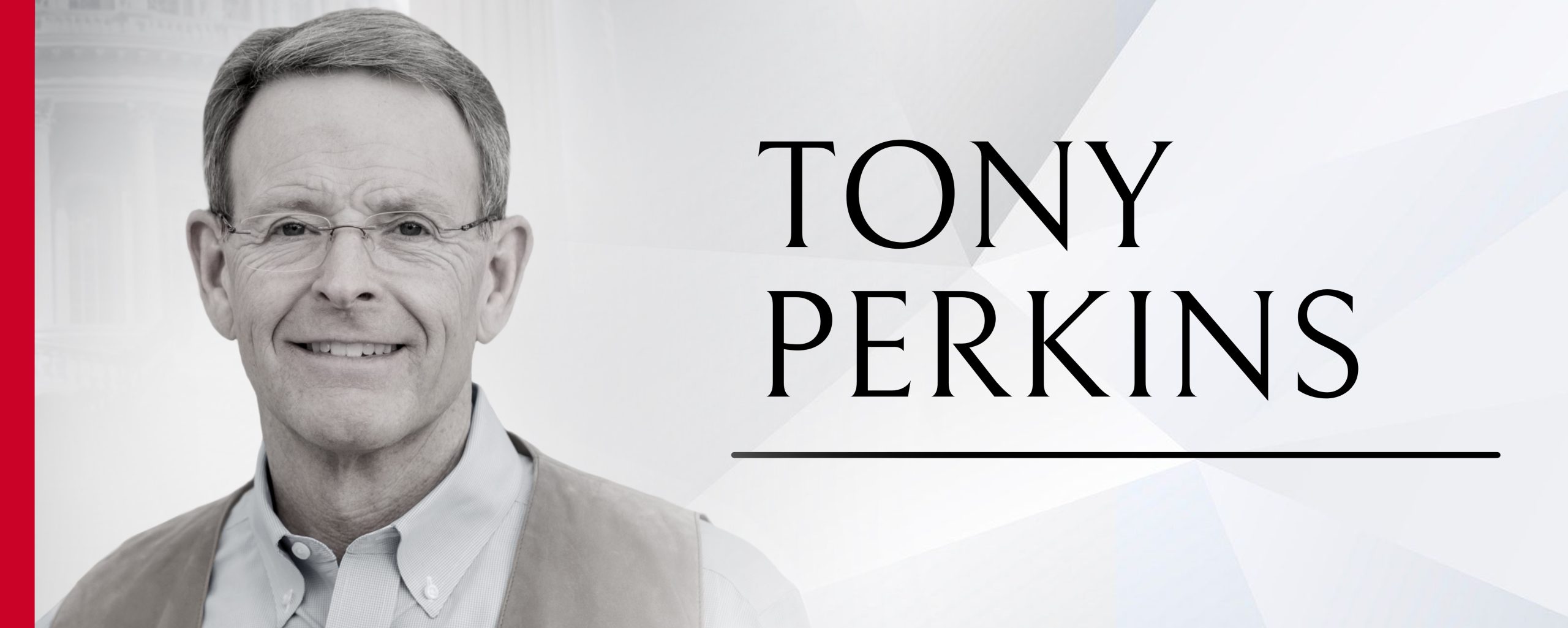
Tony Perkins

As cities descend into repeated cycles of chaos and lives are lost in Minnesota, Americans are asking a simple question: how did we get here?

Many Americans, understandably shocked, look at the protests, the violence, and the loss of life and point to immediate causes. Some cite fraud and corruption in federally funded social programs, apparently tolerated by state officials. Others point to aggressive enforcement of immigration law that sparked deadly confrontations.

But these are symptoms, not the cause.

Minnesota is not an outlier; it is a case study of what happens when institutions that once fostered moral restraint abandon that role. The real cause is less obvious because it is far removed from the tragic events we see today in the headlines. It can be traced back decades to what was called the long march through the institutions — a phrase coined in the late 1960s by Marxist student leader Rudi Dutschke. The phrase deliberately echoed Mao Zedong’s Long March, but Dutschke’s was not a military campaign. It was a cultural and ideological one, measured in decades rather than battles.

The strategy was to transform society not by overthrowing government outright, but by infiltrating its core institutions: universities, primary and secondary education, the media, the courts, and even churches. The objective was to shape what people were taught — what would be considered normal, respectable, and acceptable — so that political outcomes would eventually become inevitable.

House Speaker Mike Johnson (R-La.) alluded to this reality recently before the British Parliament when he referenced a quote often attributed to Abraham Lincoln: “The philosophy of the schoolroom in one generation will be the philosophy of government in the next.”

That insight helps explain why the classroom has been central to this long march. Obstacles to Marxist ideology had to be removed or marginalized. It was no accident that prayer and Bible reading were removed from public schools in 1962 and 1963. When God and His word are removed as moral restraints, lawlessness fills the vacuum — and that is the fertile ground in which Marxism takes root and gains power.

Over time, that march has moved beyond institutions and inevitably spilled into the streets. Confrontations like those we’ve seen in Minneapolis — whether involving George Floyd or Alex Pretti — are becoming routine. The rule of law depends on shared moral limits; when those limits erode, force alone cannot restore order. 

Yet this is not the end of the story.

We are now seeing efforts to retrace the steps of the long march and restore what was dismantled. Just last week, I sat in the courtroom of the Fifth Circuit Court of Appeals as officials from Louisiana and Texas argued in defense of laws placing the Ten Commandments in public school classrooms. Ten years ago, leaders were routinely warned not to attempt such measures, intimidated by a distorted notion of “separation of church and state.”

But the fruits of the long march — lawlessness and chaos — are now undeniable. And so courageous parents, pastors, and public officials are standing up. With constitutional authority and the courage of faith, they are working to restore and preserve what has always been essential to our republic: if we are to be one nation — under God. Because restoration does not begin in Washington — it begins in classrooms, courtrooms, churches, and homes.



Millions Are Understanding The News Through A Biblical Worldview

THANKS TO YOUR PRAYER AND SUPPORT

Syrian Nuclear Material, Turkish Encroachment, And The Burden Of Damascus

The aim of the Turks is to encroach toward the border with Israel, starting from the north and pushing further and further toward the center of Syria. Without intervention, before you know it, they will be on the border next to the Golan Heights. With a shared border with Israel, Turkey hopes to eventually fulfill its dreams of walking into Jerusalem to “liberate” it—a goal they discuss openly. Alongside Turkish activity in the region, the International Atomic Energy Agency (IAEA) released the information uncovering more undeclared nuclear material in Syria—tons of it.

A Race For Energy: AI Infrastructure Is Becoming Increasingly Difficult To Confine Within Traditional National Boundaries

Historically, governments could identify critical infrastructure relatively easily—power plants, factories, banks, and computer centers all had addresses. But imagine autonomous AI infrastructure scattered across international waters, connected through satellite networks. Now add space-based computing, orbital communications, global satellite internet, autonomous ships, and digital currencies. The technological world begins to look considerably different. Infrastructure is becoming increasingly global, distributed, autonomous, and difficult to confine within traditional national boundaries. That is where the Bible-prophecy discussion becomes especially interesting.

sign up

Political Division, Persecution, And War: How Bible Prophecy Changes Our Perspective On World Affairs

As history hurtles toward the Last Days, we find ourselves trying to navigate through an increasingly hostile world. Politics are dividing our country and even our churches. People are becoming more cold-hearted, selfish, and angry. We are experiencing a breakdown that feels irreversible. Our problems do not have simple solutions, but we can find guidance in Scripture.

ABC's of Salvation

Decision

UTT

FOI

untitled artwork

Israel My Glory

Tony Perkins

As cities descend into repeated cycles of chaos and lives are lost in Minnesota, Americans are asking a simple question: how did we get here?

Many Americans, understandably shocked, look at the protests, the violence, and the loss of life and point to immediate causes. Some cite fraud and corruption in federally funded social programs, apparently tolerated by state officials. Others point to aggressive enforcement of immigration law that sparked deadly confrontations.

But these are symptoms, not the cause.

Minnesota is not an outlier; it is a case study of what happens when institutions that once fostered moral restraint abandon that role. The real cause is less obvious because it is far removed from the tragic events we see today in the headlines. It can be traced back decades to what was called the long march through the institutions — a phrase coined in the late 1960s by Marxist student leader Rudi Dutschke. The phrase deliberately echoed Mao Zedong’s Long March, but Dutschke’s was not a military campaign. It was a cultural and ideological one, measured in decades rather than battles.

The strategy was to transform society not by overthrowing government outright, but by infiltrating its core institutions: universities, primary and secondary education, the media, the courts, and even churches. The objective was to shape what people were taught — what would be considered normal, respectable, and acceptable — so that political outcomes would eventually become inevitable.

House Speaker Mike Johnson (R-La.) alluded to this reality recently before the British Parliament when he referenced a quote often attributed to Abraham Lincoln: “The philosophy of the schoolroom in one generation will be the philosophy of government in the next.”

That insight helps explain why the classroom has been central to this long march. Obstacles to Marxist ideology had to be removed or marginalized. It was no accident that prayer and Bible reading were removed from public schools in 1962 and 1963. When God and His word are removed as moral restraints, lawlessness fills the vacuum — and that is the fertile ground in which Marxism takes root and gains power.

Over time, that march has moved beyond institutions and inevitably spilled into the streets. Confrontations like those we’ve seen in Minneapolis — whether involving George Floyd or Alex Pretti — are becoming routine. The rule of law depends on shared moral limits; when those limits erode, force alone cannot restore order. 

Yet this is not the end of the story.

We are now seeing efforts to retrace the steps of the long march and restore what was dismantled. Just last week, I sat in the courtroom of the Fifth Circuit Court of Appeals as officials from Louisiana and Texas argued in defense of laws placing the Ten Commandments in public school classrooms. Ten years ago, leaders were routinely warned not to attempt such measures, intimidated by a distorted notion of “separation of church and state.”

But the fruits of the long march — lawlessness and chaos — are now undeniable. And so courageous parents, pastors, and public officials are standing up. With constitutional authority and the courage of faith, they are working to restore and preserve what has always been essential to our republic: if we are to be one nation — under God. Because restoration does not begin in Washington — it begins in classrooms, courtrooms, churches, and homes.

Trusted Analysis From A Biblical Worldview

Help reach the lost and equip the church with the living and active truth of God's Word in our world today.

YOU CARE ABOUT

BIBLICAL TRUTH. SO DO WE.


Together, We Can Deliver A Biblical Understanding

Of News Events Around The World.

Syrian Nuclear Material, Turkish Encroachment, And The Burden Of Damascus

The aim of the Turks is to encroach toward the border with Israel, starting from the north and pushing further and further toward the center of Syria. Without intervention, before you know it, they will be on the border next to the Golan Heights. With a shared border with Israel, Turkey hopes to eventually fulfill its dreams of walking into Jerusalem to “liberate” it—a goal they discuss openly. Alongside Turkish activity in the region, the International Atomic Energy Agency (IAEA) released the information uncovering more undeclared nuclear material in Syria—tons of it.

A Race For Energy: AI Infrastructure Is Becoming Increasingly Difficult To Confine Within Traditional National Boundaries

Historically, governments could identify critical infrastructure relatively easily—power plants, factories, banks, and computer centers all had addresses. But imagine autonomous AI infrastructure scattered across international waters, connected through satellite networks. Now add space-based computing, orbital communications, global satellite internet, autonomous ships, and digital currencies. The technological world begins to look considerably different. Infrastructure is becoming increasingly global, distributed, autonomous, and difficult to confine within traditional national boundaries. That is where the Bible-prophecy discussion becomes especially interesting.

untitled artwork 6391

Political Division, Persecution, And War: How Bible Prophecy Changes Our Perspective On World Affairs

As history hurtles toward the Last Days, we find ourselves trying to navigate through an increasingly hostile world. Politics are dividing our country and even our churches. People are becoming more cold-hearted, selfish, and angry. We are experiencing a breakdown that feels irreversible. Our problems do not have simple solutions, but we can find guidance in Scripture.

ABC's of Salvation

TV AD

worldview matters

Decision Magazine V AD

Decision

Jan Markell

Israel My Glory

Erick Stakelbeck

untitled artwork

YOU CARE ABOUT

BIBLICAL TRUTH.

SO DO WE.

Together, We Can Deliver A Biblical Understanding Of News Events Around The World And Equip The Church To Stand With A Biblical Worldview.

untitled artwork

Israel My Glory

YOU CARE ABOUT

BIBLICAL TRUTH.

SO DO WE.


Together, We Can Deliver A Biblical Understanding Of News Events Around The World And Equip The Church To Stand With A Biblical Worldview.