May 13, 2026

May, 13, 2026
May 13, 2026

give

untitled artwork

untitled artwork

World news biblically understood

TRENDING:

Little By Little, Mankind Is Being Discipled By The Tech Industry

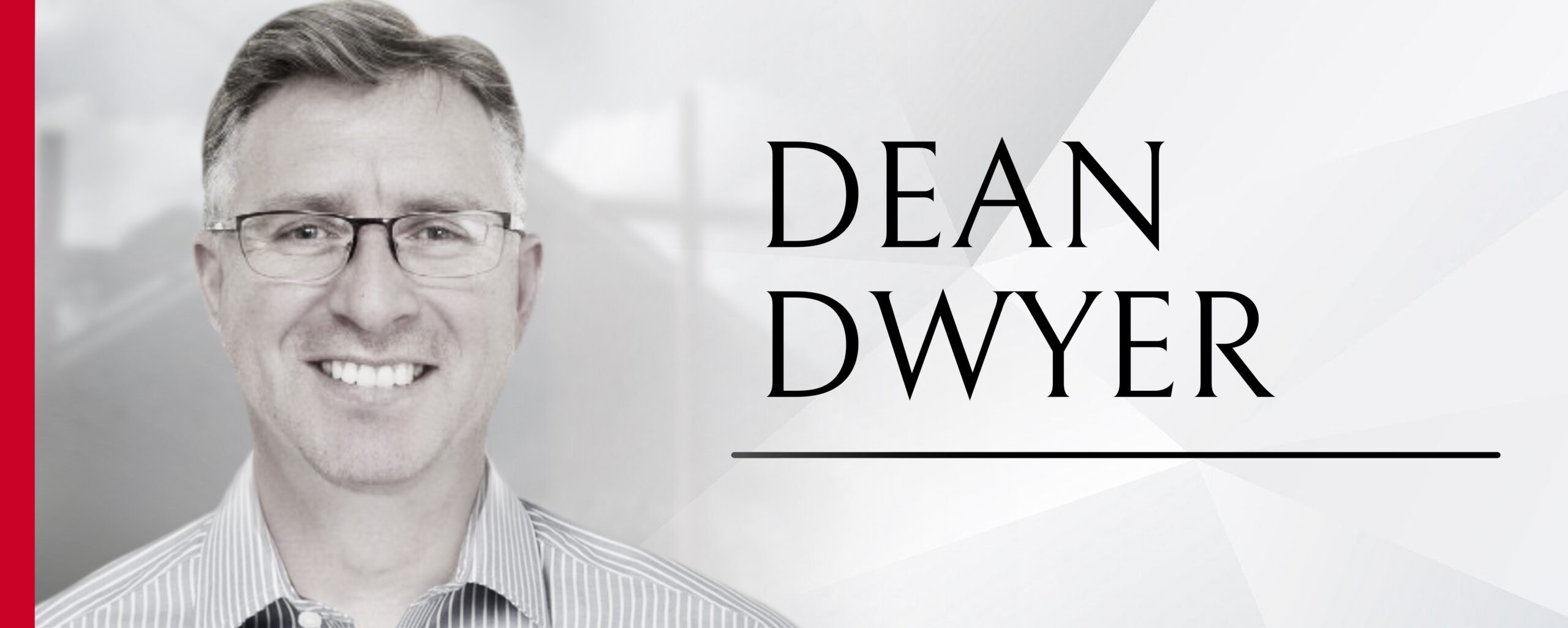
Pastor Dean Dwyer

There is a humorous (but fictional) story told about some children who were raised in an orphanage. As they were brought out to lunch one day, there was a huge basket of apples sitting on a table.  In front of the apples was a sign: Take only one, God is watching. On the next table was another basket, but no sign.  This basket was overflowing with delicious chocolate chip cookies. As the children stared at the baskets, one young boy said to the others, “Take all the cookies you want, God is watching the apples!”

Authority figures everywhere have sought to influence behaviour by reminding those under their control that somebody is always watching or listening. Influencing our behaviour begins in the mind—a fact which not only our spiritual enemy understands, but also those who wish to influence our thoughts and behaviours for their own political, social or financial gain.

George Orwell once stated: “Power is in tearing human minds to pieces and putting them together again in new shapes of your own choosing.” Sadly, we are all too aware that, although unstated, many worldly organisations clearly adopt this goal. One of the powerful tools they have at their disposal are complex algorithms.

The challenge for believers is to have a working understanding of how algorithms function, why they are deployed against the human mind and why it is important to follow the exhortation in Romans 12:2: “And do not be conformed to this world, but be transformed by the renewing of your mind, that you may prove what is that good and acceptable and perfect will of God.

As you may appreciate, social media organisations, streaming platforms, and music subscription services have a vested interest in ensuring your constant interaction with their services. As part of the world system, their significant financial gain is only possible because of humanity’s consumption of their products.

Undoubtedly, many Christians use the aforementioned services as part of their personal and corporate ministry programs. After all, the advent of technology has allowed us all to further God’s work in ways not available to the early church. However, as Romans 12:2 reminds us, we must also recognise that our life is subject to change either by pressure from without (conformation) or by power from within (transformation).

In succinct layman terminology, an algorithm is part of the technology that learns your preferences and prioritises the content you are shown on social media apps and streaming services.

Although you may be tempted to believe that algorithms are a recent invention, they actually find their origin in antiquity.  So far as the term “algorithm” is concerned, it relates to a 9th century Persian polymath, Muhammad ibn Mūsā al-Khwārizmī.  He wrote a book in Arabic about Hindu-Arabic numerals and the Latin translation of the book title was “Algoritmi de numero Indorum” (in English “Al-Khwārizmī on the Hindu Art of Reckoning”). Hence, our modern term “algorithm”. 

Algorithms are at work in every one of your digital platforms. Therefore, think of your online presence as a digital diet. However, you are not setting the menu. An algorithm is determining your digital diet and enticing you to sit down and eat. However, just like our physical diet, our digital diet can radically shape our lives, sometimes pushing us toward specific ends that clash with our personal goals.

When mankind remains a passive consumer of whatever the algorithm decides to put before it, man is no longer the agent of choice, leading to a scenario whereby our mind is being conditioned to unquestionably accept the suggestion that an algorithm puts before us on any given day. 

The challenge that mankind will face, both now and in the future, is the desire for those in the technology sector to turn every non-tech-based activity into a tech-based activity. After all, if technocrats and powerbrokers are able to connect (and keep mankind connected) to emerging technologies, not only does that allow for greater behavioural modification, but it also allows the entrenchment of the use of algorithms as people become wholly reliant on the service being provided.

Little by little, mankind is being discipled by the tech industry in very particular ways—by curating the news we see, suggesting the items we should purchase and the entertainment we enjoy.  However, this is not only affecting mankind’s social pursuits but also having a deep impact on our spiritual lives.      

As believers, we must warn against the practice of “algorithmic spirituality”. You see, algorithms do not take into account biblical truth when suggesting information to users. The algorithm will identify a common point of interest and suggest the more popular content without an examination of the validity or substance of the information.  Therefore, people who are prone to accept what they see without being good Bereans will allow their spiritual life to be shaped more by algorithm than the Holy Spirit.

Furthermore, there are enough legitimate studies now to confirm that many young adult Christians are being led to change their theological beliefs due to pressure from other users and influencers on social media. Consequently, they are moving away from biblical truth and adopting subjectivity and relativism.

If this problem continues unchecked, the number of apostates will continue to rise, leaving a small minority willing to stand on the authority of Scripture. The answer? The Apostle Paul’s words still ring true today: “Test all things; hold fast what is good” (1 Thessalonians 5:21).


Give

Give

Biblical Insight: No Matter The Iran War’s Outsome, It Will Not Result In A Lasting Peace

As Christians who believe in God’s prophetic Word in Scripture, we have a key piece of insight. Even if a deal of some fashion is reached, or better yet, regime change that embraces Israel and the West, lasting peace will not be the outcome. Ezekiel 38 and 39 tell us that Persia—modern-day Iran—will once again come against Israel in a future war, in another attempt to destroy Israel.

Denying God’s Authority: The Driving Force Behind Our Culture’s Rejection Of Absolute Truth

Is truth whatever one wants it to be? Are statements like, “You have your truth and I have my truth” legitimate? Postmodernism floods universities with this definition of truth. This view believes that truth is in the eye of the beholder; it is relative and subjective instead of absolute and objective. Thus, Christianity’s absolute and objective claims are met with skepticism by postmodernists.  

sign up

We Really Are In A Raging War: University Professor Says He Is Waiting For Me To Die

The evolutionary worldview is a religion, one that’s practiced by those who attack Christianity. They have a nontheistic religion; in fact, evolution fits one of the Merriam-Webster dictionary definitions of religion: “a cause, principle, or system of beliefs held to with ardor and faith.” The dictionary definition of religion certainly describes the worldview of evolutionary naturalism. The beliefs of evolutionism purport to explain the entire world’s existence by means of evolutionary naturalism, and thus, it is an all-encompassing faith—a religious worldview.

ABC's of Salvation

Decision

UTT

FOI

untitled artwork

Israel My Glory

Pastor Dean Dwyer

There is a humorous (but fictional) story told about some children who were raised in an orphanage. As they were brought out to lunch one day, there was a huge basket of apples sitting on a table.  In front of the apples was a sign: Take only one, God is watching. On the next table was another basket, but no sign.  This basket was overflowing with delicious chocolate chip cookies. As the children stared at the baskets, one young boy said to the others, “Take all the cookies you want, God is watching the apples!”

Authority figures everywhere have sought to influence behaviour by reminding those under their control that somebody is always watching or listening. Influencing our behaviour begins in the mind—a fact which not only our spiritual enemy understands, but also those who wish to influence our thoughts and behaviours for their own political, social or financial gain.

George Orwell once stated: “Power is in tearing human minds to pieces and putting them together again in new shapes of your own choosing.” Sadly, we are all too aware that, although unstated, many worldly organisations clearly adopt this goal. One of the powerful tools they have at their disposal are complex algorithms.

The challenge for believers is to have a working understanding of how algorithms function, why they are deployed against the human mind and why it is important to follow the exhortation in Romans 12:2: “And do not be conformed to this world, but be transformed by the renewing of your mind, that you may prove what is that good and acceptable and perfect will of God.

As you may appreciate, social media organisations, streaming platforms, and music subscription services have a vested interest in ensuring your constant interaction with their services. As part of the world system, their significant financial gain is only possible because of humanity’s consumption of their products.

Undoubtedly, many Christians use the aforementioned services as part of their personal and corporate ministry programs. After all, the advent of technology has allowed us all to further God’s work in ways not available to the early church. However, as Romans 12:2 reminds us, we must also recognise that our life is subject to change either by pressure from without (conformation) or by power from within (transformation).

In succinct layman terminology, an algorithm is part of the technology that learns your preferences and prioritises the content you are shown on social media apps and streaming services.

Although you may be tempted to believe that algorithms are a recent invention, they actually find their origin in antiquity.  So far as the term “algorithm” is concerned, it relates to a 9th century Persian polymath, Muhammad ibn Mūsā al-Khwārizmī.  He wrote a book in Arabic about Hindu-Arabic numerals and the Latin translation of the book title was “Algoritmi de numero Indorum” (in English “Al-Khwārizmī on the Hindu Art of Reckoning”). Hence, our modern term “algorithm”. 

Algorithms are at work in every one of your digital platforms. Therefore, think of your online presence as a digital diet. However, you are not setting the menu. An algorithm is determining your digital diet and enticing you to sit down and eat. However, just like our physical diet, our digital diet can radically shape our lives, sometimes pushing us toward specific ends that clash with our personal goals.

When mankind remains a passive consumer of whatever the algorithm decides to put before it, man is no longer the agent of choice, leading to a scenario whereby our mind is being conditioned to unquestionably accept the suggestion that an algorithm puts before us on any given day. 

The challenge that mankind will face, both now and in the future, is the desire for those in the technology sector to turn every non-tech-based activity into a tech-based activity. After all, if technocrats and powerbrokers are able to connect (and keep mankind connected) to emerging technologies, not only does that allow for greater behavioural modification, but it also allows the entrenchment of the use of algorithms as people become wholly reliant on the service being provided.

Little by little, mankind is being discipled by the tech industry in very particular ways—by curating the news we see, suggesting the items we should purchase and the entertainment we enjoy.  However, this is not only affecting mankind’s social pursuits but also having a deep impact on our spiritual lives.      

As believers, we must warn against the practice of “algorithmic spirituality”. You see, algorithms do not take into account biblical truth when suggesting information to users. The algorithm will identify a common point of interest and suggest the more popular content without an examination of the validity or substance of the information.  Therefore, people who are prone to accept what they see without being good Bereans will allow their spiritual life to be shaped more by algorithm than the Holy Spirit.

Furthermore, there are enough legitimate studies now to confirm that many young adult Christians are being led to change their theological beliefs due to pressure from other users and influencers on social media. Consequently, they are moving away from biblical truth and adopting subjectivity and relativism.

If this problem continues unchecked, the number of apostates will continue to rise, leaving a small minority willing to stand on the authority of Scripture. The answer? The Apostle Paul’s words still ring true today: “Test all things; hold fast what is good” (1 Thessalonians 5:21).


Trusted Analysis From A Biblical Worldview

Help reach the lost and equip the church with the living and active truth of God's Word in our world today.

YOU CARE ABOUT

BIBLICAL TRUTH. SO DO WE.


Together, We Can Deliver A Biblical Understanding

Of News Events Around The World.

Biblical Insight: No Matter The Iran War’s Outsome, It Will Not Result In A Lasting Peace

As Christians who believe in God’s prophetic Word in Scripture, we have a key piece of insight. Even if a deal of some fashion is reached, or better yet, regime change that embraces Israel and the West, lasting peace will not be the outcome. Ezekiel 38 and 39 tell us that Persia—modern-day Iran—will once again come against Israel in a future war, in another attempt to destroy Israel.

Denying God’s Authority: The Driving Force Behind Our Culture’s Rejection Of Absolute Truth

Is truth whatever one wants it to be? Are statements like, “You have your truth and I have my truth” legitimate? Postmodernism floods universities with this definition of truth. This view believes that truth is in the eye of the beholder; it is relative and subjective instead of absolute and objective. Thus, Christianity’s absolute and objective claims are met with skepticism by postmodernists.  

untitled artwork 6391

We Really Are In A Raging War: University Professor Says He Is Waiting For Me To Die

The evolutionary worldview is a religion, one that’s practiced by those who attack Christianity. They have a nontheistic religion; in fact, evolution fits one of the Merriam-Webster dictionary definitions of religion: “a cause, principle, or system of beliefs held to with ardor and faith.” The dictionary definition of religion certainly describes the worldview of evolutionary naturalism. The beliefs of evolutionism purport to explain the entire world’s existence by means of evolutionary naturalism, and thus, it is an all-encompassing faith—a religious worldview.

ABC's of Salvation

TV AD

worldview matters

Decision Magazine V AD

Decision

Jan Markell

Israel My Glory

Erick Stakelbeck

untitled artwork

YOU CARE ABOUT

BIBLICAL TRUTH.

SO DO WE.

Together, We Can Deliver A Biblical Understanding Of News Events Around The World And Equip The Church To Stand With A Biblical Worldview.

untitled artwork

Israel My Glory

YOU CARE ABOUT

BIBLICAL TRUTH.

SO DO WE.


Together, We Can Deliver A Biblical Understanding Of News Events Around The World And Equip The Church To Stand With A Biblical Worldview.