A state law in California, ostensibly meant to make it easier for religious institutions and nonprofit colleges to rezone their property for building low-income housing for the homeless, is now being used to potentially confiscate church property, according to legal experts in the Golden State.
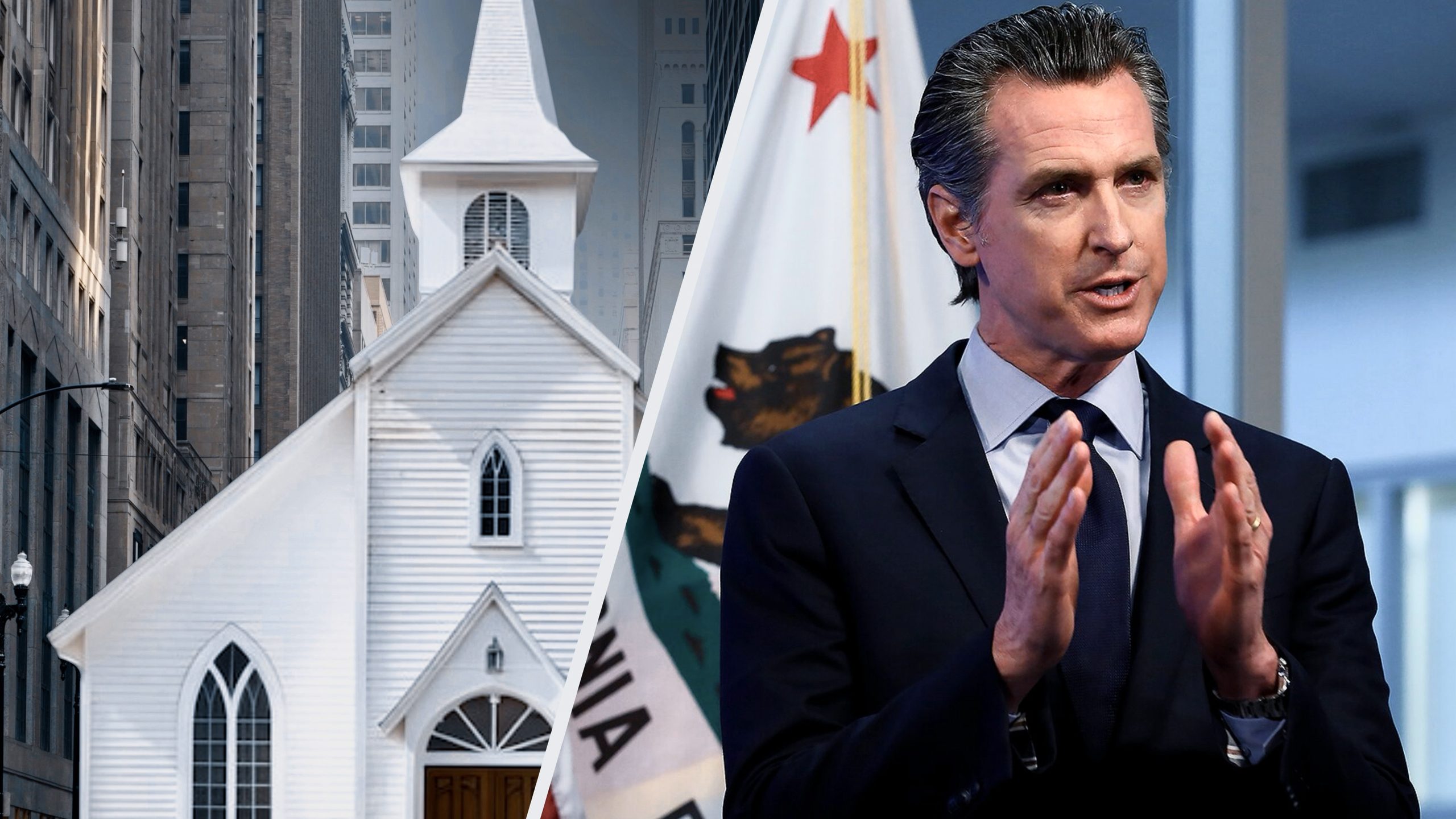
The controversy began in October 2023, when California Governor Gavin Newsom (D) signed into law a measure that allowed religious institutions and nonprofit colleges to bypass local zoning laws in order to quickly establish affordable housing. The measure was apparently intended to make it easier for local jurisdictions to abide by state regulations that mandate a certain amount of appropriately zoned land in order to accommodate population growth across all economic levels, including extremely low-income individuals like the homeless.
But now, churches in the deep blue state are finding that property developers are attempting to use the regulations to force them to sell property against their will, which could eventually devolve into their property being confiscated through eminent domain.
On Monday, Brad Dacus, who serves as president and founder of the Pacific Justice Institute, joined “Washington Watch with Tony Perkins” to explain what is happening under the regulations.
“California has this mandate that cities have to appropriate zoned land so you can have government-paid public housing projects for the homeless,” he described. “[The city of] Lakewood went ahead and decided to [do this]. And our attorney Natalie Smith appeared and made it very clear that this is very objectionable because they said, ‘Okay, all these 10 churches, we’re going to zone them. They could be churches, but we’re going to zone it also to be used for public housing.’ Now, they didn’t use eminent domain and say, ‘We’re going to use eminent domain ourselves.’ They just said, ‘We’re going to zone this for public housing.’”
“Well, here’s the problem,” Dacus continued. “The real rub here is that companies and developers can come in and say to a court, ‘Look, the city is not meeting their requirements to implement public housing for the homeless, so we are going to do it.’ And the law allows them to file independent actions and be able to seek eminent domain against churches. Is it hypothetical? No. Right now, we are in Huntington Beach, California [in] Orange County defending a church at Calvary Chapel that is dealing with that issue. A developer [is] trying to take part of the land rights of a church right there in Huntington Beach under the same auspices … to say we need more housing.”
What makes the situation particularly alarming is that this is happening in Orange County — one of the few “conservative strongholds” that exists in deep blue California, Family Research Council President Tony Perkins pointed out.
Even still, Dacus described how the state “pounced [on] them and said, ‘No, you have to allow areas for homeless. And if you’re not going to do it, companies can come in and do it instead and get the eminent domain.’ Well, at least that’s what they’re arguing. We at Pacific Justice Institute, we fought these things before. We’ve defended churches on land use issues using the First Amendment, and we stand ready to defend any church in any way that has its land taken from them. Churches are actually more protected than any other entity when it comes to property [and] land rights pursuant to the First Amendment’s free exercise clause. … And if necessary, we’ll have to engage in litigation. … [I]t’s interesting. [Lakewood is] not targeting other areas. They’re really focusing on churches.”
Perkins pointed out that this is unsurprising. “We’ve seen this before. One of the reasons they’re going after churches is they don’t pay property tax. They’re not getting money from those churches. They would rather turn that into property that’s generating tax revenue, so that’s one of the reasons these churches get targeted.”
Dacus concurred, noting that the financial stakes of the situation could scare off lenders as well. “Lenders could easily look at this and say, ‘Whoa, this isn’t quite so certain. There’s a possibility that a company could come in and get a judge to order eminent domain. We’re going to hold off.’ That’s a very real possibility as well. The stakes are high here, and we intend to make sure that this doesn’t spread to other states by hopefully nipping it in the bud.”
Dan Hart is senior editor at The Washington Stand, a news division of the Family Research Council.