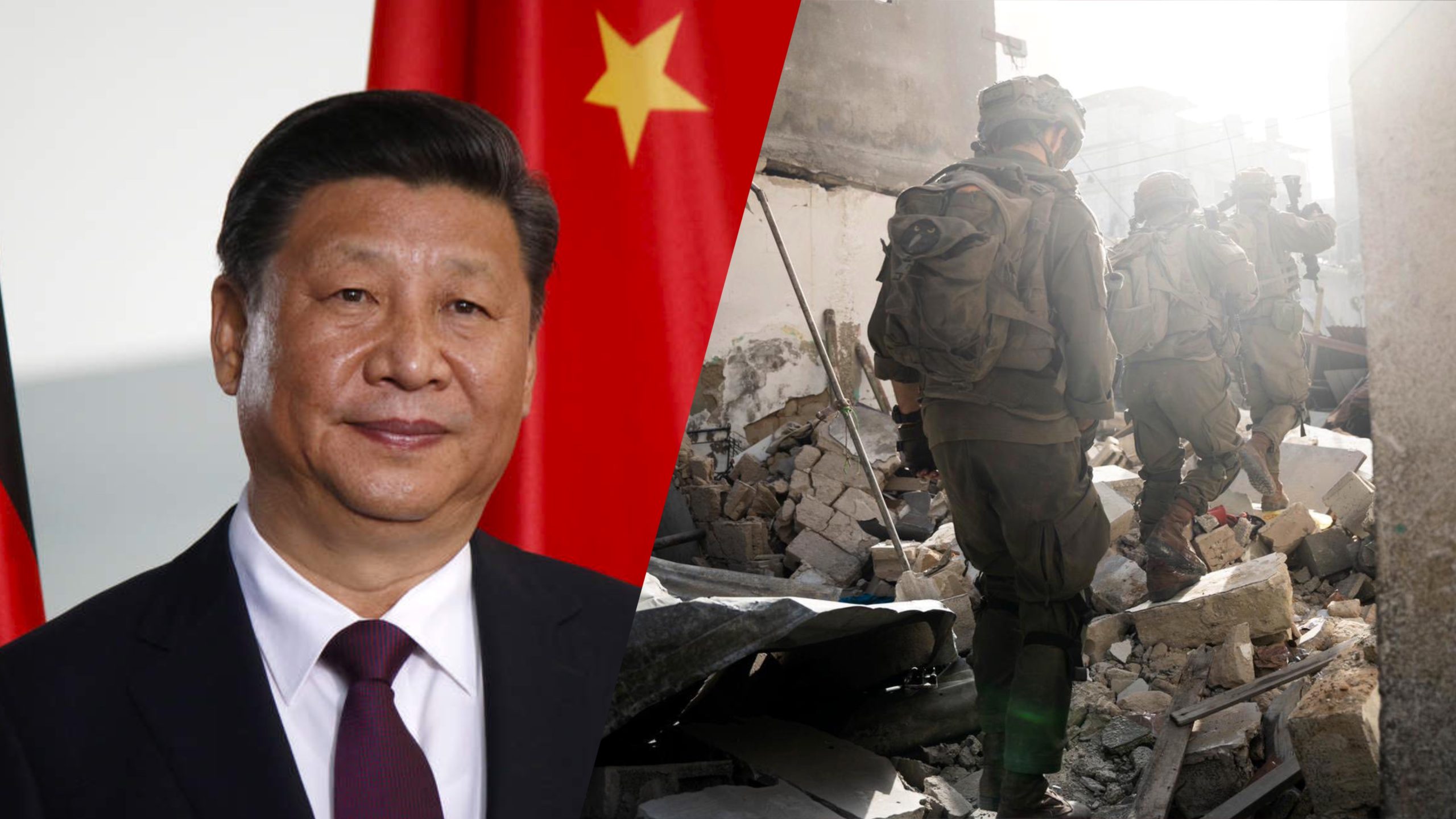
More than a dozen Palestinian factions—including bitter rivals Fatah and Hamas—recently signed a national unity deal aimed at maintaining Palestinian control over the Gaza Strip after the war with Israel ends. Known as the Beijing Declaration, the deal, negotiated by China, lays the groundwork for an interim national reconciliation government to rule post-war Gaza.
China, which has long sought to expand its influence in the Middle East, touted the agreement as a diplomatic victory to enhance its image as a champion of the Palestinian cause. However, the deal is unlikely to succeed because it does not address the deep-seated divisions within the Palestinian movement.
Intra-Palestinian rivalry revolves around a power struggle for control of the Palestinian national movement. Fatah, allegedly secular, claims to seek a nonviolent path to a two-state solution, which would involve establishing an independent State of Palestine alongside the State of Israel. By contrast, Hamas, an Iran-backed Islamist terror group, fundamentally rejects Israel’s right to exist as an independent, sovereign country.
Fatah’s and Hamas’s decades-long enmity increased in 2004, after the death of Yasser Arafat, the first president of the Palestinian Authority, and boiled over in 2007, when Hamas violently ejected Fatah from Gaza and took control over the territory. Since then, more than a dozen reconciliation attempts have ended in failure.
The Beijing Declaration has several major objectives: (1) creating an interim Palestinian national unity government for Gaza and the West Bank, (2) unifying Palestinian institutions, and (3) electing a new Palestinian National Council. The agreement leaves out crucial details, including whether Hamas will recognize Israel’s right to exist.
Chinese Foreign Minister Wang Yi, who said the agreement was “dedicated to the great reconciliation and unity of all 14 [Palestinian] factions,” outlined a three-step plan for post-war Gaza: (1) promoting a lasting ceasefire, (2) upholding the principle of “Palestinians governing Palestine,” and (3) recognizing an independent Palestinian state. An official Chinese statement included a commitment to “the establishment of an independent Palestinian state with Jerusalem as its capital.” President Xi Jinping additionally called for an international peace conference aimed at achieving Palestine’s “full” membership in the United Nations.
Middle East expert Tahani Mustafa believes the Beijing Declaration will fail because Fatah leader Mahmoud Abbas is opposed to sharing power with Hamas. “The biggest obstacle so far has been Mahmoud Abbas and his absolute reluctance to relinquish in any way his monopoly on power. . . . It would mean Fatah losing its hegemony over the last Palestinian political institution it controls,” she said.
Israel opposes any future governance role for Hamas, and Israeli Foreign Minister Israel Katz flatly rejected the Beijing Declaration. “Hamas and Fatah signed an agreement in China for joint control of Gaza after the war,” he noted. “Instead of rejecting terrorism, Mahmoud Abbas embraces the murderers and rapists of Hamas, revealing his true face. In reality, this won’t happen because Hamas’s rule will be crushed, and Abbas will be watching Gaza from afar. Israel’s security will remain solely in Israel’s hands.”
During a recent speech to a joint session of the U.S. Congress, Israeli Prime Minister Benjamin Netanyahu said his goal is to destroy Hamas. “The day after we defeat Hamas, a new Gaza can emerge,” he said. “My vision for that day is of a demilitarized and deradicalized Gaza. Israel does not seek to resettle Gaza. But for the foreseeable future, we must retain overriding security control there to prevent the resurgence of terror, to ensure that Gaza never again poses a threat to Israel.”
Editor’s Note: Why Is This News Biblically Relevant?
The current status of Gaza showcases that creating a Palestinian State, providing a deal could even be reached, would not breed a peaceful outcome. When Israel left Gaza in 2005, the land went from a thriving region to a bastion of terrorism against the Jewish State.
In addition, the Palestinian Authority (PA) has continued to demonstrate its genocidal views against the Jewish People with its ongoing payments to the families of terrorists.
Iran, the largest state sponsor of terrorism in the world, would continue to funnel money, just as they do with Hezbollah in Lebanon, to accomplish their goals of eradicating Israel.
As Olivier Melnick recently underscored, “As much as the Palestinian narrative has wanted us to believe it was, this was never about the land. This has always been about the complete annihilation of the Jewish people and the complete eradication of the State of Israel from the world map.”
Hal Lindsey likewise wrote: “Hatred against Israel is not about land, rights, or money. It is a tenet of [Islamic] faith.”
Rewarding terrorists with land and autonomy couldn’t possibly bring peace to the region. So why are the Biden administration and numerous world leaders championing this “solution”? The answer is found in Scripture.
A two-state solution advocates for the dividing of Jerusalem, with the east portion of the city being given to the Palestinians for their state capital.
God told the prophet Zechariah that a time would come when Israel is re-established, and the world would be fixated on the idea of dividing the Jewish State, specifically Jerusalem.
In Zechariah 12:3, God warned the nations: “And in that day will I make Jerusalem a burdensome stone for all people: all that burden themselves with it shall be cut in pieces, though all the people of the earth be gathered together against it.”
The seeming complexity of bringing peace to the Middle East is not complicated when we examine the region through a Biblical worldview. The Bible provides a detailed understanding of Israel’s history and future. In its divine precision, God’s Word even illuminates the intentions in the hearts of those seeking to destroy or divide the world’s only Jewish State.