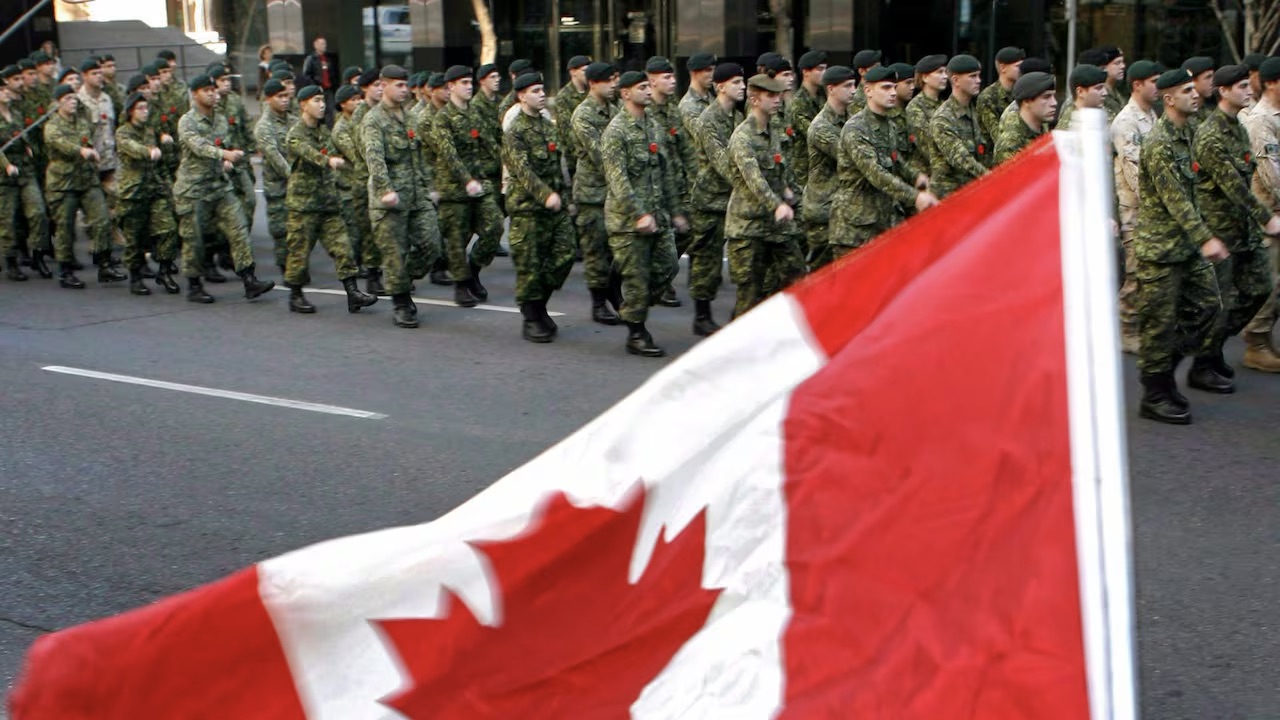
Canada’s government has raised alarms by instructing military chaplains that they may offer “inclusive” spiritual reflections at public events but cannot pray or mention God.
The personnel instruction released July 29 by the Canadian Armed Forces (CAF) does not apply to funerals or voluntary worship services, but does apply to all other public events, including military parades, change of command ceremonies, commissioning of ships and historical commemorations.
“The purpose of this instruction is to provide direction to commanders and all members of the CAF regarding their moral, ethical and legal obligation to respect freedom of religion and religious neutrality in the execution of their public duties … respecting the cultural and spiritual diversity of CAF members,” the government said.
Critics of the move chastised the military for relegating meaningful religious speech to private worship spaces and diminishing the unique role of military chaplains.
“This policy goes beyond banning prayer and prohibits even the acknowledgment to those gathered that some may believe in the divine and others not,” said Bruce Clemenger, senior ambassador and president emeritus of the Evangelical Fellowship of Canada (EFC), and member of the Interfaith Committee for Canadian Military Chaplaincy. “This exclusion restricts the spiritual reflection of chaplains to a secularist and characteristically humanist expression.”
The policy carves out an exception for “Indigenous rites” in military settings for cultural or educational purposes while claiming the exception doesn’t constitute an endorsement of a religious viewpoint.
In a statement the EFC said: “Rather than taking a nonpreferential and pluralistic approach, the spiritual reflection required by the new policy favours and mandates one view of spirituality and religion to the exclusion of others.”
EFC said they are asking that the policy “be rescinded and replaced with a more inclusive approach.”
The conservative group CitizenGo Canada posted on X: “Tell Lt.-Gen. Erick Simoneau to withdraw it and allow voluntary denominational prayer at official ceremonies.” Simoneau is commanding officer of the CAF’s Military Personnel Command. The Liberal Party, led by Prime Minister Mark Carney, holds a sizable majority in Canada’s Parliament.
The Conservative Party’s shadow defense minister, James Bezan, posted on X: “Conservatives are deeply concerned about this Liberal government’s continued interference in the traditions, values, and personal freedoms,” adding, “This is yet another attack…on freedom of religion and expression.”
A 2021 review of the Royal Canadian Chaplain Service showed that of CAF members surveyed, 61% identified as religious; 27% as Catholic, 20% Protestant, 7% an unspecified Christian denomination, and 7% practiced a non-Christian religion.
Retired Chaplain Maj. Gen. Douglas Carver, former U.S. Army Chief of Chaplains and now executive director of chaplaincy for the North American Mission Board, told Decision in an email that he is thankful for the religious liberty protections afforded to American troops, including chaplains. The news from Canada is a reminder to be vigilant in defending our constitutional freedoms.
“Our service members have sacrificed their blood, sweat, and tears to ensure all Americans, including those in uniform, can freely exercise their religious liberty as guaranteed by the First Amendment,” Carver said.
He added: “The Military Chaplains Modernization Act, a bipartisan legislative proposal currently under consideration by Congress, will fully safeguard military chaplains to exercise their primary role as religious leaders without the threat of retaliation. It will legally codify the duties, qualifications, and religious liberties of chaplains across all branches of the U.S. Armed Forces.”