June 21, 2026

June, 21, 2026
June 21, 2026

give

untitled artwork

untitled artwork

World news biblically understood

TRENDING:

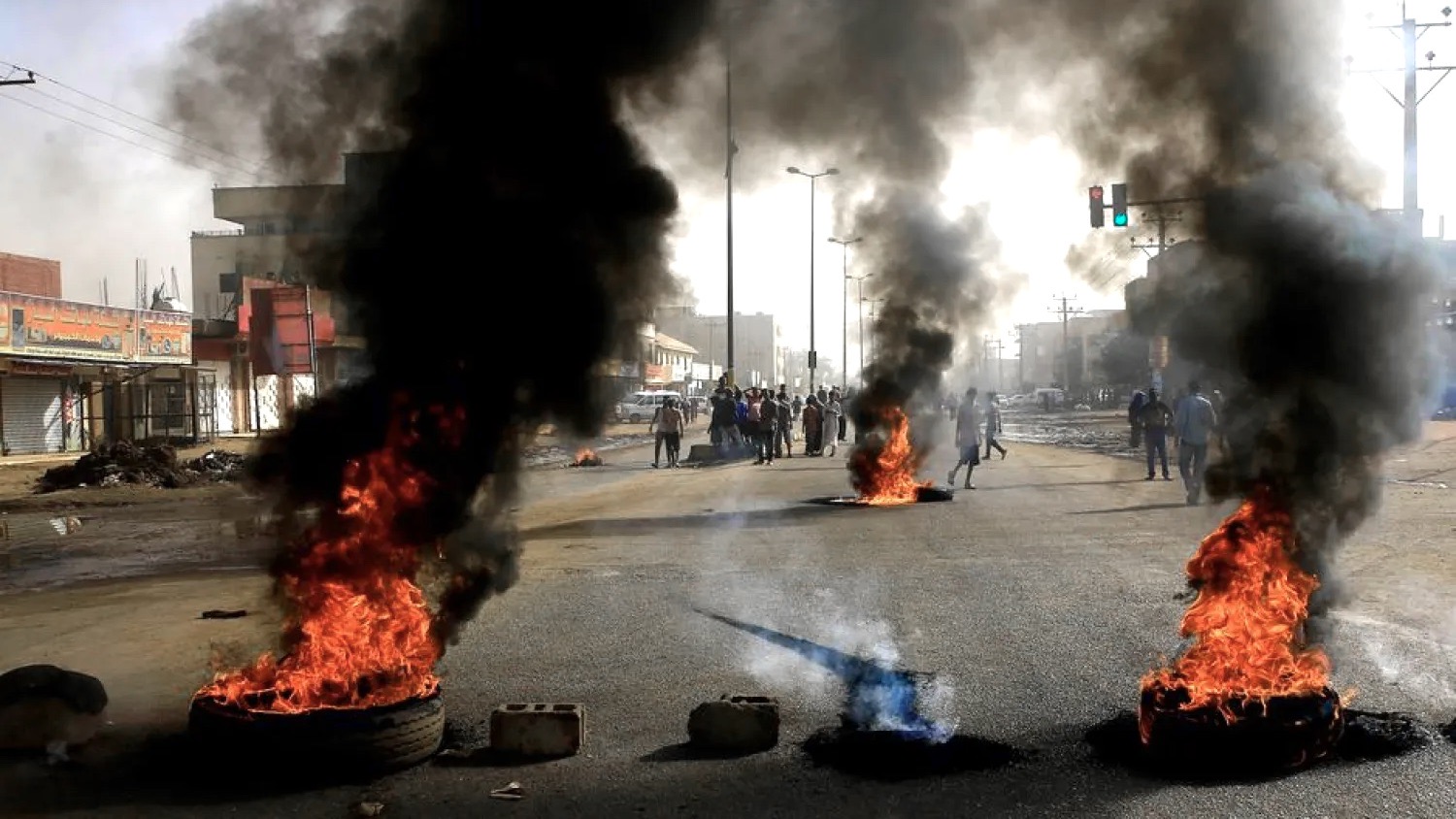
Both Side Of The Bloody Conflict In Sudan Have A Common Enemy: Christians

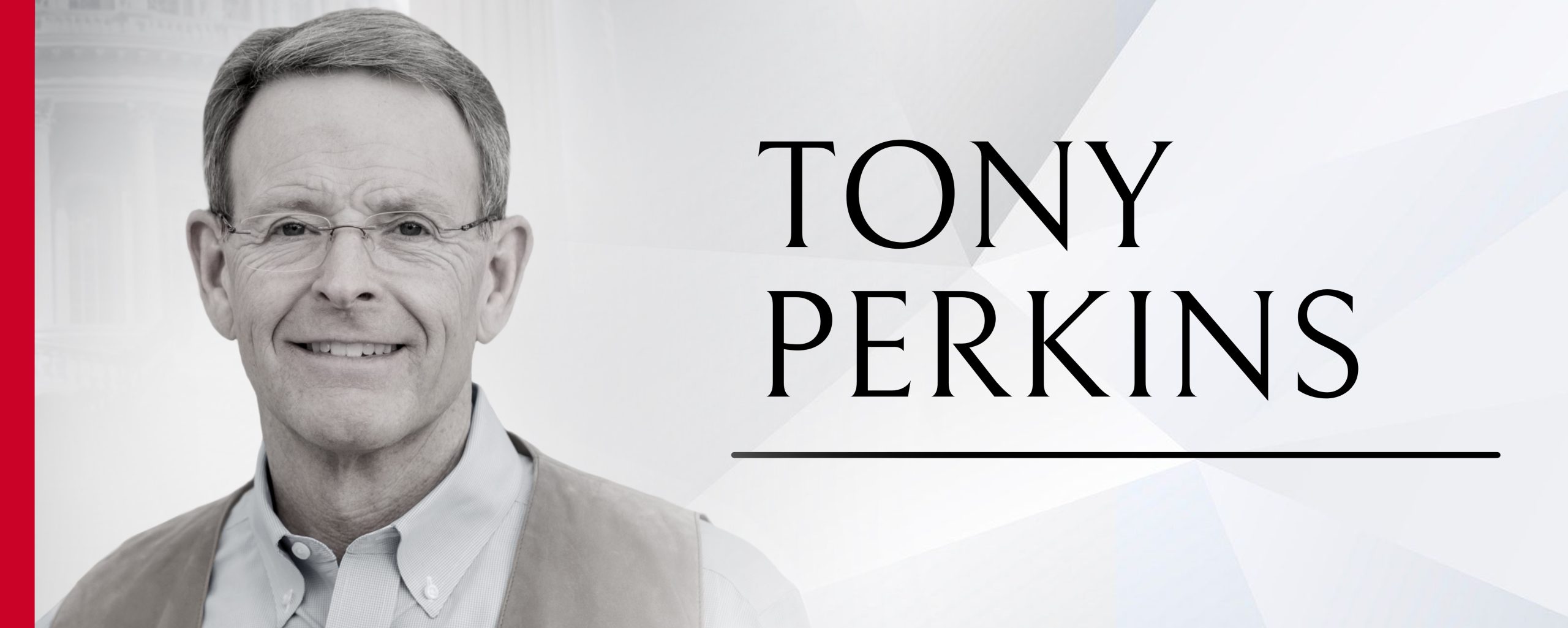
Tony Perkins

I served on the U.S. Commission on International Religious Freedom from 2018 to 2022, including as chair and vice chair, and I currently serve as president of Family Research Council in Washington, D.C.

We care deeply about protecting and promoting fundamental human rights, chief among them religious freedom. Research has shown that higher levels of religious freedom are associated with greater social peace and, in many cases, stronger economic performance—things desperately needed in war-torn Sudan.

When I served on USCIRF, I participated in the most recent USCIRF government visit to Sudan in 2020. During that visit, I met with transitional Prime Minister Abdalla Hamdok, who was taking necessary steps to improve religious freedom. Those reforms led to Sudan being removed from the U.S. list of “countries of particular concern” (CPC) after 20 years. Sadly, the progress we witnessed then has collapsed, and ethnic- and religiously-driven violence has once again engulfed the country.

Conditions in Sudan

Sudan is currently making headlines due to horrific violence, but the reality is that the country has experienced conflict throughout most of its history since gaining independence in 1956. The danger in moments like this is to treat the crisis as something new, instead of addressing the deeply-rooted issues that have fueled decades of instability. We do not need peace in name only; we need a peace that deals honestly with those underlying causes.

While the Rapid Support Forces (RSF) are rightly condemned for their atrocities, the truth is that both major armed factions carry responsibility for violence. The Sudanese Armed Forces (SAF) have engaged in their own brutal acts, including killings of civilians and beheadings. Neither group represents a path toward long-term stability or human rights.

Many may recall Omar al-Bashir, who ruled Sudan from 1989 to 2019. He created the Janjaweed militias—the same forces that later evolved into today’s RSF—as instruments of jihadist ethnic cleansing against Christians and African tribes. At that time, the RSF and SAF worked together. It was only after the coup against al-Bashir that they started fighting each other. The Islamist ideology shaping both the RSF and the SAF is a major driver of Sudan’s continuing violence.

Although the RSF and SAF are in conflict with each other, they have a common enemy in Christians, whom they do not see as fitting their Islamic vision for Sudan. Churches have been targeted by both the RSF and SAF. Christians have been denied food aid and told, “Unless you leave your Christianity, no food for you.” They, along with all the other people of Sudan caught in the crossfire, are the true victims here.

Regional actors are exacerbating this conflict. While the United Arab Emirates’ support of the RSF is in the news, other nations have their hands in Sudan as well to wield influence (Egypt, for example, is the primary backer of the SAF) and extract resources. Iran, Egypt, and Turkey have supplied drones to the SAF. Russia initially backed the RSF in exchange for access to gold, but then switched sides. Just a few weeks ago, it was reported that the Sudanese government offered Russia its first naval base in Africa in Port Sudan.

The ongoing refugee crisis, along with internal displacement and mass starvation, remain significant challenges. Nearly 12 million people are internally displaced, and over four million people have left the country. According to the UN Refugee Agency, many of these refugees have gone to Chad, Egypt, and South Sudan. Chad and South Sudan now face food shortages themselves and do not have the infrastructure to sustain the inflow of people. The Nuba Mountains area, in particular, is in need of more aid that is free from the interference of the RSF and SAF.

With more than 150,000 people dead from the past few years of conflict, and with the death toll only continuing to rise, we must take action.

Religious Freedom and CPC Status

Sudan was designated a “country of particular concern” for religious freedom from 1999 to 2019. After the 2019 transition, the government enacted meaningful reforms: repealing apostasy laws, increasing protections for minorities, and partnering with U.S. institutions. Because of this, Sudan was removed from the CPC list.

But Sudan has now fallen back into a conflict driven in part by the very same Islamist structures that persecuted Christians and other religious minorities for decades. The safeguards once put in place have eroded.

Given this massive backsliding, the U.S. should reimpose the CPC designation and make clear that it will only be removed when we see verifiable improvements in religious freedom and human rights on the ground.

Policy Recommendations

  1. Utilize the CPC designation and similar tools to advance American values in discussions with Sudanese governing factions and regional actors.
  2. Strengthen federalism. A centralized government controlled by a single faction guarantees continued bloodshed. Regional governance structures are essential.
  3. Ensure direct humanitarian access to the Nuba Mountains without interference from the SAF and RSF. Aid to other regions must be ensured as well.
  4. Partner with Sudan’s churches. Despite decades of conflict, local churches remain one of the few stabilizing forces serving communities in need.

Five years ago, I stood in Khartoum, at the very place where the Blue Nile and White Nile converge to form the great river that flows north through Africa. Each tributary is distinct—different origins, different paths—but they meet at a single point that shapes everything downstream.

Sudan is standing at just such a confluence today. Its history—marked by conflict, repression, and resilience—meets a present moment filled with both danger and opportunity. What flows from this convergence will shape not only Sudan’s future but also the stability of the entire region.

My hope is that the United States will help ensure that what flows forward is justice, peace, and genuine freedom for all the people of Sudan.


give

The Clash Of Worldviews: Secular Progressivism Vs Biblical Christianity

To understand the age in which we live, it is important to understand the ideas behind secular progressivism and, more importantly, what its aspirations are. After all, whether the majority of people realise it or not, secular progressivism has the stated goal of organising social life (with or without your consent) toward explicitly chosen goals. Those goals, however, put it in direct conflict with Biblical truth. The major flaw in secular progressivism is its belief that preference trumps truth. Because the maxim of this ideology is that “all preferences are created equal,” any belief which competes with somebody’s “preference” is treated in one of two ways. Either it must be suppressed (usually with the backing of government or media institutions), or it must be branded as a private hobby which is acceptable in the home or inner thought life but not welcome in the public square where others may be influenced by it.

How Allegory Reduces The Bible To Nothing More Than A Work Of Fiction

It is God alone who predicts the future. Prophecy is one of God’s signatures that tells us that we can trust in Him and His Word. It is what separates the Bible from all other religious writings in the world. But if we consistently use allegorical hermeneutics, as Charles Ryrie points out, then in effect what we have just done is reduce the Bible to nothing more than a work of fiction. How tragic! With hermeneutics like that, it is no wonder so many people want nothing to do with Bible prophecy. It is no wonder pastors refuse to preach and teach events concerning the future, and it is no wonder it can be so hard to understand.

sign up

Jan Markell: You Can’t Have A Genuine Revival With False Doctrine Raging

I hear a dozen evangelists stating that we are on the verge of a great revival. One self-proclaimed prophet says that a billion souls will come to faith in the coming weeks and months. If my Rapture is imminent, how can there be an imminent revival? Which is it? The Bible does talk about a coming revival. The question concerns its timing. Is it in the coming days, or is it after the Rapture when the “left behind” world realizes they should have listened to believers like you and me, get a second chance, and multitudes come to faith?

ABC's of Salvation

Decision

UTT

FOI

untitled artwork

Israel My Glory

Tony Perkins

I served on the U.S. Commission on International Religious Freedom from 2018 to 2022, including as chair and vice chair, and I currently serve as president of Family Research Council in Washington, D.C.

We care deeply about protecting and promoting fundamental human rights, chief among them religious freedom. Research has shown that higher levels of religious freedom are associated with greater social peace and, in many cases, stronger economic performance—things desperately needed in war-torn Sudan.

When I served on USCIRF, I participated in the most recent USCIRF government visit to Sudan in 2020. During that visit, I met with transitional Prime Minister Abdalla Hamdok, who was taking necessary steps to improve religious freedom. Those reforms led to Sudan being removed from the U.S. list of “countries of particular concern” (CPC) after 20 years. Sadly, the progress we witnessed then has collapsed, and ethnic- and religiously-driven violence has once again engulfed the country.

Conditions in Sudan

Sudan is currently making headlines due to horrific violence, but the reality is that the country has experienced conflict throughout most of its history since gaining independence in 1956. The danger in moments like this is to treat the crisis as something new, instead of addressing the deeply-rooted issues that have fueled decades of instability. We do not need peace in name only; we need a peace that deals honestly with those underlying causes.

While the Rapid Support Forces (RSF) are rightly condemned for their atrocities, the truth is that both major armed factions carry responsibility for violence. The Sudanese Armed Forces (SAF) have engaged in their own brutal acts, including killings of civilians and beheadings. Neither group represents a path toward long-term stability or human rights.

Many may recall Omar al-Bashir, who ruled Sudan from 1989 to 2019. He created the Janjaweed militias—the same forces that later evolved into today’s RSF—as instruments of jihadist ethnic cleansing against Christians and African tribes. At that time, the RSF and SAF worked together. It was only after the coup against al-Bashir that they started fighting each other. The Islamist ideology shaping both the RSF and the SAF is a major driver of Sudan’s continuing violence.

Although the RSF and SAF are in conflict with each other, they have a common enemy in Christians, whom they do not see as fitting their Islamic vision for Sudan. Churches have been targeted by both the RSF and SAF. Christians have been denied food aid and told, “Unless you leave your Christianity, no food for you.” They, along with all the other people of Sudan caught in the crossfire, are the true victims here.

Regional actors are exacerbating this conflict. While the United Arab Emirates’ support of the RSF is in the news, other nations have their hands in Sudan as well to wield influence (Egypt, for example, is the primary backer of the SAF) and extract resources. Iran, Egypt, and Turkey have supplied drones to the SAF. Russia initially backed the RSF in exchange for access to gold, but then switched sides. Just a few weeks ago, it was reported that the Sudanese government offered Russia its first naval base in Africa in Port Sudan.

The ongoing refugee crisis, along with internal displacement and mass starvation, remain significant challenges. Nearly 12 million people are internally displaced, and over four million people have left the country. According to the UN Refugee Agency, many of these refugees have gone to Chad, Egypt, and South Sudan. Chad and South Sudan now face food shortages themselves and do not have the infrastructure to sustain the inflow of people. The Nuba Mountains area, in particular, is in need of more aid that is free from the interference of the RSF and SAF.

With more than 150,000 people dead from the past few years of conflict, and with the death toll only continuing to rise, we must take action.

Religious Freedom and CPC Status

Sudan was designated a “country of particular concern” for religious freedom from 1999 to 2019. After the 2019 transition, the government enacted meaningful reforms: repealing apostasy laws, increasing protections for minorities, and partnering with U.S. institutions. Because of this, Sudan was removed from the CPC list.

But Sudan has now fallen back into a conflict driven in part by the very same Islamist structures that persecuted Christians and other religious minorities for decades. The safeguards once put in place have eroded.

Given this massive backsliding, the U.S. should reimpose the CPC designation and make clear that it will only be removed when we see verifiable improvements in religious freedom and human rights on the ground.

Policy Recommendations

  1. Utilize the CPC designation and similar tools to advance American values in discussions with Sudanese governing factions and regional actors.
  2. Strengthen federalism. A centralized government controlled by a single faction guarantees continued bloodshed. Regional governance structures are essential.
  3. Ensure direct humanitarian access to the Nuba Mountains without interference from the SAF and RSF. Aid to other regions must be ensured as well.
  4. Partner with Sudan’s churches. Despite decades of conflict, local churches remain one of the few stabilizing forces serving communities in need.

Five years ago, I stood in Khartoum, at the very place where the Blue Nile and White Nile converge to form the great river that flows north through Africa. Each tributary is distinct—different origins, different paths—but they meet at a single point that shapes everything downstream.

Sudan is standing at just such a confluence today. Its history—marked by conflict, repression, and resilience—meets a present moment filled with both danger and opportunity. What flows from this convergence will shape not only Sudan’s future but also the stability of the entire region.

My hope is that the United States will help ensure that what flows forward is justice, peace, and genuine freedom for all the people of Sudan.


Trusted Analysis From A Biblical Worldview

Help reach the lost and equip the church with the living and active truth of God's Word in our world today.

YOU CARE ABOUT

BIBLICAL TRUTH. SO DO WE.


Together, We Can Deliver A Biblical Understanding

Of News Events Around The World.

The Clash Of Worldviews: Secular Progressivism Vs Biblical Christianity

To understand the age in which we live, it is important to understand the ideas behind secular progressivism and, more importantly, what its aspirations are. After all, whether the majority of people realise it or not, secular progressivism has the stated goal of organising social life (with or without your consent) toward explicitly chosen goals. Those goals, however, put it in direct conflict with Biblical truth. The major flaw in secular progressivism is its belief that preference trumps truth. Because the maxim of this ideology is that “all preferences are created equal,” any belief which competes with somebody’s “preference” is treated in one of two ways. Either it must be suppressed (usually with the backing of government or media institutions), or it must be branded as a private hobby which is acceptable in the home or inner thought life but not welcome in the public square where others may be influenced by it.

How Allegory Reduces The Bible To Nothing More Than A Work Of Fiction

It is God alone who predicts the future. Prophecy is one of God’s signatures that tells us that we can trust in Him and His Word. It is what separates the Bible from all other religious writings in the world. But if we consistently use allegorical hermeneutics, as Charles Ryrie points out, then in effect what we have just done is reduce the Bible to nothing more than a work of fiction. How tragic! With hermeneutics like that, it is no wonder so many people want nothing to do with Bible prophecy. It is no wonder pastors refuse to preach and teach events concerning the future, and it is no wonder it can be so hard to understand.

untitled artwork 6391

Jan Markell: You Can’t Have A Genuine Revival With False Doctrine Raging

I hear a dozen evangelists stating that we are on the verge of a great revival. One self-proclaimed prophet says that a billion souls will come to faith in the coming weeks and months. If my Rapture is imminent, how can there be an imminent revival? Which is it? The Bible does talk about a coming revival. The question concerns its timing. Is it in the coming days, or is it after the Rapture when the “left behind” world realizes they should have listened to believers like you and me, get a second chance, and multitudes come to faith?

ABC's of Salvation

TV AD

worldview matters

Decision Magazine V AD

Decision

Jan Markell

Israel My Glory

Erick Stakelbeck

untitled artwork

YOU CARE ABOUT

BIBLICAL TRUTH.

SO DO WE.

Together, We Can Deliver A Biblical Understanding Of News Events Around The World And Equip The Church To Stand With A Biblical Worldview.

untitled artwork

Israel My Glory

YOU CARE ABOUT

BIBLICAL TRUTH.

SO DO WE.


Together, We Can Deliver A Biblical Understanding Of News Events Around The World And Equip The Church To Stand With A Biblical Worldview.