May 23, 2026

May, 23, 2026
May 23, 2026

give

untitled artwork

untitled artwork

World news biblically understood

TRENDING:

Ukraine Conflict: Moscow Could ‘Defend’ Russia-Backed Rebels

A top Russian official has warned that Moscow could intervene to help Russian-speaking residents in eastern Ukraine if Ukraine launches an all-out assault on separatists there.

Russian-backed separatist rebels and Ukrainian troops have been clashing in the east of the country.

Russia has also been building up troops on the border with Ukraine.

The official, Dmitry Kozak, said that Russian forces could intervene to “defend” Russian citizens.

“Everything depends on the scale of the conflagration,” he said. He is deputy head of Russia’s presidential administration.

He also warned that an escalation could mark the “beginning of the end” for Ukraine – “not a shot in the leg, but in the face”.

The Ukrainian military says one of its soldiers was killed on Thursday by shooting from the separatists. The rebels used machine-guns, grenades and mortars several times and Ukrainian forces fired back, the military was quoted as saying.

The Ukrainian army commander, Gen Ruslan Khomchak, said “we see the build-up of Russian troops near Ukraine’s state border.

“However, this does not mean that our country is being encircled. The situation is under control.”

Earlier the rebels said one of their fighters was killed when Ukrainian troops fired mortars at a village on the outskirts of the city of Donetsk.

The United States and Germany have both expressed concern at the increase in tensions.

Why are Ukraine-Russia tensions rising?

Russia has been increasing the number of troops at the Ukrainian border, but at the same time maintains that they should not be seen as a threat.

White House press secretary Jen Psaki said Russian troop numbers there were the highest since 2014, when the conflict in eastern Ukraine began. She described the situation as “deeply concerning”.

Russia has not detailed troop numbers, but the Ukrainian military asserted at the end of March that some 20,000 Russian troops had been moved towards Ukraine’s border. Video has emerged on social media of Russian trains moving heavy weaponry, apparently towards the region.

For months there have been sporadic clashes between Ukrainian troops and the Moscow-backed rebels in the Donbas region, violating a fragile ceasefire daily.

Ukraine says 25 of its troops have been killed in the conflict zone so far this year, and 50 died in the whole of last year.

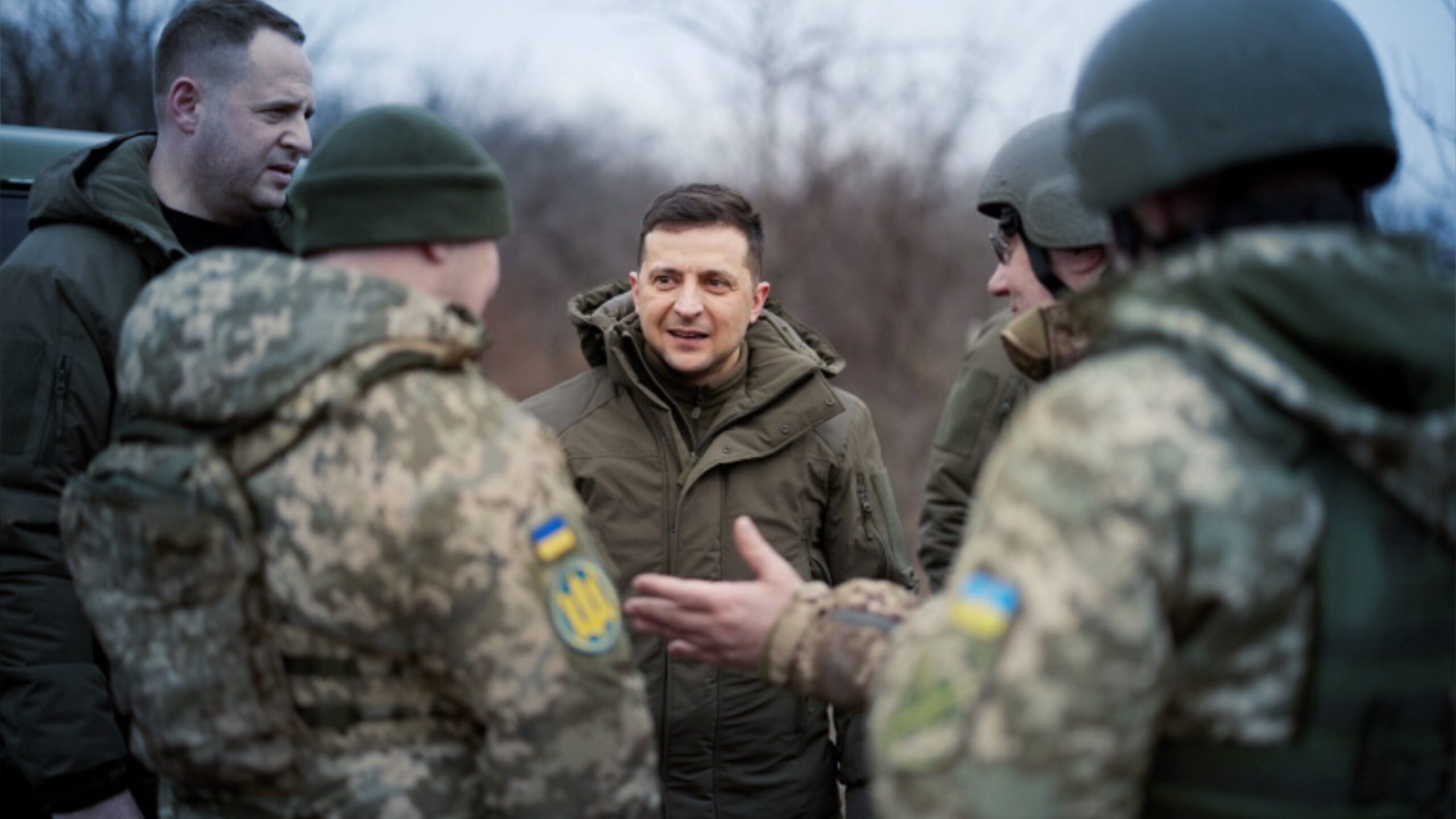
Ukrainian President Volodymyr Zelensky visited the region on Thursday to see “the locations of the escalation” and “be with our soldiers in the tough times in Donbas”.

German Chancellor Angela Merkel discussed the conflict in a phone call with Russian President Vladimir Putin on Thursday.

She urged Russia to “de-escalate tensions” by pulling troops back, while Mr Putin accused Ukraine of inflaming the situation in the east.

What else did the Kremlin official say?

In Moscow, Mr Kozak likened the current situation of the separatists to Srebrenica, the town in Bosnia-Herzegovina where 8,000 Muslim men were killed by Bosnian Serb forces in 1995.

“If, as our president says, there is a Srebrenica there, we shall probably have to come to their defence,” Mr Kozak said.

President Putin first suggested in 2019 that Russian-speaking residents might suffer a Srebrenica-like massacre if Ukraine regained full control of Donbas without guarantees. He has always made it clear the Russian state reserves the right to defend ethnic Russians abroad, and in 2019 signed a law making it easier for people in separatist areas to obtain Russian passports.

There is no sign that Ukraine is preparing any such Bosnian Serb-style “ethnic cleansing” campaign.

Mr Kozak suggested the rebels could hold their own for now against Ukrainian forces, as they consisted of “battle-hardened units”.

What’s the background to all this?

The roots of the conflict go back to March 2014, when Russia annexed the Ukrainian region of Crimea. Pro-Russian President Viktor Yanukovych had fled the Ukrainian capital Kyiv in February, after massive street demonstrations and clashes.

Russia’s military intervention sparked a major rift with Western nations, prompting the European Union and the US to impose sanctions on Russia.

A month later, Russian-backed rebels in the mainly Russian-speaking Donbas seized much of the Donetsk and Luhansk regions.

Western governments and Nato accused Russia of sending regular troops over the border into Ukraine, but Russia maintains any Russian fighters there are “volunteers”.

Ukraine’s President Zelensky came to power promising to bring about peace, and a ceasefire was signed last July. Both sides have since accused each other of violating it.

The conflict is estimated to have killed 14,000 people.


HD Editors Note: Why is this News Biblically Relevant?

In Matthew 24, the disciples ask Jesus, “What shall be the sign of thy coming, and the end of the world?”

Jesus’s response is a detailed description of the condition of the world and what it will look like in the last days. Wars and rumours of wars, nation rising against nation, famines, pestilences, earthquakes, these being the beginning of sorrows. He depicts persecution and an abounding iniquity that would cause the love of many to wax cold and divisions that would cause loved ones to betray one another.

In Luke 21:25, Jesus says, “There will be signs in the sun, and in the moon, and in the stars; and upon the earth Distress of Nations with Perplexity, the seas and the wave roaring.”

With the current global state of turmoil amongst the nations, we can’t help but recognize the distress of nations Jesus describes in Luke 21 and Matthew 24, matching what we see today.

Just as the psalmist tells us to lift our eyes, so does Jesus instruct his believers in the face of the times we are living in “When these things begin to come to pass, look up and lift up your heads; for your redemption draweth nigh.” (Luke 21:28)

Give

Give

No Matter How Deep The Corruption Runs, Democrats Remain Eager To Defend The SPLC’s Hate Machine

Despite six counts of wire fraud, four counts of bank fraud, and one count of money laundering to finance the hate it was supposed to fight, SPLC’s wrongdoing didn’t give the Democrats a second’s pause. Instead, they launched into a passionate defense of the group that’s spent years embroiled in lawsuits, shady financial dealings, multi-million-dollar settlements for defamation, embarrassing retractions, workplace uprisings, and links to domestic terrorism in court. 

As Biblical Christianity Weakens In The West, More People Turn To The Occult To Fill The Gap

As biblical Christianity weakens in America and the West, more people turn to occult practices to fill the gap. People naturally want to worship. If they reject the true God, they often look for spiritual answers somewhere else. This is why we see more interest in astrology, tarot cards, witchcraft, spirit guides, meditation, New Age ideas, manifestation, and the paranormal. Surprisingly, studies show that many people who say they are Christians now take part in practices the Bible clearly forbids.

sign up

Prophetic Pieces: As Putin Ups The Ante In The Arms Race, Russia Considers Providing Refuge To Top Iranian Leaders

Prophetic events in the end times right now are casting their shadows over the Middle East like never before. Preparations for the Gog Magog coalition prophesied in Ezekiel 38 and 39 are increasing and intensifying. Written 2,500 years ago by Ezekiel, these chapters prophesy an end-time invasion of Israel led by the nations of Russia, Iran, and Turkey. Two significant developments showcase that the prophetic pieces are falling perfectly into place.

ABC's of Salvation

Decision

UTT

FOI

untitled artwork

Israel My Glory

A top Russian official has warned that Moscow could intervene to help Russian-speaking residents in eastern Ukraine if Ukraine launches an all-out assault on separatists there.

Russian-backed separatist rebels and Ukrainian troops have been clashing in the east of the country.

Russia has also been building up troops on the border with Ukraine.

The official, Dmitry Kozak, said that Russian forces could intervene to “defend” Russian citizens.

“Everything depends on the scale of the conflagration,” he said. He is deputy head of Russia’s presidential administration.

He also warned that an escalation could mark the “beginning of the end” for Ukraine – “not a shot in the leg, but in the face”.

The Ukrainian military says one of its soldiers was killed on Thursday by shooting from the separatists. The rebels used machine-guns, grenades and mortars several times and Ukrainian forces fired back, the military was quoted as saying.

The Ukrainian army commander, Gen Ruslan Khomchak, said “we see the build-up of Russian troops near Ukraine’s state border.

“However, this does not mean that our country is being encircled. The situation is under control.”

Earlier the rebels said one of their fighters was killed when Ukrainian troops fired mortars at a village on the outskirts of the city of Donetsk.

The United States and Germany have both expressed concern at the increase in tensions.

Why are Ukraine-Russia tensions rising?

Russia has been increasing the number of troops at the Ukrainian border, but at the same time maintains that they should not be seen as a threat.

White House press secretary Jen Psaki said Russian troop numbers there were the highest since 2014, when the conflict in eastern Ukraine began. She described the situation as “deeply concerning”.

Russia has not detailed troop numbers, but the Ukrainian military asserted at the end of March that some 20,000 Russian troops had been moved towards Ukraine’s border. Video has emerged on social media of Russian trains moving heavy weaponry, apparently towards the region.

For months there have been sporadic clashes between Ukrainian troops and the Moscow-backed rebels in the Donbas region, violating a fragile ceasefire daily.

Ukraine says 25 of its troops have been killed in the conflict zone so far this year, and 50 died in the whole of last year.

Ukrainian President Volodymyr Zelensky visited the region on Thursday to see “the locations of the escalation” and “be with our soldiers in the tough times in Donbas”.

German Chancellor Angela Merkel discussed the conflict in a phone call with Russian President Vladimir Putin on Thursday.

She urged Russia to “de-escalate tensions” by pulling troops back, while Mr Putin accused Ukraine of inflaming the situation in the east.

What else did the Kremlin official say?

In Moscow, Mr Kozak likened the current situation of the separatists to Srebrenica, the town in Bosnia-Herzegovina where 8,000 Muslim men were killed by Bosnian Serb forces in 1995.

“If, as our president says, there is a Srebrenica there, we shall probably have to come to their defence,” Mr Kozak said.

President Putin first suggested in 2019 that Russian-speaking residents might suffer a Srebrenica-like massacre if Ukraine regained full control of Donbas without guarantees. He has always made it clear the Russian state reserves the right to defend ethnic Russians abroad, and in 2019 signed a law making it easier for people in separatist areas to obtain Russian passports.

There is no sign that Ukraine is preparing any such Bosnian Serb-style “ethnic cleansing” campaign.

Mr Kozak suggested the rebels could hold their own for now against Ukrainian forces, as they consisted of “battle-hardened units”.

What’s the background to all this?

The roots of the conflict go back to March 2014, when Russia annexed the Ukrainian region of Crimea. Pro-Russian President Viktor Yanukovych had fled the Ukrainian capital Kyiv in February, after massive street demonstrations and clashes.

Russia’s military intervention sparked a major rift with Western nations, prompting the European Union and the US to impose sanctions on Russia.

A month later, Russian-backed rebels in the mainly Russian-speaking Donbas seized much of the Donetsk and Luhansk regions.

Western governments and Nato accused Russia of sending regular troops over the border into Ukraine, but Russia maintains any Russian fighters there are “volunteers”.

Ukraine’s President Zelensky came to power promising to bring about peace, and a ceasefire was signed last July. Both sides have since accused each other of violating it.

The conflict is estimated to have killed 14,000 people.


HD Editors Note: Why is this News Biblically Relevant?

In Matthew 24, the disciples ask Jesus, “What shall be the sign of thy coming, and the end of the world?”

Jesus’s response is a detailed description of the condition of the world and what it will look like in the last days. Wars and rumours of wars, nation rising against nation, famines, pestilences, earthquakes, these being the beginning of sorrows. He depicts persecution and an abounding iniquity that would cause the love of many to wax cold and divisions that would cause loved ones to betray one another.

In Luke 21:25, Jesus says, “There will be signs in the sun, and in the moon, and in the stars; and upon the earth Distress of Nations with Perplexity, the seas and the wave roaring.”

With the current global state of turmoil amongst the nations, we can’t help but recognize the distress of nations Jesus describes in Luke 21 and Matthew 24, matching what we see today.

Just as the psalmist tells us to lift our eyes, so does Jesus instruct his believers in the face of the times we are living in “When these things begin to come to pass, look up and lift up your heads; for your redemption draweth nigh.” (Luke 21:28)

Trusted Analysis From A Biblical Worldview

Help reach the lost and equip the church with the living and active truth of God's Word in our world today.

YOU CARE ABOUT

BIBLICAL TRUTH. SO DO WE.


Together, We Can Deliver A Biblical Understanding

Of News Events Around The World.

No Matter How Deep The Corruption Runs, Democrats Remain Eager To Defend The SPLC’s Hate Machine

Despite six counts of wire fraud, four counts of bank fraud, and one count of money laundering to finance the hate it was supposed to fight, SPLC’s wrongdoing didn’t give the Democrats a second’s pause. Instead, they launched into a passionate defense of the group that’s spent years embroiled in lawsuits, shady financial dealings, multi-million-dollar settlements for defamation, embarrassing retractions, workplace uprisings, and links to domestic terrorism in court. 

As Biblical Christianity Weakens In The West, More People Turn To The Occult To Fill The Gap

As biblical Christianity weakens in America and the West, more people turn to occult practices to fill the gap. People naturally want to worship. If they reject the true God, they often look for spiritual answers somewhere else. This is why we see more interest in astrology, tarot cards, witchcraft, spirit guides, meditation, New Age ideas, manifestation, and the paranormal. Surprisingly, studies show that many people who say they are Christians now take part in practices the Bible clearly forbids.

untitled artwork 6391

Prophetic Pieces: As Putin Ups The Ante In The Arms Race, Russia Considers Providing Refuge To Top Iranian Leaders

Prophetic events in the end times right now are casting their shadows over the Middle East like never before. Preparations for the Gog Magog coalition prophesied in Ezekiel 38 and 39 are increasing and intensifying. Written 2,500 years ago by Ezekiel, these chapters prophesy an end-time invasion of Israel led by the nations of Russia, Iran, and Turkey. Two significant developments showcase that the prophetic pieces are falling perfectly into place.

ABC's of Salvation

TV AD

worldview matters

Decision Magazine V AD

Decision

Jan Markell

Israel My Glory

Erick Stakelbeck

untitled artwork

YOU CARE ABOUT

BIBLICAL TRUTH.

SO DO WE.

Together, We Can Deliver A Biblical Understanding Of News Events Around The World And Equip The Church To Stand With A Biblical Worldview.

untitled artwork

Israel My Glory

YOU CARE ABOUT

BIBLICAL TRUTH.

SO DO WE.


Together, We Can Deliver A Biblical Understanding Of News Events Around The World And Equip The Church To Stand With A Biblical Worldview.