The Iranian regime’s ultimate strategy in negotiations with the United States is very clear: drive a wedge between the U.S. and Israel to create tension between allies.
The regime plans to do it through Lebanon—and it doesn’t take a brain surgeon to see it.
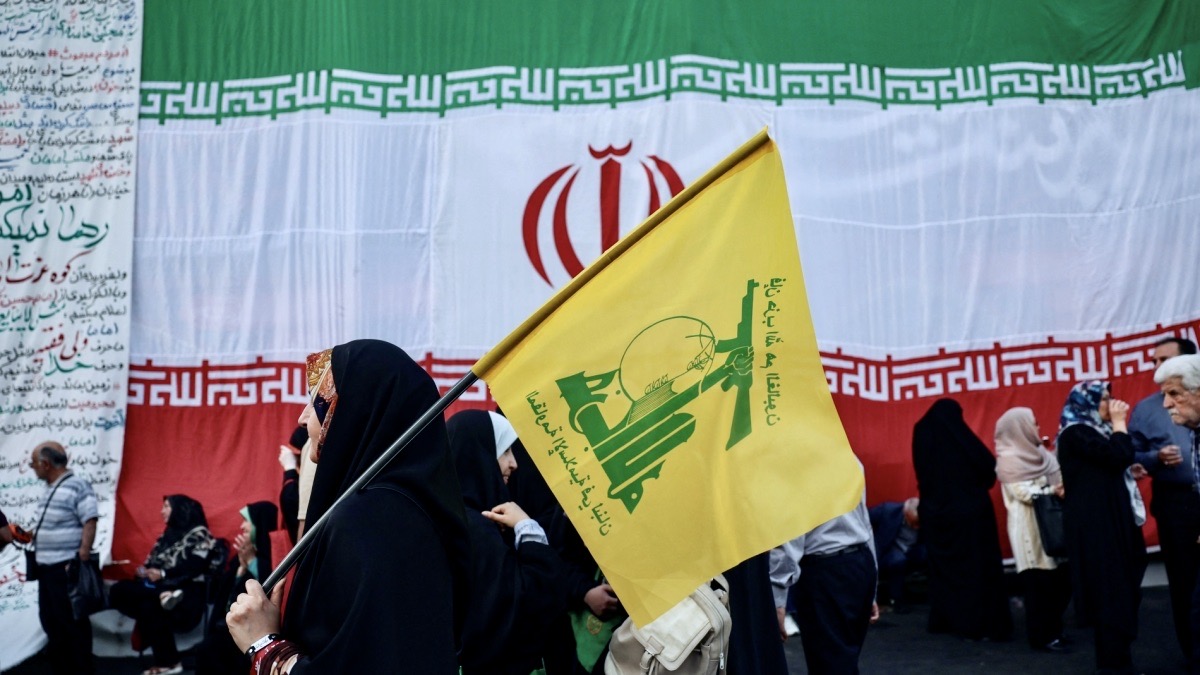
We have seen this play out for weeks. Iran orders its Lebanon-based terror proxy to carry out attacks against Israel despite an ongoing ceasefire. Five Israeli soldiers were killed and 13 more injured over the weekend thanks to multiple Hezbollah attacks. Some ceasefire!
When Israel responds to these Hezbollah onslaughts—as any sovereign nation would—they get blamed for being reckless and endangering a broader deal with Iran. Why? Because sadly, Iran’s regime has been able to link a potential Iran deal with what happens in Lebanon.
Israel has pounded Hezbollah and left it in tatters. Iran knows that Hezbollah is in very big trouble and badly wants to save the crown jewel of its proxy network. The regime not only demanded to have Lebanon included in the Memorandum of Understanding that was signed by President Trump last week, but also ordered Hezbollah to continue attacking Israel. The Jewish State gets the blame when it responds, and the U.S. then calls for Israeli restraint. Do you see how this works?
Even though our leaders would obviously never tolerate a terror group on America’s borders launching rockets from Canada or Mexico, Israel, as usual, is held to a different standard.
Israel is being asked very openly to not respond to Hezbollah attacks. It’s an impossible situation for the world’s one and only Jewish state.
For some reason, US negotiators have allowed Iran to create this status quo. And it’s not good.
During talks in Switzerland between the U.S. delegation led by Vice President Vance and Iran, the two sides reportedly agreed to a new deconfliction mechanism in Lebanon involving Israel, Hezbollah, and regional partners.
“The Qataris, the Pakistanis, our friends in Israel, we’re all working towards regional peace,” the Vice President said. “There of course are going to be sometimes disagreements about precisely how to get there, but I actually feel great about where we are in Lebanon. There’s still some additional wood to chop, but we’re going to keep on working at it. And what we’re trying to accomplish here is something very simple. Through diplomacy, through working together to transform the Middle East, where Iran and the Gulf have been at war with each other—or at least have had very unfriendly relations—where Iran has been a driver of regional instability, now we see a future where everybody can work together to promote peace and prosperity for everyone.”
Really? At the end of the day, we’re apparently expecting Qatar and Pakistan to be “honest brokers,” and Iran to “rein in” Hezbollah—something the regime has refused to do for over 40 years since they created this terror group in Lebanon. We are putting a lot of faith in the world’s number one state sponsor of terrorism! Color me skeptical.
Iran has also reportedly now agreed to let inspectors from the International Atomic Energy Agency (IAEA) into their country to make sure the mad mullahs are not developing nuclear weapons and restarting the nuclear program which has been destroyed by the United States and Israel. This sounds great on the surface, but remember, IAEA inspectors were also let into Iran in previous years, and it didn’t go so well.
The regime doesn’t change its spots, and as Secretary of State Marco Rubio laid out this past weekend, the regime in Tehran has, and will continue to be, the driving force behind Middle East terror and turmoil.
“Every problem in the Middle East tracks back to Iran,” Rubio stressed. “Hezbollah—Iran. Shia militias that are destroying and threatening Iraq—Iran. Hamas—Iran. The Houthis—Iran. Assad when he was in Syria—Iran. Everywhere you turn, they’re behind all of it.”
“They are a destabilizing, dangerous, evil force that had to be dealt with,” he emphasized. “They have to be weakened.”
Amen!
It’s been nearly half a century of unyielding jihad. Is a credible deal possible with a radical Islamic—and frankly, demonic—regime that has a long history of lies, double talk, and fomenting terrorism? The bottom line is that you cannot trust your negotiating partner, the Iranian regime. And that will not change.