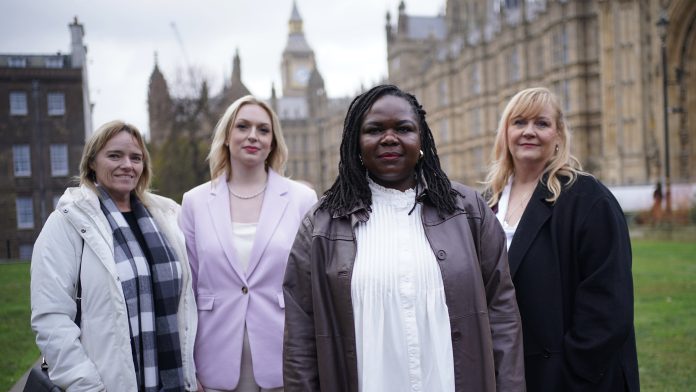
The Nursing and Midwifery Council (NMC) has abandoned two investigations on a U.K. nurse who was suspended for using male pronouns to refer to a convicted male pedophile who identified as a transgender woman.
The decision comes about three months after the Epsom and St. Helier University Hospitals NHS Trust settled its tribunal case with nurse Jennifer Melle.
The dispute stems from an incident in May 2024, when Melle was serving a patient at St. Helier Hospital in southern England. The male patient, a prisoner and convicted pedophile, identified as a woman. Melle, a Christian who believes God lovingly and intentionally created every individual as male or female, used male pronouns to refer to the prisoner. The convicted sex offender retaliated by physically threatening Melle and using racial slurs against her before hospital security intervened.
The hospital disciplined Melle over the incident and labeled her a “potential risk to the public.” They also reported her to the NMC for failure to treat people in her care with dignity because she “misgendered” a patient.
Supported by Christian Legal Centre, Melle responded by filing suit against the Trust, claiming that her freedom of thought, conscience and Christian beliefs had been violated.
In March 2025, Melle shared about her experience with a media outlet. She was again investigated by the hospital, suspended and escorted from the premises; and again reported to the NMC for allegedly breaching confidentiality by sharing the patient’s information to media.
The NHS Trust eventually dropped its disciplinary case against Melle, and Melle won a settlement in April 2026. The Trust had agreed to settle her claim days before her trial was scheduled.
The NMC, which completed a full investigation, verified on July 1 that the case has closed and it is taking no further action against Melle. Furthermore, there was “no evidence to support the allegation that a breach of confidentiality took place,” as the information she shared did not lead to the identification of the patient.
The NMC said it accepts findings that the incident was not malicious, but rather was a result of Melle’s Christian beliefs, which are protected, and there was no intention to harass or bully.
“In summary, we do not consider that this is one of those rare cases where the way you conducted yourself suggests a deep-seated attitudinal problem or that what you are alleged to have done is so serious that a finding of impairment may be necessary to protect the public or maintain the public’s confidence and trust in the professions and to uphold professional standards,” NMC said.
“We therefore conclude that there is no realistic possibility that your fitness to practice would be found currently impaired. Following our conclusions on facts and current impairment, we have determined there is no case for you to answer.”
Melle expressed relief and gratitude at the NMC’s decision, but emphasized that she should never have been put through the ordeal in the first place.
“It has been devastating to be labelled a risk to the public for holding beliefs which are lawful, mainstream and central to my faith,” she said. “Nurses should not have to choose between their conscience, the truth and their profession. I spoke out because I believed what happened to me raised serious public interest concerns. I took care to protect the patient’s identity, and the NMC has now accepted that no confidentiality breach took place. I want to return fully to the work I love, serving patients with compassion and professionalism. But there must now be accountability.”
Andrea Williams, chief executive of the Christian Legal Centre, said Melle’s case should be “the turning point” for the NMC, which “must return to its proper role, drop the Darlington cases, and ensure that no nurse is ever again subjected” to such an ordeal for telling the truth.
“There must also be urgent reform of the NMC,” she said. “It must not be captured by activist ideology or used as a weapon against nurses who hold lawful Christian or gender-critical beliefs. A regulator exists to protect the public and uphold professional standards, not to enforce contested political doctrines on sex and gender. … Nurses must be free to speak accurately about sex, protect single-sex spaces, and act according to conscience without fear of being reported to their regulator as though they are extremists.”
Recently, gender-related speech policies have also faced increased scrutiny in the U.S., with some government entities ending or altering such policies in order to prevent unlawful discrimination on the basis of employees’ protected beliefs.
One example is the Los Angeles Unified School District’s (LAUSD) decision to no longer require educators to acknowledge an agreement to “affirm and respect” the “identities” of LGBTQ-identifying students.
The educators were mandated to affirm the statement, “I am aware that LAUSD policy requires me to affirm and respect the identities of all students, including those who identify as LGBTQ+” until law firm Liberty Counsel sent a demand letter to LAUSD.
The June 8 letter argued that the requirement violated the Title VII of the Civil Rights Act of 1964. Two days later, LAUSD reportedly altered the questionnaire by removing “affirm and respect.” Instead, LAUSD is asking educators to be “aware” of the school district’s nondiscrimination polices that are related to LGBTQ students.