A prosecution case against a Christian mother in Northern Ireland collapsed during her trial hearing, where the prosecutors dropped major charges, witnesses failed to show, and evidence fell short of bringing a conviction.
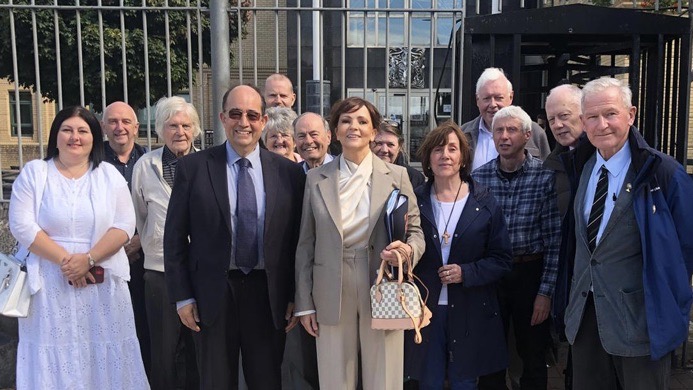
The Christian Legal Centre, which is supporting Claire Brennan, announced in a press release that Brennan’s name was cleared during the Coleraine Magistrates’ Court hearing on May 20 on charges of illegally influencing women near a hospital in 2025.
In an earlier case, Brennan had been convicted of violating the Abortion Services (Safe Access Zones) Act 2023, standing as the first person to be found guilty under the law. The statute effectively criminalized praying, pro-life religious engagement, or providing pregnancy resources to women near abortion facilities.
The law states that it is “a crime to do anything in a safe access zone that might influence a person in their decision to attend an abortion clinic, or which might prevent or impede access to the clinic, or which might harass, alarm or distress that person.”
In the latest case, Brennan was accused of “influencing” people when she prayed and spoke to women in a 150-meter zone near Causeway Hospital in Coleraine during encounters in September, October and November 2025.
Three witnesses were scheduled to testify at the May 20 hearing. However, two witnesses were absent. Hence, the court could not prove any wrongdoing against Brennan, Christian Legal Centre said.
Brennan’s defense relied on articles within the European Convention on Human Rights pertaining to freedom of religion, expression and thought, court documents show. She argued that consensual conversations and peaceful prayer do not “harass, alarm or distress” a person.
Brennan, a mother of four, called the ruling “a huge relief” not only for her but for “everyone who believes that compassion should never be criminalized.”
“I have always acted peacefully, praying, offering hope, and trying to help women who may feel they have no alternative,” Brennan said. “These censorship zones are unjust. They silence prayer, restrict free speech, and prevent women from hearing that there is another option besides abortion.”
Andrea Williams, chief executive of the Christian Legal Centre, responded to the ruling in a statement.
“The collapse of this case exposes serious flaws in the enforcement of these so-called ‘censorship zones,’” Williams said. “Claire Brennan was engaged in peaceful, compassionate activity, praying and offering support. Yet she faced criminal prosecution for living out her Christian faith. These laws are having a chilling effect across Northern Ireland, criminalizing ordinary people who simply want to offer women real choice, including alternatives to abortion. No society committed to freedom can justify punishing prayer or quiet offers of help.”
Brennan’s case points to an expanding discourse around censorship zones and their implications on free speech and freedom of religion.
In early May, Clive Johnston, a retired pastor in Northern Ireland, was criminally convicted under the Safe Access Zones law for conducting an outdoor Sunday service near a hospital that provides abortion services. Although he never mentioned abortion in his message, the judge ruled he had been “motivated … to influence anyone who heard him towards the Bible and the Christian message generally” and had “tested the law to the point where he broke the law.”