On December 28, the protests began. This wasn’t the first time. Major protests had taken place in 2022, in 2019, and even before. What was different this time is that the flames of rage ignited throughout the entire population. Iran is a divided country with only 49% being Persian. The rest are a wide mix of minorities. Often, demonstrations would begin within one of the minority groups who were tired of being slighted. However, the rebellion could never reach the level of revolution, because the Persians and various other minorities would hold back from the conflict.
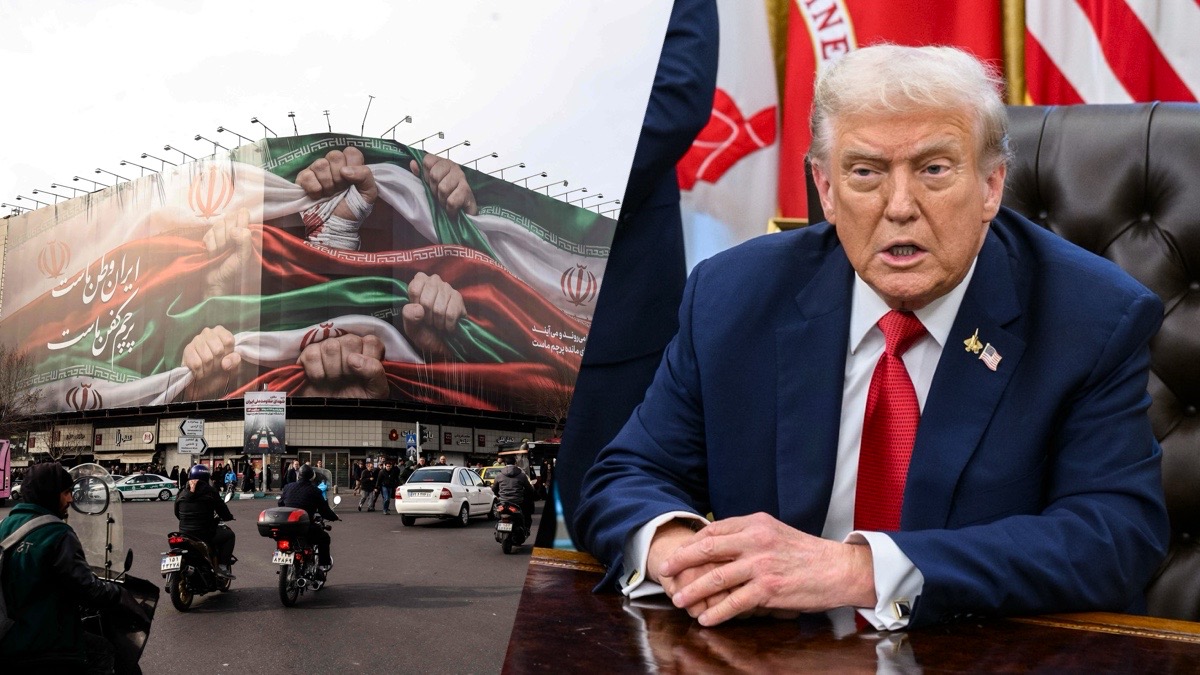
The popular conflagration of this current uprising crosses all segments of the population, including the Persians. The people are tired of having no water and no electricity. They are sick of having to deal with impossible inflation which places even bare necessities out of the reach of many people, unless they turn to the black market. Add to that the fact that as they experience their own deprivations, they see their government pouring money into their proxy militias in Iraq, Yemen, Syria, and Lebanon. This is what has led to the ferocity and durability of the current protests.
The government has met the protests head on. Live fire on protesters have killed thousands and wounded hundreds of thousands. Morality police and military soldiers have raided hospitals, killing wounded on the surgical tables and in recovery rooms. Chemical weapons have even been deployed, causing sickness and death among many. Thus far, more than 16,500 people have been slaughtered by the regime’s thugs causing bodies to pile up because they’re coming too fast to be buried in a timely manner.
Where’s the help for these people? At the beginning, President Donald Trump encouraged the protesters to go out and take over, promising that help would be on the way. And it certainly seemed that a military strike could happen at any moment. But then the brakes were put on. A list had been published by the regime of 870 people who were set for execution. Trump said the ayatollahs better not execute them, and the regime said, “Okay,” putting in motion plans to kill all the people on the list in quieter ways within the prison. As a result of the stays of execution, it appears as if America is going to back off its promise to give Iran a knock-down blow.
But is that really what is happening? Here’s my take. I don’t believe that President Trump was fooled by the stays of execution. I think the current halt is due to a conversation between the president and Prime Minister Netanyahu. The subject was regime change, which is a very real possibility if America and Israel get involved. They recognize that the ayatollahs will do whatever it takes to ensure that they stay in power.
If the regime senses that an attack is imminent, it is likely that it will preemptively strike. They still have thousands of missiles, and those missiles will be directed at Israel and at all the US bases and assets that are in the Middle East. Both the US and Israel have great defense systems, but it’s a numbers game. If Iran fires enough missiles, they will overwhelm the defenses and Americans and Israelis will die. But the attack will not only come from the air. All the proxy militias will be sent into action. The country of Israel, the American bases, and even US naval forces will be targeted by terrorist groups.
Currently, more and more US firepower is moving to the Middle East. If they are going to hit Iran, it’s going to have to be devastating. Netanyahu has already promised that if Iran attacks Israel, the IDF will respond with a force the ayatollahs do not know. This very well could be an allusion to nuclear weapons. Something needs to happen. The status quo is untenable. Will the ayatollahs give up? Will Trump give them an option to save face and remain in power? Or will the whole region blow up? It will likely not be much longer before we get the answer. Steve Witkoff, US Special Envoy to the Middle East, did tell Bloomberg News yesterday, “Iran needs to change its ways, and if that happens, we can arrange this diplomatically.”
Has America Abandoned the Kurds Once Again?
There is a scene in my first novel, Operation Joktan, in which a Kurdish major is naming all the groups of people the Kurds can never trust. Within the list, he makes it clear that “the Americans could be trusted until they changed their minds and the Russians only when goats sprouted wings.” Sadly, it appears that this aphorism is playing out once again as the Kurds watch their people killed, their women kidnapped into sexual slavery, and their land taken over by the Syrian military and ISIS, all while their ally, the United States, is nowhere to be seen.
The Kurds are the largest group of people without a country. With a population of about 35 to 45 million – for comparison, Canada’s population is 41.5 million – the region they live in spreads through parts of Turkey, Syria, Iraq, and Iran. In 2011, the US formed an alliance with the Kurds, tasking them with the rounding up and imprisoning of ISIS forces. They did so, locking many away within prisons in Kurdish territory. But now the Kurds have become next on the hit list of Syrian President Ahmed al-Sharaa, née Al-Qaeda terrorist Abu Mohammad al-Julani, since he’s already gone after the Alawites, the Druze, the Christians, and anyone else who didn’t toe his line. The Syrian army and ISIS forces have pushed into Kurdish territories, slaughtering people along the way and emptying the prisons of all the ISIS terrorists that the Kurds had captured at the behest of the American government.
Why isn’t the United States doing anything to help the Kurds? It seems there are two possible impediments. First, President Trump has what appears to be a strong admiration for the rookie Syrian president. He has complimented him for numerous accomplishments and attributes, including his good looks. However, I understand that Trump is all about working the deal. Is the US president really taken in by al-Sharaa? It’s possible, but I don’t think so. It seems much more likely that Trump is working the Syrian president to accomplish some sort of power play that I and most of the rest of the world just haven’t quite figured out yet. The US did announce yesterday that it is transferring the ISIS prisoners who are left from Syria to Iraq, so at least there’s some movement from Washington.
The second impediment is much more concerning. It is US Ambassador to Turkey Tom Barrack. An Arab-Christian, an apologist for Turkey, and an admirer of al-Sharaa, I believe that he is the one who has abandoned the Kurds to al-Sharaa. It was Barrack who convinced Trump to lift the sanctions against Turkish President Erdoğan’s regime, and who tried to get Turkey admitted back into the F-35 club, which would nullify Israel’s air superiority in the region.
A true politician, if you want to find Barrack you only need to follow the money. Syria just canceled an oil deal with a British-Dutch company, signing instead with American company Chevron and its subsidiary ExxonMobil. This is a boon for the US. In exchange, it appears as if Washington is going hands-off on the Kurds, despite Trump saying that America is protecting the people group. The US president is also being pressured to accept Turkish soldiers and Qatari monitors in Gaza, something that Israel has sworn will never happen.
If it sounds convoluted, it’s because it is. But while the world is trying to piece everything together in their heads, the abandoned Kurds are once again being brutalized. My hope is that President Trump will honor the promises given to the Kurdish people back during the Obama administration, but never lived up to, and pressure the Turks and the Syrians to back down.
IDF Making Headway Against Hezbollah
Internal pressure inside Lebanon continues to mount for the disarmament of Hezbollah. But the terrorists are not going to disappear quietly. This is why the IDF is hitting Hezbollah in Lebanon on the daily. Without question, Iran is going to deploy the terrorist organization if the ayatollahs are attacked and, since the Lebanese government can’t seem to overcome Hezbollah, Israel must step in for its own safety.
President Trump’s Board of Peace
What do you call blueberries, mustard, and Japanese nori mixed together in a bowl? A recipe for disaster. Yet this feels like exactly what Trump has done with the invitations he sent out for his Board of Peace for resolving global conflicts, originally created to deal with the situation in Gaza. World leaders like Russian President Vladimir Putin and Chinese President Xi Jinping have received invitations; Putin has accepted, but there is no answer yet from Xi. The Turks and the Qataris, both allies of Hamas, were also invited and both have joined. The UAE, Egypt, Saudi Arabia, and Israel are also part of the new club. In fact, out of the approximately 50 invitations that were sent, 35 world leaders have committed to joining. Most of the western European states have either declined the offer or are hedging their bets as they wait to see how it all pans out.
The goal of the Board of Peace is to have a group that can address international conflicts as they arise and promote peace around the world. Each country that accepts will be limited to a three-year term, unless they pony up $1 billion to claim a permanent seat. The chairman of the board will be President Trump, a role that appears to carry on even after he is out of office. If this all sounds a little wacky to you, you need to remember that Trump never does anything without a purpose, and often those outside of his inner circle can only guess at what that purpose is until the full story is revealed. To many, including myself, Trump’s plan seems very plain. He has had a running battle with the United Nations ever since he took office for his first term. This Board of Peace appears to be his move to dismantle the bloated bureaucratic beast that is the UN and replace it with something that fits much more into a sleek, efficient business model. Will it work? We can only sit back and watch.
Netanyahu’s Secret Weapon
October 2026 will complete Prime Minister Netanyahu’s four-year term. However, there are those who have made it their mission in life not to let him reach that goal. They are doing everything they can to get him out of office as soon as possible. But Prime Minister Netanyahu has a secret weapon, and it’s not what most people would expect. He is bringing the ultra-Orthodox community to his side, and this could make all the difference. I don’t have time to get into it in this already long article, but I would highly encourage you to watch my nine-minute video “Israel’s Secret Weapon the World Never Saw Coming”. It may be the clearest sign yet that God is not done with the nation of Israel.