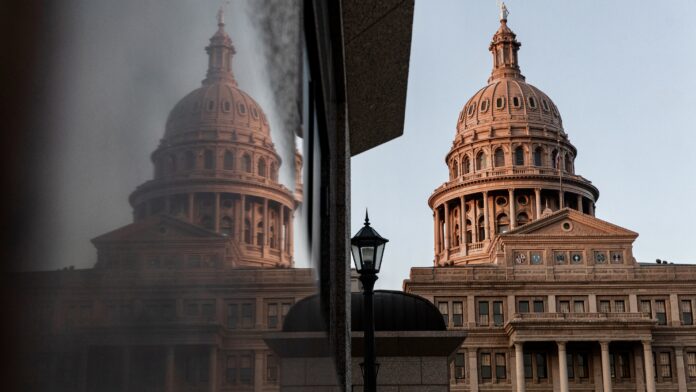
The Texas Legislature recently advanced several bills that would protect religious freedom for students, parents, teachers and all public-school employees.
The following were passed by the Senate and House and are now with Gov. Greg Abbott waiting on his signature:
- SB 10 – requires the display of the Ten Commandments in all public school classrooms.
- SB 11 – allows public schools to provide time for students and educators to pray or read the Bible or other religious texts during school.
- SB 965 – protects the rights of teachers, coaches, school district staff and all public employees to engage in religious speech or prayer while on duty.
- SB 1049 – strengthens parents’ rights to choose religious education for their children during school hours.
History & Tradition: Displaying the Ten Commandments in Public Schools
Former state Rep. Matt Krause, a legal and policy advisor to First Liberty, testified in support of SB 10.
“Displaying The Ten Commandments in Texas classrooms is consistent with Supreme Court decisions that recognize the religious heritage and the best of the nation’s history and traditions,” Krause said. “The Ten Commandments are a symbol of law and moral conduct with both religious and secular significance which provide valuable lessons for students. We applaud Texas legislators for taking this bold step for religious liberty.”
Sen. Phil King, who introduced the legislation, argues the proposal is legally feasible because of the U.S. Supreme Court’s landmark ruling in Kennedy v. Bremerton School District, First Liberty’s case involving Coach Joe Kennedy.
“SB 10 follows the historic 2022 U.S. Supreme Court decision which overturned a faulty legal precedent used since 1980 to prohibit these displays,” King said. “This legislation is in accord with the history and traditions of our state and nation. It will help ensure our students understand and appreciate the role of the Ten Commandments in our heritage, our system of law, and their impact throughout Western Civilization.”
Protecting Religious Expression in the Schoolhouse Gates
Introduced by Sen. Tan Parker, SB 965 has been called the “Coach Kennedy” bill. The legislation is intended to protect the rights of school district and charter school employees to engage in religious speech or prayer while on duty. First Liberty provided counsel and advice to the Senator’s office as the bill was drafted and debated on the Senate floor.
Coach Kennedy traveled to Austin to testify in support of it, emphasizing it is an opportunity to correct the stifling of religious expression in public education.
“Players, coaches, principals, superintendents, lunch ladies and many more people don’t have the opportunity to have a moment of prayer in public school,” Coach Kennedy told the Senate Committee on Education. “That’s un-American. That’s not what the First Amendment says. This bill rectifies that.”
Sen. Mayes Middleton introduced SB 11, a similar bill that would give school districts the option to “adopt a policy requiring every campus of the district or school to provide students and employees with an opportunity to participate in a period of prayer and reading of the Bible or other religious text on each school day.”
“This bill restores prayer in our public schools,” Sen. Middleton wrote on X. “This legislation builds on the victory of the Coach Kennedy case in the U.S. Supreme Court by protecting religious freedom in our schools.”
Strengthening Parents’ Right to Choose Religious Education for Their Children
SB 1049 authorizes high school students to participate in religious instruction for course credit. The bill would allow public school students to be excused during school hours for one-to-five hours per week to attend off-campus religious instruction, with written consent from a parent or legal guardian.
Laws allowing such educational programs are nothing new. In fact, earlier this year, Ohio Gov. Mike DeWine signed a law allowing students to leave school during the day for religious instruction. A similar law was recently signed in Montana.
One example of a religious-instruction program that meets the requirements of the release-time program is LifeWise Academy, which has been tremendously successful in 30 states.
LifeWise teaches character education through a Biblical lens. The structure of LifeWise is similar to that approved in Zorach: it is held off-campus, entirely voluntary, and funded privately by interested members of the community. Parental permission is required for participation and may be withdrawn at any time for any reason.
Today, many schools take advantage of LifeWise programs, with classes taking place at local churches, businesses, community centers or privately owned buildings.
“Release-time programs are clearly constitutional and have been highly successful in states across the nation,” Krause said. “This bill puts parents in the driver’s seat of educational opportunities.”
SB 1049 does not establish a specific religion, nor does it mandate attendance. All it does is make sure that if parents want to send their children to religious instruction during release-time, they may.
That’s what this bill is really about: protecting parents right to choose the education and instruction that they think is best for their children. Enacting this bill into law would be major victory for religious freedom and parental rights.
The Battle for Religious Freedom Isn’t Over
In Texas and states all across America, faith and religious expression are being restored where they rightfully and legally belong. But the fight for religious freedom is far from over. In fact, the new attacks have already begun.
While our Supreme Court victories opened the door of opportunity, our opponents are relentless. Each effort to advance religious liberty is being met with resistance and lawsuits. This is a fight that will only intensify.