Would you host criminals, ex-criminals or people with serious mental health issues in your home to help your mayor shut down a local jail? For New Yorkers, this question isn’t a hypothetical.
Mamdani’s Taxpayer-Fueled Plan
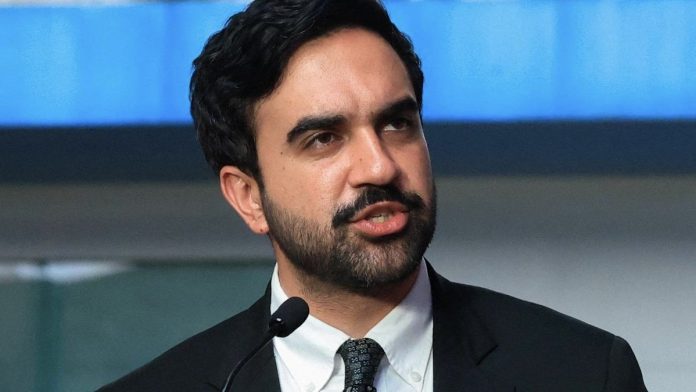
The Kinship Reentry Housing Program, which began in 2021 on a small scale, is drawing attention as part of New York City Mayor Zohran Mamdani’s 88-page “strategic plan,” which was announced Friday. The Democratic Socialist mayor has signaled that his long-term aim is to continue the plan to shut down Rikers Island—one of the largest local jail systems in the U.S.—in favor of a reenvisioned criminal justice network for the Big Apple.
Originally, Rikers was planned to be shut down by 2027, but Mamdani has pushed to delay it by five years in order to lessen the jail population. Meanwhile, plans for four new jail facilities are in the works.
Under Mamdani’s initial plans, the Kinship Reentry Housing Program would expand far beyond what was first established five years ago, giving New Yorkers the option to house family members awaiting trial or state incarceration and those serving short-term jail sentences. The question of which prisoners would qualify for the program isn’t entirely clear.
The original plan accommodated 50 families; the expanded version makes room for up to 300 who would be released into a home environment.
While hosting prisoners might be optional for New Yorkers, they don’t have a say in funding the project. Mamdani plans to pump $3.55 million in taxpayer dollars into it this fiscal year alone, with projections of roughly $7.1 million annually in the years to come. “This program,” the plan says, “provides a stable home for people returning to community from Rikers or prison, including 100 people with diagnoses of serious mental illness, substance use disorder or other complex behavior health needs.”
As The New York Post reported, “It’s unclear how much of a monthly payment family members will receive under the expansion, but the Osborne Association, which runs the program for NYC, currently provides $500 a month for up to 12 months to help cover the costs of housing an ex-con.”
Backlash From Concerned Locals
While some residents welcome the plan as a helping hand to the incarcerated, others are concerned—seeing it as another step in a broader pattern of government-led redistribution that prioritizes expansive social experiments over personal responsibility, fiscal restraint and public safety.
“This seems like another reckless use of taxpayer money on a social experiment that could go horribly wrong,” New York Council Minority Leader David Carr said. “In Mamdani’s New York, crime really does pay.”
Councilwoman Joann Ariola added, “New Yorkers are paying for crime twice—first for the offense and then again to pay for these programs. Where are we even getting this money from? This city is crying broke every budget cycle, but we seem to have no problem pulling millions out of the air for programs like this. It’s going to be yet another burden on taxpaying New Yorkers.”
Warnings That Go Beyond NYC
These local criticisms echo longer-standing national warnings from Christian leaders such as Franklin Graham, who has repeatedly described socialism as the “gospel of envy”—a bankrupt ideology that promises abundance through government redistribution but historically delivers poverty, dependency and the erosion of personal responsibility.
Franklin has pointed to examples like Venezuela and Cuba, arguing that such approaches undermine the value of work, productivity and limited government while expanding state control. In his view, policies that shift costs onto taxpayers for social experiments often reflect the same underlying philosophy: looking to government as the final authority rather than fostering self-reliance and accountability.
Mamdani’s proposal for a five-year delay to shut down Rikers Island in order to decrease the jail population needs City Council approval, which he’s expected to receive.
“The city initially had $8.2 billion budgeted to build the four new jails with a planned capacity of 3,544 beds,” The Post added, “but delays, redesigns and rising construction costs are expected to bring the cost to at least $16 billion.”
For many watching the debate, the Kinship expansion is more than a housing initiative but a real-life test of whether taxpayer-funded incentives can safely and sustainably reduce incarceration, or whether they risk becoming another costly illustration of the failures Franklin and others have long cautioned against.