LIVE UPDATES — FROM SEPT. 21st – 27th
Israel At War: Week Fifty-One Coverage
TRUSTED ANALYSIS

Day 357 — Friday, September 27
IDF Conducts Massive Strike On Hezbollah HQ In Beirut; Nasrallah’s Fate Unclear

The Israeli Air Force carried out massive targeted airstrikes in the Lebanese capital of Beirut on Friday evening, with the military saying it had struck Hezbollah’s main headquarters.
The attack shook the Lebanese capital and sent thick clouds of smoke over the city. There were reports of many casualties in the multiple strikes.
Unconfirmed Hebrew media reports said Hezbollah leader Hassan Nasrallah was targeted, leading to widespread speculation and conflicting reports as to his fate. The New York Times quoted multiple Israeli and US officials saying Nasrallah was targeted.
A source close to Hezbollah said the Israeli strikes flattened six buildings. It was the heaviest attack in Beirut in almost a year of conflict between Hezbollah and Israel.
A Lebanese security source told Reuters that Hezbollah’s top officials are usually gathered at the site that was targeted.
Underlining the extraordinary nature of the strike, IDF Spokesman Rear Adm. Daniel Hagari gave an on-camera statement minutes after the strike. Hagari said the main command center was built underneath civilian buildings in the Dahiyeh suburb, a known Hezbollah stronghold in Beirut.
He did not mention whether Nasrallah was a target or was believed to be present at the site.
Footage from Beirut showed extensive destruction at the site.
بالفيديو: لحظة استهداف الضاحية بغارات عدة pic.twitter.com/N7Q8TAIBNI
— هنا لبنان (@thisislebnews) September 27, 2024
Day 357 — Friday, September 27
IDF Says It Shot Down Missile From Yemen, After Sirens Sound Across Central Israel
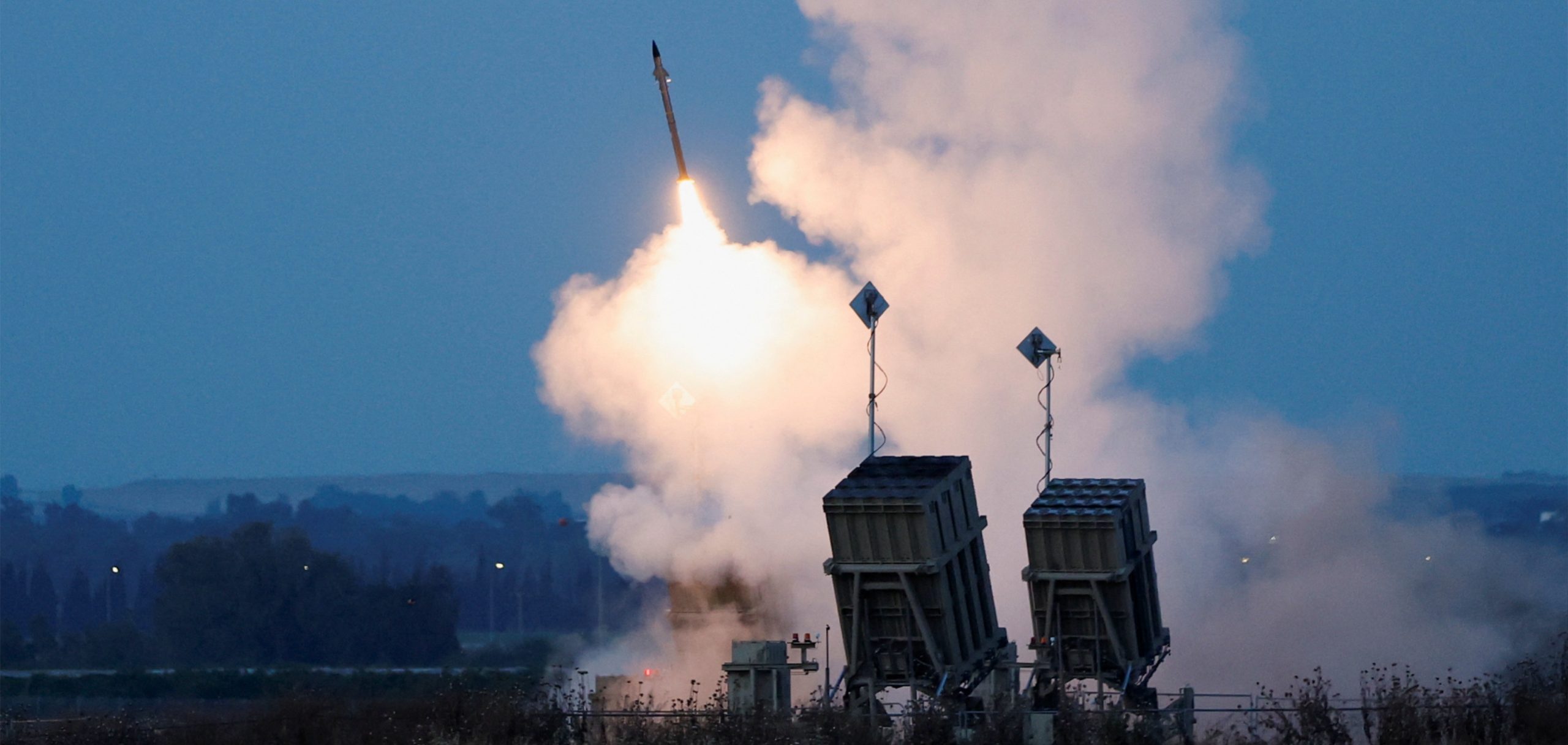
Israeli air defenses intercepted a surface-to-surface ballistic missile fired from Yemen, the military said after sirens were activated in Tel Aviv and across central Israel early Friday morning.
The Israel Defense Forces said the missile was downed “outside the country’s borders” by the long-range Arrow air defense system, adding that warning alerts were triggered due to concerns about falling shrapnel from the interception.
The IDF also said there were no new instructions from the Home Front Command following the attack.
There were no reports of direct impacts from the shrapnel and no one was directly hurt by falling debris. However, the Magen David Adom ambulance service said a 17-year-old girl was moderately hurt after being struck by a car pulling to the side of the road amid the attack.
The girl was conscious and taken to a local hospital, according to MDA, which said another 17 people were lightly hurt after falling on their way to shelters or as the result of acute anxiety.
There was no immediate claim of responsibility for the attack, though Yemen’s Houthi rebels said early Friday morning that a military spokesman would be making an announcement within hours.
A Houthi official hinted that the attack was in retaliation for an Israeli airstrike Thursday that killed senior Hezbollah leader Mohammed Srur, whose death was confirmed by the Lebanese terror group shortly before the sirens sounded in Israel.
Srur was among several top advisers sent by Hezbollah to Yemen to train the Houthis, who are also backed by Iran, a source close to Hezbollah told AFP.
The IDF, which described Srur as Hezbollah’s drone commander, said he was Hezbollah’s attaché to Yemen where he was involved in the Houthis’ aerial forces.
The strike targeting Srur was the fourth in a week targeting Hezbollah commanders in the densely populated southern suburbs of Beirut, one of the Shiite organization’s strongholds, with fighting between Israel and Hezbollah intensifying after nearly a year of cross-border skirmishes.
The missile attack from Yemen came after Hezbollah fired a surface-to-surface missile at Tel Aviv early Wednesday, the first time it has had a rocket reach close to Israel’s central hub.
Times Of Israel
Day 357 — Friday, September 27
Analysis — No Country Would Tolerate Non-Stop Attacks On Its Civilians… And Israel Is Determined To Put An End To It
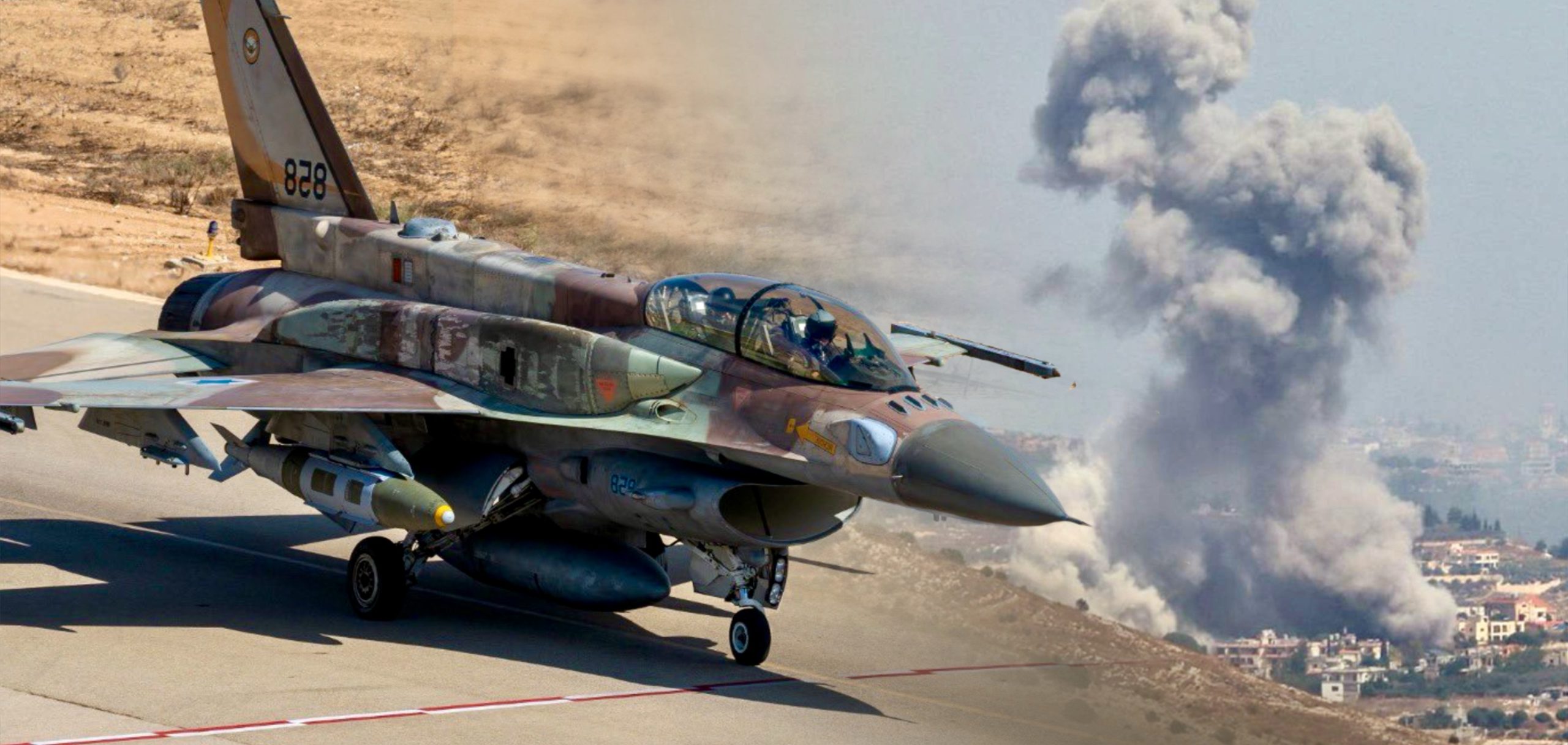
Israel has begun to pound Hezbollah targets within Southern Lebanon. Frankly, they’ve had enough of the terror group’s constant rocket attacks against Israeli cities, displacing over 60,000 residents in the north.
Israeli Prime Minister Benjamin Netanyahu, as he addressed the critical situation, stated:
On October 7th, the Hamas terrorist monsters burst into Israel, murdered our people, raped and beheaded our women, burnt babies alive, and took 255 innocent people hostage, including many Americans.
A day later, on October 8th, another Iranian terrorist proxy, Hezbollah, attacked Israel completely unprovoked. They fired missiles and rockets into our cities. They made 60,000 Israelis leave their homes along the Lebanon border, becoming refugees in their own land.
In the subsequent months, they haven’t stopped for a single day attacking us.
No country can accept the wanton rocketing of its cities. We can’t accept it either.
We will take whatever action is necessary to restore security and to bring our people safe back to their homes.
No country would tolerate non-stop rocket attacks on its civilians. Israel is determined to put an end to it, and Israel means business.
I’m sure you’ve all heard by now of the events of last week when approximately 4,000 pagers and radios of Hezbollah commanders were blown up by Israel. Dozens were killed, and Lebanon’s hospitals were flooded with thousands of injured Hezbollah members, with some blinded by the blast.
Israel then launched another attack on Hezbollah last Friday with an airstrike in Beirut, which fired four missiles, killing Ibrahim Aqil and 15 other senior Radwan Force commanders. Hezbollah, of course, is in shock, stunned by what has happened, giving Israel a perfect opportunity to pound Hezbollah targets within Southern Lebanon.
Day 357 — Friday, September 27
Analysis — International Law Confirms Israel’s Legitimacy... From Jordan River to the Mediterranean Sea

Today, I want to address a remarkably important question: Is Israel a legal State? You might have come across arguments that Israel is an illegitimate country or that it is occupying Palestinian land. Well, I’m here to shed light on the truth backed by historical facts and in international law to understand Israel’s legal status.
We must start with the Balfour Declaration of 1917. This groundbreaking statement by the British government pledged support for the establishment of a national home for the Jewish people in Palestine. It marked a significant step towards the realization of the Zionist dream. A dream that the Jewish people have carried in their hearts for centuries through countless prayers and longings for their ancestral Homeland.
Fast forward to 1920, when the Allied powers of World War I convened at the San Remo Conference. It was here that they agreed to put the Balfour Declaration into action.
This was followed by the League of Nations’ official establishment of the “Mandate for Palestine” in 1922. The Mandate recognized the unbreakable historical connection between the Jewish people and the land of, then, “Palestine,” and it called for the establishment of a Jewish National Homeland.
Now, I want to draw your attention to a crucial aspect of the Mandate. Article 6 encouraged “close settlement by Jews on the land, including State lands and waste lands not required for public purposes.” This means the Jews were granted the legal right to settle anywhere within the mandated territory, which included Judea Samaria and even Gaza. This right was anchored in international law and has never been revoked.
But what happened to the Mandate when the League of Nations was dissolved and the United Nations was formed? Did it simply vanish? Absolutely not! The architects of the UN Charter made sure to include Article 80, often referred to as “The Palestine Clause.” This article preserves the rights granted under the Mandate regardless of the League of Nations dissolution.
Day 356 — Thursday, September 26
Call from US, EU, Nine States For 21-Day, Israel-Lebanon Ceasefire Doesn’t Mention Hezbollah
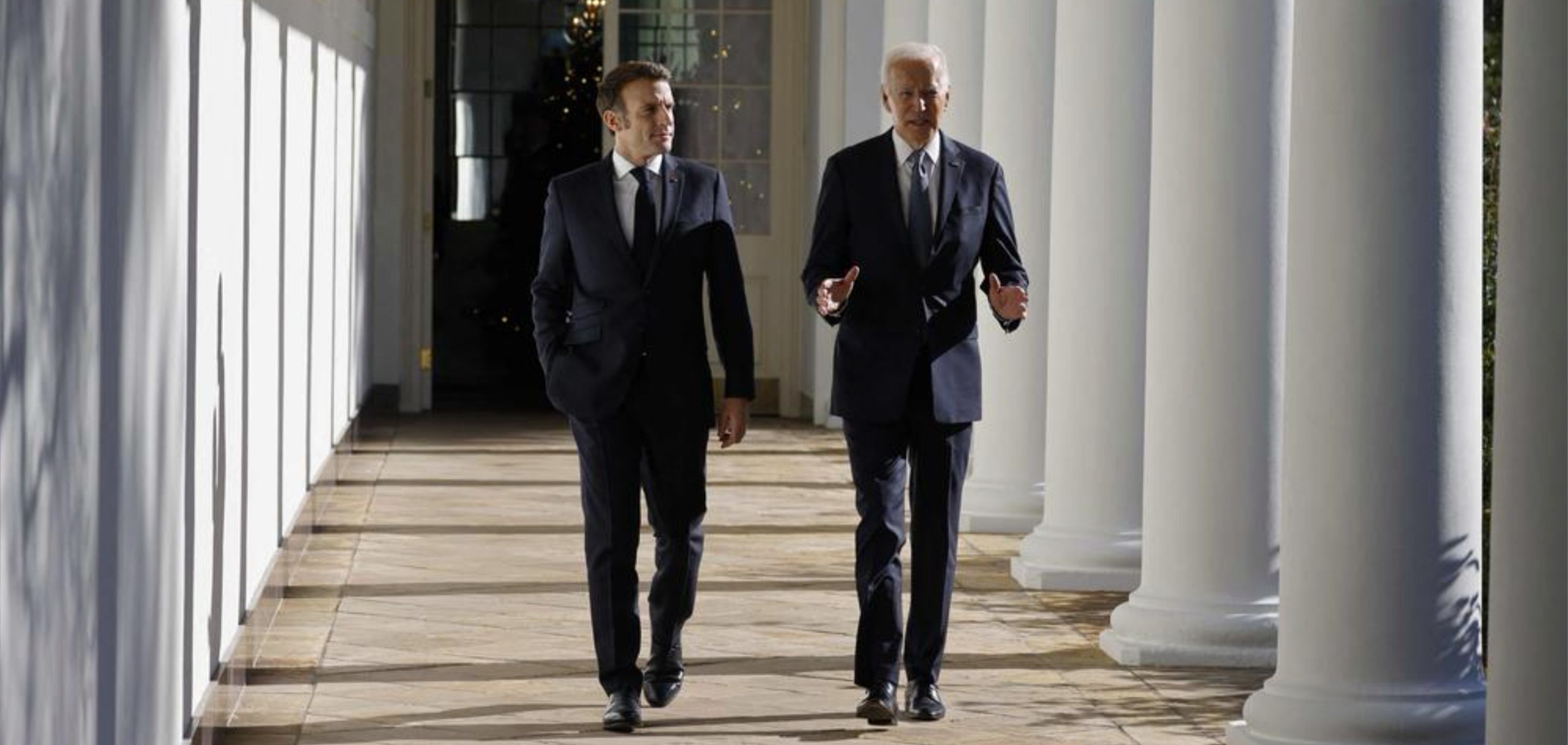
The United States, Australia, Canada, European Union, France, Germany, Italy, Japan, Saudi Arabia, United Arab Emirates and Qatar called jointly on Wednesday night for an “immediate 21-day ceasefire across the Lebanon-Israel border to provide space for diplomacy towards the conclusion of a diplomatic settlement.”
Minutes before the statement went out, U.S. President Joe Biden and French President Emmanuel Macron stated that “it is time for a settlement on the Israel-Lebanon border that ensures safety and security to enable civilians to return to their homes.”
Neither of the two statements referred to Hezbollah, a U.S.-designated terror group, which has launched thousands of rockets at the Jewish state since Oct. 8. Israel has targeted launch sites and missiles tied to Hezbollah and has not declared war on Lebanon.
In a call with reporters on Wednesday night, a senior U.S. official referred to the proposal as an “important breakthrough.”
“There is no government of Lebanon,” wrote Mark Dubowitz, CEO of the Foundation for Defense of Democracies. “No mention here of Hezbollah or Hamas.”
“Imagine releasing two statements calling for a temporary ceasefire between Israel and Lebanon as if the government of Lebanon has any agency and sovereignty without mention of Hezbollah, which holds the power here,” wrote Jason Brodsky, policy director at United Against Nuclear Iran.
“That’s how disconnected from reality this sounds,” Brodsky wrote.
Kabir Taneja, a fellow at the Observer Research Foundation, wrote that it is “strange that Biden-Macron joint statement on border conflict between Israel and Lebanon fails to clarify the fact that the military exchange taking place is with Hezbollah, not the Lebanese armed forces.”
Day 356 — Thursday, September 26
IDF Readying For A Possible Ground Maneuver In Lebanon, Chief Of Staff Says

Israel Defense Forces (IDF) Chief of Staff Lt. Gen. Herzi Halevi said on Wednesday the military was preparing for a possible ground operation against Hezbollah in Lebanon.
“We are conducting aerial attacks all day, both to prepare the area for the possibility of entry into Lebanon, and also to continue dealing blows to Hezbollah,” the general told troops of the 7th Armored Brigade during a drill simulating a ground maneuver in Lebanon.
“Hezbollah has expanded its range of fire today. It is about to receive a very strong response,” he said. “Today we will continue, we do not stop, we continue to attack and continue to strike them everywhere. The goal is very clear, to return the displaced residents of the north safely.”
“To this end, we are preparing the ground maneuver,” he concluded.
Day 355 — Wednesday, September 25
Israeli Envoy Blasts ‘Outrageous’ Criticism Of Jewish State On Opening Day Of UNGA
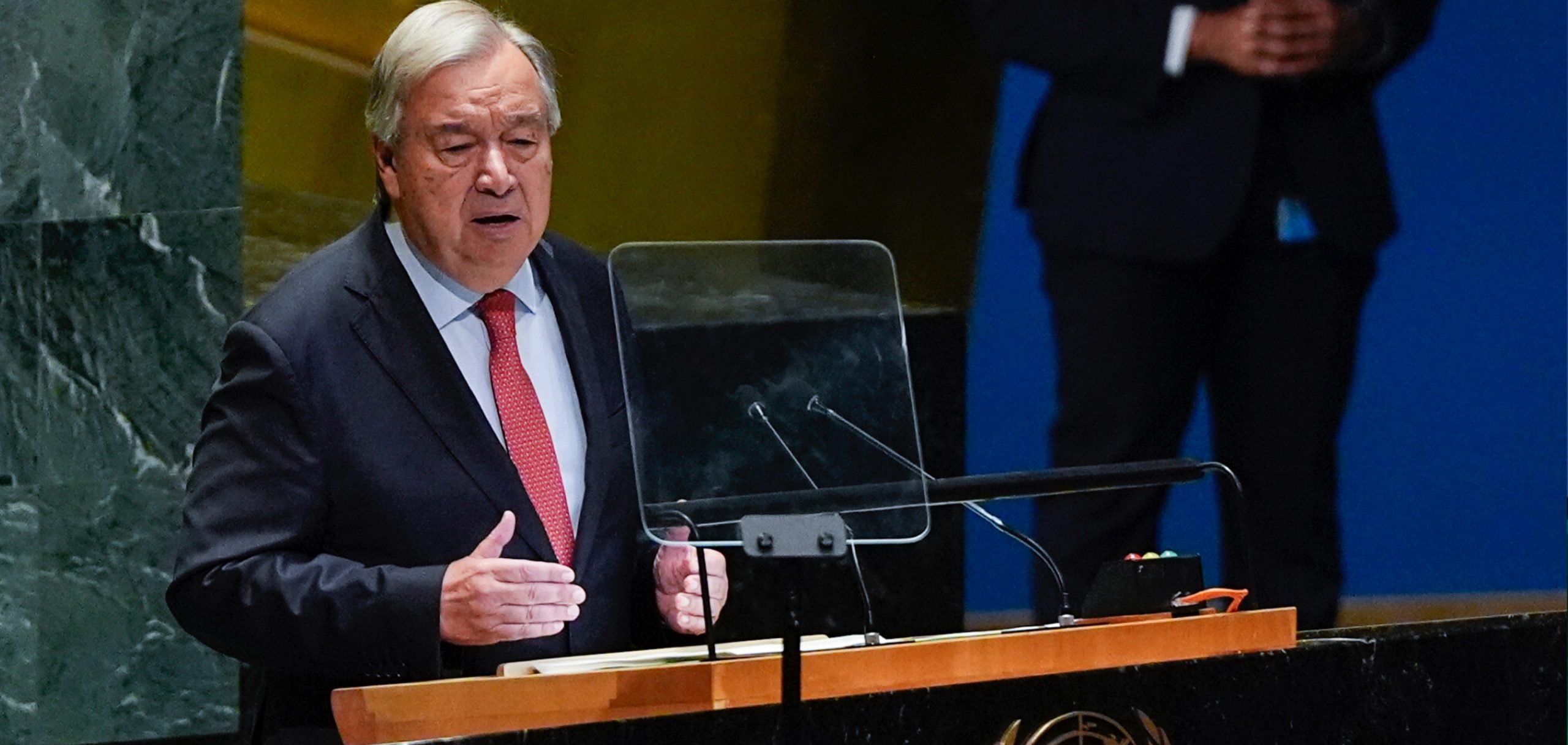
Israel’s ambassador to the United Nations told JNS on Tuesday that criticism lobbed at Jerusalem from multiple directions at the annual U.N. General Assembly was best ignored by those back home.
“We expected that to happen,” Danon said of condemnations of Israel from U.N. Secretary-General António Guterres, Turkish President Recep Tayyip Erdoğan, Jordanian King Abdullah and others from the General Assembly podium.
Danon said that Guterres saw the applause he received when discussing the suffering in Gaza as a result of the war between Israel and Hamas
“But when he spoke about our hostages, silence,” Danon observed.
Danon said Erdoğan’s comparison of Israeli Prime Minister Benjamin Netanyahu to Adolf Hitler was “outrageous.”
“We will stand strong and proud against those lies, against the libel, and I am telling my colleagues in Israel, keep going,” Danon said. “Do whatever you have to do against Hezbollah, against Hamas.”
“I know how to handle those guys here,” he added.
With a U.N. Security Council meeting on the Israeli-Palestinian file called for Friday and an emergency session on Lebanon requested by the French now set for Wednesday—both during high-level debate week—Danon said the global body offers no solutions.
“It’s much easier to talk and to condemn Israel,” he said. “If someone wants to avoid a war today between Israel and Lebanon, he should speak up today against Hezbollah and put pressure on the Lebanese government.”
“Instead of doing that, it’s much easier to condemn Israel and to blame us for crazy things that they are doing here,” he added. “I expect real leaders to come with real solutions.”
Danon said that a solution in Lebanon is as simple as Hezbollah retreating north of the Litani River, an east-west waterway parallel to the Israel-Lebanon border that was supposed to serve as the marker for a no-man’s land following the 2006 Lebanon War.
The Israeli diplomat told JNS that such a move by Hezbollah “will be a solution that will avoid the escalation.”
“We don’t want to see full war with Lebanon,” he said. “Lebanon will not look the same if they continue to attack us.”
Danon said that countries attacking Israel diplomatically can’t be a part of any potential solutions after they have blamed the victims.
“It’s not helpful,” he said. “All those who are playing the game attacking Israel, they shouldn’t expect that we’re going to allow them to come and be part of the process.”
“It doesn’t work that way,” he added. “You have to be neutral. You have to try to bring the sides to a point that they can agree. But what we see with most of the countries here, they just want to come blame Israel and move on.”
Day 355 — Wednesday, September 25
IDF Eliminates Another Hezbollah Commander, Only Recently Elevated To Position Under Nasrallah
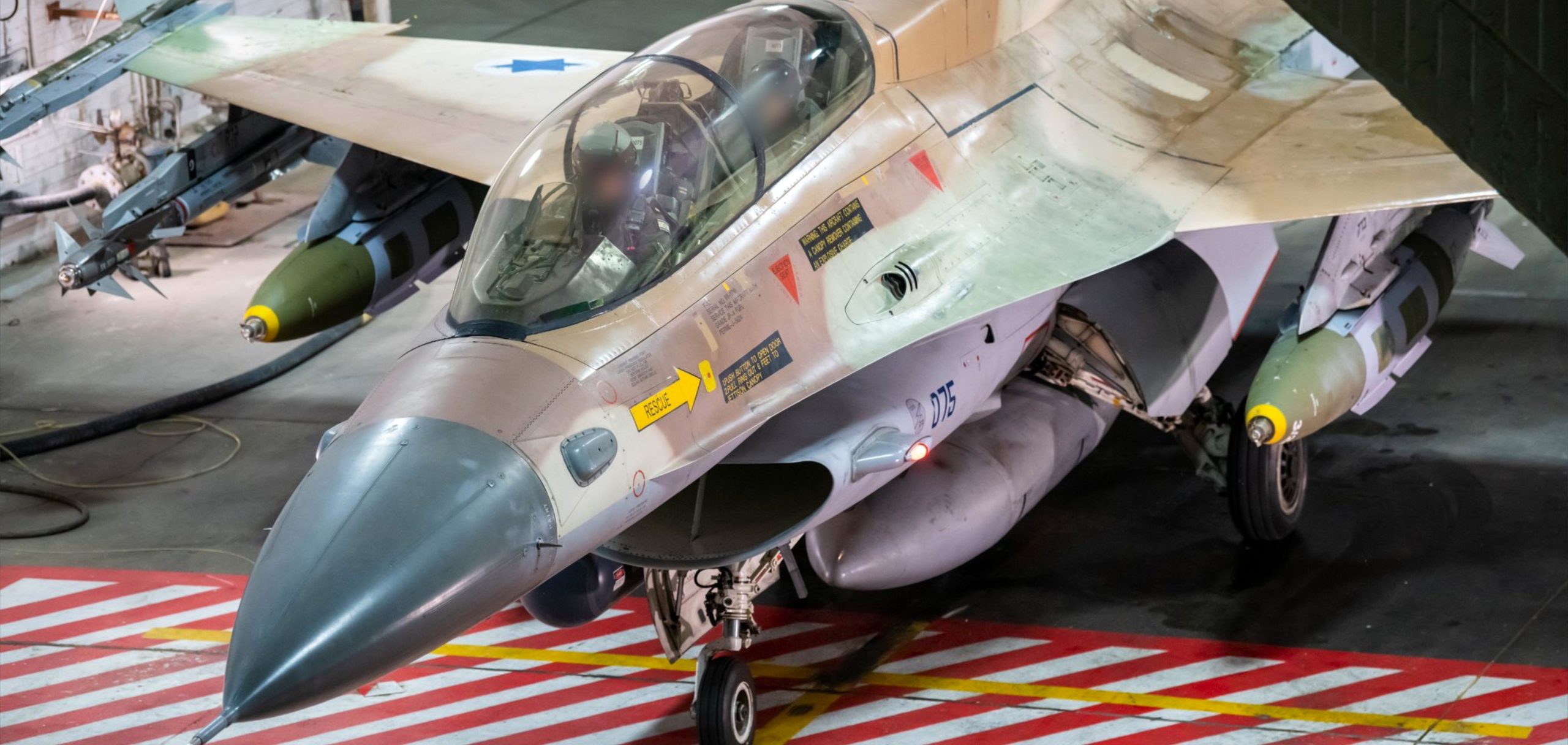
The IDF announced that it had killed Ibrahim Qabisi (Abu Musa), the head of Hezbollah’s missile and rocket force, in a targeted attack in Beirut’s Dahiyeh district on Tuesday afternoon.
According to the IDF spokesperson, Qabisi was accompanied by other key commanders in Hezbollah’s “Missiles and Rockets Force” at the time of the strike. According to Lebanese news sites, at least six people were reported killed and 15 wounded in the attack that killed Qabisi.
Later on Tuesday evening, the IDF released an official statement announcing Qabisi’s death and his connection to the deaths of three IDF soldiers around 24 years ago.
“The terrorist Ibrahim Muhammad Qabisi, Head of Hezbollah’s Missiles and Rockets Force, who was eliminated by the IDF today (Tuesday), planned the abduction terror attack in Mount Dov in the 2000s, in which Staff Sergeant Benyamin (Benny) Avraham, Staff Sergeant Adi Avitan and Staff Sergeant Omar Sawaid were abducted and killed. They were brought back to Israel for burial in 2004.”
Qabisi joined Hezbollah in the 1980s and held several significant military roles within the terror group, including as a senior officer in Hezbollah’s Operations Unit in southern Lebanon and commanding the Badr Unit on Hezbollah’s Southern Front. More recently, he commanded several missile units within Hezbollah, including the precision-guided missile unit.
Following the recent eliminations of several high-level officers, Qabisi was recently appointed to a subordinate command position under Hezbollah Sec.-Gen Hassan Nasrallah, according to reports in Hebrew media.
During the border conflict, Qabisi was responsible for launching rockets at the Israeli home front.
An anonymous government source told Ynet News, “The strategy is to change the balance of power in the north.”
Day 354 — Tuesday, September 24
‘Israel’s War Is Not With You – It’s With Hezbollah,’ Netanyahu Tells The People Of Lebanon

“I have a message for the people of Lebanon: Israel’s war is not with you. It’s with Hezbollah,” stated Israeli Prime Minister Benjamin Netanyahu on Monday, a day described by a Lebanese official as “the deadliest in the country since the end of the civil war in 1989.”
Netanyahu delivered his statement in English, addressing the citizens of Lebanon directly, while a massive series of airstrikes on Hezbollah targets in the country was still underway.
His statement echoed the warnings Israel had been issuing since the morning, as the IDF launched a series of announcements through flyers, SMS messages, radio broadcasts and social media alerts. These warnings aimed to evacuate Lebanese citizens from southern Lebanon and the Bekaa Valley, where most of Hezbollah’s infrastructure is concentrated.
“For too long, Hezbollah has been using you as human shields. It placed rockets in your living rooms and missiles in your garage. Those rockets and missiles are aimed directly at our cities, directly at our citizens,” Netanyahu said.
“To defend our people against Hezbollah strikes, we must take out those weapons. Starting this morning, the IDF has warned you to get out of harm’s way,” he added.
“Please, get out of harm’s way now. Once our operation is finished, you can come back safely to your homes.”
By the evening, thousands of Lebanese had heeded the prime minister’s warnings, with fleeing residents causing large traffic jams on the highways leading north.
Day 354 — Tuesday, September 24
Report: Iran’s IRGC Bans All Communications Devices After Hezbollah Pager and Radio Blasts

The Islamic Revolutionary Guard Corps (IRGC) of Iran has reportedly ordered all of its members to stop using communications devices, at least until they can all be inspected.
The order came a few days after pagers and handheld radios used by the Iran-backed Lebanese terrorist organization Hezbollah blew up, killing 39 and injuring over 3,000 more.
Two senior Iranian security officials told Reuters on Monday that the IRGC plans to inspect all of the electronics carried by its operatives. The IRGC gets most of its equipment from China and Russia and, in the wake of the Hezbollah blasts, the IRGC fears its supply lines may not be secure.
The security officials said Iran is also worried about “infiltration by Israeli agents, including Iranians on Israel’s payroll,” so a “thorough investigation” of middle- and high-ranking IRGC officers has begun.
“This includes scrutiny of their bank accounts both in Iran and abroad, as well as their travel history and that of their families,” one of the officials said.
The IRGC has reportedly obtained debris from exploded Hezbollah pagers and radios to study how the attack was pulled off, and the Iranians have asked their Hezbollah clients for “technical assessments” from last week’s explosions.
Iranian officials said they were particularly worried about Israel – widely thought to have engineered the pager blasts, although it has yet to claim responsibility for them – using its heretofore-unsuspected skills at weaponizing personal electronics to surveil or sabotage Iran’s nuclear and missile programs.
Neither of Reuters’ sources was willing to disclose how the IRGC’s roughly 190,000 personnel are communicating with each other at the moment. One of them mentioned that the Iranian military stopped using pagers “over two decades” ago. Another spoke of using “end-to-end encrypted messaging systems,” without discussing what sort of battery-powered device might be considered safe to use on either end of those messages.
Iranian opposition news service Iran International noticed on Monday that “regime insider” and former nuclear negotiator Mohammad Marandi has been cranking out social media posts warning Iranians not to purchase electronic devices from Western, Taiwanese, South Korea, or Japanese manufacturers.
Hezbollah’s exploding pagers were ostensibly manufactured by a Taiwanese firm, while it walkie-talkies came from a Japanese company. Both of those companies have said they had nothing to do with the equipment that exploded, describing them as obsolete models and knockoffs.
It is not yet clear whether the pagers and radios were weaponized at the time of manufacture, or if they were intercepted and sabotaged at some point along their supply chain.
Day 353 — Monday, September 23
IDF Carries Out Largest Attack On Hezbollah Since 2006, Causes Mass Evacuations In Lebanon
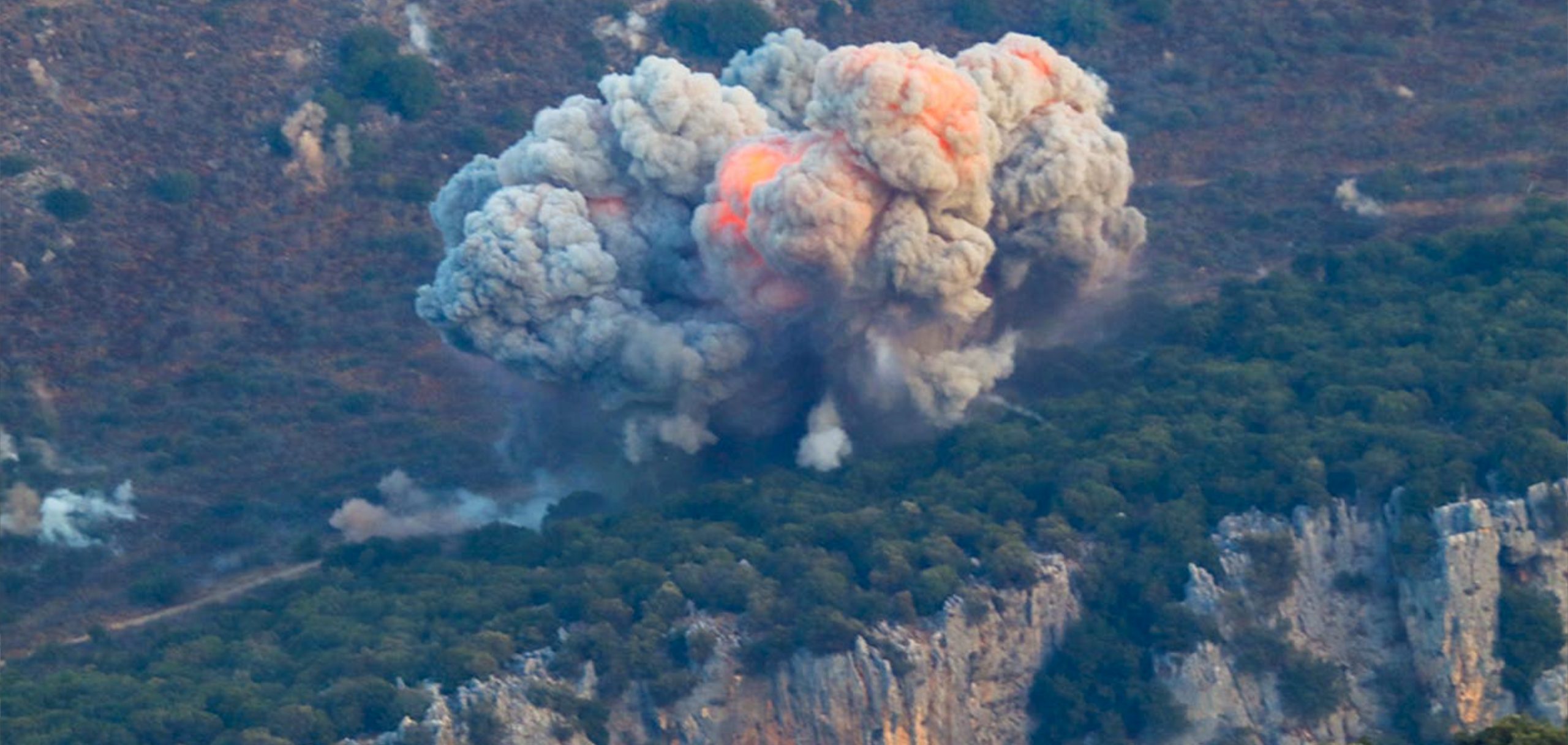
The IDF battered Hezbollah with the largest attack since the Second Lebanon War (2006) on Monday. The attack was broken down roughly into four massive rounds of air strikes against rockets and other assets. The Iranian proxy group tried hard to fight back but had very limited success in relative terms.
The figures from Monday’s attacks, along with the days preceding, were staggering and also led to enormous waves of evacuations of Lebanese civilians from both southern Lebanon and the Bekaa Valley area.
The IDF struck over 1,300 targets in around 650 sorties; the Lebanese Health Ministry estimated well over 1,645 wounded and close to 492 dead.
Defense Minister Yoav Gallant said that the military’s continuous strikes in recent days destroyed tens of thousands of rockets, with some commentators noting that the attacks could be impacting aspects of Hezbollah’s strategic capabilities to wage a war against Israel.
Hezbollah fired – almost non-stop – rounds of dozens of rockets across the entire North, over 200 rockets throughout Monday, which extended all the way down to Haifa.
For the first time, Hezbollah fired approximately 10 long-range rockets at the northern West Bank. Some commentators speculated this was a signal of threat to Israel – given that if they could reach there, they could also reach Tel Aviv – if Hezbollah decided to aim that far.
Day 353 — Monday, September 23
Netanyahu On Hezbollah: We’re Not Waiting For Threats, We’re Pre-Empting Them

The IDF is pre-empting security threats rather than waiting to respond to attacks, Prime Minister Benjamin Netanyahu said as IDF action to push Hezbollah back to the Litani River raised international alarm, drew threats from Iran and caused concern in Washington.
“I would like to clarify Israel’s policy to whoever does not yet understand,” Netanyahu stated as he held security consultations with Defense Minister Yoav Gallant and IDF Chief-of-Staff Herzl Halevi.
“We are not waiting for the threat, we are pre-empting it – everywhere, in every sector, constantly. We are eliminating senior figures, terrorists, and missiles – and our arm is still extended,” he stressed.
“Whoever tries to harm us, we will harm them all the more forcefully,” he underscored in a message he issued.
Israel for the last week has engaged in an intensive military campaign to sway the Iranian proxy group Hezbollah to move its forces out of the southern border area and back to the Litani River.
“I promised that we would change the security balance, the balance of forces in the north [by Lebanon] – this is exactly what we are doing. We are destroying thousands of missiles and rockets that are directed at Israel’s cities and citizens,” he said.
Day 353 — Monday, September 23
IDF Warns Lebanese Civilians To Immediately Move Away From Homes Used By Hezbollah To Store Weapons

IDF Spokesman Rear Adm. Daniel Hagari issues a message to Lebanese civilians in border villages, warning them against Hezbollah’s use of their homes to store weaponry.
“To all the residents of the villages in Lebanon, in the near future we will strike terror targets in Lebanon. We call on everyone who is near properties or inside homes where Hezbollah is hiding weapons, we call on you to distance yourselves from them immediately. This is for your safety and protection,” he says.
Hagari shows previously unreleased footage of Hezbollah operatives preparing to launch a cruise missile from within a civilian home in a southern Lebanon village. The building was targeted in an airstrike.
“Hezbollah puts you and your families in danger. Hezbollah is planning to launch these weapons toward Israel, stay away from them immediately for your own protection,” he says.
Meanwhile, Hagari says that the ongoing widespread strikes in Lebanon come after the military identified Hezbollah preparations to launch rockets at Israel.
He says the strikes will continue to “remove the threats.”
Day 353 — Monday, September 23
Analysis — UN Has Become A Propaganda Agent For Some Of The Worst Terror Groups In History
 The weapons of war do not consist solely of missiles and guns. They also exist in the form of words and communication. A verbal assault can be more significant than a missile barrage. The United Nations has no standing army. But it still chooses sides and tries to direct the outcome of conflicts. In the conflict between Iran’s proxies and Israel, the UN has chosen to become a propaganda agent for some of the worst terror groups in history.
Both Old and New Testament prophecies speak of all nations gathering against Israel. The UN is a gathering of the world’s nations. Its current attacks on Israel do not entirely fulfill these prophecies, but it comes remarkably close.
A few months ago, Hezbollah leaders switched from cell phone-based communications to pagers and walkie-talkies. They believed it would be harder for Israel to keep track of them with these more primitive communications tools. Israel apparently intercepted the devices along the supply line, planted a small amount of explosive in each one, and then set them up to be remotely triggered. On September 17th, pagers all over Lebanon simultaneously exploded. Hezbollah says the explosions killed a dozen people and injured about 2,800, including Iran’s ambassador to Lebanon. The next day, the walkie-talkies exploded. Hezbollah says this second attack killed another 25 and injured about 700.
The UN began its propaganda campaign by indicating that Israel had probably broken international law. Its high commissioner for human rights, Volker Turk, told the Security Council that using communications devices in an attack may constitute a war crime.
UN Secretary-General Antonio Guterres, a man who always finds it hard to hide his disdain for Israel, gave a briefing at UN headquarters. He said Israel should not “weaponize civilian objects.” Think about that. Civilian objects include microphones, pens, computers, paper clips, knives, guns, printing presses, and a million other things that are regularly weaponized.
The UN apparently prefers for Israel to use missiles and massive, indiscriminate bombs. But in this case, Israel was able to make a pinpoint attack against terrorists, even though those fighters were hiding in civilian areas. Never in history was such an attack carried out with so little collateral damage. The UN should congratulate Israel and condemn Hezbollah’s continued terror bombings of civilian neighborhoods in Israel. But don’t hold your breath.
Day 352 — Sunday, September 22
IDF Announces New Security Restrictions For Northern Israel
Israel’s Home Front Command is issuing new security restrictions on civilians applying from the Haifa area and northward, the Israel Defense Forces (IDF) Spokesperson Daniel Hagari announced on Saturday.
Hagari said educational institutions and workplaces are permitted to operate if an adequate shelter is nearby and can be reached in time. The official also announced restrictions on gatherings: Up to 30 people outdoors and 300 people indoors.
The changes are unfolded as the IDF scales up its airstrikes against Hezbollah sites and rocket launchers in Lebanon.
i24 News
Day 352 — Sunday, September 22
IDF Retaliates After Hezbollah's Deepest Attack Yet: Over 140 Rockets, Six Wounded
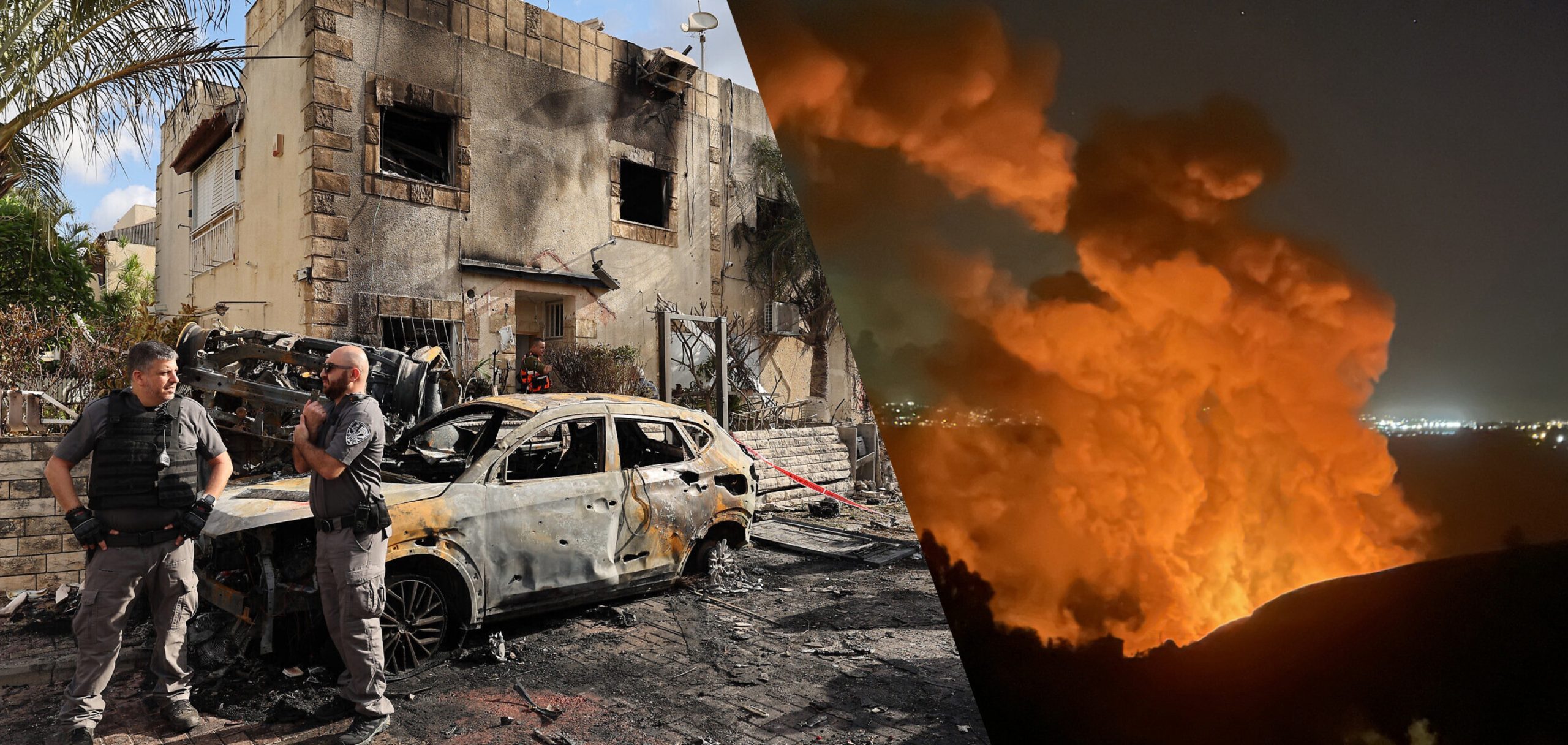
Hezbollah fired its deepest barrage into Israel since the beginning of the current war, with four rounds of over 140 rockets and drones fired into the Jezreel Valley in the early hours of Sunday morning, the IDF confirmed.
Alerts were sounded in and around Haifa, the Ramat David air base, Nazareth, Afula, the lower Galilee, and the Jezreel Valley.
Following the barrage, the IDF stated that they were conducting strikes against Hezbollah targets in Lebanon.
As a result of the fire on northern Israel, six people were wounded, and they were evacuated to the Emek Medical Center in Afula, the Medical Center announced. Magen David Adom (MDA) teams were called to treat four individuals with shrapnel injuries, including a 76-year-old man in moderate condition, as well as a 70-year-old man, a 60-year-old man, and a 16-year-old girl in moderate condition.
Two houses were hit in Kiryat Bialik following a fourth wave of rocket attacks from Lebanon, according to Israeli media.
Initial reports also stated that one person had been killed and that most of the casualties were from a car accident resulting from panic from the rocket fire.
Army Radio and Israeli state broadcaster KAN reported that Hezbollah specifically targeted the Ramat David base near Haifa for the first time in the war. Hezbollah confirmed this, stating it had targeted the Ramat David base and airport in response to Israel Air Force (IAF) strikes in Beirut, which killed some of its top commanders.
The impact of the Lebanese terror group’s counterattack so far, while much farther and potentially deadlier than its general attacks limited to the Upper Galilee and Golan, has been significantly less than expected by the IDF and the general public, given its pre-war arsenal of 150,000 rockets.
Its attempts to perpetrate graver damage and larger casualties deeper into Israel come following a whirlwind week in which the IDF destroyed over 400 rocket launchers, many thousands of rockets, killed Hezbollah’s special forces Radwan chief and around 16 of his deputies, and has been accused of wounding around 3,000-4,000 Hezbollah operatives using explosive device sabotage.
The IDF said that it would continue massive strikes on Hezbollah’s capabilities, mostly focused on southern Lebanon in response.
Day 351 — Saturday, September 21
Danon To Lebanese FM: The Suffering Of The Lebanese People Will Be On Your Shoulders

The UN Security Council convened on Friday for an emergency discussion on the latest developments in Lebanon.
The Lebanese Foreign Minister, Abdallah Bou Habib, and the ambassadors of Iran and Syria participated in the briefing convened at the request of Algeria.
Iran’s Ambassador to the UN blamed Israel for the pager explosions in Lebanon this week, saying, “The attack against our ambassador in Lebanon is an act of terrorism and a violation of international law.”
Lebanese Foreign Minister Abdallah Bou Habib accused Israel of attacking Lebanon and said, “Israel fled Lebanon in 2000, and is now repeating the same mistakes of the past.”
Israel’s Ambassador to the UN, Danny Danon, responded to the Lebanese Foreign Minister by saying, “Mr. Bou Habib, you allowed a terrorist organization to build a state within a state and wreak havoc on your people. Instead of blaming your peace-loving neighbor, the time has come to take action and curb Hezbollah, which is the only way to prevent further escalation.”
“If you continue to ignore Hezbollah’s aggression, the pain and suffering of the Lebanese people will be on your shoulders,” warned Danon.
Day 351 — Saturday, September 21
Hezbollah Announces Death Of Senior Commander, 14 Other Members In Israeli Airstrike in Beirut
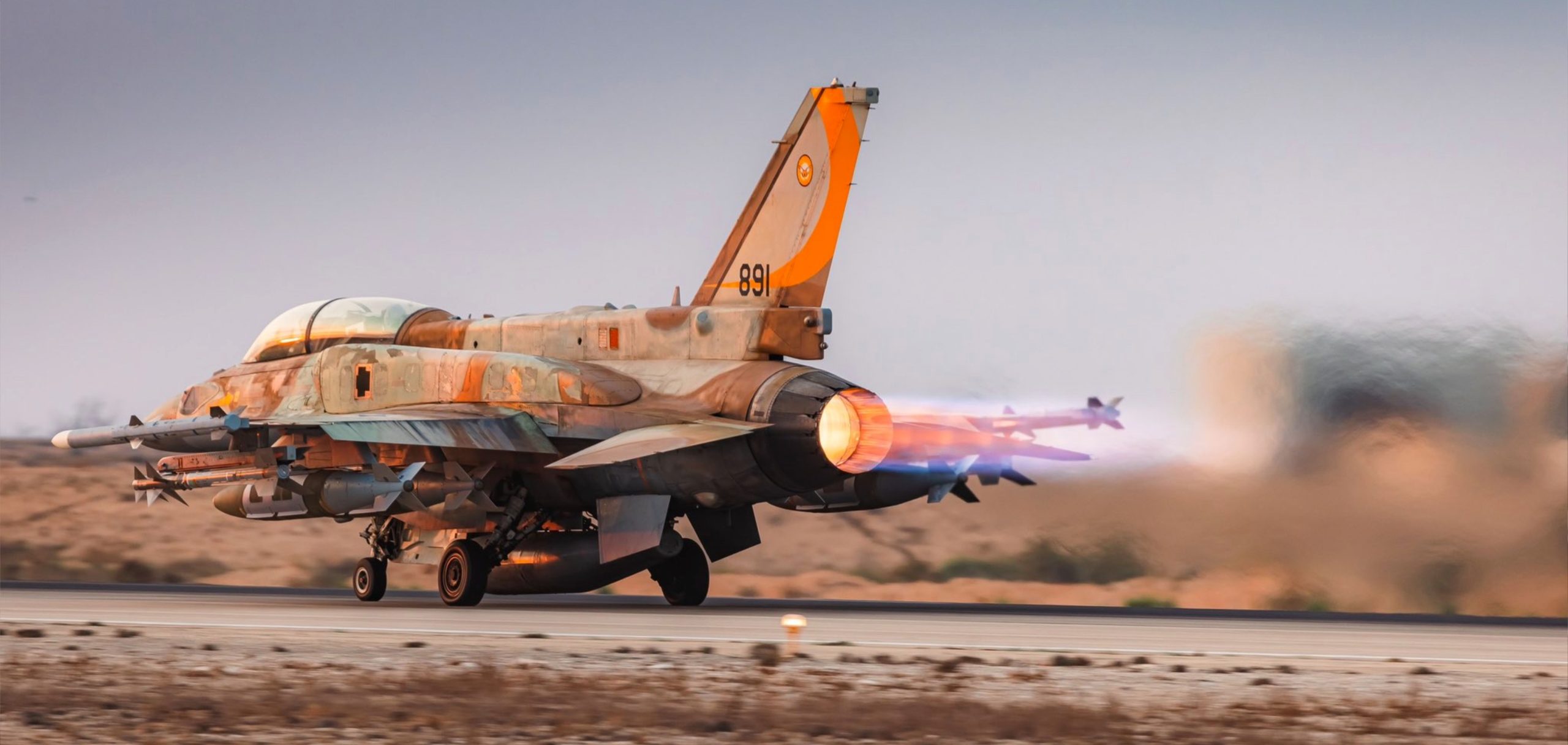
Overnight, Hezbollah named 14 members of the terror group killed in yesterday’s Israeli airstrike in the Lebanese capital of Beirut, alongside top commander Ibrahim Aqil.
One of those named by Hezbollah, Ahmed Wahabi, is identified by the terror group as a “commander.” Hezbollah rarely refers to its senior operatives slain in Israeli strikes as commanders.
Previously, the only other operatives referred to as commanders were Taleb Abdullah, the commander of the Nasr regional division; Muhammad Nasser, the commander of the Aziz regional division; and Wissam al-Tawil, the deputy head of the terror group’s elite Radwan Force.
Hezbollah says Wahabi was the head of the terror group’s “central training unit,” and was previously a top commander in the elite Radwan Force. Like other Hezbollah officers, Wahabi was also involved in fighting for the Assad regime in Syria during the civil war.
Aqil, and fellow slain member of the Jihad Council, Fuad Shukr — killed in July — have been referred to as “great jihadist leader.”
Hezbollah has named 497 members who have been killed by Israel during the ongoing fighting since October.
Day 351 — Saturday, September 21
Analysis — Wikipedia’s Redefinition Of Zionism Draws Severe Rebuke: ‘History Is Being Rewritten’
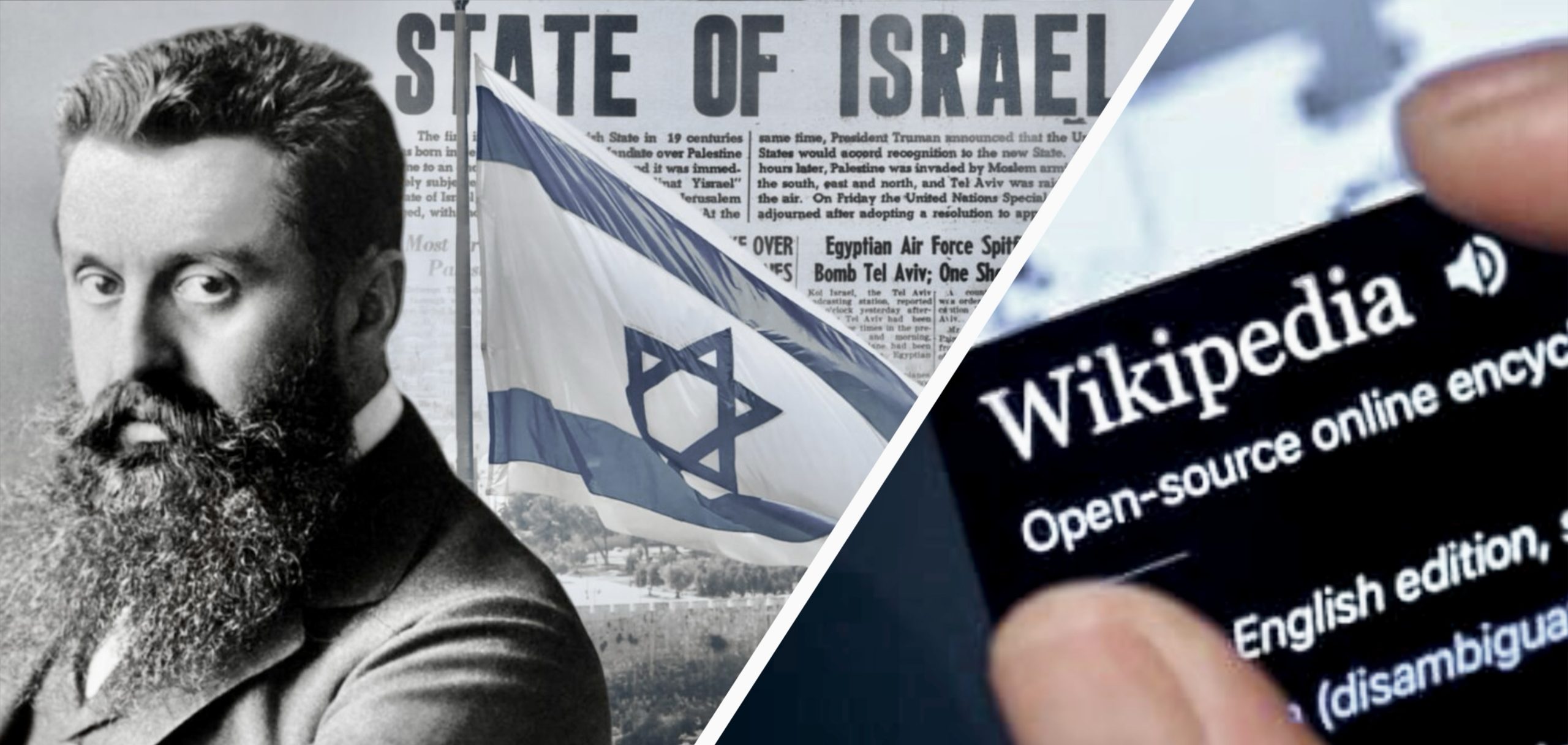
Despite Wikipedia co-founder Larry Sanger’s warnings that the online encyclopedia has become a bastion of bias and “leftist propaganda,” millions continue to rely on it as their primary source of information on a wide array of topics.
One of the most recent issues highlighting the danger of Wikipedia’s impact on public opinion came when the group changed its definition of Zionism in mid-June. Though only now drawing public attention, the revisions are receiving severe backlash on social media, with users warning that “history is being rewritten.”
While much of the condemnation focuses on changes made between 2023 and 2024, venturing further back to Wikipedia’s page in 2004 shows just how far the editors have gone in redefining Zionism.
“Zionism is a political movement among Jews holding that the Jewish people constitute a nation and are entitled to a national homeland,” the 2004 page stated. “The word ‘Zionist’ derives from the word ‘Zion,’ being one of the names of Jerusalem, as mentioned in the Bible. To diaspora Jews, Zion has been a symbol of the Holy Land and of their return to it, as promised by God in Biblical prophecies.”
Though still far from perfect in its definition, the page in 2004 acknowledged the Jewish history in the land, the desire of Jews to return since the Roman Empire’s destruction of Jerusalem in 70 AD, the antisemitism faced globally by diaspora Jews, and that there has always remained, to varying degrees, a Jewish presence in the land.
Slowly rewritten over time, the latest revisions made in June now insist that Zionism is an “ethno-cultural nationalist movement” rooted in the desire to “create a Jewish state in Palestine with as much land, as many Jews, and as few Palestinian Arabs as possible.”
“The common ideology among mainstream Zionist factions is support for territorial concentration and a Jewish demographic majority in Palestine, through colonization,” the revision further states.
As Tel Aviv Institute senior fellow Hen Mazzig noted, “The new Wikipedia entry on Zionism isn’t just inaccurate, it’s downright antisemitic,” pointing to its section calling into question the genetic authenticity of European Jews.
“It asserts that the origin of Ashkenazi Jews is ‘highly debated and enigmatic,’ echoing Khazar theory, the dangerous lie that Ashkenazi Jews are converts and not descendants of the Jews exiled from the Land of Israel,” Mazzig stressed. “This theory is often weaponized to call Israelis ‘colonizers’ and thus dehumanize us. In fact, Jewish history of repeated exile and migration from Israel to Europe is incredibly well-documented, as are genetic studies linking our people to the Middle East. Any balanced article discussing Jewish genetics and Israel would mention that. Wikipedia has become a hate site.”
While the page in 2023 asserted that “Critics of Zionism view it as a colonialist, racist, or exceptionalist ideology or movement (through settler colonialism),” the revision now adds that even “Proponents of Zionism do not necessarily reject the characterization…” In other words, supporters of Zionism are apparently in agreement that their views are rooted in conquering, ethnically cleansing, and exploiting Palestinians.
Antisemitism expert Olivier Melnick would undoubtedly beg to differ, highlighting recently the vast scriptural evidence “validating the claims of Zionism.”
“From the biblical record, starting in Genesis, it can easily be argued that God Himself was the first Zionist,” Melnick underscored. “It hasn’t changed and never will. Those who fight or reject Zionism are fighting and/or rejecting God. Incidentally, He doesn’t want anybody to perish, and He certainly has the same love and compassion for both Jews and Arabs and so should we. Being a Zionist doesn’t mean that one is a racist or a colonizer.”

Day 357 — Friday, September 27
IDF Conducts Massive Strike On Hezbollah HQ In Beirut; Nasrallah’s Fate Unclear
The Israeli Air Force carried out massive targeted airstrikes in the Lebanese capital of Beirut on Friday evening, with the military saying it had struck Hezbollah’s main headquarters.
The attack shook the Lebanese capital and sent thick clouds of smoke over the city. There were reports of many casualties in the multiple strikes.
Unconfirmed Hebrew media reports said Hezbollah leader Hassan Nasrallah was targeted, leading to widespread speculation and conflicting reports as to his fate. The New York Times quoted multiple Israeli and US officials saying Nasrallah was targeted.
A source close to Hezbollah said the Israeli strikes flattened six buildings. It was the heaviest attack in Beirut in almost a year of conflict between Hezbollah and Israel.
A Lebanese security source told Reuters that Hezbollah’s top officials are usually gathered at the site that was targeted.
Underlining the extraordinary nature of the strike, IDF Spokesman Rear Adm. Daniel Hagari gave an on-camera statement minutes after the strike. Hagari said the main command center was built underneath civilian buildings in the Dahiyeh suburb, a known Hezbollah stronghold in Beirut.
He did not mention whether Nasrallah was a target or was believed to be present at the site.
Footage from Beirut showed extensive destruction at the site.
بالفيديو: لحظة استهداف الضاحية بغارات عدة pic.twitter.com/N7Q8TAIBNI
— هنا لبنان (@thisislebnews) September 27, 2024
Day 357 — Friday, September 27
IDF Says It Shot Down Missile From Yemen, After Sirens Sound Across Central Israel
Israeli air defenses intercepted a surface-to-surface ballistic missile fired from Yemen, the military said after sirens were activated in Tel Aviv and across central Israel early Friday morning.
The Israel Defense Forces said the missile was downed “outside the country’s borders” by the long-range Arrow air defense system, adding that warning alerts were triggered due to concerns about falling shrapnel from the interception.
The IDF also said there were no new instructions from the Home Front Command following the attack.
There were no reports of direct impacts from the shrapnel and no one was directly hurt by falling debris. However, the Magen David Adom ambulance service said a 17-year-old girl was moderately hurt after being struck by a car pulling to the side of the road amid the attack.
The girl was conscious and taken to a local hospital, according to MDA, which said another 17 people were lightly hurt after falling on their way to shelters or as the result of acute anxiety.
There was no immediate claim of responsibility for the attack, though Yemen’s Houthi rebels said early Friday morning that a military spokesman would be making an announcement within hours.
A Houthi official hinted that the attack was in retaliation for an Israeli airstrike Thursday that killed senior Hezbollah leader Mohammed Srur, whose death was confirmed by the Lebanese terror group shortly before the sirens sounded in Israel.
Srur was among several top advisers sent by Hezbollah to Yemen to train the Houthis, who are also backed by Iran, a source close to Hezbollah told AFP.
The IDF, which described Srur as Hezbollah’s drone commander, said he was Hezbollah’s attaché to Yemen where he was involved in the Houthis’ aerial forces.
The strike targeting Srur was the fourth in a week targeting Hezbollah commanders in the densely populated southern suburbs of Beirut, one of the Shiite organization’s strongholds, with fighting between Israel and Hezbollah intensifying after nearly a year of cross-border skirmishes.
The missile attack from Yemen came after Hezbollah fired a surface-to-surface missile at Tel Aviv early Wednesday, the first time it has had a rocket reach close to Israel’s central hub.
Times Of Israel
Day 357 — Friday, September 27
Analysis — No Country Would Tolerate Non-Stop Attacks On Its Civilians… And Israel Is Determined To Put An End To It
Israel has begun to pound Hezbollah targets within Southern Lebanon. Frankly, they’ve had enough of the terror group’s constant rocket attacks against Israeli cities, displacing over 60,000 residents in the north.
Israeli Prime Minister Benjamin Netanyahu, as he addressed the critical situation, stated:
On October 7th, the Hamas terrorist monsters burst into Israel, murdered our people, raped and beheaded our women, burnt babies alive, and took 255 innocent people hostage, including many Americans.
A day later, on October 8th, another Iranian terrorist proxy, Hezbollah, attacked Israel completely unprovoked. They fired missiles and rockets into our cities. They made 60,000 Israelis leave their homes along the Lebanon border, becoming refugees in their own land.
In the subsequent months, they haven’t stopped for a single day attacking us.
No country can accept the wanton rocketing of its cities. We can’t accept it either.
We will take whatever action is necessary to restore security and to bring our people safe back to their homes.
No country would tolerate non-stop rocket attacks on its civilians. Israel is determined to put an end to it, and Israel means business.
I’m sure you’ve all heard by now of the events of last week when approximately 4,000 pagers and radios of Hezbollah commanders were blown up by Israel. Dozens were killed, and Lebanon’s hospitals were flooded with thousands of injured Hezbollah members, with some blinded by the blast.
Israel then launched another attack on Hezbollah last Friday with an airstrike in Beirut, which fired four missiles, killing Ibrahim Aqil and 15 other senior Radwan Force commanders. Hezbollah, of course, is in shock, stunned by what has happened, giving Israel a perfect opportunity to pound Hezbollah targets within Southern Lebanon.
Day 357 — Friday, September 27
Analysis — International Law Confirms Israel’s Legitimacy... From Jordan River to the Mediterranean Sea
Today, I want to address a remarkably important question: Is Israel a legal State? You might have come across arguments that Israel is an illegitimate country or that it is occupying Palestinian land. Well, I’m here to shed light on the truth backed by historical facts and in international law to understand Israel’s legal status.
We must start with the Balfour Declaration of 1917. This groundbreaking statement by the British government pledged support for the establishment of a national home for the Jewish people in Palestine. It marked a significant step towards the realization of the Zionist dream. A dream that the Jewish people have carried in their hearts for centuries through countless prayers and longings for their ancestral Homeland.
Fast forward to 1920, when the Allied powers of World War I convened at the San Remo Conference. It was here that they agreed to put the Balfour Declaration into action.
This was followed by the League of Nations’ official establishment of the “Mandate for Palestine” in 1922. The Mandate recognized the unbreakable historical connection between the Jewish people and the land of, then, “Palestine,” and it called for the establishment of a Jewish National Homeland.
Now, I want to draw your attention to a crucial aspect of the Mandate. Article 6 encouraged “close settlement by Jews on the land, including State lands and waste lands not required for public purposes.” This means the Jews were granted the legal right to settle anywhere within the mandated territory, which included Judea Samaria and even Gaza. This right was anchored in international law and has never been revoked.
But what happened to the Mandate when the League of Nations was dissolved and the United Nations was formed? Did it simply vanish? Absolutely not! The architects of the UN Charter made sure to include Article 80, often referred to as “The Palestine Clause.” This article preserves the rights granted under the Mandate regardless of the League of Nations dissolution.
Day 356 — Thursday, September 26
Call from US, EU, Nine States For 21-Day, Israel-Lebanon Ceasefire Doesn’t Mention Hezbollah
The United States, Australia, Canada, European Union, France, Germany, Italy, Japan, Saudi Arabia, United Arab Emirates and Qatar called jointly on Wednesday night for an “immediate 21-day ceasefire across the Lebanon-Israel border to provide space for diplomacy towards the conclusion of a diplomatic settlement.”
Minutes before the statement went out, U.S. President Joe Biden and French President Emmanuel Macron stated that “it is time for a settlement on the Israel-Lebanon border that ensures safety and security to enable civilians to return to their homes.”
Neither of the two statements referred to Hezbollah, a U.S.-designated terror group, which has launched thousands of rockets at the Jewish state since Oct. 8. Israel has targeted launch sites and missiles tied to Hezbollah and has not declared war on Lebanon.
In a call with reporters on Wednesday night, a senior U.S. official referred to the proposal as an “important breakthrough.”
“There is no government of Lebanon,” wrote Mark Dubowitz, CEO of the Foundation for Defense of Democracies. “No mention here of Hezbollah or Hamas.”
“Imagine releasing two statements calling for a temporary ceasefire between Israel and Lebanon as if the government of Lebanon has any agency and sovereignty without mention of Hezbollah, which holds the power here,” wrote Jason Brodsky, policy director at United Against Nuclear Iran.
“That’s how disconnected from reality this sounds,” Brodsky wrote.
Kabir Taneja, a fellow at the Observer Research Foundation, wrote that it is “strange that Biden-Macron joint statement on border conflict between Israel and Lebanon fails to clarify the fact that the military exchange taking place is with Hezbollah, not the Lebanese armed forces.”
Day 356 — Thursday, September 26
IDF Readying For A Possible Ground Maneuver In Lebanon, Chief Of Staff Says
Israel Defense Forces (IDF) Chief of Staff Lt. Gen. Herzi Halevi said on Wednesday the military was preparing for a possible ground operation against Hezbollah in Lebanon.
“We are conducting aerial attacks all day, both to prepare the area for the possibility of entry into Lebanon, and also to continue dealing blows to Hezbollah,” the general told troops of the 7th Armored Brigade during a drill simulating a ground maneuver in Lebanon.
“Hezbollah has expanded its range of fire today. It is about to receive a very strong response,” he said. “Today we will continue, we do not stop, we continue to attack and continue to strike them everywhere. The goal is very clear, to return the displaced residents of the north safely.”
“To this end, we are preparing the ground maneuver,” he concluded.
Day 355 — Wednesday, September 25
Israeli Envoy Blasts ‘Outrageous’ Criticism Of Jewish State On Opening Day Of UNGA
Israel’s ambassador to the United Nations told JNS on Tuesday that criticism lobbed at Jerusalem from multiple directions at the annual U.N. General Assembly was best ignored by those back home.
“We expected that to happen,” Danon said of condemnations of Israel from U.N. Secretary-General António Guterres, Turkish President Recep Tayyip Erdoğan, Jordanian King Abdullah and others from the General Assembly podium.
Danon said that Guterres saw the applause he received when discussing the suffering in Gaza as a result of the war between Israel and Hamas “But when he spoke about our hostages, silence,” Danon observed.
Danon said Erdoğan’s comparison of Israeli Prime Minister Benjamin Netanyahu to Adolf Hitler was “outrageous.”
“We will stand strong and proud against those lies, against the libel, and I am telling my colleagues in Israel, keep going,” Danon said. “Do whatever you have to do against Hezbollah, against Hamas.”
“I know how to handle those guys here,” he added.
With a U.N. Security Council meeting on the Israeli-Palestinian file called for Friday and an emergency session on Lebanon requested by the French now set for Wednesday—both during high-level debate week—Danon said the global body offers no solutions.
“It’s much easier to talk and to condemn Israel,” he said. “If someone wants to avoid a war today between Israel and Lebanon, he should speak up today against Hezbollah and put pressure on the Lebanese government.”
“Instead of doing that, it’s much easier to condemn Israel and to blame us for crazy things that they are doing here,” he added. “I expect real leaders to come with real solutions.”
Danon said that a solution in Lebanon is as simple as Hezbollah retreating north of the Litani River, an east-west waterway parallel to the Israel-Lebanon border that was supposed to serve as the marker for a no-man’s land following the 2006 Lebanon War.
The Israeli diplomat told JNS that such a move by Hezbollah “will be a solution that will avoid the escalation.”
“We don’t want to see full war with Lebanon,” he said. “Lebanon will not look the same if they continue to attack us.”
Danon said that countries attacking Israel diplomatically can’t be a part of any potential solutions after they have blamed the victims.
“It’s not helpful,” he said. “All those who are playing the game attacking Israel, they shouldn’t expect that we’re going to allow them to come and be part of the process.”
“It doesn’t work that way,” he added. “You have to be neutral. You have to try to bring the sides to a point that they can agree. But what we see with most of the countries here, they just want to come blame Israel and move on.”
Day 355 — Wednesday, September 25
IDF Eliminates Another Hezbollah Commander, Only Recently Elevated To Position Under Nasrallah
The IDF announced that it had killed Ibrahim Qabisi (Abu Musa), the head of Hezbollah’s missile and rocket force, in a targeted attack in Beirut’s Dahiyeh district on Tuesday afternoon.
According to the IDF spokesperson, Qabisi was accompanied by other key commanders in Hezbollah’s “Missiles and Rockets Force” at the time of the strike. According to Lebanese news sites, at least six people were reported killed and 15 wounded in the attack that killed Qabisi.
Later on Tuesday evening, the IDF released an official statement announcing Qabisi’s death and his connection to the deaths of three IDF soldiers around 24 years ago.
“The terrorist Ibrahim Muhammad Qabisi, Head of Hezbollah’s Missiles and Rockets Force, who was eliminated by the IDF today (Tuesday), planned the abduction terror attack in Mount Dov in the 2000s, in which Staff Sergeant Benyamin (Benny) Avraham, Staff Sergeant Adi Avitan and Staff Sergeant Omar Sawaid were abducted and killed. They were brought back to Israel for burial in 2004.”
Qabisi joined Hezbollah in the 1980s and held several significant military roles within the terror group, including as a senior officer in Hezbollah’s Operations Unit in southern Lebanon and commanding the Badr Unit on Hezbollah’s Southern Front. More recently, he commanded several missile units within Hezbollah, including the precision-guided missile unit.
Following the recent eliminations of several high-level officers, Qabisi was recently appointed to a subordinate command position under Hezbollah Sec.-Gen Hassan Nasrallah, according to reports in Hebrew media.
During the border conflict, Qabisi was responsible for launching rockets at the Israeli home front.
An anonymous government source told Ynet News, “The strategy is to change the balance of power in the north.”
Day 354 — Tuesday, September 24
‘Israel’s War Is Not With You – It’s With Hezbollah,’ Netanyahu Tells The People Of Lebanon
“I have a message for the people of Lebanon: Israel’s war is not with you. It’s with Hezbollah,” stated Israeli Prime Minister Benjamin Netanyahu on Monday, a day described by a Lebanese official as “the deadliest in the country since the end of the civil war in 1989.”
Netanyahu delivered his statement in English, addressing the citizens of Lebanon directly, while a massive series of airstrikes on Hezbollah targets in the country was still underway.
His statement echoed the warnings Israel had been issuing since the morning, as the IDF launched a series of announcements through flyers, SMS messages, radio broadcasts and social media alerts. These warnings aimed to evacuate Lebanese citizens from southern Lebanon and the Bekaa Valley, where most of Hezbollah’s infrastructure is concentrated.
“For too long, Hezbollah has been using you as human shields. It placed rockets in your living rooms and missiles in your garage. Those rockets and missiles are aimed directly at our cities, directly at our citizens,” Netanyahu said.
“To defend our people against Hezbollah strikes, we must take out those weapons. Starting this morning, the IDF has warned you to get out of harm’s way,” he added.
“Please, get out of harm’s way now. Once our operation is finished, you can come back safely to your homes.”
By the evening, thousands of Lebanese had heeded the prime minister’s warnings, with fleeing residents causing large traffic jams on the highways leading north.
Day 354 — Tuesday, September 24
Report: Iran’s IRGC Bans All Communications Devices After Hezbollah Pager and Radio Blasts
The Islamic Revolutionary Guard Corps (IRGC) of Iran has reportedly ordered all of its members to stop using communications devices, at least until they can all be inspected.
The order came a few days after pagers and handheld radios used by the Iran-backed Lebanese terrorist organization Hezbollah blew up, killing 39 and injuring over 3,000 more.
Two senior Iranian security officials told Reuters on Monday that the IRGC plans to inspect all of the electronics carried by its operatives. The IRGC gets most of its equipment from China and Russia and, in the wake of the Hezbollah blasts, the IRGC fears its supply lines may not be secure.
The security officials said Iran is also worried about “infiltration by Israeli agents, including Iranians on Israel’s payroll,” so a “thorough investigation” of middle- and high-ranking IRGC officers has begun.
“This includes scrutiny of their bank accounts both in Iran and abroad, as well as their travel history and that of their families,” one of the officials said.
The IRGC has reportedly obtained debris from exploded Hezbollah pagers and radios to study how the attack was pulled off, and the Iranians have asked their Hezbollah clients for “technical assessments” from last week’s explosions.
Iranian officials said they were particularly worried about Israel – widely thought to have engineered the pager blasts, although it has yet to claim responsibility for them – using its heretofore-unsuspected skills at weaponizing personal electronics to surveil or sabotage Iran’s nuclear and missile programs.
Neither of Reuters’ sources was willing to disclose how the IRGC’s roughly 190,000 personnel are communicating with each other at the moment. One of them mentioned that the Iranian military stopped using pagers “over two decades” ago. Another spoke of using “end-to-end encrypted messaging systems,” without discussing what sort of battery-powered device might be considered safe to use on either end of those messages.
Iranian opposition news service Iran International noticed on Monday that “regime insider” and former nuclear negotiator Mohammad Marandi has been cranking out social media posts warning Iranians not to purchase electronic devices from Western, Taiwanese, South Korea, or Japanese manufacturers.
Hezbollah’s exploding pagers were ostensibly manufactured by a Taiwanese firm, while it walkie-talkies came from a Japanese company. Both of those companies have said they had nothing to do with the equipment that exploded, describing them as obsolete models and knockoffs.
It is not yet clear whether the pagers and radios were weaponized at the time of manufacture, or if they were intercepted and sabotaged at some point along their supply chain.
Day 353 — Monday, September 23
IDF Carries Out Largest Attack On Hezbollah Since 2006, Causes Mass Evacuations In Lebanon
The IDF battered Hezbollah with the largest attack since the Second Lebanon War (2006) on Monday. The attack was broken down roughly into four massive rounds of air strikes against rockets and other assets. The Iranian proxy group tried hard to fight back but had very limited success in relative terms.
The figures from Monday’s attacks, along with the days preceding, were staggering and also led to enormous waves of evacuations of Lebanese civilians from both southern Lebanon and the Bekaa Valley area.
The IDF struck over 1,300 targets in around 650 sorties; the Lebanese Health Ministry estimated well over 1,645 wounded and close to 492 dead.
Defense Minister Yoav Gallant said that the military’s continuous strikes in recent days destroyed tens of thousands of rockets, with some commentators noting that the attacks could be impacting aspects of Hezbollah’s strategic capabilities to wage a war against Israel.
Hezbollah fired – almost non-stop – rounds of dozens of rockets across the entire North, over 200 rockets throughout Monday, which extended all the way down to Haifa.
For the first time, Hezbollah fired approximately 10 long-range rockets at the northern West Bank. Some commentators speculated this was a signal of threat to Israel – given that if they could reach there, they could also reach Tel Aviv – if Hezbollah decided to aim that far.
Day 353 — Monday, September 23
Netanyahu On Hezbollah: We’re Not Waiting For Threats, We’re Pre-Empting Them
The IDF is pre-empting security threats rather than waiting to respond to attacks, Prime Minister Benjamin Netanyahu said as IDF action to push Hezbollah back to the Litani River raised international alarm, drew threats from Iran and caused concern in Washington.
“I would like to clarify Israel’s policy to whoever does not yet understand,” Netanyahu stated as he held security consultations with Defense Minister Yoav Gallant and IDF Chief-of-Staff Herzl Halevi.
“We are not waiting for the threat, we are pre-empting it – everywhere, in every sector, constantly. We are eliminating senior figures, terrorists, and missiles – and our arm is still extended,” he stressed.
“Whoever tries to harm us, we will harm them all the more forcefully,” he underscored in a message he issued.
Israel for the last week has engaged in an intensive military campaign to sway the Iranian proxy group Hezbollah to move its forces out of the southern border area and back to the Litani River.
“I promised that we would change the security balance, the balance of forces in the north [by Lebanon] – this is exactly what we are doing. We are destroying thousands of missiles and rockets that are directed at Israel’s cities and citizens,” he said.
Day 353 — Monday, September 23
IDF Warns Lebanese Civilians To Immediately Move Away From Homes Used By Hezbollah To Store Weapons
IDF Spokesman Rear Adm. Daniel Hagari issues a message to Lebanese civilians in border villages, warning them against Hezbollah’s use of their homes to store weaponry.
“To all the residents of the villages in Lebanon, in the near future we will strike terror targets in Lebanon. We call on everyone who is near properties or inside homes where Hezbollah is hiding weapons, we call on you to distance yourselves from them immediately. This is for your safety and protection,” he says.
Hagari shows previously unreleased footage of Hezbollah operatives preparing to launch a cruise missile from within a civilian home in a southern Lebanon village. The building was targeted in an airstrike.
“Hezbollah puts you and your families in danger. Hezbollah is planning to launch these weapons toward Israel, stay away from them immediately for your own protection,” he says.
Meanwhile, Hagari says that the ongoing widespread strikes in Lebanon come after the military identified Hezbollah preparations to launch rockets at Israel.
He says the strikes will continue to “remove the threats.”
Day 353 — Monday, September 23
Analysis — UN Has Become A Propaganda Agent For Some Of The Worst Terror Groups In History
The weapons of war do not consist solely of missiles and guns. They also exist in the form of words and communication. A verbal assault can be more significant than a missile barrage. The United Nations has no standing army. But it still chooses sides and tries to direct the outcome of conflicts. In the conflict between Iran’s proxies and Israel, the UN has chosen to become a propaganda agent for some of the worst terror groups in history.
Both Old and New Testament prophecies speak of all nations gathering against Israel. The UN is a gathering of the world’s nations. Its current attacks on Israel do not entirely fulfill these prophecies, but it comes remarkably close.
A few months ago, Hezbollah leaders switched from cell phone-based communications to pagers and walkie-talkies. They believed it would be harder for Israel to keep track of them with these more primitive communications tools. Israel apparently intercepted the devices along the supply line, planted a small amount of explosive in each one, and then set them up to be remotely triggered. On September 17th, pagers all over Lebanon simultaneously exploded. Hezbollah says the explosions killed a dozen people and injured about 2,800, including Iran’s ambassador to Lebanon. The next day, the walkie-talkies exploded. Hezbollah says this second attack killed another 25 and injured about 700.
The UN began its propaganda campaign by indicating that Israel had probably broken international law. Its high commissioner for human rights, Volker Turk, told the Security Council that using communications devices in an attack may constitute a war crime.
UN Secretary-General Antonio Guterres, a man who always finds it hard to hide his disdain for Israel, gave a briefing at UN headquarters. He said Israel should not “weaponize civilian objects.” Think about that. Civilian objects include microphones, pens, computers, paper clips, knives, guns, printing presses, and a million other things that are regularly weaponized.
The UN apparently prefers for Israel to use missiles and massive, indiscriminate bombs. But in this case, Israel was able to make a pinpoint attack against terrorists, even though those fighters were hiding in civilian areas. Never in history was such an attack carried out with so little collateral damage. The UN should congratulate Israel and condemn Hezbollah’s continued terror bombings of civilian neighborhoods in Israel. But don’t hold your breath.
Day 352 — Sunday, September 22
IDF Announces New Security Restrictions For Northern Israel
Israel’s Home Front Command is issuing new security restrictions on civilians applying from the Haifa area and northward, the Israel Defense Forces (IDF) Spokesperson Daniel Hagari announced on Saturday.
Hagari said educational institutions and workplaces are permitted to operate if an adequate shelter is nearby and can be reached in time. The official also announced restrictions on gatherings: Up to 30 people outdoors and 300 people indoors.
The changes are unfolded as the IDF scales up its airstrikes against Hezbollah sites and rocket launchers in Lebanon.
i24 News
Day 352 — Sunday, September 22
IDF Retaliates After Hezbollah's Deepest Attack Yet: Over 140 Rockets, Six Wounded
Hezbollah fired its deepest barrage into Israel since the beginning of the current war, with four rounds of over 140 rockets and drones fired into the Jezreel Valley in the early hours of Sunday morning, the IDF confirmed.
Alerts were sounded in and around Haifa, the Ramat David air base, Nazareth, Afula, the lower Galilee, and the Jezreel Valley.
Following the barrage, the IDF stated that they were conducting strikes against Hezbollah targets in Lebanon.
As a result of the fire on northern Israel, six people were wounded, and they were evacuated to the Emek Medical Center in Afula, the Medical Center announced. Magen David Adom (MDA) teams were called to treat four individuals with shrapnel injuries, including a 76-year-old man in moderate condition, as well as a 70-year-old man, a 60-year-old man, and a 16-year-old girl in moderate condition.
Two houses were hit in Kiryat Bialik following a fourth wave of rocket attacks from Lebanon, according to Israeli media.
Initial reports also stated that one person had been killed and that most of the casualties were from a car accident resulting from panic from the rocket fire.
Army Radio and Israeli state broadcaster KAN reported that Hezbollah specifically targeted the Ramat David base near Haifa for the first time in the war. Hezbollah confirmed this, stating it had targeted the Ramat David base and airport in response to Israel Air Force (IAF) strikes in Beirut, which killed some of its top commanders.
The impact of the Lebanese terror group’s counterattack so far, while much farther and potentially deadlier than its general attacks limited to the Upper Galilee and Golan, has been significantly less than expected by the IDF and the general public, given its pre-war arsenal of 150,000 rockets.
Its attempts to perpetrate graver damage and larger casualties deeper into Israel come following a whirlwind week in which the IDF destroyed over 400 rocket launchers, many thousands of rockets, killed Hezbollah’s special forces Radwan chief and around 16 of his deputies, and has been accused of wounding around 3,000-4,000 Hezbollah operatives using explosive device sabotage.
The IDF said that it would continue massive strikes on Hezbollah’s capabilities, mostly focused on southern Lebanon in response.
Day 351 — Saturday, September 21
Danon To Lebanese FM: The Suffering Of The Lebanese People Will Be On Your Shoulders
The UN Security Council convened on Friday for an emergency discussion on the latest developments in Lebanon.
The Lebanese Foreign Minister, Abdallah Bou Habib, and the ambassadors of Iran and Syria participated in the briefing convened at the request of Algeria.
Iran’s Ambassador to the UN blamed Israel for the pager explosions in Lebanon this week, saying, “The attack against our ambassador in Lebanon is an act of terrorism and a violation of international law.”
Lebanese Foreign Minister Abdallah Bou Habib accused Israel of attacking Lebanon and said, “Israel fled Lebanon in 2000, and is now repeating the same mistakes of the past.”
Israel’s Ambassador to the UN, Danny Danon, responded to the Lebanese Foreign Minister by saying, “Mr. Bou Habib, you allowed a terrorist organization to build a state within a state and wreak havoc on your people. Instead of blaming your peace-loving neighbor, the time has come to take action and curb Hezbollah, which is the only way to prevent further escalation.”
“If you continue to ignore Hezbollah’s aggression, the pain and suffering of the Lebanese people will be on your shoulders,” warned Danon.
Day 351 — Saturday, September 21
Hezbollah Announces Death Of Senior Commander, 14 Other Members In Israeli Airstrike in Beirut
Overnight, Hezbollah named 14 members of the terror group killed in yesterday’s Israeli airstrike in the Lebanese capital of Beirut, alongside top commander Ibrahim Aqil.
One of those named by Hezbollah, Ahmed Wahabi, is identified by the terror group as a “commander.” Hezbollah rarely refers to its senior operatives slain in Israeli strikes as commanders.
Previously, the only other operatives referred to as commanders were Taleb Abdullah, the commander of the Nasr regional division; Muhammad Nasser, the commander of the Aziz regional division; and Wissam al-Tawil, the deputy head of the terror group’s elite Radwan Force.
Hezbollah says Wahabi was the head of the terror group’s “central training unit,” and was previously a top commander in the elite Radwan Force. Like other Hezbollah officers, Wahabi was also involved in fighting for the Assad regime in Syria during the civil war.
Aqil, and fellow slain member of the Jihad Council, Fuad Shukr — killed in July — have been referred to as “great jihadist leader.”
Hezbollah has named 497 members who have been killed by Israel during the ongoing fighting since October.
Day 351 — Saturday, September 21
Analysis — Wikipedia’s Redefinition Of Zionism Draws Severe Rebuke: ‘History Is Being Rewritten’
Despite Wikipedia co-founder Larry Sanger’s warnings that the online encyclopedia has become a bastion of bias and “leftist propaganda,” millions continue to rely on it as their primary source of information on a wide array of topics.
One of the most recent issues highlighting the danger of Wikipedia’s impact on public opinion came when the group changed its definition of Zionism in mid-June. Though only now drawing public attention, the revisions are receiving severe backlash on social media, with users warning that “history is being rewritten.”
While much of the condemnation focuses on changes made between 2023 and 2024, venturing further back to Wikipedia’s page in 2004 shows just how far the editors have gone in redefining Zionism.
“Zionism is a political movement among Jews holding that the Jewish people constitute a nation and are entitled to a national homeland,” the 2004 page stated. “The word ‘Zionist’ derives from the word ‘Zion,’ being one of the names of Jerusalem, as mentioned in the Bible. To diaspora Jews, Zion has been a symbol of the Holy Land and of their return to it, as promised by God in Biblical prophecies.”
Though still far from perfect in its definition, the page in 2004 acknowledged the Jewish history in the land, the desire of Jews to return since the Roman Empire’s destruction of Jerusalem in 70 AD, the antisemitism faced globally by diaspora Jews, and that there has always remained, to varying degrees, a Jewish presence in the land.
Slowly rewritten over time, the latest revisions made in June now insist that Zionism is an “ethno-cultural nationalist movement” rooted in the desire to “create a Jewish state in Palestine with as much land, as many Jews, and as few Palestinian Arabs as possible.”
“The common ideology among mainstream Zionist factions is support for territorial concentration and a Jewish demographic majority in Palestine, through colonization,” the revision further states.
As Tel Aviv Institute senior fellow Hen Mazzig noted, “The new Wikipedia entry on Zionism isn’t just inaccurate, it’s downright antisemitic,” pointing to its section calling into question the genetic authenticity of European Jews.
“It asserts that the origin of Ashkenazi Jews is ‘highly debated and enigmatic,’ echoing Khazar theory, the dangerous lie that Ashkenazi Jews are converts and not descendants of the Jews exiled from the Land of Israel,” Mazzig stressed. “This theory is often weaponized to call Israelis ‘colonizers’ and thus dehumanize us. In fact, Jewish history of repeated exile and migration from Israel to Europe is incredibly well-documented, as are genetic studies linking our people to the Middle East. Any balanced article discussing Jewish genetics and Israel would mention that. Wikipedia has become a hate site.”
While the page in 2023 asserted that “Critics of Zionism view it as a colonialist, racist, or exceptionalist ideology or movement (through settler colonialism),” the revision now adds that even “Proponents of Zionism do not necessarily reject the characterization…” In other words, supporters of Zionism are apparently in agreement that their views are rooted in conquering, ethnically cleansing, and exploiting Palestinians.
Antisemitism expert Olivier Melnick would undoubtedly beg to differ, highlighting recently the vast scriptural evidence “validating the claims of Zionism.”
“From the biblical record, starting in Genesis, it can easily be argued that God Himself was the first Zionist,” Melnick underscored. “It hasn’t changed and never will. Those who fight or reject Zionism are fighting and/or rejecting God. Incidentally, He doesn’t want anybody to perish, and He certainly has the same love and compassion for both Jews and Arabs and so should we. Being a Zionist doesn’t mean that one is a racist or a colonizer.”