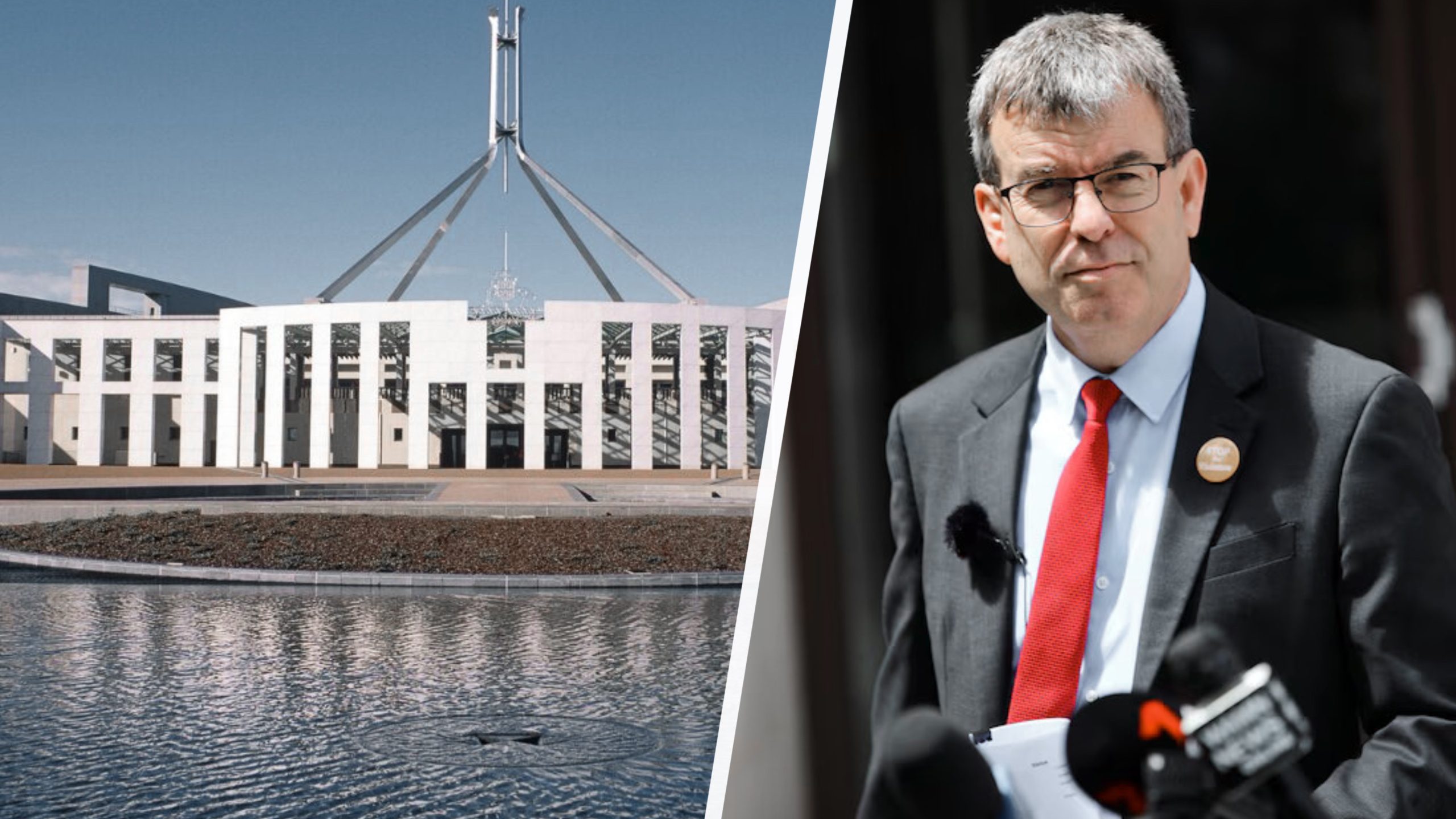

(Queensland, Australia) — Around the world, public institutions seem to have a problem with prayer. Well, more specifically, they have a problem with Christian prayer because they hate anything that actively opposes their vision of a society where they get to write the rules. This is why, even though many Western governments have tolerated the model prayer of Matthew 6, they bitterly oppose the suggestion that God’s kingdom should come and His will be done on earth as it is in heaven.
On 26 March 1897, Australian leaders were presented with a petition lobbying for the inclusion of prayer at the beginning of each sitting day of Parliament. In the following months, some opposed the idea, believing that members would eventually become indifferent to it as had happened in the United Kingdom.
However, on 13 June 1901, a report which recommended the inclusion of prayer was accepted without dissent and from the following day, once the Speaker took the chair each day in the House of Representatives, he was required to read the following prayer: “Almighty God, we humbly beseech Thee at this time to vouchsafe Thy special blessing upon this Parliament, and Thou wouldst be pleased to direct and prosper all our consultations to the advancement of Thy glory, and to the true welfare of the people of Australia. Our Father, which art in Heaven, Hallowed be Thy name. Thy Kingdom come. Thy Will be done in Earth, as it is in Heaven. Give us this day our daily bread. And forgive us our trespasses, As we forgive them that trespass against us. And lead us not into temptation; But deliver us from evil: For Thine is the Kingdom, and the Power, and the Glory, for ever and ever. Amen.”
However, it wouldn’t be long until the inclusion of prayer was challenged. Clearly sensing a shift in the mindset of the representatives who may have been agitating for an amendment to the agreed prayer, on 29 May 1918, an electoral representative from Victoria stated: “I would welcome an amendment of the Standing Orders which would permit us to offer up a prayers for peace, but I would ask that that prayer be offered up in the Christian spirit, and not in any pagan spirit … I oppose any amendment to the Standing Orders which will alter the prayer offered up in this House at the commencements of our deliberations in any direction which is not consistent with the faith of the great majority of honourable members of this Chamber, namely, the Christian faith.”
As Australia’s social, political and religious landscape change over the next 50 years, so did the approach to prayer. On 20 March 1972, a representative from Queensland wrote to the Standing Orders Committee requesting a more universally acceptable and relevant formula, specifically: “Fellow members of one race, let us ever strive for closer understanding, respect and harmony between the earth’s peoples and their chosen spokesmen, to their greater spiritual, social and personal welfare, and let us save and cherish other forms of life and nature in our global village. Amen.”
Thankfully, that proposal was rejected and there were no similar proposals until 27 June 1996 when, in the Senate, a representative suggested that the reciting of prayer be replaced with “a minute’s contemplative silence…or you could have an evocative poem, or something like that.” This way, he argued, there would be an appeal “to all faiths, or non-faiths.”
Although Christian politicians put up a gallant fight, the number of hostile members was increasing and they were determined to see prayer removed from the Australian Parliament. The Australian Greens Party (which is far more interested in Communism than environmentalism) continued to fight the matter of prayer, writing in 2018: “The Australian Greens firmly believe that the current prayer, which has been read each sitting day since 1901, is outdated and no longer reflective of Australia’s religiously diverse and secular society.”
Still, the Greens met resistance. Yet, not deterred, on 1 August 2022 another Greens member stated: “Our parliament should be modern and secular, so let’s stop pretending that we are a white Christian monocultural society. We are not. We never were. We must shed the shackles of colonialism. Racism, the oath to the British monarch and the reading of the Lord’s Prayer to start our day have no place in here.”
Although prayer has been preserved at a federal level (in both the House of Representatives and the Senate), individual States are facing ongoing petitions from members determined to see Christian prayer eradicated. This has already happened in the Australian Capital Territory (the location of the nation’s capital city, Canberra). In the Legislative Assembly, the rule in effect is: “Members, at the beginning of this sitting of the Assembly, I would ask you to stand in silence and pray or reflect on our responsibilities to the people of the Australian Capital Territory.”
Similar calls are now being made in Australia’s most western State, appropriately called Western Australia. In the name of inclusivity, they want Christian prayer excluded, with one person claiming it was “no longer appropriate.”
Amongst some Australian believers there is often a reference to the story of the European explorer Pedro Fernández de Quirós (1563–1615) who travelled to the Southern Region of the Pacific and declared it, “The Great South Land of the Holy Spirit.” Therefore, some claim Quirós’s declaration as a “prophetic birthright” for Australia, suggesting that Australia is destined to be a launching pad for global spiritual revival. In reality, Quirós didn’t even visit the land which would become known as Australia. When he made that declaration, he was 3,600 kilometres away, standing on an island of Vanuatu.
Nevertheless, my point is this. Australia is in serious spiritual decline and although many Australian believers zealously cling to an obscure 400-year-old declaration they claim is “prophetic,” the reality is that Australia is following the well-worn path of most other nations into godlessness. Is it possible for God to bring revival to Australia? Of course it is. But recent decisions by Australia’s leaders have proven that God does not factor into their vision for this nation. There is an unholy spirit which is pervasive in our political system and this land is suffering because of it.