July 18, 2026

July, 18, 2026
July 18, 2026

give

untitled artwork

untitled artwork

World news biblically understood

TRENDING:

There Is No Greater Love Than For A Man To Lay Down His Life For His Friends

Tom Gilbreath

In 1998, I sat in a movie theater watching a film set during World War II. Thirty minutes in, the movie turned from scenes of war to a barren yet majestic countryside beneath a superb Iowa sky — a day so perfect it seemed to connect the ground of earth to the glories of heaven. Then, rolling along a dirt road, a dark gray car entered the frame moving toward a farm in the distance — a quintessentially American farm. 

The scene changed. Inside the farmhouse, a woman stood washing dishes. A shadow of apprehension haunted her eyes. Intent on her work, she did not notice the day’s glory or the approaching car. But the camera looking from behind the woman through the window over the sink, saw both. It was a gray government car — Department of War — now traveling up her driveway. Finally, she saw it, and moved from the kitchen into the living room, where she paused to look out the screen door. She briefly stood, silhouetted against the bright day beyond the door, then stepped outside. 

The government car — an Army car — rolled up to the house, stopping just beyond the porch. Two uniformed men emerged from it — one in a military uniform and the other in the uniform of a priest. Before they had spoken a word, she felt the message they carried and collapsed onto the wooden floor of the porch.

Nothing could seem further from war than this picturesque Iowa farm. But this was the American homefront of World War II. When her sons left Iowa to fight for their country and for freedom, Pearl Harbor, Iwo Jima, Auschwitz, and Normandy had come to Iowa. The character is about to learn that three of those four sons have been killed in action.

This scene from Steven Spielberg’s Saving Private Ryan takes place about half an hour into the movie. Most of that first half hour featured a visceral, ocean-and-sand-level view of the D-Day invasion at Normandy. The 1962 film, The Longest Day, gave huge, sweeping panoramas of that world-changing event. But Steven Spielberg brought us in close. He filled our eyes and ears with the terrible sights and sounds of war — a baptism by immersion into an environment thick with the horror of men dying and of death impending. 

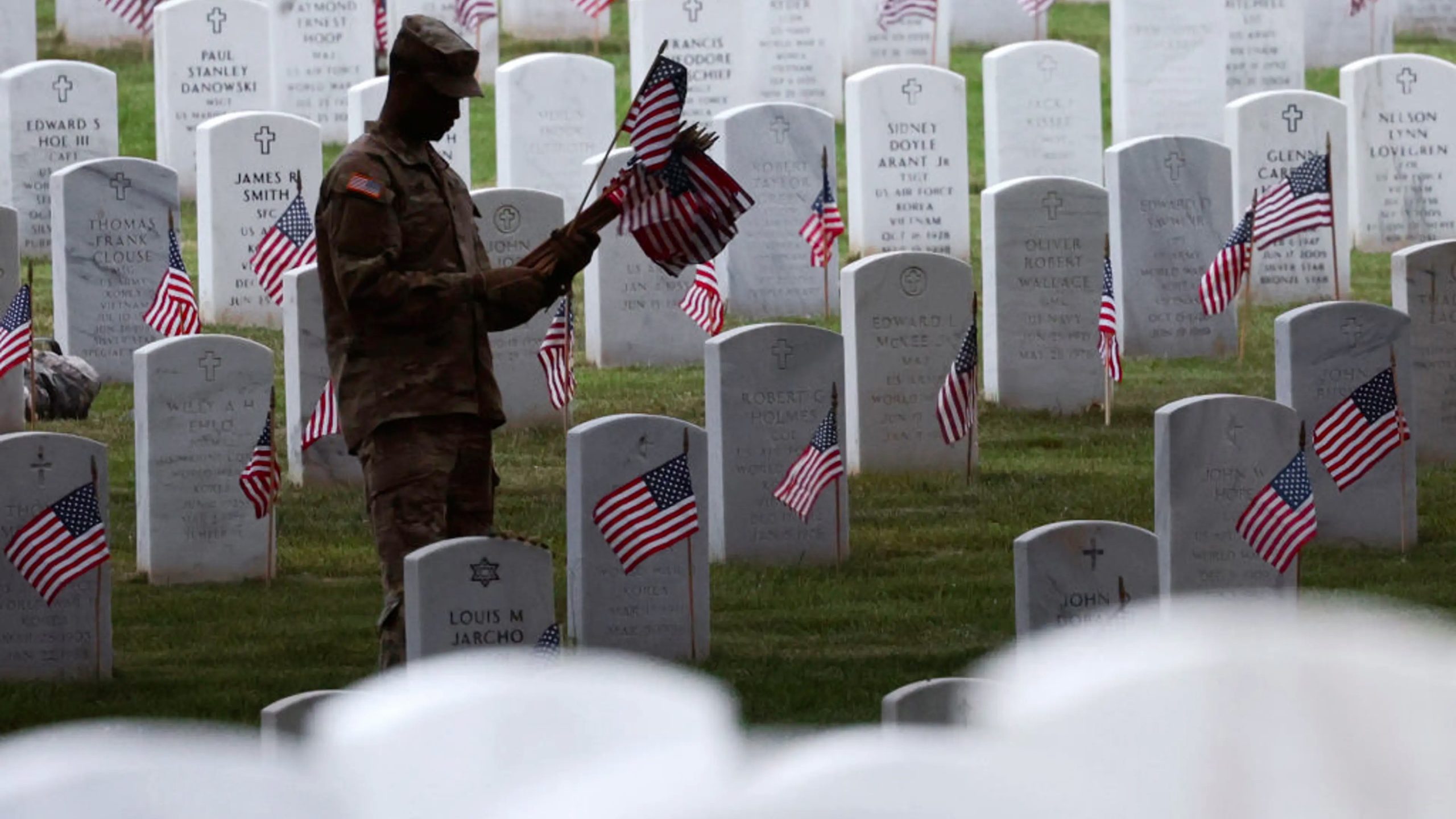
On that day in real life, 2,501 Americans — most of them young — died on or near those beaches. At Pearl Harbor, thirty months before, 2,403 Americans died. Those were just the American deaths in two battles of one war. Approximately 1.3 million US soldiers and service members have died in all major wars combined since the Revolutionary War — each one a real, flesh-and-blood human being with real dreams and real lives they hoped to come home to. Like Spielberg’s fictional story, they all had mothers — most still alive. Each death felt as bad to their mothers as a similar loss would feel to you. They all had families of one kind or another. Some had sweethearts or spouses — some had children they never met.

We honor our nation and its founders on Independence Day. We honor the military on Veterans Day. But our forebears wisely set aside another day — Memorial Day — to specifically remember those who gave their lives for their country and their countrymen.

I usually watch the end credits at movies, but most people don’t. Saving Private Ryan was different. Most of this audience stayed. Soft sobs mixed with the music. As the credits wound down, most people finally left. After the film completely stopped and the lights came up, three groups of five to ten people were still in the theater. At the center of each group sat a white-haired sobbing man. The people surrounding them were apparently family members, or just kindhearted moviegoers, offering support.

The movie ended with survivor’s guilt and its question. Why am I alive when others died? Do I deserve their sacrifice? That question applies to us all. And the answer is, “No.”

Fallen heroes bequeathed to each American a gift of grace — an unmerited but beautiful birthright. Don’t misunderstand, this nation — like every nation — is flawed. But America’s freedoms give its citizens the opportunity to make things better. We didn’t earn our birthright. How could we? We weren’t alive yet. For that reason, our history and rights may seem ethereal or abstract. But they are real, and they are mighty. That’s why it’s heartbreaking that so many people now scorn this amazing heritage.

Jesus said in John 15:13, “Greater love has no one than this, than to lay down one’s life for his friends.” And then He became the ultimate example of that love. Christians remember Him and His sacrifice every time we partake of communion. America sets aside one day a year to remember those who gave their lives for our country. On that day at least, may we remember what a very big deal each of their lives was and the magnificent gift their sacrifices conferred on us.



Millions Are Understanding The News Through A Biblical Worldview

THANKS TO YOUR PRAYER AND SUPPORT

Do Conservative Americans Crave The Temporary Societal And Political Blessings More Than We Crave Jesus?

Especially during the country’s 250th anniversary year, many Christians have fervently prayed for this nation. I, too, am burdened by the sin rotting America from within. I have loved ones who need to be saved. I see churches struggling to survive. I see Christians who aren’t walking closely with the Lord like they once did. I see neighborhoods destroyed by sin. Add to that the sheer insanity and unbridled brokenness filling this nation because its citizens are pursuing their own lusts. Oh, what a burden it is to ponder these realities! It is right to take them to God in prayer. I do, and will continue to pray over these things. However, I’m concerned that some Christians might be praying with the wrong motivation.

‘Treated As Disposable’: Same-Sex Couple Sues Surrogate Who Refused To Abort Baby With Minor Birth Defect

According to the lawsuit, the “intended fathers” demanded the termination at 22 weeks’ gestation. When the surrogate mother pushed back, the relationship collapsed. The same-sex couple is now accusing the surrogate of failing to keep them informed about the baby’s health, putting the child at risk, causing emotional distress, and violating confidentiality—all of which the birth mother has denied. As this legal battle unfolds in Canada, it spawns a number of ethical questions regarding the commodification of human life in an era of advancing reproductive technologies.

sign up

Called Out From The Culture: The Hope For America Is The Church

I believe that the hope for America is the church—God working through his church. Christians need to live up to their name. As Christ followers, we need to be Christlike. And if the church would be what it was meant to be, then it would change our nation. But let’s localize it. If your church would be what it ought to be, it could change your city. It could change your county, and it could change your state. Let’s localize it even more. If you would be what you ought to be as a follower of Jesus Christ and as a part of the church, then what a difference it could make in your church.

ABC's of Salvation

Decision

UTT

FOI

untitled artwork

Israel My Glory

Tom Gilbreath

In 1998, I sat in a movie theater watching a film set during World War II. Thirty minutes in, the movie turned from scenes of war to a barren yet majestic countryside beneath a superb Iowa sky — a day so perfect it seemed to connect the ground of earth to the glories of heaven. Then, rolling along a dirt road, a dark gray car entered the frame moving toward a farm in the distance — a quintessentially American farm. 

The scene changed. Inside the farmhouse, a woman stood washing dishes. A shadow of apprehension haunted her eyes. Intent on her work, she did not notice the day’s glory or the approaching car. But the camera looking from behind the woman through the window over the sink, saw both. It was a gray government car — Department of War — now traveling up her driveway. Finally, she saw it, and moved from the kitchen into the living room, where she paused to look out the screen door. She briefly stood, silhouetted against the bright day beyond the door, then stepped outside. 

The government car — an Army car — rolled up to the house, stopping just beyond the porch. Two uniformed men emerged from it — one in a military uniform and the other in the uniform of a priest. Before they had spoken a word, she felt the message they carried and collapsed onto the wooden floor of the porch.

Nothing could seem further from war than this picturesque Iowa farm. But this was the American homefront of World War II. When her sons left Iowa to fight for their country and for freedom, Pearl Harbor, Iwo Jima, Auschwitz, and Normandy had come to Iowa. The character is about to learn that three of those four sons have been killed in action.

This scene from Steven Spielberg’s Saving Private Ryan takes place about half an hour into the movie. Most of that first half hour featured a visceral, ocean-and-sand-level view of the D-Day invasion at Normandy. The 1962 film, The Longest Day, gave huge, sweeping panoramas of that world-changing event. But Steven Spielberg brought us in close. He filled our eyes and ears with the terrible sights and sounds of war — a baptism by immersion into an environment thick with the horror of men dying and of death impending. 

On that day in real life, 2,501 Americans — most of them young — died on or near those beaches. At Pearl Harbor, thirty months before, 2,403 Americans died. Those were just the American deaths in two battles of one war. Approximately 1.3 million US soldiers and service members have died in all major wars combined since the Revolutionary War — each one a real, flesh-and-blood human being with real dreams and real lives they hoped to come home to. Like Spielberg’s fictional story, they all had mothers — most still alive. Each death felt as bad to their mothers as a similar loss would feel to you. They all had families of one kind or another. Some had sweethearts or spouses — some had children they never met.

We honor our nation and its founders on Independence Day. We honor the military on Veterans Day. But our forebears wisely set aside another day — Memorial Day — to specifically remember those who gave their lives for their country and their countrymen.

I usually watch the end credits at movies, but most people don’t. Saving Private Ryan was different. Most of this audience stayed. Soft sobs mixed with the music. As the credits wound down, most people finally left. After the film completely stopped and the lights came up, three groups of five to ten people were still in the theater. At the center of each group sat a white-haired sobbing man. The people surrounding them were apparently family members, or just kindhearted moviegoers, offering support.

The movie ended with survivor’s guilt and its question. Why am I alive when others died? Do I deserve their sacrifice? That question applies to us all. And the answer is, “No.”

Fallen heroes bequeathed to each American a gift of grace — an unmerited but beautiful birthright. Don’t misunderstand, this nation — like every nation — is flawed. But America’s freedoms give its citizens the opportunity to make things better. We didn’t earn our birthright. How could we? We weren’t alive yet. For that reason, our history and rights may seem ethereal or abstract. But they are real, and they are mighty. That’s why it’s heartbreaking that so many people now scorn this amazing heritage.

Jesus said in John 15:13, “Greater love has no one than this, than to lay down one’s life for his friends.” And then He became the ultimate example of that love. Christians remember Him and His sacrifice every time we partake of communion. America sets aside one day a year to remember those who gave their lives for our country. On that day at least, may we remember what a very big deal each of their lives was and the magnificent gift their sacrifices conferred on us.

Trusted Analysis From A Biblical Worldview

Help reach the lost and equip the church with the living and active truth of God's Word in our world today.

YOU CARE ABOUT

BIBLICAL TRUTH. SO DO WE.


Together, We Can Deliver A Biblical Understanding

Of News Events Around The World.

Do Conservative Americans Crave The Temporary Societal And Political Blessings More Than We Crave Jesus?

Especially during the country’s 250th anniversary year, many Christians have fervently prayed for this nation. I, too, am burdened by the sin rotting America from within. I have loved ones who need to be saved. I see churches struggling to survive. I see Christians who aren’t walking closely with the Lord like they once did. I see neighborhoods destroyed by sin. Add to that the sheer insanity and unbridled brokenness filling this nation because its citizens are pursuing their own lusts. Oh, what a burden it is to ponder these realities! It is right to take them to God in prayer. I do, and will continue to pray over these things. However, I’m concerned that some Christians might be praying with the wrong motivation.

‘Treated As Disposable’: Same-Sex Couple Sues Surrogate Who Refused To Abort Baby With Minor Birth Defect

According to the lawsuit, the “intended fathers” demanded the termination at 22 weeks’ gestation. When the surrogate mother pushed back, the relationship collapsed. The same-sex couple is now accusing the surrogate of failing to keep them informed about the baby’s health, putting the child at risk, causing emotional distress, and violating confidentiality—all of which the birth mother has denied. As this legal battle unfolds in Canada, it spawns a number of ethical questions regarding the commodification of human life in an era of advancing reproductive technologies.

untitled artwork 6391

Called Out From The Culture: The Hope For America Is The Church

I believe that the hope for America is the church—God working through his church. Christians need to live up to their name. As Christ followers, we need to be Christlike. And if the church would be what it was meant to be, then it would change our nation. But let’s localize it. If your church would be what it ought to be, it could change your city. It could change your county, and it could change your state. Let’s localize it even more. If you would be what you ought to be as a follower of Jesus Christ and as a part of the church, then what a difference it could make in your church.

ABC's of Salvation

TV AD

worldview matters

Decision Magazine V AD

Decision

Jan Markell

Israel My Glory

Erick Stakelbeck

untitled artwork

YOU CARE ABOUT

BIBLICAL TRUTH.

SO DO WE.

Together, We Can Deliver A Biblical Understanding Of News Events Around The World And Equip The Church To Stand With A Biblical Worldview.

untitled artwork

Israel My Glory

YOU CARE ABOUT

BIBLICAL TRUTH.

SO DO WE.


Together, We Can Deliver A Biblical Understanding Of News Events Around The World And Equip The Church To Stand With A Biblical Worldview.