
give

June 2, 2026

June, 2, 2026
June 2, 2026

give

untitled artwork

untitled artwork

World news biblically understood

TRENDING:

Gog of Magog: Who Is The Russian Leader At The Center Of The Ezekiel 38 Prophecy?

Mark Hitchcock

Ezekiel 38—39 contains one of the greatest prophecies in the Bible. It describes a massive invasion of Israel in the last days by a colossal confederation of nations.

Today’s events in the Middle East, though not direct fulfillments of Ezekiel’s prophecies, strikingly foreshadow them; and a survey of Ezekiel 38 in its context reveals that the events Ezekiel described may be on the horizon.

The Context

The Jewish prophet Ezekiel prophesied from 593 to 570 BC, during the time of the Babylonian invasions of Judah, as well as the destruction of the Temple in Jerusalem in 586 BC. The book of Ezekiel divides into three main sections:

Chapters 1—24: Retribution on Judah at the hands of Babylon
Chapters 25—32: Ruin of Judah’s nearby neighbors
Chapters 33—48: Restoration of Israel and Judah

Ezekiel 38—39 falls into the restoration section immediately after the prophecy of Israel’s regathering to its ancient homeland in the end-times (chap. 37). This prophecy was fulfilled beginning in 1948 with the birth of the modern State of Israel, and the fulfillment continues today as more Jewish people return to Israel. This physical regathering of the Jewish people to their land sets the stage for the events in Ezekiel 38—39.

The broader biblical context for this invasion is found in Revelation 20:8, the only other place the words Gog and Magog occur together. Some scholars equate this biblical reference to the Gog and Magog in Ezekiel. While this view is attractive in connecting the biblical dots, the different settings for these two passages reveal they are two separate events:

Gog and Magog in Ezekiel 38:

  • The Period — Before the Tribulation
  • The Participants — Specific list of nations

Gog and Magog in Revelation 20:8:

  • The Period — After Christ’s 1,000-year reign (Rev. 20:1-6)
  • The Participants — Worldwide enemies of Christ

The only element these battles have in common is the terminology Gog and Magog. But, if we view these two events as distinct, a question arises: How do we explain the identical names used for them?

One common explanation is that the apostle John simply used “Gog and Magog” in Revelation as a type of shorthand, like we might use the word Waterloo to describe the final battle in Revelation 20. Rather than giving all the details of what will happen, John employed a well-known biblical allusion to communicate that nations will invade Israel and be wiped out by God, just like what happened in Ezekiel 38—39.

John was telling us in the briefest way possible that the circumstance will be another Gog and Magog, even though the two events are separated by more than 1,000 years. In the same way that we speak of World War I and World War II, this will be Gog and Magog I (Ezek. 38) and Gog and Magog II (Rev. 20:8).

The Commander

In Ezekiel 38:1–6, 10 proper names identify the invading forces. Nine of them describe geographical locations. The word Gog is the lone exception. It occurs 12 times in chapters 38—39 and is a name or title for the leader of the invasion.

He is identified as “Gog, of the land of Magog, the prince of Rosh, Meshech, and Tubal” (38:2). We know Gog is an individual because he (1) is addressed directly by God (v. 14; 39:1), (2) is called a prince (38:2; 39:1), and (3) is referred to repeatedly by the use of personal pronouns. Also, he is “of the land of Magog,” indicating he is a person. The word Gog is not the leader’s name but, rather, a title, like pharaoh, president, or czar.

In the Old Testament, the word Gog appears only once outside Ezekiel 38—39 (cf. 1 Chr. 5:4) and clearly references a different person. Gog may mean “high, supreme,” or “a height,” possibly emphasizing this leader’s elevated position and pride. It may come from a Sumerian word (gug) meaning “darkness.” Bible scholar Dr. Thomas Constable said Ezekiel may have “referred to this unnamed future enemy of Israel as a dark figure (unknown and evil) calling him ‘Dark’ much as we might refer to such a person as a new Hitler.”

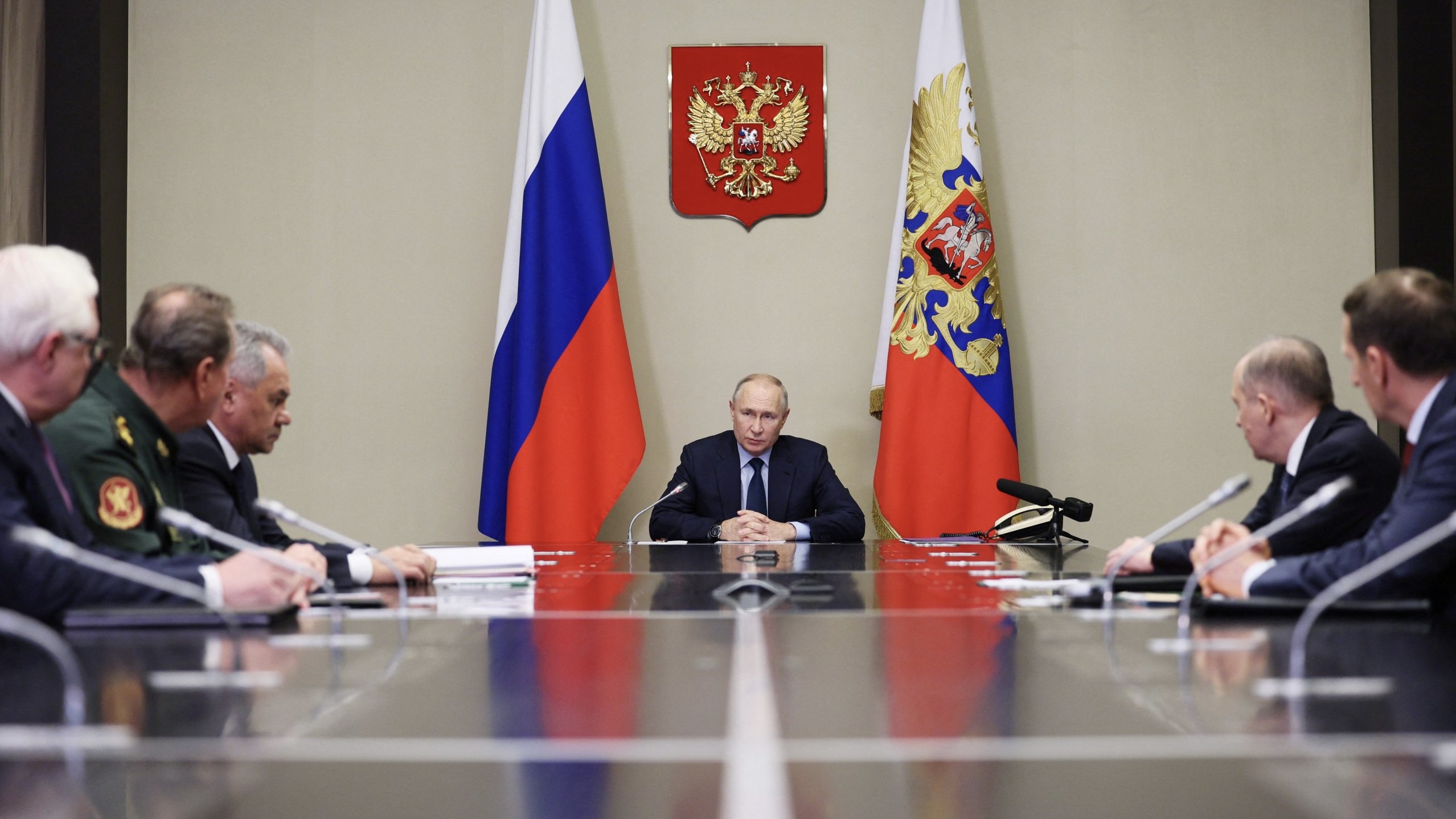
In light of the actions of current Russian President Vladimir Putin, many have wondered if he could be the Russian leader known as Gog. While it is possible, we must always avoid irresponsible attempts to identify a world leader today with an end-times figure.

Author and journalist Joel Rosenberg gave his assessment about any connection between Putin and Gog:

Over the years, people have asked me if Putin might be the Russian dictator referred to as “Gog” in the Biblical prophecies of “Gog and Magog” in Ezekiel 38—39. . . . Here’s my quick answer: It’s too soon to draw such a conclusion. There’s much more that would have to happen to indicate that Putin was the “Gog” of Bible prophecy. But there’s no question in my mind that Putin is Gog-esque. He is dangerous, and both Israel and the West should keep a close and wary eye on him, especially given all that Putin has done to build a strategic alliance between Russia and Iran and the other countries mentioned in the “Gog and Magog” prophecies.

Time will tell. What we can say is that Putin cannot definitively be identified as Gog nor conclusively ruled out. He may be setting the stage for another leader who is waiting in the wings. But Putin is at least a faint foreshadow of what’s coming.

The Coalition

The name Gog is followed by nine ancient names of places. These names have changed many times over the millennia and may change again before this prophecy is fulfilled. Nevertheless, they indicate the geographical locations that will be part of this massive incursion into Israel in the last days:

  • Rosh: Russia
  • Magog: Central Asia (possibly including Ukraine and Russia)
  • Meshech, Tubal, Togarmah, Gomer: Turkey
  • Ethiopia/Cush: Sudan
  • Put: Libya (See “The Invaders“)

At the end of Ezekiel 38:6, the prophet added, “many people are with you.” I believe this general statement refers to the nearby nations surrounding Israel that Ezekiel did not mention specifically. The nations listed in Ezekiel 38:1–6 are distant, remote enemies of Israel in every direction. Ezekiel’s addition of the words many people are with you includes Israel’s neighboring enemies who live within the outer circle of far enemies. Bible scholar Walter Kaiser supports this view: “There seems also to be many other nations not mentioned, but who are fully allied with Gog (Ezek. 38:6) as well.”

The Carnage

Gog’s coalition invasion of Israel in the end-times will look like the biggest mismatch in history. It will make the Arab invasions of Israel in 1967 and 1973 pale in comparison.

When Gog assembles this strike force, it will look like Israel is finished. But God is in control of the entire situation. He will mount up in His fury to destroy these godless invaders:

God will come to rescue His helpless people, employing four means to destroy the invading horde:

1. A great earthquake (Ez. 38:19–20)
2. Infighting among the troops of the various nations (Ez. 38:21)
3. Disease (Ez. 38:22)
4. Torrential rain, hailstones, fire, and burning sulfur (Ez. 38:22).

The destruction will be complete and catastrophic. The power vacuum left behind by the annihilation will certainly be filled by the Antichrist as he consolidates his power.

The Conclusion

The pieces of Ezekiel’s prophecy are moving into place. The Hamas massacre on October 7, 2023, served as a type of prophetic shift of gears. Iran has unleashed its proxies known as the Axis of Resistance.

Russia’s relations with Israel have sunk to an all-time low as Russia has sided with Hamas. Turkey’s President Recep Tayyip Erdoğan is an outspoken supporter of Hamas and has instituted economic measures against Israel.

We already see signs of this invasion, which will occur after the Lord removes His true church via the Rapture. So the Rapture may be very near.



Jan Markell: Is Israel’s Spiritual Blindness A Reason For Christians To Reject Them?

Ezekiel 36 emphasizes that when the Jews return to the land, they will do so in unbelief. There will be spiritual regeneration much later! The dry bones of Ezekiel 37 reflect a lack of breath or spiritual life. God states he is gathering them back “not for your sake but for my holy name’s sake,” because their presence among the nations caused his name to be profaned. Ezekiel 36 promises that once back in the land, God will cleanse them, give them a new spirit, and cause them to walk in his statutes. But much later.

The Battle To Maintain Our Judeo-Christian Freedoms Must Be Fought By Courageous Pastors In The Pulpits

And we must not allow the “slow creep” of an anti-Judeo-Christian bias in our culture to smother the religious freedoms we have enjoyed for 250 years. It is still a battle worth fighting. But it will only be won if pastors in the pulpits are courageous, and Christians in the pews are engaged.

sign up

Prison Camps For ‘Zionists’: Democrats Scramble To Disown The Political Jew-Hatred They Actively Promoted

At a time when antisemitism is becoming increasingly normalized within the Democrat party, a Texas Candidate has taken the escalation in Jew hatred a disturbing step further, with representatives denouncing her as the “first current political candidate [to suggest] concentration camps for American Jews.” In an alarming social media post, Democrat candidate for Texas’ 35th Congressional District, Maureen Galindo, proposed turning an ICE facility into a camp and castration center for “American Zionists,” while branding them as “pedophiles.”

ABC's of Salvation

Decision

UTT

FOI

untitled artwork

Israel My Glory

Mark Hitchcock

Ezekiel 38—39 contains one of the greatest prophecies in the Bible. It describes a massive invasion of Israel in the last days by a colossal confederation of nations.

Today’s events in the Middle East, though not direct fulfillments of Ezekiel’s prophecies, strikingly foreshadow them; and a survey of Ezekiel 38 in its context reveals that the events Ezekiel described may be on the horizon.

The Context

The Jewish prophet Ezekiel prophesied from 593 to 570 BC, during the time of the Babylonian invasions of Judah, as well as the destruction of the Temple in Jerusalem in 586 BC. The book of Ezekiel divides into three main sections:

Chapters 1—24: Retribution on Judah at the hands of Babylon
Chapters 25—32: Ruin of Judah’s nearby neighbors
Chapters 33—48: Restoration of Israel and Judah

Ezekiel 38—39 falls into the restoration section immediately after the prophecy of Israel’s regathering to its ancient homeland in the end-times (chap. 37). This prophecy was fulfilled beginning in 1948 with the birth of the modern State of Israel, and the fulfillment continues today as more Jewish people return to Israel. This physical regathering of the Jewish people to their land sets the stage for the events in Ezekiel 38—39.

The broader biblical context for this invasion is found in Revelation 20:8, the only other place the words Gog and Magog occur together. Some scholars equate this biblical reference to the Gog and Magog in Ezekiel. While this view is attractive in connecting the biblical dots, the different settings for these two passages reveal they are two separate events:

Gog and Magog in Ezekiel 38:

  • The Period — Before the Tribulation
  • The Participants — Specific list of nations

Gog and Magog in Revelation 20:8:

  • The Period — After Christ’s 1,000-year reign (Rev. 20:1-6)
  • The Participants — Worldwide enemies of Christ

The only element these battles have in common is the terminology Gog and Magog. But, if we view these two events as distinct, a question arises: How do we explain the identical names used for them?

One common explanation is that the apostle John simply used “Gog and Magog” in Revelation as a type of shorthand, like we might use the word Waterloo to describe the final battle in Revelation 20. Rather than giving all the details of what will happen, John employed a well-known biblical allusion to communicate that nations will invade Israel and be wiped out by God, just like what happened in Ezekiel 38—39.

John was telling us in the briefest way possible that the circumstance will be another Gog and Magog, even though the two events are separated by more than 1,000 years. In the same way that we speak of World War I and World War II, this will be Gog and Magog I (Ezek. 38) and Gog and Magog II (Rev. 20:8).

The Commander

In Ezekiel 38:1–6, 10 proper names identify the invading forces. Nine of them describe geographical locations. The word Gog is the lone exception. It occurs 12 times in chapters 38—39 and is a name or title for the leader of the invasion.

He is identified as “Gog, of the land of Magog, the prince of Rosh, Meshech, and Tubal” (38:2). We know Gog is an individual because he (1) is addressed directly by God (v. 14; 39:1), (2) is called a prince (38:2; 39:1), and (3) is referred to repeatedly by the use of personal pronouns. Also, he is “of the land of Magog,” indicating he is a person. The word Gog is not the leader’s name but, rather, a title, like pharaoh, president, or czar.

In the Old Testament, the word Gog appears only once outside Ezekiel 38—39 (cf. 1 Chr. 5:4) and clearly references a different person. Gog may mean “high, supreme,” or “a height,” possibly emphasizing this leader’s elevated position and pride. It may come from a Sumerian word (gug) meaning “darkness.” Bible scholar Dr. Thomas Constable said Ezekiel may have “referred to this unnamed future enemy of Israel as a dark figure (unknown and evil) calling him ‘Dark’ much as we might refer to such a person as a new Hitler.”

In light of the actions of current Russian President Vladimir Putin, many have wondered if he could be the Russian leader known as Gog. While it is possible, we must always avoid irresponsible attempts to identify a world leader today with an end-times figure.

Author and journalist Joel Rosenberg gave his assessment about any connection between Putin and Gog:

Over the years, people have asked me if Putin might be the Russian dictator referred to as “Gog” in the Biblical prophecies of “Gog and Magog” in Ezekiel 38—39. . . . Here’s my quick answer: It’s too soon to draw such a conclusion. There’s much more that would have to happen to indicate that Putin was the “Gog” of Bible prophecy. But there’s no question in my mind that Putin is Gog-esque. He is dangerous, and both Israel and the West should keep a close and wary eye on him, especially given all that Putin has done to build a strategic alliance between Russia and Iran and the other countries mentioned in the “Gog and Magog” prophecies.

Time will tell. What we can say is that Putin cannot definitively be identified as Gog nor conclusively ruled out. He may be setting the stage for another leader who is waiting in the wings. But Putin is at least a faint foreshadow of what’s coming.

The Coalition

The name Gog is followed by nine ancient names of places. These names have changed many times over the millennia and may change again before this prophecy is fulfilled. Nevertheless, they indicate the geographical locations that will be part of this massive incursion into Israel in the last days:

  • Rosh: Russia
  • Magog: Central Asia (possibly including Ukraine and Russia)
  • Meshech, Tubal, Togarmah, Gomer: Turkey
  • Ethiopia/Cush: Sudan
  • Put: Libya (See “The Invaders“)

At the end of Ezekiel 38:6, the prophet added, “many people are with you.” I believe this general statement refers to the nearby nations surrounding Israel that Ezekiel did not mention specifically. The nations listed in Ezekiel 38:1–6 are distant, remote enemies of Israel in every direction. Ezekiel’s addition of the words many people are with you includes Israel’s neighboring enemies who live within the outer circle of far enemies. Bible scholar Walter Kaiser supports this view: “There seems also to be many other nations not mentioned, but who are fully allied with Gog (Ezek. 38:6) as well.”

The Carnage

Gog’s coalition invasion of Israel in the end-times will look like the biggest mismatch in history. It will make the Arab invasions of Israel in 1967 and 1973 pale in comparison.

When Gog assembles this strike force, it will look like Israel is finished. But God is in control of the entire situation. He will mount up in His fury to destroy these godless invaders:

God will come to rescue His helpless people, employing four means to destroy the invading horde:

1. A great earthquake (Ez. 38:19–20)
2. Infighting among the troops of the various nations (Ez. 38:21)
3. Disease (Ez. 38:22)
4. Torrential rain, hailstones, fire, and burning sulfur (Ez. 38:22).

The destruction will be complete and catastrophic. The power vacuum left behind by the annihilation will certainly be filled by the Antichrist as he consolidates his power.

The Conclusion

The pieces of Ezekiel’s prophecy are moving into place. The Hamas massacre on October 7, 2023, served as a type of prophetic shift of gears. Iran has unleashed its proxies known as the Axis of Resistance.

Russia’s relations with Israel have sunk to an all-time low as Russia has sided with Hamas. Turkey’s President Recep Tayyip Erdoğan is an outspoken supporter of Hamas and has instituted economic measures against Israel.

We already see signs of this invasion, which will occur after the Lord removes His true church via the Rapture. So the Rapture may be very near.


Trusted Analysis From A Biblical Worldview

Help reach the lost and equip the church with the living and active truth of God's Word in our world today.

YOU CARE ABOUT

BIBLICAL TRUTH. SO DO WE.


Together, We Can Deliver A Biblical Understanding

Of News Events Around The World.

Jan Markell: Is Israel’s Spiritual Blindness A Reason For Christians To Reject Them?

Ezekiel 36 emphasizes that when the Jews return to the land, they will do so in unbelief. There will be spiritual regeneration much later! The dry bones of Ezekiel 37 reflect a lack of breath or spiritual life. God states he is gathering them back “not for your sake but for my holy name’s sake,” because their presence among the nations caused his name to be profaned. Ezekiel 36 promises that once back in the land, God will cleanse them, give them a new spirit, and cause them to walk in his statutes. But much later.

The Battle To Maintain Our Judeo-Christian Freedoms Must Be Fought By Courageous Pastors In The Pulpits

And we must not allow the “slow creep” of an anti-Judeo-Christian bias in our culture to smother the religious freedoms we have enjoyed for 250 years. It is still a battle worth fighting. But it will only be won if pastors in the pulpits are courageous, and Christians in the pews are engaged.

untitled artwork 6391

Prison Camps For ‘Zionists’: Democrats Scramble To Disown The Political Jew-Hatred They Actively Promoted

At a time when antisemitism is becoming increasingly normalized within the Democrat party, a Texas Candidate has taken the escalation in Jew hatred a disturbing step further, with representatives denouncing her as the “first current political candidate [to suggest] concentration camps for American Jews.” In an alarming social media post, Democrat candidate for Texas’ 35th Congressional District, Maureen Galindo, proposed turning an ICE facility into a camp and castration center for “American Zionists,” while branding them as “pedophiles.”

ABC's of Salvation

TV AD

worldview matters

Decision Magazine V AD

Decision

Jan Markell

Israel My Glory

Erick Stakelbeck

untitled artwork

YOU CARE ABOUT

BIBLICAL TRUTH.

SO DO WE.

Together, We Can Deliver A Biblical Understanding Of News Events Around The World And Equip The Church To Stand With A Biblical Worldview.

untitled artwork

Israel My Glory

YOU CARE ABOUT

BIBLICAL TRUTH.

SO DO WE.


Together, We Can Deliver A Biblical Understanding Of News Events Around The World And Equip The Church To Stand With A Biblical Worldview.