With reports that the hostage-ceasefire talks are in danger of completely collapsing, IDF soldiers and military experts warn that Hamas is adapting its strategies to decrease the pace of the war, and is trying to strengthen its hand in negotiations by attempting to capture Israeli troops.
The recent killing of Master Sergeant (res.) Avraham Azoulay, as he operated a D-9 combat bulldozer in the Khan Younis area, demonstrates how Hamas is attempting to re-employ a previously used tactic in its fight with the IDF in Gaza. Azoulay was killed after an attempt to abduct him was unsuccessful, and the terrorists feared that trying to take his body could put them at risk of being eliminated by IDF fire.
The attempt to abduct Azoulay represents a return to a strategy used by Hamas in previous conflicts, in which the terror group attempted to abduct either living or killed soldiers to use as bargaining chips in negotiations with Israel.
Michael Milshtein, head of the Palestinian studies forum at Tel Aviv University, recently told The Guardian that he has “no doubt Hamas will increase its attempts to take new hostages, including bodies of dead soldiers and civilians.”
Abdeljawad Hamayel, a Ramallah-based analyst, agreed with Milshtein’s assessment, saying, “Hamas may release captives to have a ceasefire, at least for now, but is also attempting to capture more.”
According to Hamayel, this indicates that “any agreement is not going to be a permanent end to the overall conflict.”
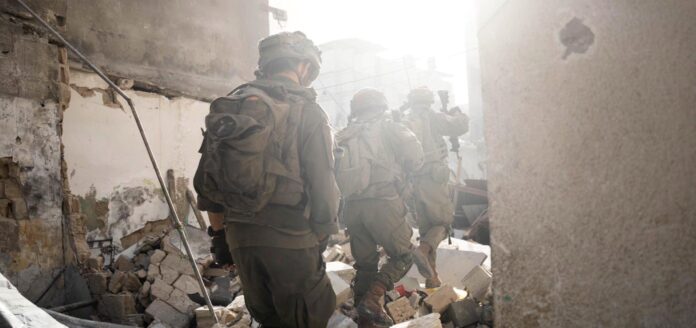
Meanwhile, soldiers from the Givati Brigade, who are leading the fighting in Beit Hanoun are reporting that Hamas terrorists have prepared tactical fighting pits, “trenches,” with food and ammunition for a long stay in the area.
In addition, field commanders from the brigade said they are increasingly required to make fateful decisions rapidly, often having seconds to decide whether to rush in quickly to treat or rescue their comrades, or wait a few minutes to isolate and secure the scene to avoid Hamas traps.
According to a report in Ynet News, the Givati fighters say Hamas uses buildings demolished by the IDF to plant improvised explosive devices (IEDs) and surveillance cameras.
Soldiers have discovered remote cameras in piles of garbage and said Hamas is burying IEDs deeper than before in order to avoid detection.
The soldiers told Ynet that sniffer dogs and special drones designed to detect bombs and cameras do not always find the traps.
In addition, IDF commanders warned government officials last week that Hamas does not plan to sit still during the 60-day ceasefire.
Besides planting hundreds of IEDs and relocating its forces between different sectors, the IDF leaders believe that Hamas will also start a war of revenge against clans that cooperated with Israel or opposed Hamas during Operation Gideon’s Chariots.