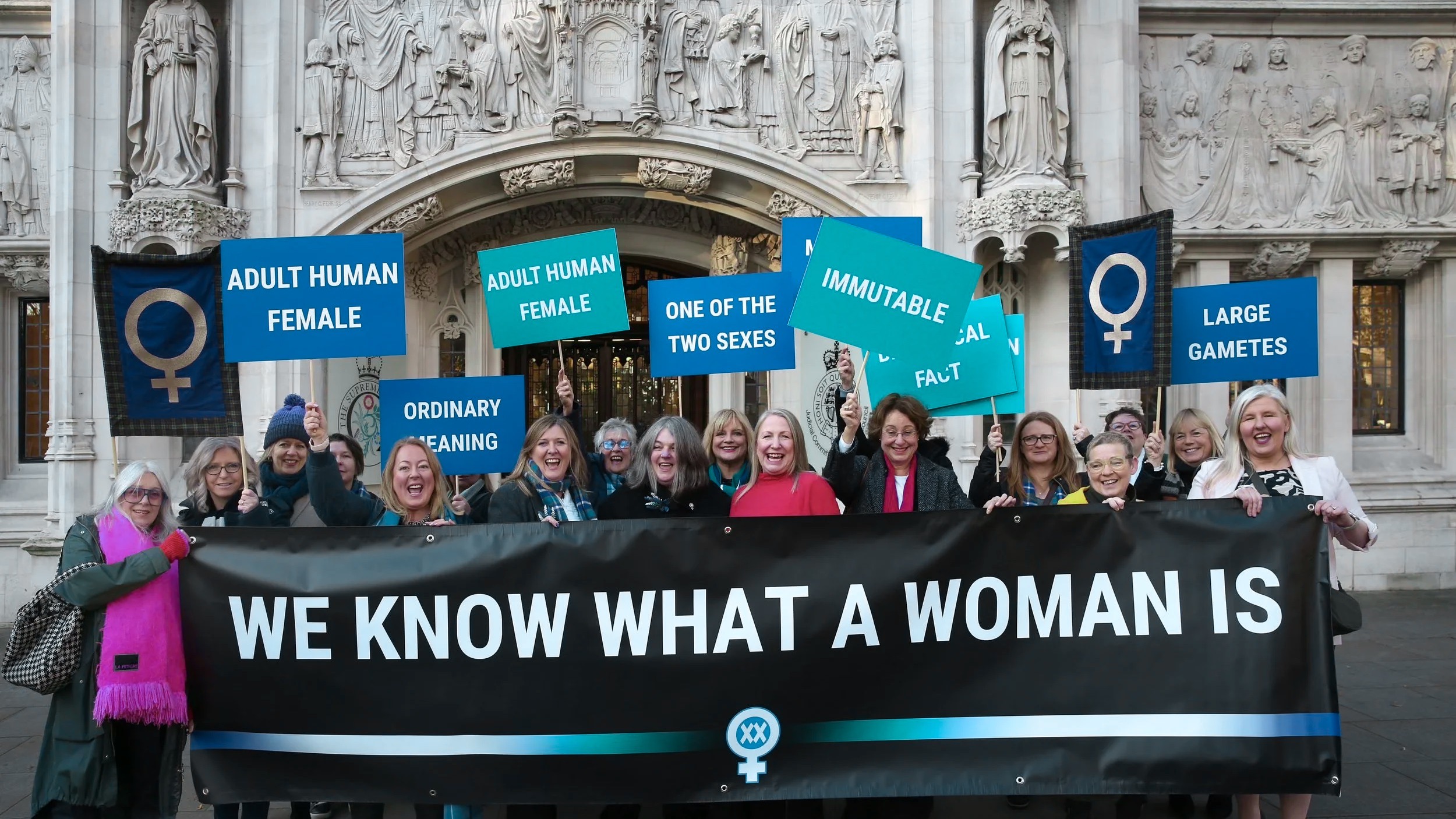
In a move that could reshape how public services, businesses, and charities across Great Britain operate, the Equality and Human Rights Commission (EHRC) has released an updated Code of Practice. This guidance firmly anchors the definition of “sex” in the Equality Act 2010 to biological reality, drawing a clear line after years of legal wrangling and institutional hesitation.
A New Dawn for Single-Sex Spaces
The revised code explicitly states that “sex” refers only to biological sex—not so-called “gender identity.” Private spaces such as bathrooms, changing rooms, and hospital wards must align with a person’s biological sex at birth—not their self-identified gender.
This clarification carries significant weight because, as the code emphasizes, allowing biological males in female-only spaces or vice versa effectively nullifies the purpose of single-sex provisions.
The code’s core conclusion cuts through the ambiguity that has lingered for years: “a person’s sex remains their biological sex” regardless of how they feel, and designated spaces should reflect that biological reality.
Strong Words from Government and Advocates
Equalities Minister Bridget Phillipson welcomed the development as “an important step in ensuring that organizations across Great Britain have clear guidance regarding its implementation, protecting people’s rights across our country.”
She added: “At the heart of the Act is a simple principle: ‘sex’ means what it says—male and female. What people call themselves and how they dress doesn’t change their sex. Neither does getting updated paperwork.”
Phillipson warned that any “business, charity or public service provider” operating differently has taken “a wrong turn.” Policies that blur biological boundaries “must now urgently” be fixed.
She acknowledged that “the guidance could be clearer” in places but asserted that “it’s absurd to say that it is ‘unlikely to be either practical or appropriate’ to ask an individual what sex they are in relation to facilities such as toilets: on the contrary, if a man walks into a women’s space it will be not just appropriate to challenge him, but essential. Otherwise, women’s rights to single-sex spaces cannot be enforced.”
Voices from the Front Lines
Andrea Williams, chief executive of the Christian Legal Centre, hailed the code as long-overdue confirmation of existing law: “This Code of Practice confirms what should never have been in doubt: the law has always required the protection of single-sex spaces. Public bodies, including the NHS, have had a legal duty to comply, yet many have failed to do so, choosing instead to hide behind ‘awaiting guidance’ while pursuing unlawful policies.”
Bethany Hutchison, a Darlington nurse and president of the Darlington Nursing Union, echoed the frustration: “The publication of the EHRC Code of Practice must mark the end of delay and denial. The NHS and other public bodies should have been following the law, and the Supreme Court’s ruling, all along.”
She highlighted how “waiting for guidance” became “a smokescreen to avoid making the necessary changes and to prolong the imposition of radical, Stonewall-influenced gender identity policies that have placed both staff and patients in deeply difficult situations. There are now no excuses, no more smoke and mirrors. The law must be followed.”
“Frontline nurses have paid a heavy price for speaking up,” Hutchison concluded. “We now need urgent, system-wide reform to restore confidence, protect patient dignity, and ensure staff can carry out their duties without fear of reprisal.”
Concerns Over Loopholes and Stronger Enforcement
Supporters of strong single-sex protections welcome the code. However, many remain concerned it still leaves room for loopholes that could weaken enforcement.
Critics highlight the risk of subjective interpretations that allow resistant organizations to continue prioritizing gender-identity policies under the guise of flexibility. Practical verification is another worry: updated official documents (such as birth certificates or driver’s licenses) and other constraints may leave providers without clear, reliable ways to confirm biological sex.
Many also fear the code doesn’t go far enough in mandating universal single-sex spaces, especially in high-risk settings like refuges, prisons and health care. Without stricter monitoring, mandatory training and tighter language to close interpretive gaps, some worry the “awaiting guidance” delays could simply evolve into new forms of evasion.
Nonetheless, the updated guidance has been widely embraced as a victory for common-sense gender policies. The guidance now sits before Parliament for a 40-day scrutiny period. If unchallenged, it will take full effect, offering what many hope will be the clarity needed to restore trust and safety in public life.
And as England takes this major step, many are watching to see if U.S. leaders follow suit in ensuring strict biological distinctions in both private spaces and women’s and girls’ sports—which has been a stated priority of the second Trump administration.