
A troubling case is emerging from Maine and it has raised serious questions about the future of religious liberty in the United States.
Here is the background: Emily Bickford and her 13-year-old daughter Ava, are waiting for a decision on an appeal to the state’s Supreme Court after Portland District Judge Jennifer Nofsinger issued the ruling that Ava is not allowed to attend church, or any religious holidays. The Portland District judge’s order says she cannot be “exposed” to the Bible or any other Christian literature. The judge even ordered that Ava cannot have or associate with any “Christian” friends. This all comes down to a custody battle between the parents. The father is accusing the mother of endangering Ava in a cult. The so-called cult is a Bible-based Calvary Chapel church, where the pastor preaches expositorily from Scripture.
So now, as a result of this judge’s order, a 13-year-old girl, who professes a love for Christianity, has been prohibited by court order from attending church, reading the Bible, or even having Christian friends.
While the details of these legal proceedings continue to unfold, the broader implications of such actions should concern every believer. Regardless of one’s political views, the idea that a government authority could restrict a child’s exposure to Christianity strikes at the very heart of America’s constitutional protections and raises profound prophetic questions about the direction of our culture.
A Nation Founded on Religious Liberty
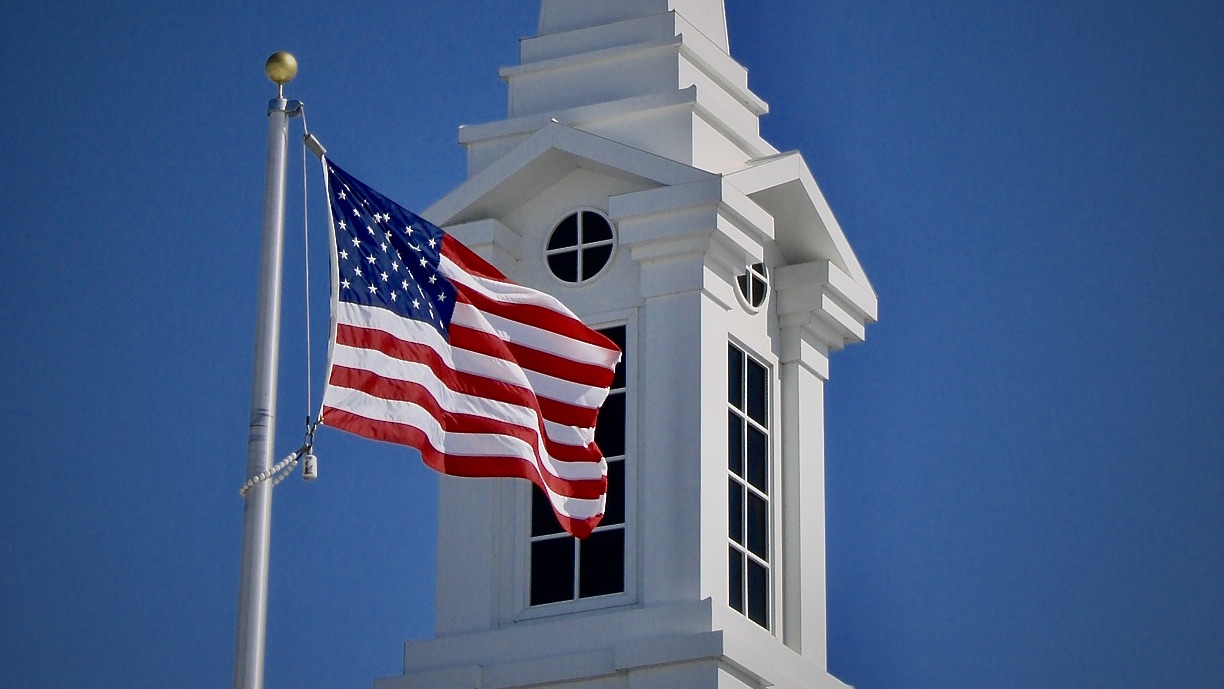
The First Amendment to the United States Constitution begins with these words: “Congress shall make no law respecting an establishment of religion, or prohibiting the free exercise thereof…” (First Amendment)
For more than two centuries, Americans have understood religious liberty to be a fundamental right. It is not a privilege granted by government officials, but a God-given freedom protected by the Constitution.
Historically, parents have enjoyed broad authority regarding the religious upbringing of their children. The notion that a court could restrict access to church attendance, Scripture, Christian fellowship, and religious observances appears to many as a gross departure from those long-God-honoring principles.
Whether this particular ruling survives appeal remains to be seen. However, the case serves as a warning sign of a much larger trend that Bible students have been observing for years. Is this the beginning of what’s coming?
The New Tolerance Has Little Room for Biblical Christianity
In today’s culture, Christianity is increasingly viewed not as a faith to be respected but as a belief system to be managed, restricted, or even marginalized.
Many institutions that once championed freedom of thought now embrace a new form of tolerance that celebrates nearly every worldview except biblical exclusivity. The message of Jesus Christ—that He alone is the way, the truth, and the life (John 14:6)—is increasingly viewed as offensive in a culture that values personal truth over absolute truth.
As society drifts further from biblical foundations, Christian convictions are often portrayed as harmful, divisive, or intolerant. What previous generations considered religious freedom is increasingly being reframed as a potential threat to social harmony.
The concern is not merely that Christianity is unpopular. The concern is that biblical faith is being treated as something that must be regulated. The question is, by whom?
The Prophetic Pattern
Jesus warned His followers that opposition would attack faithfulness. In John 15:18-20, Jesus declared: “If the world hates you, ye know that it hated me before it hated you.”
Likewise, the Apostle Paul wrote: “Yea, and all that will live godly in Christ Jesus shall suffer persecution” (2 Timothy 3:12).
For a while now, many Christians have seen the warning signs. Believers have somewhat assumed persecution would arrive via imprisonment, violence, or overt government oppression. Yet history shows that persecution often begins much more subtly.
• It starts when biblical values are pushed to the margins.
• It progresses when believers are mocked and ridiculed.
• It advances when public expressions of faith are restricted.
• Eventually, what was once protected becomes prohibited.
True, the church in America has enjoyed extraordinary freedom compared to believers in many parts of the world. But the events unfolding around us suggest that those freedoms should never be taken for granted. Nor should they ever be taken away, especially from children and families.
Preparing for the Days Ahead
Bible prophecy indicates that the last days will be characterized by increasing hostility toward God’s truth. Paul warned that a time would come when people would not endure sound doctrine (2 Timothy 4:3). Isaiah described a culture that would call evil good and good evil (Isaiah 5:20). Jesus spoke of deception increasing across the world prior to His return (Matthew 24:4-12).
None of this should surprise believers. What should gain our attention is whether we are spiritually prepared.
If Christians become fearful when faith is unpopular, how will they respond when faith becomes costly? If believers remain silent while freedoms are eroded, who will stand when greater challenges arise? The answer is not found in panic. The answer is found in preparation.
Now is the time for Christians to deepen their commitment to Scripture, strengthen their families, support biblical churches, and cultivate courage rooted in God’s Word.
Our Ultimate Hope
While headlines may be alarming, Christians possess a hope that transcends every courtroom, government, and cultural trend. Jesus Christ remains King. No judge can overrule His authority. No government can silence His Gospel. No court order can prevent God from accomplishing His purposes.
The church has survived empires, persecutions, dictators, and hostile cultures for two thousand years. It will continue to stand because it is built upon the solid rock of Jesus Christ.
Cases like this one in Maine remind us that freedom is precious and must be defended. More importantly, they remind us that biblical prophecy is unfolding exactly as Scripture foretold.
As the world grows increasingly uncomfortable with truth, believers must remain steadfast, discerning the times while faithfully proclaiming the Gospel.
The question facing America may not simply be whether religious liberty is under attack.
The deeper question is whether the church is prepared for a world that increasingly rejects the truth it proclaims.