Between Operation Midnight Hammer last June and the recently completed Operation Epic Fury, the U.S. military, on President Trump’s orders, has turned Iran’s nuclear sites into rubble. It’s also eliminated Iran’s Navy, Air Force, air defenses, much of the regime’s ballistic missiles and drone-launching capability, not to mention many of its senior political and military leaders. Meanwhile, Iran’s economy is in tatters thanks to a crippling U.S. naval blockade.
The president was bold and decisive, and he deserves immense credit for all of this. So does our great ally Israel, which fought bravely by our side in these operations. Great things were achieved, and the world’s number one state sponsor of terrorism was on the ropes and more vulnerable than ever to an uprising by the long-suffering Iranian people.
That’s why I’m so baffled by the Memorandum of Understanding that President Trump signed with Iran on Wednesday.
Now, this memorandum is not a final deal. It’s an agreement between the United States and Iran to continue talking for the next 60 days in hopes of achieving a final deal—and as we know with Iran’s terrorist regime, nothing is guaranteed.
Some of what is laid out in the current memorandum, which again is the basis for a final deal, is deeply troubling.
First, Iran pledges not to develop nuclear weapons. That is their promise. Scouts honor. Gee, now I feel better! Are we to believe that the most untrustworthy regime on the planet, which, in 47 years, has never signed a deal it has not broken, has now suddenly discovered the concepts of honesty and transparency? Or will they simply restart their nuclear program once President Trump leaves office?
Folks, the Iranians have not suddenly seen the light. They are engaged in the Islamic concept of taqiyya, deception, as David Brody of CBN News pointed out to Vice President Vance on Wednesday:
David Brody: It kind of goes to the theological issues within Islam, specifically the way they, the regime, sees it: taqiyya, which basically allows you to lie in righteousness, if you will. There is Hudaybiyyah, which is the Treaty of Hudaybiyyah, which Mohammed signed in the 6th century, which basically says that’s a way for them to retool and to rearm. And this is part of their mindset. It’s a theology. How concerning is that to you?
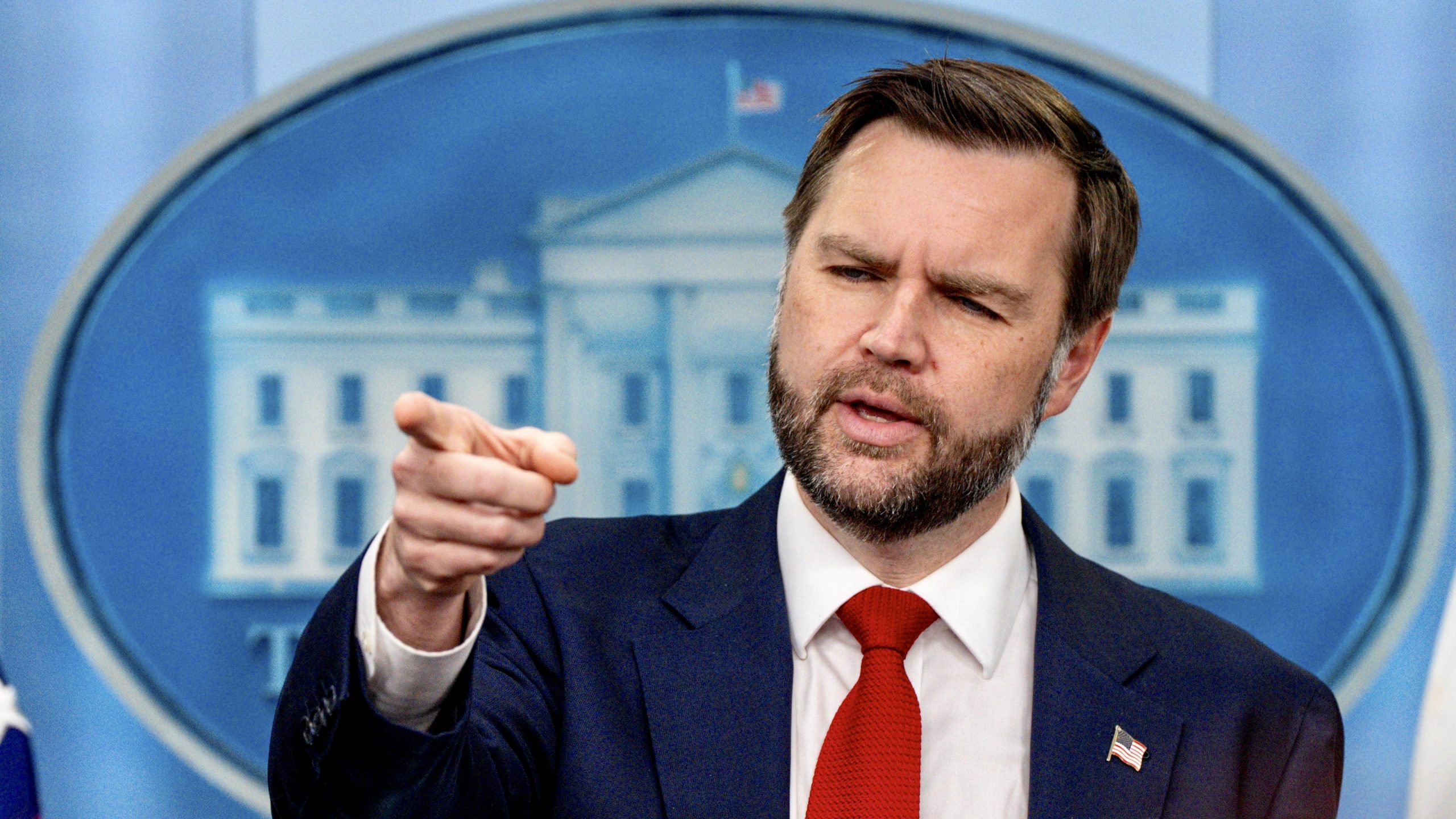
JD Vance: Well, you know, I certainly hope that they’re not lying, but it’s not concerning to me because I don’t really trust anybody. And I think this is one of the things the president has told us to do in this negotiation is don’t trust any words that are written on paper, which is why I think both the good and the bad of this entire negotiation—meaning I shouldn’t say the bad… The good things for America and also the good things for Iran fundamentally only happen through action. And that’s what we have set this up to do.
So if they do things, then they get things. If they don’t do anything, then they don’t get any of the benefits of the bargain. I am sure that there are people within their system who are not telling us exactly what’s on their mind.
That’s just the way that these things go. But that’s why the president has told us, don’t reward good words, reward good conduct if that happens. And if not, we don’t; no skin off our back.
Iran does get one big immediate benefit. It will restart its oil exports as the U.S. lifts its naval blockade. Other deal points, thankfully, are contingent on Iran’s behavior.
According to the Memorandum of Understanding, if Iran keeps its end of the bargain—a big if—it will receive U.S. sanctions relief, plus $300 billion in reconstruction money from Arab Gulf states, some of the same Gulf states, presumably, that Iran just spent months bombing during the war.
It’s not hard to imagine what Iran’s regime will do with a financial windfall of hundreds of billions of dollars. Again, they will lie low as much as they can until Trump leaves office, and then they will resume pouring those newfound billions into rebuilding their nuclear and missile programs and funding the likes of Hamas and Hezbollah.
President Trump is no dummy. He knows what Iran’s regime is all about, but it seems the economic factor loomed large here. He warned yesterday of a “global depression” if the Iran issue was not resolved soon.
“Who’s really happy is the market because the market’s gone up thousands of points over the last four or five days since hearing about it, and the strait is going to be opening,” President Trump stated. “It’s already partially opened; it’s going to be opening up soon in full over the next day or two. And the market has gone wild, and oil has come tumbling down. Oil is at $73, $74, and it’s getting very close to where it was before the crisis. The difference is now we have Iran without a nuclear weapon.”
“We’ll see how that all plays out,” he continued. “I think people are going to be very happy, but there’s nothing so smart as the market, and the market loves it.”
It’s great that the Strait of Hormuz is reopening, but a big question is whether Iran will be allowed to control it. The regime has even talked about charging tolls to ships that pass through.
Clearly, there are many important points that will need to be worked out over the next 60 days. Two of the most important points of all are not even mentioned in the Memorandum of Understanding: Iran’s ballistic missile program and its support for proxies like Hezbollah.
Speaking of Hezbollah, as part of the deal, Iran has also managed to link Israel’s battle with a terror group in Lebanon to the broader agreement. Iran says it will not sign a final deal unless Israel stops responding to repeated attacks by Hezbollah—attacks that Iran encourages. This obviously puts Israel in an impossible position.
We have lots of red flags.
I encourage everyone to pray for wisdom for our leaders, President Trump in particular, as he engages in these very sensitive negotiations, and pray for the Iranian people who are the main victims of this evil regime.
President Trump’s threat to use military force if the regime does not comply with the terms of the Memorandum is extremely important. There is still an opportunity to do what I believe should have been done back in April. That is to finish the job.