
October 27, 2026

October, 27, 2026
October 27, 2026

give

untitled artwork

untitled artwork

World news biblically understood

TRENDING:

The Original Marxist-Islamist Test: The Ideological Engine Behind The Iranian Revolution Is Setting Europe On Fire

Throughout the Western world, many are becoming increasingly concerned about the burgeoning โ€œRed-Green Alliance.โ€ For the uninitiated, the โ€œRedโ€ refers to the radical leftโ€”those who are Marxist in ideology and practice. The โ€œGreenโ€ refers to political Islamists. At first glance, the two ideologies are entirely incompatible. However, there is one distinct area of symmetry between the two: the remaking or, in many cases, the destruction of, society.ย 

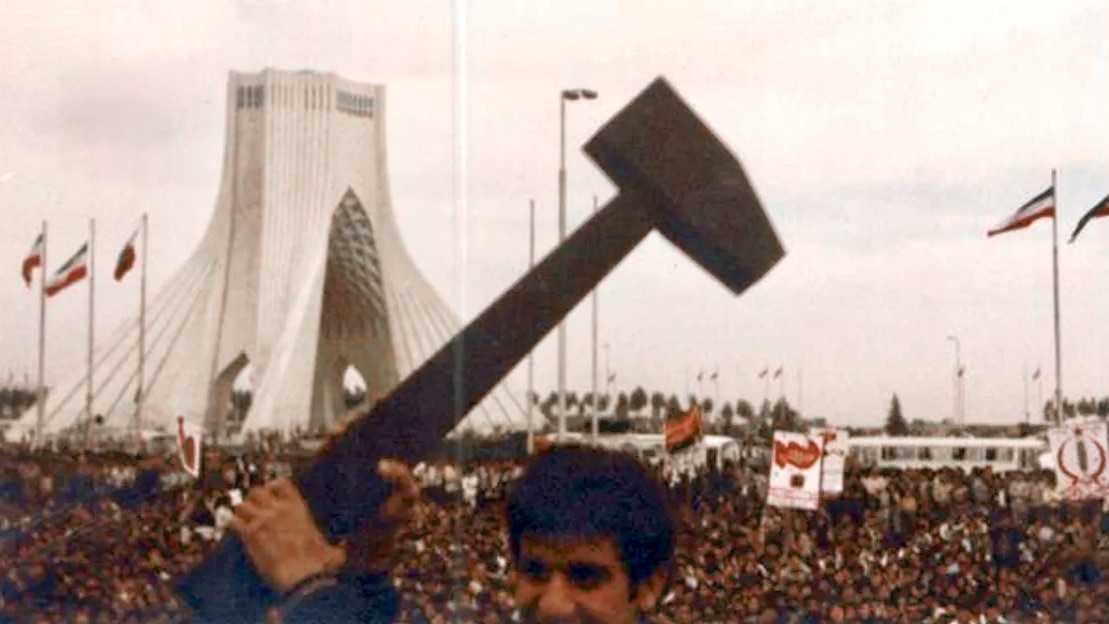
At present, the US and Israel are attempting to keep nuclear weapons out of the hands of the apocalyptic Iranian regime. Since the revolution in 1979, the Iranians have been a constant concern for Western nations. But little did political analysts know that the ideological engine behind the revolution also represented a warning as to what was to come, particularly in the area of Marxist-Islamist ideology.

Although the name Ali Shariati would not be familiar to most people, he was in many ways the ideological architect of the 1979 Islamic revolution in Iran. Shariati was born in Iran but studied in Paris during the 1960s. It was during this time in a Western institution that Shariati developed a new theoretical approach to the combination of Marxism, existentialism (the philosophical belief we are each responsible for creating purpose or meaning in our own lives) and Islam. Though he did not live to see the 1979 Revolution (he died in 1977), his writings mobilized a generation of revolutionaries.ย 

Inspired by the works of anti-colonialist scholars, Shariati became convinced that only a revolutionary ideology could oust Iranโ€™s Pahlavi monarchy and liberate Iranians from the evils of Western imperialism. In many ways, the Iranian Revolution was the first test of this new political and religious ideology which would come to be known as Revolutionary Shiism. It transformed traditional Shia Islam from passive faith to a mass-mobilizing force aimed at overthrowing unjust regimes and installing an Islamic state in its place. Because it was developed as an active revolutionary ideology, it would focus its energy on the development of Shia warriors and martyrdom rather than scholarly debates and mysticism.ย 

As part of the ideological framework developed by Shariati, he categorized Shia Islam into โ€œRed Shiismโ€ and โ€œBlack Shiism.โ€ According to Shariati, Black Shiism is static, ritualistic and readily compliant with unjust rulers whereas Red Shiism is centred on sacrifice, resistance against tyranny, and social justice. For Shariati, Islam was not an โ€œopiateโ€ that pacified society; it was a force capable of igniting social transformation. Therefore, Shariati rejected Black Shiism because he believed it was too preoccupied with spirituality, individual piety, and scholarly squabbles, rather than social justice against oppression.

Even though Shariati faced backlash from Shia clergy, Shariatiโ€™s message resonated with thousands of Iranian university students prior to the revolution, many of whom were middle-income left-wing Muslims. By encouraging them to view the Pahlavi monarchy through a colonial lens, the principles of Red Shiism were invoked, leading them to rise up against the so-called oppression.

Despite being criticized for his views, Shariati found favor with Ayatollah Khomeini, who believed that humanity was divided into categories:ย mustazafeenย (oppressed) andย mustakbareenย (oppressors or arrogant ones). In Islamic teaching, although the term mustazafeen can refer to those who are naturally weak, politically it is used to describe those who have been systematically weakened or made a victim of tyranny by powerful oppressors. Not surprisingly, the Ayatollah believed that Jews were mustakbareen and that those belonging to Islam were mustazafeen.

Leading up to 1979, Khomeini framed the Iranian Revolution as a movement of the Mustazafeenย (the oppressed masses) rising up against the Mustakbareen (oppressive domestic and international powers, such as the Shah and Western influence). Shariati even reinterpreted the story of Cain and Abel through the lens of class struggle, believing the oppressors/exploiters to be represented by Cain and the oppressed/exploited symbolized by Abel.

With the benefit of hindsight, we can see that Iranian foreign policy, particularly since 1979, has been built around oppressor/oppressed principles. Even prior to his death, Shariati advocated for a new foreign relations paradigm in which the Palestinians would serve as a symbol of Israeli-Western colonialism and domination. As one of his interpreters put it, Shariati wanted to make Palestinians a โ€œsacred symbol of uprising against injustice and domination.โ€

In fact, he claimed that โ€œโ€ฆJerusalem has now fallen to the hands of [Zionist] Jews and that the Muslims have become defenseless victims of a Jewish-Christian [alliance] and are being expelled from that sacred land in the most brutal wayโ€ฆโ€

What becomes evident from Shariatiโ€™s writings is that he saw the issue of Palestine as not just a regional conflict but as a crucial litmus test for anti-colonial resistance. To Shariati (and the countless others who are dogmatically aligned with him),ย the principles of Red Shiism emerge as a fundamental pillar that enhances liberation from the perceived social and political roots of oppression and injustice. It is this undercurrent of liberation psychology that draws Marxism and Islam together in their shared vision to overthrow the worldโ€™s โ€œoppressors.โ€ย ย 

The world bore witness to the dangerous results of Shariatiโ€™s โ€œRed Shiismโ€ in 1979. While rejecting its materialistic and atheistic foundations, Shariati soon discovered that Marxโ€™s analytical tools such as class struggle, economic exploitation, and anti-imperialism were useful in his quest to reinterpret Shia Islam as a revolutionary ideology of the oppressed.

Shariati believed that orthodox Marxism failed because it ignored the spiritual dimensions of meaning which, in the eyes of Shariati, could only be provided by a monotheistic faith grounded in similar principles of liberation: Islam. Despite Marxism missing the faith element, Shariatiโ€™s assessment of the suitability of ideological frameworks was not whether those forces were religious or non-religious, but how revolutionary they were. Thatโ€™s why he praised the revolutionary left. Between the faith of Islam and the revolutionary mindset of the radical left, Shariati believed he had found the perfected combination.

Shariati may have died almost 50 years ago, but the world is now suffering immeasurably under the weight of his Marxist-Islamist ideology. How ironic that the very place where Shariati had come under the spell of Marxism (Paris) is the very place which is now suffering immeasurably as a result of his revolutionary ideology.ย 


In The Last Days, Moral Depravity Will Become A Human Right

Our world has become the opposite of what it used to be. The moral and character flaws that are listed in Romans 1:28-32 have always been part of life in a fallen world, but there has long been a clearly defined line between good and evil. Even during the periods of history when evil seemed to be dominant and tyrants were brutal in their rule, people knew the difference between right and wrong, and good and evil. Good was still good, and evil was still evil. Yet Paul says in Romans 1 that when a nation (or the world) rejects Godโ€™s existence and authority, a moral perversion will spread and lead to a time when the moral and character flaws in Romans 1:28-32 will become dominant.

The Final Showdown?: Netanyahu And Trump Hint Decisive Action Against Iran Could Be Soon

The final showdown with Iran's regime may be imminent. The United States and Israel are reportedly considering new strikes against Iran's regime after the U.S. midterm elections, which will be held on November 3rd. Both nations have ramped up military drills in recent days, and Secretary of War Pete Hegseth was in Israel last week meeting with Prime Minister Netanyahu. Both Prime Minister Netanyahu and President Trump have hinted in recent days that something decisive could be coming.

sign up

Franklin Graham: Jesus Is Coming Backโ€ฆ And Itโ€™s Not Going To Be Far Down The Roadย 

During a lengthy sit-down interview with Fox News Sean Hannity, evangelist Franklin Graham boldly detailed to a largely secular podcast audience the list of extraordinary evidence showcasing that our world is living in the season of Jesusโ€™ return. โ€œJesus is coming back,โ€ Graham declared. โ€œHe is going to come back, and He is going to establish His throne here. There's gonna be a new Jerusalem. He is coming down, and He is going to reign. That is going to take place. When that's gonna take place, I don't knowโ€ฆ but it's not gonna be that far down the road. Jesus told us to look for signs. In Matthew chapter 24, He gives us great examples of what's coming and what we ought to be looking for. If you look today, [you can see] the signs.โ€

ABC's of Salvation

Decision

christ in prophecy

christ in prophecy

Decision

untitled artwork

Israel My Glory

Throughout the Western world, many are becoming increasingly concerned about the burgeoning โ€œRed-Green Alliance.โ€ For the uninitiated, the โ€œRedโ€ refers to the radical leftโ€”those who are Marxist in ideology and practice. The โ€œGreenโ€ refers to political Islamists. At first glance, the two ideologies are entirely incompatible. However, there is one distinct area of symmetry between the two: the remaking or, in many cases, the destruction of, society.ย 

At present, the US and Israel are attempting to keep nuclear weapons out of the hands of the apocalyptic Iranian regime. Since the revolution in 1979, the Iranians have been a constant concern for Western nations. But little did political analysts know that the ideological engine behind the revolution also represented a warning as to what was to come, particularly in the area of Marxist-Islamist ideology.

Although the name Ali Shariati would not be familiar to most people, he was in many ways the ideological architect of the 1979 Islamic revolution in Iran. Shariati was born in Iran but studied in Paris during the 1960s. It was during this time in a Western institution that Shariati developed a new theoretical approach to the combination of Marxism, existentialism (the philosophical belief we are each responsible for creating purpose or meaning in our own lives) and Islam. Though he did not live to see the 1979 Revolution (he died in 1977), his writings mobilized a generation of revolutionaries.ย 

Inspired by the works of anti-colonialist scholars, Shariati became convinced that only a revolutionary ideology could oust Iranโ€™s Pahlavi monarchy and liberate Iranians from the evils of Western imperialism. In many ways, the Iranian Revolution was the first test of this new political and religious ideology which would come to be known as Revolutionary Shiism. It transformed traditional Shia Islam from passive faith to a mass-mobilizing force aimed at overthrowing unjust regimes and installing an Islamic state in its place. Because it was developed as an active revolutionary ideology, it would focus its energy on the development of Shia warriors and martyrdom rather than scholarly debates and mysticism.ย 

As part of the ideological framework developed by Shariati, he categorized Shia Islam into โ€œRed Shiismโ€ and โ€œBlack Shiism.โ€ According to Shariati, Black Shiism is static, ritualistic and readily compliant with unjust rulers whereas Red Shiism is centred on sacrifice, resistance against tyranny, and social justice. For Shariati, Islam was not an โ€œopiateโ€ that pacified society; it was a force capable of igniting social transformation. Therefore, Shariati rejected Black Shiism because he believed it was too preoccupied with spirituality, individual piety, and scholarly squabbles, rather than social justice against oppression.

Even though Shariati faced backlash from Shia clergy, Shariatiโ€™s message resonated with thousands of Iranian university students prior to the revolution, many of whom were middle-income left-wing Muslims. By encouraging them to view the Pahlavi monarchy through a colonial lens, the principles of Red Shiism were invoked, leading them to rise up against the so-called oppression.

Despite being criticized for his views, Shariati found favor with Ayatollah Khomeini, who believed that humanity was divided into categories:ย mustazafeenย (oppressed) andย mustakbareenย (oppressors or arrogant ones). In Islamic teaching, although the term mustazafeen can refer to those who are naturally weak, politically it is used to describe those who have been systematically weakened or made a victim of tyranny by powerful oppressors. Not surprisingly, the Ayatollah believed that Jews were mustakbareen and that those belonging to Islam were mustazafeen.

Leading up to 1979, Khomeini framed the Iranian Revolution as a movement of the Mustazafeenย (the oppressed masses) rising up against the Mustakbareen (oppressive domestic and international powers, such as the Shah and Western influence). Shariati even reinterpreted the story of Cain and Abel through the lens of class struggle, believing the oppressors/exploiters to be represented by Cain and the oppressed/exploited symbolized by Abel.

With the benefit of hindsight, we can see that Iranian foreign policy, particularly since 1979, has been built around oppressor/oppressed principles. Even prior to his death, Shariati advocated for a new foreign relations paradigm in which the Palestinians would serve as a symbol of Israeli-Western colonialism and domination. As one of his interpreters put it, Shariati wanted to make Palestinians a โ€œsacred symbol of uprising against injustice and domination.โ€

In fact, he claimed that โ€œโ€ฆJerusalem has now fallen to the hands of [Zionist] Jews and that the Muslims have become defenseless victims of a Jewish-Christian [alliance] and are being expelled from that sacred land in the most brutal wayโ€ฆโ€

What becomes evident from Shariatiโ€™s writings is that he saw the issue of Palestine as not just a regional conflict but as a crucial litmus test for anti-colonial resistance. To Shariati (and the countless others who are dogmatically aligned with him),ย the principles of Red Shiism emerge as a fundamental pillar that enhances liberation from the perceived social and political roots of oppression and injustice. It is this undercurrent of liberation psychology that draws Marxism and Islam together in their shared vision to overthrow the worldโ€™s โ€œoppressors.โ€ย ย 

The world bore witness to the dangerous results of Shariatiโ€™s โ€œRed Shiismโ€ in 1979. While rejecting its materialistic and atheistic foundations, Shariati soon discovered that Marxโ€™s analytical tools such as class struggle, economic exploitation, and anti-imperialism were useful in his quest to reinterpret Shia Islam as a revolutionary ideology of the oppressed.

Shariati believed that orthodox Marxism failed because it ignored the spiritual dimensions of meaning which, in the eyes of Shariati, could only be provided by a monotheistic faith grounded in similar principles of liberation: Islam. Despite Marxism missing the faith element, Shariatiโ€™s assessment of the suitability of ideological frameworks was not whether those forces were religious or non-religious, but how revolutionary they were. Thatโ€™s why he praised the revolutionary left. Between the faith of Islam and the revolutionary mindset of the radical left, Shariati believed he had found the perfected combination.

Shariati may have died almost 50 years ago, but the world is now suffering immeasurably under the weight of his Marxist-Islamist ideology. How ironic that the very place where Shariati had come under the spell of Marxism (Paris) is the very place which is now suffering immeasurably as a result of his revolutionary ideology.ย 


Trusted Analysis From A Biblical Worldview

Help reach the lost and equip the church with the living and active truth of God's Word in our world today.

YOU CARE ABOUT

BIBLICAL TRUTH. SO DO WE.

ย 

Together, We Can Deliver A Biblical Understanding

Of News Events Around The World.

In The Last Days, Moral Depravity Will Become A Human Right

Our world has become the opposite of what it used to be. The moral and character flaws that are listed in Romans 1:28-32 have always been part of life in a fallen world, but there has long been a clearly defined line between good and evil. Even during the periods of history when evil seemed to be dominant and tyrants were brutal in their rule, people knew the difference between right and wrong, and good and evil. Good was still good, and evil was still evil. Yet Paul says in Romans 1 that when a nation (or the world) rejects Godโ€™s existence and authority, a moral perversion will spread and lead to a time when the moral and character flaws in Romans 1:28-32 will become dominant.

The Final Showdown?: Netanyahu And Trump Hint Decisive Action Against Iran Could Be Soon

The final showdown with Iran's regime may be imminent. The United States and Israel are reportedly considering new strikes against Iran's regime after the U.S. midterm elections, which will be held on November 3rd. Both nations have ramped up military drills in recent days, and Secretary of War Pete Hegseth was in Israel last week meeting with Prime Minister Netanyahu. Both Prime Minister Netanyahu and President Trump have hinted in recent days that something decisive could be coming.

untitled artwork 6391

Franklin Graham: Jesus Is Coming Backโ€ฆ And Itโ€™s Not Going To Be Far Down The Roadย 

During a lengthy sit-down interview with Fox News Sean Hannity, evangelist Franklin Graham boldly detailed to a largely secular podcast audience the list of extraordinary evidence showcasing that our world is living in the season of Jesusโ€™ return. โ€œJesus is coming back,โ€ Graham declared. โ€œHe is going to come back, and He is going to establish His throne here. There's gonna be a new Jerusalem. He is coming down, and He is going to reign. That is going to take place. When that's gonna take place, I don't knowโ€ฆ but it's not gonna be that far down the road. Jesus told us to look for signs. In Matthew chapter 24, He gives us great examples of what's coming and what we ought to be looking for. If you look today, [you can see] the signs.โ€

ABC's of Salvation

TV AD

worldview matters

Decision Magazine V AD

Decision

Jan Markell

Israel My Glory

Erick Stakelbeck

untitled artwork

YOU CARE ABOUT

BIBLICAL TRUTH.

SO DO WE.

Together, We Can Deliver A Biblical Understanding Of News Events Around The World And Equip The Church To Stand With A Biblical Worldview.

untitled artwork

Israel My Glory

YOU CARE ABOUT

BIBLICAL TRUTH.

SO DO WE.

ย 

Together, We Can Deliver A Biblical Understanding Of News Events Around The World And Equip The Church To Stand With A Biblical Worldview.