July 4, 2026

July, 4, 2026
July 4, 2026

give

untitled artwork

untitled artwork

World news biblically understood

TRENDING:

The Ominous Shadow Of Antisemitism: As Wonderful As America Was And Is, It Is Not The Promised Land

Steve Herzig

Between 1880 and 1917, more than 2 million Jewish people immigrated from Eastern Europe to America—the Goldene Medina (Yiddish for “Golden Land”). They fled poverty, persecution, and the rising tide of deadly antisemitism, seeking refuge in a nation that promised liberty and opportunity. My four grandparents were among the wave of immigrants. They believed America was that Golden Land, the “land of the free and the home of the brave.”

Despite the challenges of starting over in a new country, they passed on to their children—my parents—a deep love for America. So, it came as no surprise that, immediately after Pearl Harbor, my father and my mother’s brothers eagerly volunteered for military service. I remember family gatherings where they proudly recounted their wartime experiences, knowing America had played a critical role in defeating Hitler and fascism while helping to prevent the extermination of the Jewish people.

They passed their love of America on to me. I grew up believing, as they did, that America was not just a refuge but a wonderful place to live, thrive, and grow as a Jew.

But many Americans’ response to the terror attacks of October 7, 2023, the ensuing war between Israel and Hamas, and now Israel and Iran’s conflict have shaken that belief. Since October 7, antisemitism in America has surged to alarming, even deadly, levels and, with it, fear among Jewish Americans.

A Darkening Climate

The American Jewish Committee’s (AJC’s) 2024 report, “The State of Antisemitism in America,” the most comprehensive survey of its kind, analyzed the rise of Jewish hatred over the last six years. The report’s data begins in November 2018, shortly after the Tree of Life synagogue terrorist shooting in Pittsburgh that left 11 people dead and six others injured.

According to the report, 90% of Jewish Americans say antisemitism in the United States has increased since October 7. Another 77% say they feel less safe living as Jews in America since Hamas’s massacre. In the year following October 7, the Anti-Defamation League (ADL) recorded more than 10,000 antisemitic incidents in the United States—the highest number recorded since the ADL began tracking them in 1979.

After the report was released, AJC CEO Ted Deutch said, “Antisemitism has reached a tipping point in America, threatening the freedoms of American Jews and casting an ominous shadow across our society.”

ADL CEO Jonathan Greenblatt said that, since October 7, “Jewish Americans haven’t had a single moment of respite … we’ve faced a shocking number of antisemitic threats and experienced calls for more violence against Israelis and Jews everywhere.”

The Effects of Fear

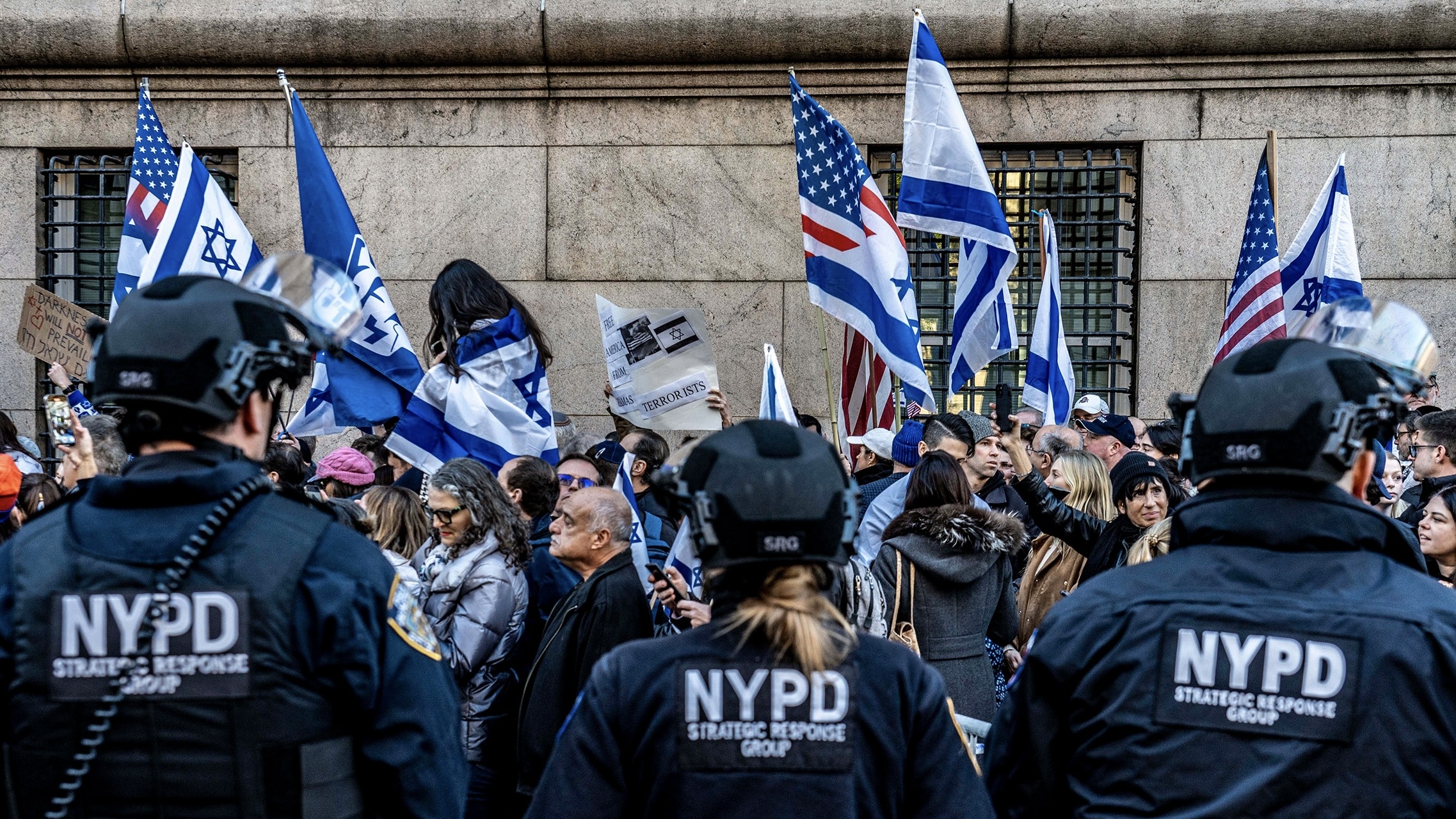
Recently, after teaching at a church in Pennsylvania, I spoke with two believers, both passionate supporters of Israel. Both shared with me separately that their families had been asked by Jewish friends to take down the American flag displayed outside their homes because it made them feel unsafe.

If I had heard these accounts years ago, I would have been shocked. But not anymore. Even if we, as Bible-believing Christians, unequivocally reject any connection between patriotism and hatred for the Jewish people, we must take seriously the perceptions of our Jewish neighbors. After all, perception—and fear—can shape reality.

The AJC report revealed that 56% of Jewish Americans have changed their behavior because of the rise of antisemitism. Some hide their identity on online forums, while others avoid going to certain places and events. For protection, they sometimes refrain from wearing visible symbols of their faith—like the Star of David or a yarmulke.

Once unthinkable in America, these preventive patterns are sadly becoming more mainstream. In 2018, Forbes wrote of a similar shift in France, where growing antisemitism forced Jewish people to question their future in the country; and many began to forgo any visible aspect of their Jewish identity. Now, Jewish Americans are reacting the same way:

• 40% avoid wearing visibly Jewish clothing or symbols in public.

• 31% avoid specific events or locations out of fear.

• 78% of those who experienced antisemitism did not report it.

• 54% of them said they didn’t believe reporting antisemitic incidents would make a difference.

The data is especially troubling for young Jewish people:

• 41% of Jewish people aged 18–29 say they have been targeted by antisemitism.

• 48% of Jewish college students feel unsafe at campus events.

• 33% say student life and faculty are actively promoting antisemitism.

• 24% say antisemitic ideas are embedded in their curriculum.

The climate in America is changing—and not for the better. The very nation that once gave refuge to my grandparents now feels, for many Jewish people, less like a golden land and more like the Europe they fled.

A Biblical Perspective

Despite the sobering data, I am grateful for my grandparents’ courage and vision in coming to America. Along with millions of other Jewish people, their belief in this land’s promise was not misplaced. But as Bible believers, we know that, as wonderful as America was and is, it is not the Promised Land.

We are deeply saddened by the rapidly darkening antisemitic climate, but we should not be surprised. Scripture is clear: A day is coming when antisemitism will rise so quickly and so strongly that it will blind all nations—including America. On that day, the Jewish Messiah will come—not to New York, Chicago, or Los Angeles, but to Jerusalem. There, He will stand on the Mount of Olives, fight for Israel, defeat its enemies, and rescue His people (Zechariah 14:1–4).

Until that day, may we be like the sons of Issachar, men “who had understanding of the times, to know what Israel ought to do” (1 Chronicles 12:32). That kind of understanding only comes through the Spirit of God, cultivated through prayer and daily reading of His Word.



DONOR SUPPORTED: Harbinger’s Daily publishes Biblically-centered reporting in more than 125 countries every day at no cost to the reader.

The Real ‘American Dream’ Of George Washington Was Far More God-Honoring Than Many Have Been Led To Believe

Washington personally read the Bible and quoted the Bible. Those who deny America’s unique Christian roots will claim that many educated people in positions of prominence in the 18th century also quoted from the Bible. However, they also quoted from Greek and Roman authors of antiquity. Washington quoted almost exclusively from the Bible and applied its teachings to his personal life and role as a leader. The real American dream is far more God-honoring than what we have today. The true American patriot is working and praying that Washington’s vision for America will once again claim the hearts of Americans.

Can We Still Ask God To Bless America When So Much Of The Culture Is In Open Opposition To Him?

Christians are under the kingship of Jesus first and foremost, but that does not negate the responsibilities of our earthly citizenship. We can make a difference in our own sphere of influence by being faithful where God gives us opportunities, and if every Christian did that, think how any country would change! We can still pray for God to bless America, but we should specifically pray for God to turn Americans’ hearts back to him and to recognize his authority in all the areas where the culture has increasingly rejected him.

sign up

Thomas Jefferson’s ‘Separation Of Church And State’ Never Meant Keeping God Out Of Government

In context, it’s clear this wall of separation was not created to keep religion out of the State. It was simply intended to protect religious freedom and to place boundaries on the State’s control over the Church. In fact, the United States Capitol served as a church building for seven decades and Jefferson himself was a regular attendee. He attended so faithfully that he earned a reserved seat. On the Sunday after he wrote the letter to the Danbury Baptists, he attended church services at the still-under-construction Capitol.

ABC's of Salvation

Decision

UTT

FOI

untitled artwork

Israel My Glory

Steve Herzig

Between 1880 and 1917, more than 2 million Jewish people immigrated from Eastern Europe to America—the Goldene Medina (Yiddish for “Golden Land”). They fled poverty, persecution, and the rising tide of deadly antisemitism, seeking refuge in a nation that promised liberty and opportunity. My four grandparents were among the wave of immigrants. They believed America was that Golden Land, the “land of the free and the home of the brave.”

Despite the challenges of starting over in a new country, they passed on to their children—my parents—a deep love for America. So, it came as no surprise that, immediately after Pearl Harbor, my father and my mother’s brothers eagerly volunteered for military service. I remember family gatherings where they proudly recounted their wartime experiences, knowing America had played a critical role in defeating Hitler and fascism while helping to prevent the extermination of the Jewish people.

They passed their love of America on to me. I grew up believing, as they did, that America was not just a refuge but a wonderful place to live, thrive, and grow as a Jew.

But many Americans’ response to the terror attacks of October 7, 2023, the ensuing war between Israel and Hamas, and now Israel and Iran’s conflict have shaken that belief. Since October 7, antisemitism in America has surged to alarming, even deadly, levels and, with it, fear among Jewish Americans.

A Darkening Climate

The American Jewish Committee’s (AJC’s) 2024 report, “The State of Antisemitism in America,” the most comprehensive survey of its kind, analyzed the rise of Jewish hatred over the last six years. The report’s data begins in November 2018, shortly after the Tree of Life synagogue terrorist shooting in Pittsburgh that left 11 people dead and six others injured.

According to the report, 90% of Jewish Americans say antisemitism in the United States has increased since October 7. Another 77% say they feel less safe living as Jews in America since Hamas’s massacre. In the year following October 7, the Anti-Defamation League (ADL) recorded more than 10,000 antisemitic incidents in the United States—the highest number recorded since the ADL began tracking them in 1979.

After the report was released, AJC CEO Ted Deutch said, “Antisemitism has reached a tipping point in America, threatening the freedoms of American Jews and casting an ominous shadow across our society.”

ADL CEO Jonathan Greenblatt said that, since October 7, “Jewish Americans haven’t had a single moment of respite … we’ve faced a shocking number of antisemitic threats and experienced calls for more violence against Israelis and Jews everywhere.”

The Effects of Fear

Recently, after teaching at a church in Pennsylvania, I spoke with two believers, both passionate supporters of Israel. Both shared with me separately that their families had been asked by Jewish friends to take down the American flag displayed outside their homes because it made them feel unsafe.

If I had heard these accounts years ago, I would have been shocked. But not anymore. Even if we, as Bible-believing Christians, unequivocally reject any connection between patriotism and hatred for the Jewish people, we must take seriously the perceptions of our Jewish neighbors. After all, perception—and fear—can shape reality.

The AJC report revealed that 56% of Jewish Americans have changed their behavior because of the rise of antisemitism. Some hide their identity on online forums, while others avoid going to certain places and events. For protection, they sometimes refrain from wearing visible symbols of their faith—like the Star of David or a yarmulke.

Once unthinkable in America, these preventive patterns are sadly becoming more mainstream. In 2018, Forbes wrote of a similar shift in France, where growing antisemitism forced Jewish people to question their future in the country; and many began to forgo any visible aspect of their Jewish identity. Now, Jewish Americans are reacting the same way:

• 40% avoid wearing visibly Jewish clothing or symbols in public.

• 31% avoid specific events or locations out of fear.

• 78% of those who experienced antisemitism did not report it.

• 54% of them said they didn’t believe reporting antisemitic incidents would make a difference.

The data is especially troubling for young Jewish people:

• 41% of Jewish people aged 18–29 say they have been targeted by antisemitism.

• 48% of Jewish college students feel unsafe at campus events.

• 33% say student life and faculty are actively promoting antisemitism.

• 24% say antisemitic ideas are embedded in their curriculum.

The climate in America is changing—and not for the better. The very nation that once gave refuge to my grandparents now feels, for many Jewish people, less like a golden land and more like the Europe they fled.

A Biblical Perspective

Despite the sobering data, I am grateful for my grandparents’ courage and vision in coming to America. Along with millions of other Jewish people, their belief in this land’s promise was not misplaced. But as Bible believers, we know that, as wonderful as America was and is, it is not the Promised Land.

We are deeply saddened by the rapidly darkening antisemitic climate, but we should not be surprised. Scripture is clear: A day is coming when antisemitism will rise so quickly and so strongly that it will blind all nations—including America. On that day, the Jewish Messiah will come—not to New York, Chicago, or Los Angeles, but to Jerusalem. There, He will stand on the Mount of Olives, fight for Israel, defeat its enemies, and rescue His people (Zechariah 14:1–4).

Until that day, may we be like the sons of Issachar, men “who had understanding of the times, to know what Israel ought to do” (1 Chronicles 12:32). That kind of understanding only comes through the Spirit of God, cultivated through prayer and daily reading of His Word.


Trusted Analysis From A Biblical Worldview

Help reach the lost and equip the church with the living and active truth of God's Word in our world today.

YOU CARE ABOUT

BIBLICAL TRUTH. SO DO WE.


Together, We Can Deliver A Biblical Understanding

Of News Events Around The World.

The Real ‘American Dream’ Of George Washington Was Far More God-Honoring Than Many Have Been Led To Believe

Washington personally read the Bible and quoted the Bible. Those who deny America’s unique Christian roots will claim that many educated people in positions of prominence in the 18th century also quoted from the Bible. However, they also quoted from Greek and Roman authors of antiquity. Washington quoted almost exclusively from the Bible and applied its teachings to his personal life and role as a leader. The real American dream is far more God-honoring than what we have today. The true American patriot is working and praying that Washington’s vision for America will once again claim the hearts of Americans.

Can We Still Ask God To Bless America When So Much Of The Culture Is In Open Opposition To Him?

Christians are under the kingship of Jesus first and foremost, but that does not negate the responsibilities of our earthly citizenship. We can make a difference in our own sphere of influence by being faithful where God gives us opportunities, and if every Christian did that, think how any country would change! We can still pray for God to bless America, but we should specifically pray for God to turn Americans’ hearts back to him and to recognize his authority in all the areas where the culture has increasingly rejected him.

untitled artwork 6391

Thomas Jefferson’s ‘Separation Of Church And State’ Never Meant Keeping God Out Of Government

In context, it’s clear this wall of separation was not created to keep religion out of the State. It was simply intended to protect religious freedom and to place boundaries on the State’s control over the Church. In fact, the United States Capitol served as a church building for seven decades and Jefferson himself was a regular attendee. He attended so faithfully that he earned a reserved seat. On the Sunday after he wrote the letter to the Danbury Baptists, he attended church services at the still-under-construction Capitol.

ABC's of Salvation

TV AD

worldview matters

Decision Magazine V AD

Decision

Jan Markell

Israel My Glory

Erick Stakelbeck

untitled artwork

YOU CARE ABOUT

BIBLICAL TRUTH.

SO DO WE.

Together, We Can Deliver A Biblical Understanding Of News Events Around The World And Equip The Church To Stand With A Biblical Worldview.

untitled artwork

Israel My Glory

YOU CARE ABOUT

BIBLICAL TRUTH.

SO DO WE.


Together, We Can Deliver A Biblical Understanding Of News Events Around The World And Equip The Church To Stand With A Biblical Worldview.