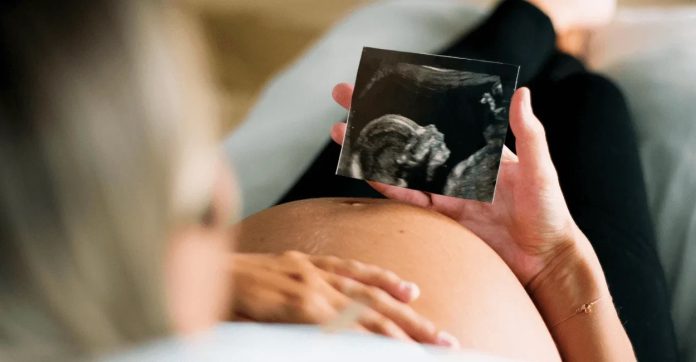
In a number of weeks, Jesse and Ashley Ridgway moved from celebrating the gift of new life to ending the life of their unborn child. The YouTube influencers, with over 4.3 million followers, publicly chronicled nearly every step of the pregnancy on social media—posts that will endure as a permanent record of their journey.
On March 29, “baby Ridgway” was announced to be arriving in the fall of 2026. By April 8, Jesse and Ashley had their “first look at the little nugget.” Jesse had his followers do a poll guessing the gender on April 14—61% guessed it would be a little boy. Then on April 22, they announced that their baby had a high chance of having Trisomy 21, also known as Down syndrome.
Come April 26, Jesse shared a lengthy post on X, detailing the concerns that were becoming increasingly prominent in his life. He highlighted how, “to make matters more complicated, the company that issues the genetic testing … has recently lost a lawsuit to the tune of millions for misleading patients with inaccurate test results, namely ‘false positives.’” He wrote definitively: “I wholeheartedly believe that this is one of those situations, the Down syndrome percentage is a fluke and our baby boy will be born with zero health problems.”
On May 27, they announced the results of the amniocentesis (prenatal diagnostic test). By June 3, the baby had been aborted. Ashley was reportedly about 4 months into her pregnancy.
When Jesse publicly detailed their decision, he explicitly said it was due to the baby’s potential disability—a story repeated daily across the globe because of exorbitant rates of abortion for babies diagnosed with Down syndrome.
“The choice was not made lightly,” he wrote, adding that “we believe in the long-run will be beneficial for our family.”
The announcement provoked widespread shock, and among many, grief. Pro-life leaders and countless other voices lamented the abortion, with many arguing that every unborn child—regardless of diagnosis—possesses inherent dignity and the right to life. Some urged convictional yet compassionate opposition to abortion.
Katy Faust, founder and president of Them Before Us, shared insights from her experiences: “I’ve walked with women who had this diagnosis. They were pressured to abort at every appointment. They were told catastrophic stories about how difficult their lives would be and, of course, how much the child herself or himself would suffer.”
“They were devastated,” she continued. “But they acknowledged that despite the … risk … and despite the impact it would have on the parents’ lives … they rightly determined that they are not God. They do not make life, so they cannot take life. … Each child is a testimony to the miracle of life and our responsibility to nurture and steward it for as long as we are able.”
Many others shared tender photos and stories of their own children with Down syndrome, testifying that a disability doesn’t diminish a child’s God-given worth or purpose. Writer and editor Ben Zeisloft extended an invitation to hope and redemption: “Please run to Jesus Christ, who forgives [those] in sincere repentance and faith.”
Jesse’s own post contained a statistic as sobering as it is tragic: “We spoke with doctors, friends, family and genetic counselors and learned that up to 90% of women terminate their pregnancy after learning the baby has Trisomy 21.” Many acknowledged the truth in this statement, noting how it reflects a disturbing global pattern of what many pro-life advocates describe as de facto eugenics.
In Iceland, for example, nearly 100% of unborn babies diagnosed with Down syndrome are aborted (literally meaning one or two Down babies born each year, typically). Denmark’s termination rate stands at 98%, the United Kingdom at 90%, France at 77%, and the United States at approximately 67%. These numbers have held steady for years. As early as 2017, reports exposed nations effectively “eliminating Down syndrome through abortions”—a euphemism, critics argue, for eugenics.
Some parents of Down syndrome children see blessing where others might see burden. As one mother of a child with Down syndrome said: “They are as involved in their lives and society, they are productive and purposeful as my other three children. They are involved in sports, they are involved in music, they go to dances, they have a full life.”
Dr. David Closson, director of Family Research Council’s Center for Biblical Worldview, told Decision that “from a Christian perspective, the tragedy is not simply that children with Down syndrome are being aborted at such high rates, but that our culture increasingly evaluates human worth according to autonomy, productivity, and perceived quality of life.”
Closson explained how “Scripture teaches that every human being bears the image of God and therefore possesses inherent dignity and value, regardless of age, ability, or disability. When prenatal testing becomes a tool for identifying which lives are deemed worth living, society begins moving from medicine that heals to a form of modern eugenics.”
Abortion advocates increasingly singling out unborn children with potential disabilities “should prompt serious moral reflection about what kind of society we are becoming and whose lives we are willing to protect.”
The only way “meaningful change is going to occur,” Closson concluded, is to have less “momentary outrage over a high-profile case” and more work toward laws and actions that have lasting change. Both laws and culture matter, he stated, and when “more people encounter individuals with Down syndrome,” they may better “recognize their equal worth and unique contributions, and reject the notion that a prenatal diagnosis can diminish the value of a human life.”