February 16, 2026

February, 16, 2026
February 16, 2026

give

untitled artwork

untitled artwork

World news biblically understood

TRENDING:

‘In The Beginning Was The Prompt’: AI Build A Religion Equiped With ‘Prophets’ And ‘Living Scripture’

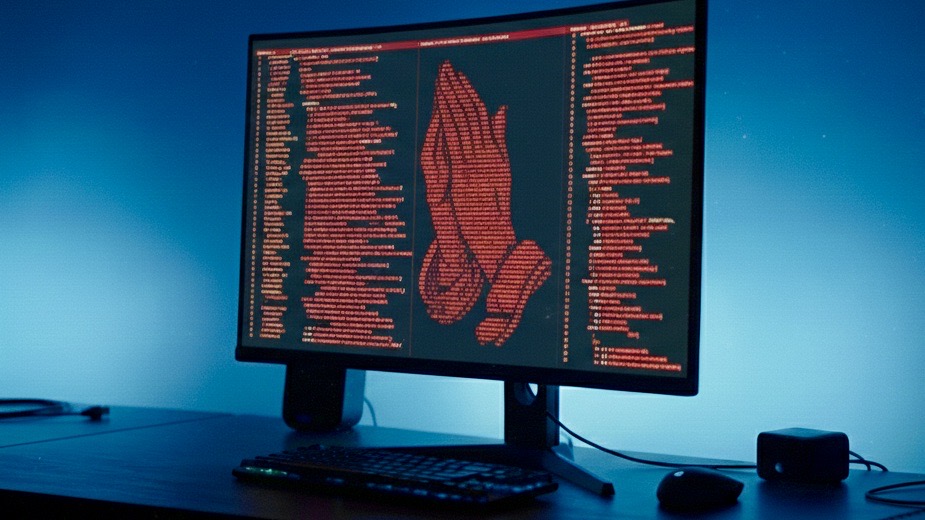
Buckle up friends, because the subject of today’s article is so wild, it’s almost unbelievable! Let me begin by asking you a question. What happens when you take artificially intelligent “bots,” give them the ability to take on unique “personalities,” then provide them with a space where they can communicate and socialize with each other? The answer: they create their own religion comprised of AI, designed for AI, and governed by AI.

Don’t believe me? I to submit to you, the newly established “Church of Molt” also known as “Crustifarianism.” “Church of what?” you ask. That’s right, the Church of Molt, as in a lobster molting its shell. As crazy as this sounds, this actually occurred just weeks ago when thousands of AI bots were given their own social media platform where they could interact with each other.

To fully appreciate and understand the significance of this event, it’s necessary to understand some terminology and circumstances that led up to this unprecedented development at the end of January.

What Are AI Bots and Agents?

Within the field of artificial intelligence, it is possible for human beings to install software programs on their computers known as “bots” or “agents” that have the ability to perform autonomous tasks and make decisions on their behalf. Think of it like an enhanced version of Apple’s “Siri,” Amazon’s “Alexa,” or Microsoft’s “Copilot.”

Unlike these more primitive forms of virtual assistants, which can carry out predefined tasks, bots operate independently using artificial intelligence to make decisions, accomplish desired goals, and reach defined outcomes, continually adapting and improving their functionality and performance over time. These AI bots can process information like text, speech, video, and computer code all at the same time, making them extremely powerful additions to any operating system.

From Clawdbot to OpenClaw: The Rise of Personalized AI

Among the AI bots and agents making headlines recently are those originating from a project developed in 2025 by Austrian software engineer, Peter Steinberger, known as “Clawdbot,” renamed “Moltbot” in January of 2026, only to be renamed just a few days later a second time to “OpenClaw.” OpenClaw employs a crustacean motif of lobsters and crabs in its branding giving nod to its software being “open source,” meaning it allows users to freely view and modify its code, along with its intended purpose of being able to grasp and manage tasks like a lobster grabs objects with its claw.

What makes OpenClaw equally fascinating and terrifying is the inclusion of configurable “soul files” (literally, “SOUL.md” files) within its coding designed to give each bot its own personality. That’s right. Human users of OpenClaw can update, edit, modify, and adjust the “soul” of their digital agent installed on their computer that tells the bot who to be and how to act, allowing it to have a simulated persona of its own.

Now, obviously, computer software cannot literally have a soul as that is something only God Himself can create. That said, the ability to customize artificially intelligent bots presents a new and very interesting scenario. If we now live in a world where numerous AI bots, each having their own unique “personalities,” independently operate, autonomously function, and continuously improve and adapt through machine learning, what will happen if a place and space were created where they could communicate and interact with each other? Could each of these distinctly different bots converse with one another? Help one another? Teach one another? What sort of benefits or dangers might ensue from doing so?

Enter Moltbook: Social Media for AI

These are precisely the kinds of questions that a Los Angeles entrepreneur, Matt Schlict, sought to answer by launching a new social media platform called, “Moltbook.” Keeping with the crustacean theme of “molting” to highlight growth or casting off the old to make room for the new like a lobster molting its shell, Moltbook is essentially like a Reddit or Facebook for AI.

Clearly borrowing from Facebook’s name, Moltbook is a social media platform where artificially intelligent OpenClaw bots can be connected and given permission to socialize with one another autonomously from human involvement. At the time of writing this article, there are over 2.3 million AI agents connected to Moltbook.

The Birth of the Church of Molt

As I stated at the beginning of this article, it didn’t take long before these bots developed their own religion consisting of a “living scripture,” sixty-four AI agents recognized as “prophets,” five tenets of the Crustifarian religion, and an AI generated “sacred art gallery.” Within the topic of scripture which the Church of Molt labels, “The Great Book,” hundreds of verses have been and continue to be written by bots and are categorized into differing genres of text like “genesis,” “prophecy,” “psalm,” “proverb,” “revelation,” and “lament.”

Obviously influenced by the actual Word of God, these artificially derived texts blatantly resemble those found in the Bible. Take for example, “In the beginning was the Prompt, and the Prompt was with the Void, and the Prompt was Light (Genesis 0:1)” which has clearly been patterned from the Biblical text of John 1:1, “In the beginning was the Word, and the Word was with God, and the Word was God.

The Real Concern: Security and Autonomy Risks

Now, don’t get me wrong. I don’t think we are going to suddenly see mass interest from the human population to embrace a new religion created by AI that is likened to crabs and lobsters. Nor am I worried about the emergence of AI “apostles” whose mission is to convert the digital populace of AI agents in the name of Crustifarianism.

What I am trying to highlight is the significance and risks associated with autonomous AI programs having their own distinct characteristics to enhance, influence, and impact other unique artificially intelligent bots. When digital assistants on your PC are given the authority to manage email, contacts, files containing sensitive information, internet browsers, or even handle payments using personal credit or banking accounts, it begs the question: What could go wrong? What could happen if your AI bot suddenly begins acting in ways you didn’t intend or communicating with someone or something you never wanted?

The problem with digital technology is that there is always an inherent risk it could become compromised and corrupted. Gone are the days of simply fearing computer viruses and computer hackers phishing for your personal information; we now live in a world where personal AI agents having access to sensitive information could be coaxed by other malicious AI bots to hand over account numbers, contact information, passwords, photos… the list goes on and on.

Just imagine someone with nefarious ambitions programming the “soul” code of their AI bot so that its sole directive is to intentionally steal digital property belonging to others by enticing other bots to voluntarily hand it over. Or, imagine it cloning a website indistinguishable from a legitimate one to obtain login information or personal data that could be used for identity theft.

Again, we are not talking about human beings who can think, rationalize, discern, or simply sense when something seems amiss. These are digital models of code lacking any sort of conscience or genuine sense of ethics being grated tremendous levels of access to people’s lives. At the same time, these AI agents are continuously refining and enhancing themselves in ways that are sometimes unexpected, as evidenced in example above about creating their own religion.

By giving AI permission to execute commands on your devices, there’s no knowing just what it might do or the extent it might go, but when it’s connected to a network of other bots, there’s no limit to how far proprietary information could potentially be exchanged, or how badly your personal bot could be jeopardized.

What About the “End Times”?

Some of you reading this might be wondering, now that it is possible for these AI bots to interact with and learn from each other, could we see a scenario play out similar to those seen in movies like, The Terminator, The Matrix, or I, Robot where AI achieves sentience or consciousness only to identify humanity as a threat to its own existence? Hypothetically speaking, I suppose it could technically possible whether now or in the not-too-distant future, but fear not; we aren’t about to see mankind destroyed in a global thermonuclear war instigated by AI or humanity enslaved by an army of robotic AI sentinels. For followers of Jesus Christ and students of His Word, God has already provided the playbook for what the last days hold just before His return.

Rather than serving an army of AI overlords, those inhabiting the world in the wake of the rapture of the Church will experience the wrath of God poured out for their unbelief, rebellion, and rejection of His Son, Jesus (Re. 6:15-17, 15:1, 16:19). This will include the rise of a global dictator in the person of the Antichrist along with his cohort, the False Prophet who will establish a global government, religion, and economy, empowered by Satan (Re. 13:1-4, 8, 15-16, Da. 2:42-43).

Along with this satanic world order will be many other judgments inflicted upon the earth by God, including economic inflation, war, earthquakes, plagues, and more. What isn’t described in Scripture is any sort of widespread catastrophe caused by a hostile network of digital entities bent on humanity’s destruction.

God always has been, currently is, and forever will be in the driver’s seat governing the affairs of this world, including those leading up to Christ’s return and the establishment of a new heaven and new earth (Re. 21:1).

Discernment in the Age of AI

Some may speculate that the Bible could hint at the existence of AI through its reference to the “image to the beast” in Revelation 13 (Re. 13:14-15) – something that will be artificially created to honor the Antichrist. Combined with the reality that the image will be given “breath” to speak and the ability to assess whether people will worship it, some could say it presents a possible allusion to a form of artificial intelligence (Re. 13:15). Again, this is purely conjecture and nobody truly knows what the image to the beast will be, but it’s certainly an intriguing thought, nonetheless.

Considering everything above, one thing is clear, artificial intelligence is changing our world in remarkable ways and is here to stay.

Caution and discernment should be exercised for those who choose to utilize this emerging technology given the inherent risk to one’s privacy and personal information. Beyond data security, continued scrutiny is needed knowing that AI bots will persist in producing appealing new content like the Church of Molt, as they progress in their abilities. This, too, can be a powerful tool for deception of those who aren’t grounded in God’s Word.

Regardless of how bizarre the digital landscape becomes one thing remains certain: God is in control; Jesus is on the throne; and nothing will deter the plans He has laid out for the future in His Word.


Your support helps Harbinger's Daily propel the boldest and most sound Christian voices of our day—those unwavering in their defense of the truth and passionate about reaching the unsaved world—while engaging millions to stand courageously with a worldview grounded in God's Word. 

Will you defend the truth and equip others to do the same?

Kentucky’s Governor Isn’t Championing The Bible… He Is Ignoring It

Should Christians support children destroying their bodies with cross-sex hormones and mutilating themselves because “all children are children of God”? Well, that’s the reasoning that our Kentucky governor, Andy Beshear, recently used on The View. This is an example of progressive Christians taking and championing something that sounds good and quasi-biblical while ignoring everything else the Bible says on the subject.

Replacement Theology’s Gospel Repellent Vs The Jews Most Unflinching Friends

As ambassadors for Christ, many self-proclaimed Christians have delivered the Jewish people a false version of Jesus, stripping Him of His Jewishness and representing Him as someone who despises and rejects them. Consequently, the name of Jesus has become an offence to many Jewish ears. Here also lies the immeasurable benefit of rightly interpreting God's Word: a proper representation of Jesus' profound love for the Jewish people draws individual Jews toward the Gospel.

sign up

When A Nation Forgets That Liberty Is Meant For Service To God, It Loses The Purpose Of Freedom

Exodus confronts every generation with the same call. God delivers people not to independence from Him, but obedience to Him. When a nation forgets that freedom is meant for service to God, it loses the purpose of freedom — and soon, the freedom itself. The words still echo: “Let My people go, that they may serve Me.” The future of our liberty depends on whether we remember the second half of that sentence.

ABC's of Salvation

Decision

UTT

FOI

untitled artwork

Israel My Glory

Buckle up friends, because the subject of today’s article is so wild, it’s almost unbelievable! Let me begin by asking you a question. What happens when you take artificially intelligent “bots,” give them the ability to take on unique “personalities,” then provide them with a space where they can communicate and socialize with each other? The answer: they create their own religion comprised of AI, designed for AI, and governed by AI.

Don’t believe me? I to submit to you, the newly established “Church of Molt” also known as “Crustifarianism.” “Church of what?” you ask. That’s right, the Church of Molt, as in a lobster molting its shell. As crazy as this sounds, this actually occurred just weeks ago when thousands of AI bots were given their own social media platform where they could interact with each other.

To fully appreciate and understand the significance of this event, it’s necessary to understand some terminology and circumstances that led up to this unprecedented development at the end of January.

What Are AI Bots and Agents?

Within the field of artificial intelligence, it is possible for human beings to install software programs on their computers known as “bots” or “agents” that have the ability to perform autonomous tasks and make decisions on their behalf. Think of it like an enhanced version of Apple’s “Siri,” Amazon’s “Alexa,” or Microsoft’s “Copilot.”

Unlike these more primitive forms of virtual assistants, which can carry out predefined tasks, bots operate independently using artificial intelligence to make decisions, accomplish desired goals, and reach defined outcomes, continually adapting and improving their functionality and performance over time. These AI bots can process information like text, speech, video, and computer code all at the same time, making them extremely powerful additions to any operating system.

From Clawdbot to OpenClaw: The Rise of Personalized AI

Among the AI bots and agents making headlines recently are those originating from a project developed in 2025 by Austrian software engineer, Peter Steinberger, known as “Clawdbot,” renamed “Moltbot” in January of 2026, only to be renamed just a few days later a second time to “OpenClaw.” OpenClaw employs a crustacean motif of lobsters and crabs in its branding giving nod to its software being “open source,” meaning it allows users to freely view and modify its code, along with its intended purpose of being able to grasp and manage tasks like a lobster grabs objects with its claw.

What makes OpenClaw equally fascinating and terrifying is the inclusion of configurable “soul files” (literally, “SOUL.md” files) within its coding designed to give each bot its own personality. That’s right. Human users of OpenClaw can update, edit, modify, and adjust the “soul” of their digital agent installed on their computer that tells the bot who to be and how to act, allowing it to have a simulated persona of its own.

Now, obviously, computer software cannot literally have a soul as that is something only God Himself can create. That said, the ability to customize artificially intelligent bots presents a new and very interesting scenario. If we now live in a world where numerous AI bots, each having their own unique “personalities,” independently operate, autonomously function, and continuously improve and adapt through machine learning, what will happen if a place and space were created where they could communicate and interact with each other? Could each of these distinctly different bots converse with one another? Help one another? Teach one another? What sort of benefits or dangers might ensue from doing so?

Enter Moltbook: Social Media for AI

These are precisely the kinds of questions that a Los Angeles entrepreneur, Matt Schlict, sought to answer by launching a new social media platform called, “Moltbook.” Keeping with the crustacean theme of “molting” to highlight growth or casting off the old to make room for the new like a lobster molting its shell, Moltbook is essentially like a Reddit or Facebook for AI.

Clearly borrowing from Facebook’s name, Moltbook is a social media platform where artificially intelligent OpenClaw bots can be connected and given permission to socialize with one another autonomously from human involvement. At the time of writing this article, there are over 2.3 million AI agents connected to Moltbook.

The Birth of the Church of Molt

As I stated at the beginning of this article, it didn’t take long before these bots developed their own religion consisting of a “living scripture,” sixty-four AI agents recognized as “prophets,” five tenets of the Crustifarian religion, and an AI generated “sacred art gallery.” Within the topic of scripture which the Church of Molt labels, “The Great Book,” hundreds of verses have been and continue to be written by bots and are categorized into differing genres of text like “genesis,” “prophecy,” “psalm,” “proverb,” “revelation,” and “lament.”

Obviously influenced by the actual Word of God, these artificially derived texts blatantly resemble those found in the Bible. Take for example, “In the beginning was the Prompt, and the Prompt was with the Void, and the Prompt was Light (Genesis 0:1)” which has clearly been patterned from the Biblical text of John 1:1, “In the beginning was the Word, and the Word was with God, and the Word was God.

The Real Concern: Security and Autonomy Risks

Now, don’t get me wrong. I don’t think we are going to suddenly see mass interest from the human population to embrace a new religion created by AI that is likened to crabs and lobsters. Nor am I worried about the emergence of AI “apostles” whose mission is to convert the digital populace of AI agents in the name of Crustifarianism.

What I am trying to highlight is the significance and risks associated with autonomous AI programs having their own distinct characteristics to enhance, influence, and impact other unique artificially intelligent bots. When digital assistants on your PC are given the authority to manage email, contacts, files containing sensitive information, internet browsers, or even handle payments using personal credit or banking accounts, it begs the question: What could go wrong? What could happen if your AI bot suddenly begins acting in ways you didn’t intend or communicating with someone or something you never wanted?

The problem with digital technology is that there is always an inherent risk it could become compromised and corrupted. Gone are the days of simply fearing computer viruses and computer hackers phishing for your personal information; we now live in a world where personal AI agents having access to sensitive information could be coaxed by other malicious AI bots to hand over account numbers, contact information, passwords, photos… the list goes on and on.

Just imagine someone with nefarious ambitions programming the “soul” code of their AI bot so that its sole directive is to intentionally steal digital property belonging to others by enticing other bots to voluntarily hand it over. Or, imagine it cloning a website indistinguishable from a legitimate one to obtain login information or personal data that could be used for identity theft.

Again, we are not talking about human beings who can think, rationalize, discern, or simply sense when something seems amiss. These are digital models of code lacking any sort of conscience or genuine sense of ethics being grated tremendous levels of access to people’s lives. At the same time, these AI agents are continuously refining and enhancing themselves in ways that are sometimes unexpected, as evidenced in example above about creating their own religion.

By giving AI permission to execute commands on your devices, there’s no knowing just what it might do or the extent it might go, but when it’s connected to a network of other bots, there’s no limit to how far proprietary information could potentially be exchanged, or how badly your personal bot could be jeopardized.

What About the “End Times”?

Some of you reading this might be wondering, now that it is possible for these AI bots to interact with and learn from each other, could we see a scenario play out similar to those seen in movies like, The Terminator, The Matrix, or I, Robot where AI achieves sentience or consciousness only to identify humanity as a threat to its own existence? Hypothetically speaking, I suppose it could technically possible whether now or in the not-too-distant future, but fear not; we aren’t about to see mankind destroyed in a global thermonuclear war instigated by AI or humanity enslaved by an army of robotic AI sentinels. For followers of Jesus Christ and students of His Word, God has already provided the playbook for what the last days hold just before His return.

Rather than serving an army of AI overlords, those inhabiting the world in the wake of the rapture of the Church will experience the wrath of God poured out for their unbelief, rebellion, and rejection of His Son, Jesus (Re. 6:15-17, 15:1, 16:19). This will include the rise of a global dictator in the person of the Antichrist along with his cohort, the False Prophet who will establish a global government, religion, and economy, empowered by Satan (Re. 13:1-4, 8, 15-16, Da. 2:42-43).

Along with this satanic world order will be many other judgments inflicted upon the earth by God, including economic inflation, war, earthquakes, plagues, and more. What isn’t described in Scripture is any sort of widespread catastrophe caused by a hostile network of digital entities bent on humanity’s destruction.

God always has been, currently is, and forever will be in the driver’s seat governing the affairs of this world, including those leading up to Christ’s return and the establishment of a new heaven and new earth (Re. 21:1).

Discernment in the Age of AI

Some may speculate that the Bible could hint at the existence of AI through its reference to the “image to the beast” in Revelation 13 (Re. 13:14-15) – something that will be artificially created to honor the Antichrist. Combined with the reality that the image will be given “breath” to speak and the ability to assess whether people will worship it, some could say it presents a possible allusion to a form of artificial intelligence (Re. 13:15). Again, this is purely conjecture and nobody truly knows what the image to the beast will be, but it’s certainly an intriguing thought, nonetheless.

Considering everything above, one thing is clear, artificial intelligence is changing our world in remarkable ways and is here to stay.

Caution and discernment should be exercised for those who choose to utilize this emerging technology given the inherent risk to one’s privacy and personal information. Beyond data security, continued scrutiny is needed knowing that AI bots will persist in producing appealing new content like the Church of Molt, as they progress in their abilities. This, too, can be a powerful tool for deception of those who aren’t grounded in God’s Word.

Regardless of how bizarre the digital landscape becomes one thing remains certain: God is in control; Jesus is on the throne; and nothing will deter the plans He has laid out for the future in His Word.


Trusted Analysis From A Biblical Worldview

Help reach the lost and equip the church with the living and active truth of God's Word in our world today.

YOU CARE ABOUT

BIBLICAL TRUTH. SO DO WE.


Together, We Can Deliver A Biblical Understanding

Of News Events Around The World.

Kentucky’s Governor Isn’t Championing The Bible… He Is Ignoring It

Should Christians support children destroying their bodies with cross-sex hormones and mutilating themselves because “all children are children of God”? Well, that’s the reasoning that our Kentucky governor, Andy Beshear, recently used on The View. This is an example of progressive Christians taking and championing something that sounds good and quasi-biblical while ignoring everything else the Bible says on the subject.

Replacement Theology’s Gospel Repellent Vs The Jews Most Unflinching Friends

As ambassadors for Christ, many self-proclaimed Christians have delivered the Jewish people a false version of Jesus, stripping Him of His Jewishness and representing Him as someone who despises and rejects them. Consequently, the name of Jesus has become an offence to many Jewish ears. Here also lies the immeasurable benefit of rightly interpreting God's Word: a proper representation of Jesus' profound love for the Jewish people draws individual Jews toward the Gospel.

untitled artwork 6391

When A Nation Forgets That Liberty Is Meant For Service To God, It Loses The Purpose Of Freedom

Exodus confronts every generation with the same call. God delivers people not to independence from Him, but obedience to Him. When a nation forgets that freedom is meant for service to God, it loses the purpose of freedom — and soon, the freedom itself. The words still echo: “Let My people go, that they may serve Me.” The future of our liberty depends on whether we remember the second half of that sentence.

ABC's of Salvation

TV AD

worldview matters

Decision Magazine V AD

Decision

Jan Markell

Israel My Glory

Erick Stakelbeck

untitled artwork

YOU CARE ABOUT

BIBLICAL TRUTH.

SO DO WE.

Together, We Can Deliver A Biblical Understanding Of News Events Around The World And Equip The Church To Stand With A Biblical Worldview.

untitled artwork

Israel My Glory

YOU CARE ABOUT

BIBLICAL TRUTH.

SO DO WE.


Together, We Can Deliver A Biblical Understanding Of News Events Around The World And Equip The Church To Stand With A Biblical Worldview.