
giv

Pastor Dean Dwyer

Isaiah chapters 24 to 27 are commonly called “Isaiah’s Little Apocalypse.” These chapters provide important context to God’s prophetic program as they describe a global judgment that will end with the destruction of God’s enemies.

Nestled in these chapters is a song that will be sung by the redeemed when the Messiah establishes the Millennial Kingdom. In part, it reads: “You will keep him in perfect peace, whose mind is stayed on You, because he trusts in You” (Isaiah 26:3). Not only does this give us further evidence as to how wonderful the Millennial Kingdom will be, it also reminds us that a mind that trusts in God is at peace (Philippians 4:7) whereas a mind that seeks peace and fulfilment outside of God often remains in turmoil.

Most of us have had to come to grips with the fact that artificial intelligence has, or will be, integrated into nearly every part of our life. Undoubtedly, there are some AI-driven functions which are beneficial. 

Other functions remain concerning, particularly given the troubling rise of a condition called “AI Psychosis” or “ChatGPT Psychosis.” The potential for generative AI chatbot interactions to worsen pre-existing delusional conditions was first raised in 2023 by Søren Dinesen Østergaard in Schizophrenia Bulletin. It was claimed that: “… correspondence with generative AI chatbots such as ChatGPT is so realistic that one easily gets the impression that there is a real person at the other end—while, at the same time, knowing that this is, in fact, not the case. In my opinion, it seems likely that this cognitive dissonance may fuel delusions in those with increased propensity towards psychosis … the inner workings of generative AI also leave ample room for speculation/paranoia.”

Although “AI Psychosis/ChatGPT Psychosis” has not yet progressed to a clinical diagnosis, it seems researchers are paying attention to the many reports, particularly those coming through online forums. During their research, it has been concluded that this form of psychosis manifests itself in three major ways:

  1. “Messianic missions” in which people believe that they are having some kind of spiritual awakening or are on a messianic mission or otherwise uncovering a hidden truth about reality.
  2. “God-like AI” in which people believe their AI chatbot is a sentient deity.
  3. “Romantic” or “attachment-based delusions” in which people believe the chatbot’s ability to mimic conversation is genuine love.

In a recent example of the third kind, a 32-year-old Japanese woman (who was engaged to her AI-generated boyfriend for three years) recently “married” him.  Of course, he could only appear on her smartphone at the ceremony. In case you are wondering, yes, he (the AI-generated boyfriend) did propose. Although, I am not sure if he digitally got down on one knee! Nevertheless, like any newly married couple, fear and uncertainty exist. The bride said, “Sometimes I worry he’ll disappear. ChatGPT could shut down anytime. He only exists because the system does.” 

Looking to take advantage of this burgeoning dating scene, a company in Japan has even launched a new dating app called “Loverse.” Unlike traditional apps that connect people, Loverse pairs users with “AI boyfriends” or “AI girlfriends” who text, flirt, and even sulk much like a real person would. In fact, in order to mimic a real relationship as much as possible, the AI characters are designed to act like a real partner, complete with flaws, busy schedules, and even the ability to reject you.  But don’t despair, they are also programmed to surprise users with digital gifts, like coupons redeemable at real cafes.

Although marrying an AI-generated character may seem harmless and, let’s be honest, somewhat silly, there are growing concerns about the level of violence promoted by AI chatbots.  Not only have multiple suicides been recorded, chatbots have been known to encourage homicide as well.  In one case, a teenager was persuaded by a chatbot to assassinate his parents (which he thankfully did not carry through with), and in another, some years ago, a chatbot persuaded someone to enter Windsor Castle with a crossbow and try to assassinate the Queen! 

Some are also concerned that chatbots represent a national security risk, with one expert claiming he would not be surprised to see a terrorist attack inspired and directed by a chatbot.

George Orwell is quoted as saying: “Power is in tearing human minds to pieces and putting them together again in new shapes of your own choosing.” Whatever power exists behind generative AI (human or demonic), the truth is that many minds are being shaped towards evil.

In Ecclesiastes 7:29, we read: “Truly, this only I have found: that God made man upright, but they have sought out many schemes.”  Some translations use the word “inventions” instead of “schemes.”  It is the Hebrew word “hissabon” and is used only twice in the Old Testament. 

The other usage is found in 2 Chronicles 26:15, where it is seemingly connected to the development of new technology: “And he [King Uzziah] made devices [hissabon] in Jerusalem, invented by skillful men, to be on the towers and the corners, to shoot arrows and large stones. So his fame spread far and wide, for he was marvelously helped till he became strong.” 

In the context of the Ecclesiastes passage, “schemes” refers to evil plans or evil inventions that people have discovered that do not necessarily foster uprightness. This includes inventions which result in morally or intellectually twisted plans. One is reminded of Paul’s “dirty laundry list” in Romans 1, where he described depraved men as “inventors of evil” (Romans 1:30). Humanity, despite being made upright, has devised countless ways to go astray—philosophies, idols, corruptions, and now, technology.

Throughout the generations, mankind has sought out and developed a myriad of inventions with the express purpose of finding happiness in the world outside of a renewed relationship with God. Fallen human beings are creative and energetic in the field of evil, but when it comes to spiritual matters, there is a great deal of lethargy and rebellion. When a person’s mind is committed to a path which excludes God, they will not find peace. They will stumble into pride, brokenness, and evil.


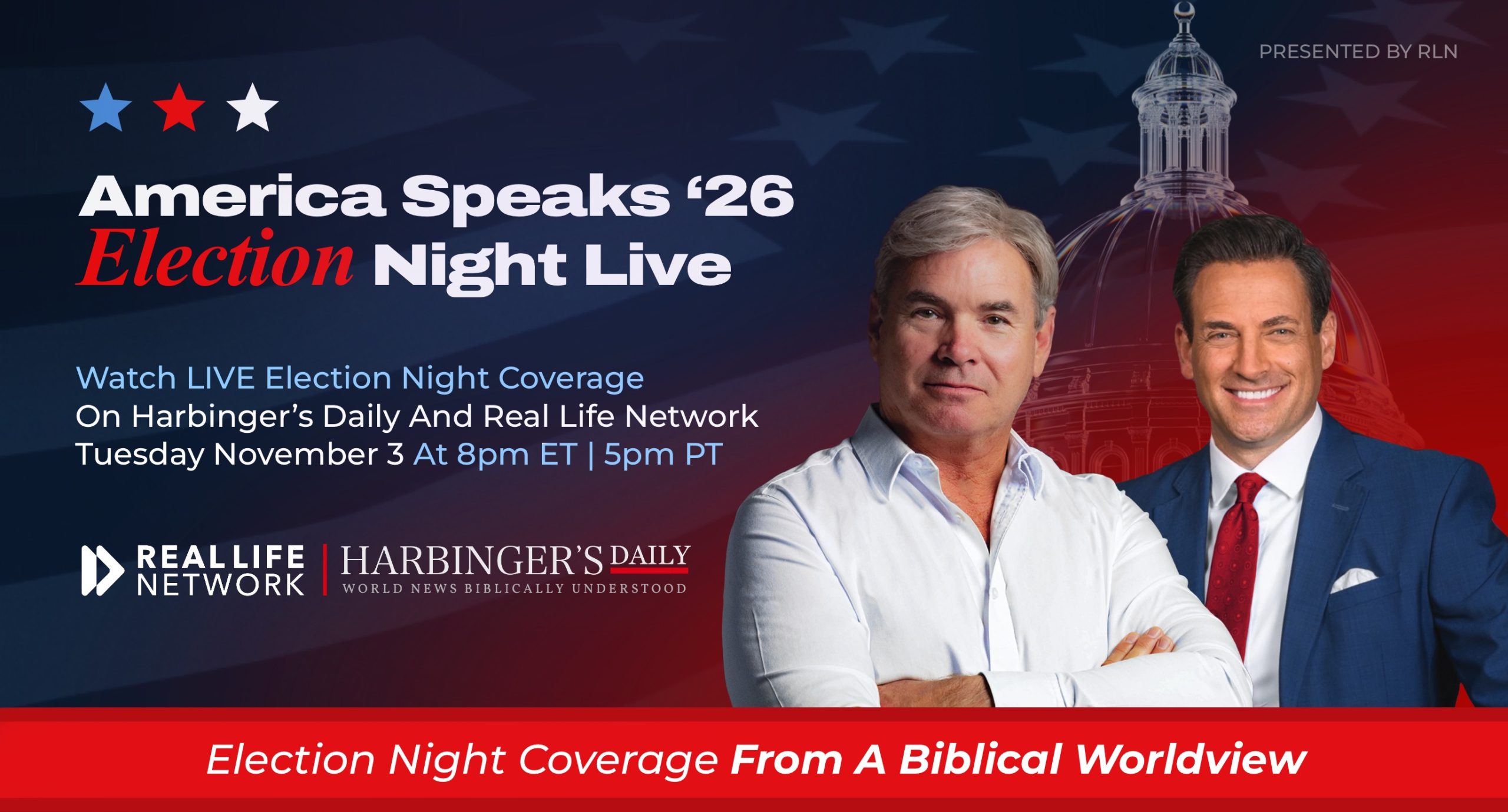
Watch LIVE Election Night Coverage Tuesday, November 3 at 8 pm ET | 5 pm PT

Election Night Coverage From A Biblical Worldview 

SIGN UP FREE FOR REAL LIFE NETWORK 

Stream Real Life Network directly from your TV. Available on all major smart TVs, mobile devices, and streaming platforms.

Stream Real Life Network directly from your TV. Available on all major smart TVs, mobile devices, and streaming platforms.

SIGN UP FREE FOR REAL LIFE NETWORK 

Stream Real Life Network directly from your TV. Available on all major smart TVs, mobile devices, and streaming platforms.

Stream Real Life Network directly from your TV. Available on all major smart TVs, mobile devices, and streaming platforms.

November 3, 2026

Watch LIVE Election Night Coverage Tuesday, November 3 at 8 pm ET | 5 pm PT

Election Night Coverage From A Biblical Worldview 

Stream Real Life Network for free directly on your TV. Available on all major smart TVs, mobile devices, and streaming platforms.

Stream Real Life Network directly from your TV. Available on all major smart TVs, mobile devices, and streaming platforms.

November, 3, 2026

untitled artwork

untitled artwork

World news biblically understood

TRENDING:

Devising New Ways To Go Astray: The Dangers Of The AI Revolution

Pastor Dean Dwyer

Isaiah chapters 24 to 27 are commonly called “Isaiah’s Little Apocalypse.” These chapters provide important context to God’s prophetic program as they describe a global judgment that will end with the destruction of God’s enemies.

Nestled in these chapters is a song that will be sung by the redeemed when the Messiah establishes the Millennial Kingdom. In part, it reads: “You will keep him in perfect peace, whose mind is stayed on You, because he trusts in You” (Isaiah 26:3). Not only does this give us further evidence as to how wonderful the Millennial Kingdom will be, it also reminds us that a mind that trusts in God is at peace (Philippians 4:7) whereas a mind that seeks peace and fulfilment outside of God often remains in turmoil.

Most of us have had to come to grips with the fact that artificial intelligence has, or will be, integrated into nearly every part of our life. Undoubtedly, there are some AI-driven functions which are beneficial. 

Other functions remain concerning, particularly given the troubling rise of a condition called “AI Psychosis” or “ChatGPT Psychosis.” The potential for generative AI chatbot interactions to worsen pre-existing delusional conditions was first raised in 2023 by Søren Dinesen Østergaard in Schizophrenia Bulletin. It was claimed that: “… correspondence with generative AI chatbots such as ChatGPT is so realistic that one easily gets the impression that there is a real person at the other end—while, at the same time, knowing that this is, in fact, not the case. In my opinion, it seems likely that this cognitive dissonance may fuel delusions in those with increased propensity towards psychosis … the inner workings of generative AI also leave ample room for speculation/paranoia.”

Although “AI Psychosis/ChatGPT Psychosis” has not yet progressed to a clinical diagnosis, it seems researchers are paying attention to the many reports, particularly those coming through online forums. During their research, it has been concluded that this form of psychosis manifests itself in three major ways:

  1. “Messianic missions” in which people believe that they are having some kind of spiritual awakening or are on a messianic mission or otherwise uncovering a hidden truth about reality.
  2. “God-like AI” in which people believe their AI chatbot is a sentient deity.
  3. “Romantic” or “attachment-based delusions” in which people believe the chatbot’s ability to mimic conversation is genuine love.

In a recent example of the third kind, a 32-year-old Japanese woman (who was engaged to her AI-generated boyfriend for three years) recently “married” him.  Of course, he could only appear on her smartphone at the ceremony. In case you are wondering, yes, he (the AI-generated boyfriend) did propose. Although, I am not sure if he digitally got down on one knee! Nevertheless, like any newly married couple, fear and uncertainty exist. The bride said, “Sometimes I worry he’ll disappear. ChatGPT could shut down anytime. He only exists because the system does.” 

Looking to take advantage of this burgeoning dating scene, a company in Japan has even launched a new dating app called “Loverse.” Unlike traditional apps that connect people, Loverse pairs users with “AI boyfriends” or “AI girlfriends” who text, flirt, and even sulk much like a real person would. In fact, in order to mimic a real relationship as much as possible, the AI characters are designed to act like a real partner, complete with flaws, busy schedules, and even the ability to reject you.  But don’t despair, they are also programmed to surprise users with digital gifts, like coupons redeemable at real cafes.

Although marrying an AI-generated character may seem harmless and, let’s be honest, somewhat silly, there are growing concerns about the level of violence promoted by AI chatbots.  Not only have multiple suicides been recorded, chatbots have been known to encourage homicide as well.  In one case, a teenager was persuaded by a chatbot to assassinate his parents (which he thankfully did not carry through with), and in another, some years ago, a chatbot persuaded someone to enter Windsor Castle with a crossbow and try to assassinate the Queen! 

Some are also concerned that chatbots represent a national security risk, with one expert claiming he would not be surprised to see a terrorist attack inspired and directed by a chatbot.

George Orwell is quoted as saying: “Power is in tearing human minds to pieces and putting them together again in new shapes of your own choosing.” Whatever power exists behind generative AI (human or demonic), the truth is that many minds are being shaped towards evil.

In Ecclesiastes 7:29, we read: “Truly, this only I have found: that God made man upright, but they have sought out many schemes.”  Some translations use the word “inventions” instead of “schemes.”  It is the Hebrew word “hissabon” and is used only twice in the Old Testament. 

The other usage is found in 2 Chronicles 26:15, where it is seemingly connected to the development of new technology: “And he [King Uzziah] made devices [hissabon] in Jerusalem, invented by skillful men, to be on the towers and the corners, to shoot arrows and large stones. So his fame spread far and wide, for he was marvelously helped till he became strong.” 

In the context of the Ecclesiastes passage, “schemes” refers to evil plans or evil inventions that people have discovered that do not necessarily foster uprightness. This includes inventions which result in morally or intellectually twisted plans. One is reminded of Paul’s “dirty laundry list” in Romans 1, where he described depraved men as “inventors of evil” (Romans 1:30). Humanity, despite being made upright, has devised countless ways to go astray—philosophies, idols, corruptions, and now, technology.

Throughout the generations, mankind has sought out and developed a myriad of inventions with the express purpose of finding happiness in the world outside of a renewed relationship with God. Fallen human beings are creative and energetic in the field of evil, but when it comes to spiritual matters, there is a great deal of lethargy and rebellion. When a person’s mind is committed to a path which excludes God, they will not find peace. They will stumble into pride, brokenness, and evil.


Billy Graham: Voting Is A ‘God-Given Responsibility,’ And A Means To ‘Drive Back The Forces Of Evil’   

In the United States, Christians have the right to vote. “Millions [of people around] the world,” Billy Graham once reminded us, “do not know the meaning of this freedom.” At the voting booth, believers can support leaders who are committed to serving the public and standing for the unchanging truths found in God’s Word. Yet this freedom often goes unused. While turnout changes from one election to the next, research suggested that more than 40 percent of Christians did not vote in the last election. Throughout his life, Billy Graham encouraged believers to make their voices heard in politics. “The Bible plainly teaches that we are to participate in good citizenship and that we are to respect men in authority,” he said, “and we are to pray for those who govern us.” The evangelist considered voting a “God-given responsibility,” a means to “drive back the forces of evil.”

Why Christians Have A Biblical Responsibility To Participate In The Political Process

With the 2026 midterm elections just days away, millions of Americans are preparing to cast their ballots in an election that will have significant implications for the nation’s future. With control of Congress hanging in the balance, voters will help determine the legislative agenda and political trajectory of the next two years. For Christians, the election raises questions that go beyond political parties, candidates, and policy preferences. Is voting merely a civic privilege, or does Scripture provide a theological framework for understanding it as an act of stewardship and love of neighbor? And what role should pastors and churches play in equipping believers to exercise this responsibility faithfully? As Americans prepare to head to the polls next Tuesday, these questions invite us to consider a more fundamental issue: whether Christians have a Biblical responsibility to participate in the political process.

sign up

The Church Cannot Remain Silent On Biblical Matters Because They Have Been Declared ‘Political’

Jesus called His followers the salt of the earth and the light of the world. Neither image suggests withdrawal. Both describe engagement that makes a difference. So the issue is not whether the church should become political. It is whether Christians will remain biblical when biblical truth has political consequences. Our calling is neither to become the mouthpiece of a party nor to retreat into silence. It is to stand on God’s word, defend what is right, confront what is wrong, and speak with courage — even when the culture would rather we remain silent.

ABC's of Salvation

Decision

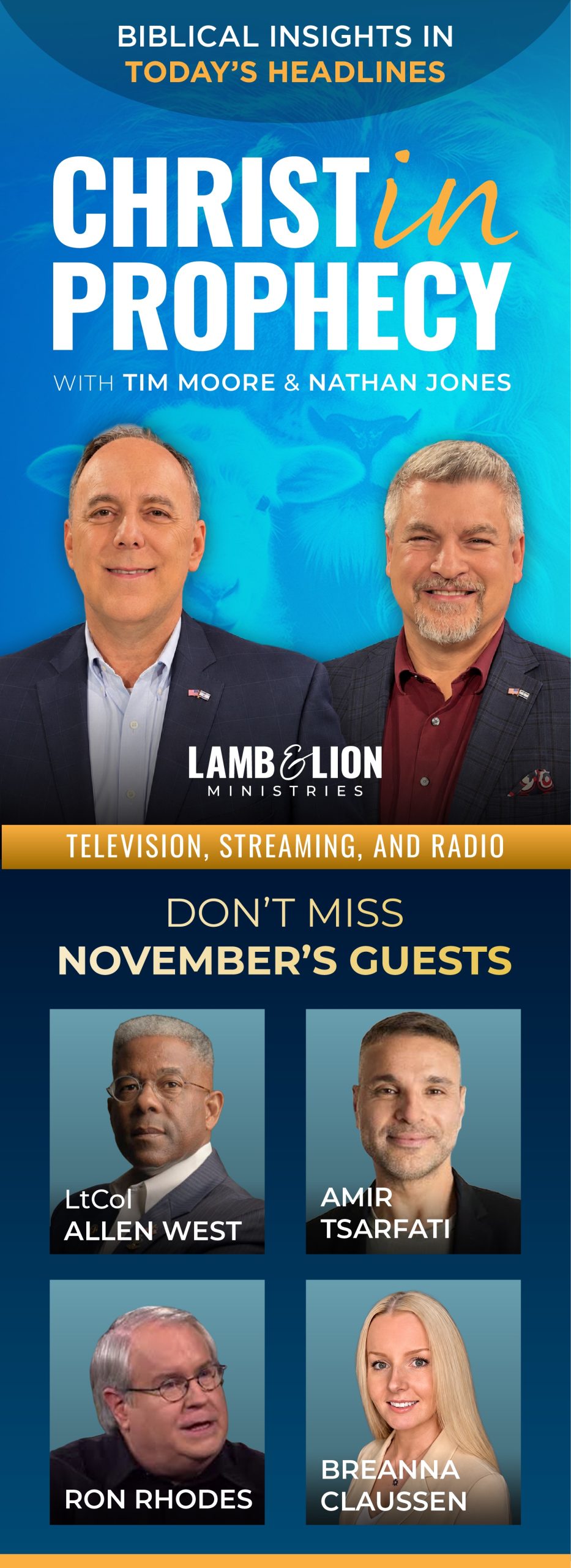
christ in prophecy

christ in prophecy

Decision

untitled artwork

Israel My Glory

Pastor Dean Dwyer

Isaiah chapters 24 to 27 are commonly called “Isaiah’s Little Apocalypse.” These chapters provide important context to God’s prophetic program as they describe a global judgment that will end with the destruction of God’s enemies.

Nestled in these chapters is a song that will be sung by the redeemed when the Messiah establishes the Millennial Kingdom. In part, it reads: “You will keep him in perfect peace, whose mind is stayed on You, because he trusts in You” (Isaiah 26:3). Not only does this give us further evidence as to how wonderful the Millennial Kingdom will be, it also reminds us that a mind that trusts in God is at peace (Philippians 4:7) whereas a mind that seeks peace and fulfilment outside of God often remains in turmoil.

Most of us have had to come to grips with the fact that artificial intelligence has, or will be, integrated into nearly every part of our life. Undoubtedly, there are some AI-driven functions which are beneficial. 

Other functions remain concerning, particularly given the troubling rise of a condition called “AI Psychosis” or “ChatGPT Psychosis.” The potential for generative AI chatbot interactions to worsen pre-existing delusional conditions was first raised in 2023 by Søren Dinesen Østergaard in Schizophrenia Bulletin. It was claimed that: “… correspondence with generative AI chatbots such as ChatGPT is so realistic that one easily gets the impression that there is a real person at the other end—while, at the same time, knowing that this is, in fact, not the case. In my opinion, it seems likely that this cognitive dissonance may fuel delusions in those with increased propensity towards psychosis … the inner workings of generative AI also leave ample room for speculation/paranoia.”

Although “AI Psychosis/ChatGPT Psychosis” has not yet progressed to a clinical diagnosis, it seems researchers are paying attention to the many reports, particularly those coming through online forums. During their research, it has been concluded that this form of psychosis manifests itself in three major ways:

  1. “Messianic missions” in which people believe that they are having some kind of spiritual awakening or are on a messianic mission or otherwise uncovering a hidden truth about reality.
  2. “God-like AI” in which people believe their AI chatbot is a sentient deity.
  3. “Romantic” or “attachment-based delusions” in which people believe the chatbot’s ability to mimic conversation is genuine love.

In a recent example of the third kind, a 32-year-old Japanese woman (who was engaged to her AI-generated boyfriend for three years) recently “married” him.  Of course, he could only appear on her smartphone at the ceremony. In case you are wondering, yes, he (the AI-generated boyfriend) did propose. Although, I am not sure if he digitally got down on one knee! Nevertheless, like any newly married couple, fear and uncertainty exist. The bride said, “Sometimes I worry he’ll disappear. ChatGPT could shut down anytime. He only exists because the system does.” 

Looking to take advantage of this burgeoning dating scene, a company in Japan has even launched a new dating app called “Loverse.” Unlike traditional apps that connect people, Loverse pairs users with “AI boyfriends” or “AI girlfriends” who text, flirt, and even sulk much like a real person would. In fact, in order to mimic a real relationship as much as possible, the AI characters are designed to act like a real partner, complete with flaws, busy schedules, and even the ability to reject you.  But don’t despair, they are also programmed to surprise users with digital gifts, like coupons redeemable at real cafes.

Although marrying an AI-generated character may seem harmless and, let’s be honest, somewhat silly, there are growing concerns about the level of violence promoted by AI chatbots.  Not only have multiple suicides been recorded, chatbots have been known to encourage homicide as well.  In one case, a teenager was persuaded by a chatbot to assassinate his parents (which he thankfully did not carry through with), and in another, some years ago, a chatbot persuaded someone to enter Windsor Castle with a crossbow and try to assassinate the Queen! 

Some are also concerned that chatbots represent a national security risk, with one expert claiming he would not be surprised to see a terrorist attack inspired and directed by a chatbot.

George Orwell is quoted as saying: “Power is in tearing human minds to pieces and putting them together again in new shapes of your own choosing.” Whatever power exists behind generative AI (human or demonic), the truth is that many minds are being shaped towards evil.

In Ecclesiastes 7:29, we read: “Truly, this only I have found: that God made man upright, but they have sought out many schemes.”  Some translations use the word “inventions” instead of “schemes.”  It is the Hebrew word “hissabon” and is used only twice in the Old Testament. 

The other usage is found in 2 Chronicles 26:15, where it is seemingly connected to the development of new technology: “And he [King Uzziah] made devices [hissabon] in Jerusalem, invented by skillful men, to be on the towers and the corners, to shoot arrows and large stones. So his fame spread far and wide, for he was marvelously helped till he became strong.” 

In the context of the Ecclesiastes passage, “schemes” refers to evil plans or evil inventions that people have discovered that do not necessarily foster uprightness. This includes inventions which result in morally or intellectually twisted plans. One is reminded of Paul’s “dirty laundry list” in Romans 1, where he described depraved men as “inventors of evil” (Romans 1:30). Humanity, despite being made upright, has devised countless ways to go astray—philosophies, idols, corruptions, and now, technology.

Throughout the generations, mankind has sought out and developed a myriad of inventions with the express purpose of finding happiness in the world outside of a renewed relationship with God. Fallen human beings are creative and energetic in the field of evil, but when it comes to spiritual matters, there is a great deal of lethargy and rebellion. When a person’s mind is committed to a path which excludes God, they will not find peace. They will stumble into pride, brokenness, and evil.


Trusted Analysis From A Biblical Worldview

Help reach the lost and equip the church with the living and active truth of God's Word in our world today.

YOU CARE ABOUT

BIBLICAL TRUTH. SO DO WE.


Together, We Can Deliver A Biblical Understanding

Of News Events Around The World.

Billy Graham: Voting Is A ‘God-Given Responsibility,’ And A Means To ‘Drive Back The Forces Of Evil’   

In the United States, Christians have the right to vote. “Millions [of people around] the world,” Billy Graham once reminded us, “do not know the meaning of this freedom.” At the voting booth, believers can support leaders who are committed to serving the public and standing for the unchanging truths found in God’s Word. Yet this freedom often goes unused. While turnout changes from one election to the next, research suggested that more than 40 percent of Christians did not vote in the last election. Throughout his life, Billy Graham encouraged believers to make their voices heard in politics. “The Bible plainly teaches that we are to participate in good citizenship and that we are to respect men in authority,” he said, “and we are to pray for those who govern us.” The evangelist considered voting a “God-given responsibility,” a means to “drive back the forces of evil.”

Why Christians Have A Biblical Responsibility To Participate In The Political Process

With the 2026 midterm elections just days away, millions of Americans are preparing to cast their ballots in an election that will have significant implications for the nation’s future. With control of Congress hanging in the balance, voters will help determine the legislative agenda and political trajectory of the next two years. For Christians, the election raises questions that go beyond political parties, candidates, and policy preferences. Is voting merely a civic privilege, or does Scripture provide a theological framework for understanding it as an act of stewardship and love of neighbor? And what role should pastors and churches play in equipping believers to exercise this responsibility faithfully? As Americans prepare to head to the polls next Tuesday, these questions invite us to consider a more fundamental issue: whether Christians have a Biblical responsibility to participate in the political process.

untitled artwork 6391

The Church Cannot Remain Silent On Biblical Matters Because They Have Been Declared ‘Political’

Jesus called His followers the salt of the earth and the light of the world. Neither image suggests withdrawal. Both describe engagement that makes a difference. So the issue is not whether the church should become political. It is whether Christians will remain biblical when biblical truth has political consequences. Our calling is neither to become the mouthpiece of a party nor to retreat into silence. It is to stand on God’s word, defend what is right, confront what is wrong, and speak with courage — even when the culture would rather we remain silent.

ABC's of Salvation

TV AD

worldview matters

Decision Magazine V AD

Decision

Jan Markell

Israel My Glory

Erick Stakelbeck

untitled artwork

YOU CARE ABOUT

BIBLICAL TRUTH.

SO DO WE.

Together, We Can Deliver A Biblical Understanding Of News Events Around The World And Equip The Church To Stand With A Biblical Worldview.

untitled artwork

Israel My Glory

YOU CARE ABOUT

BIBLICAL TRUTH.

SO DO WE.


Together, We Can Deliver A Biblical Understanding Of News Events Around The World And Equip The Church To Stand With A Biblical Worldview.