





November 3, 2026

November, 3, 2026
November 3, 2026

give

untitled artwork

untitled artwork

World news biblically understood

TRENDING:

Despite Heightened Persecution, Christianity Continues To Grow, Even In The Most Hostile Nations

Even as roughly 380 million believers face persecution every year, Christianity continues to grow—even in the most hostile nations where faithfulness commonly means imprisonment, torture or death.

International Christian Concern’s (ICC) recently released 2026 Global Persecution Index began with an urgent call: “Our brothers and sisters in Christ are beaten, imprisoned and even killed for their faith. In many countries, it is illegal for them to share the Gospel. We must stand with them.” Each new page of the report paints a sobering yet hopeful picture of global religious freedom facing rapidly growing persecution.

Among the most alarming trends:

  • Growing “religious nationalism” that snuffs out religious freedom.
  • “Transnational repression,” where governments hunt religious minorities and dissidents beyond their borders.
  • Tightening state control over religious organizations.
  • Rising terrorism and authoritarianism fueling violence and oppression.
  • Foreign regimes leveraging Western technology to supercharge persecution.

Yet amid the darkness, hope persists. Despite relentless repression, Christianity remains and is even expanding in surprising places like Iran and Asia. Believers are refusing to stay silent.

“While authoritarianism remains entrenched, it faces growing resistance,” the report notes, adding, “Turkey’s opposition movements have defied crackdowns to organize mass demonstrations demanding free elections and the restoration of civil liberties. And in Iran, the courage of women and community leaders has fueled ongoing protests that expose the regime’s moral and political fragility.”

The 124-page report tracks developments in 22 countries, 13 of which carry the U.S. State Department’s “Country of Particular Concern” designation, indicating “systematic, ongoing and egregious violations of religious freedom.”

In South Asia, militant Hindu groups are increasingly targeting Christians, while local governments in some regions have enacted anti-conversion laws that “criminalize basic religious expression.” In Myanmar, Buddhist nationalism is routinely invoked to justify razing entire Christian villages.

In Turkey and certain communist regimes, “transnational repression” is employed using global intelligence networks to surveil, intimidate and even kidnap exiled critics and religious minorities. Communist agents, in particular, pressure foreign governments to repatriate asylum seekers and harass diaspora communities across Asia, Africa and the West.

Regimes seeking total dominance now dictate clerical appointments, online sermons and even the architecture of church buildings. 

Islamist terrorism continues to claim lives in devastating numbers. In parts of Africa, jihadists routinely massacre dozens of Christians at a time. Worldwide, “thousands of Christians have been killed or displaced in attacks designed to eradicate the Christian presence from contested territories,” the report stated.

Authoritarianism, meanwhile, crushes any hint of dissent. In Iran, “the morality police have returned to the streets, enforcing harsh religious codes with impunity” against those who deviate from the regime’s strict Islamist ideology.

The pressure isn’t limited to distant lands. ICC noted that “while Christians in Western nations don’t experience the same horrific persecution that believers in other hot spots face, religious freedom in corners of the West is eroding.” (Read about rising anti-Christian hate crimes across Europe).

Restrictions on women across the globe are also intensifying. “In countless communities around the world, women in disfavored religious groups face especially severe restrictions on their rights and freedoms,” the report emphasized—nowhere more starkly than in Afghanistan, where women “remain almost entirely excluded from public life under Taliban rule.”

ICC President Shawn Wright underscored the Biblical reality: “Scripture reminds us that persecution is not an anomaly but an expectation for those who follow Christ. … As we look across the global landscape, these pressures are not diminishing—they are intensifying.”

“As a ministry,” he added, “we are deeply concerned about the growth and spread of radical Islam and other hostile ideologies that seek to suppress or eradicate the Christian witness. We recognize that evil forces are actively working to oppose the church and hinder the advance of the Gospel.”

The trends of intimidation, displacement and violence “are not abstract. They represent real men, women and children who suffer for the Name of Christ. Scripture calls us to ‘remember the prisoners, as though in prison with them.’”

Nadine Maenza, co-chair of the International Religious Freedom roundtable, echoed that call to action: “Our prayers, advocacy and support are ultimately offered unto Christ Himself, who reminds us in Matthew 25:40: ‘Inasmuch as ye have done it unto one of the least of these my brethren, ye have done it unto me.’”

She concluded that “working together to strengthen religious freedom conditions—both in these countries and globally—is urgent.”

Bible passages to ponder amid rising persecution: John 16:33, Matthew 5:10–12, John 15:18-25, Romans 8:18, Revelation 2:10–11

Why Christians Have A Biblical Responsibility To Participate In The Political Process

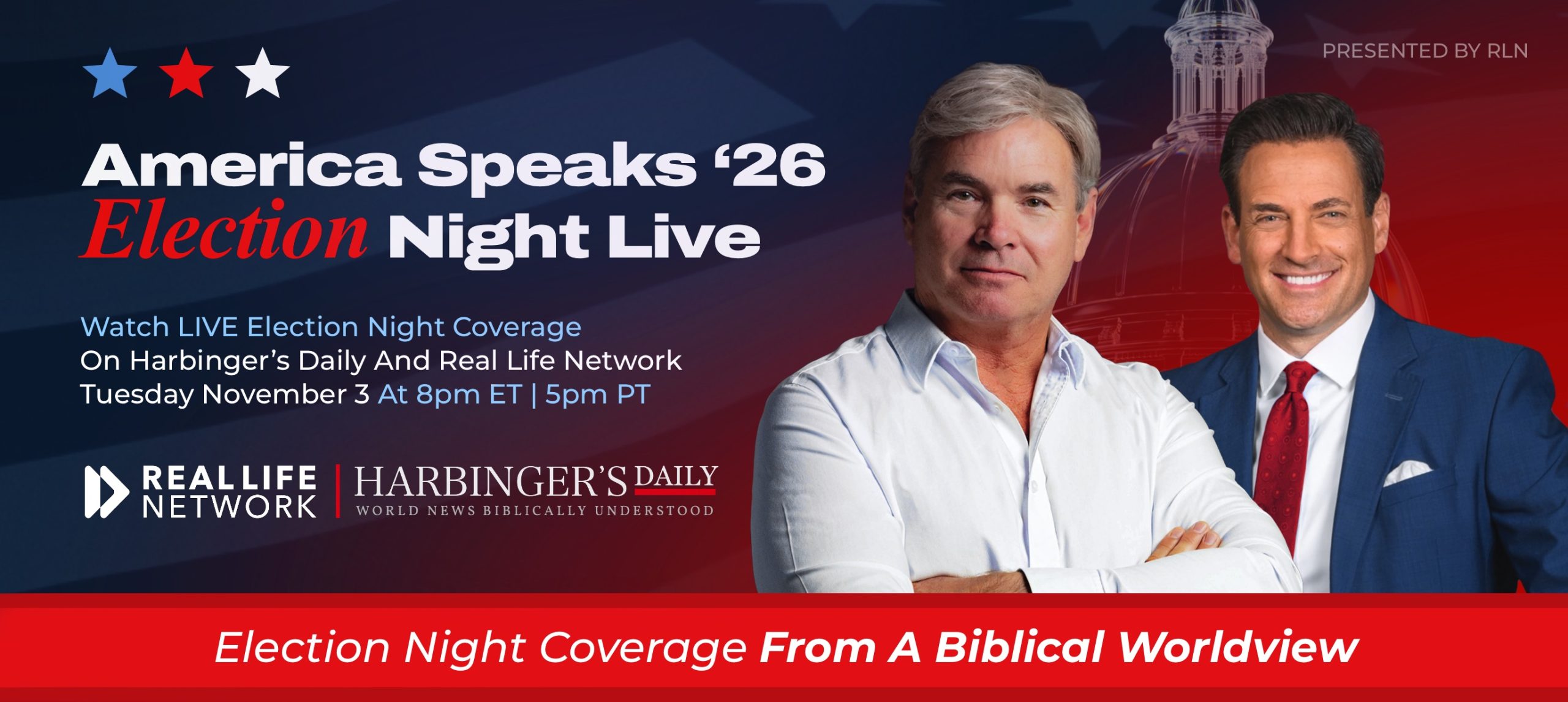
With the 2026 midterm elections just days away, millions of Americans are preparing to cast their ballots in an election that will have significant implications for the nation’s future. With control of Congress hanging in the balance, voters will help determine the legislative agenda and political trajectory of the next two years. For Christians, the election raises questions that go beyond political parties, candidates, and policy preferences. Is voting merely a civic privilege, or does Scripture provide a theological framework for understanding it as an act of stewardship and love of neighbor? And what role should pastors and churches play in equipping believers to exercise this responsibility faithfully? As Americans prepare to head to the polls next Tuesday, these questions invite us to consider a more fundamental issue: whether Christians have a Biblical responsibility to participate in the political process.

A Barbaric Death Penalty: Politicians, Doctors, The Abortion Industry, And The Media Have Lied To Mothers

Sadly, the abortion industry continues to either deny the level of pain inflicted upon the preborn or bury the evidence by introducing “expert” reports that contain deliberately vague language which seeks to assure mothers that abortion does not cross any moral barriers. Although a consensus on the impact of pain on the preborn would be a positive step in educating the public, the reality is that pain tolerance does not excuse the injustice perpetrated in abortion clinics.

sign up

The Church Cannot Remain Silent On Biblical Matters Because They Have Been Declared ‘Political’

Jesus called His followers the salt of the earth and the light of the world. Neither image suggests withdrawal. Both describe engagement that makes a difference. So the issue is not whether the church should become political. It is whether Christians will remain biblical when biblical truth has political consequences. Our calling is neither to become the mouthpiece of a party nor to retreat into silence. It is to stand on God’s word, defend what is right, confront what is wrong, and speak with courage — even when the culture would rather we remain silent.

ABC's of Salvation

Decision

christ in prophecy

christ in prophecy

Decision

untitled artwork

Israel My Glory

Even as roughly 380 million believers face persecution every year, Christianity continues to grow—even in the most hostile nations where faithfulness commonly means imprisonment, torture or death.

International Christian Concern’s (ICC) recently released 2026 Global Persecution Index began with an urgent call: “Our brothers and sisters in Christ are beaten, imprisoned and even killed for their faith. In many countries, it is illegal for them to share the Gospel. We must stand with them.” Each new page of the report paints a sobering yet hopeful picture of global religious freedom facing rapidly growing persecution.

Among the most alarming trends:

  • Growing “religious nationalism” that snuffs out religious freedom.
  • “Transnational repression,” where governments hunt religious minorities and dissidents beyond their borders.
  • Tightening state control over religious organizations.
  • Rising terrorism and authoritarianism fueling violence and oppression.
  • Foreign regimes leveraging Western technology to supercharge persecution.

Yet amid the darkness, hope persists. Despite relentless repression, Christianity remains and is even expanding in surprising places like Iran and Asia. Believers are refusing to stay silent.

“While authoritarianism remains entrenched, it faces growing resistance,” the report notes, adding, “Turkey’s opposition movements have defied crackdowns to organize mass demonstrations demanding free elections and the restoration of civil liberties. And in Iran, the courage of women and community leaders has fueled ongoing protests that expose the regime’s moral and political fragility.”

The 124-page report tracks developments in 22 countries, 13 of which carry the U.S. State Department’s “Country of Particular Concern” designation, indicating “systematic, ongoing and egregious violations of religious freedom.”

In South Asia, militant Hindu groups are increasingly targeting Christians, while local governments in some regions have enacted anti-conversion laws that “criminalize basic religious expression.” In Myanmar, Buddhist nationalism is routinely invoked to justify razing entire Christian villages.

In Turkey and certain communist regimes, “transnational repression” is employed using global intelligence networks to surveil, intimidate and even kidnap exiled critics and religious minorities. Communist agents, in particular, pressure foreign governments to repatriate asylum seekers and harass diaspora communities across Asia, Africa and the West.

Regimes seeking total dominance now dictate clerical appointments, online sermons and even the architecture of church buildings. 

Islamist terrorism continues to claim lives in devastating numbers. In parts of Africa, jihadists routinely massacre dozens of Christians at a time. Worldwide, “thousands of Christians have been killed or displaced in attacks designed to eradicate the Christian presence from contested territories,” the report stated.

Authoritarianism, meanwhile, crushes any hint of dissent. In Iran, “the morality police have returned to the streets, enforcing harsh religious codes with impunity” against those who deviate from the regime’s strict Islamist ideology.

The pressure isn’t limited to distant lands. ICC noted that “while Christians in Western nations don’t experience the same horrific persecution that believers in other hot spots face, religious freedom in corners of the West is eroding.” (Read about rising anti-Christian hate crimes across Europe).

Restrictions on women across the globe are also intensifying. “In countless communities around the world, women in disfavored religious groups face especially severe restrictions on their rights and freedoms,” the report emphasized—nowhere more starkly than in Afghanistan, where women “remain almost entirely excluded from public life under Taliban rule.”

ICC President Shawn Wright underscored the Biblical reality: “Scripture reminds us that persecution is not an anomaly but an expectation for those who follow Christ. … As we look across the global landscape, these pressures are not diminishing—they are intensifying.”

“As a ministry,” he added, “we are deeply concerned about the growth and spread of radical Islam and other hostile ideologies that seek to suppress or eradicate the Christian witness. We recognize that evil forces are actively working to oppose the church and hinder the advance of the Gospel.”

The trends of intimidation, displacement and violence “are not abstract. They represent real men, women and children who suffer for the Name of Christ. Scripture calls us to ‘remember the prisoners, as though in prison with them.’”

Nadine Maenza, co-chair of the International Religious Freedom roundtable, echoed that call to action: “Our prayers, advocacy and support are ultimately offered unto Christ Himself, who reminds us in Matthew 25:40: ‘Inasmuch as ye have done it unto one of the least of these my brethren, ye have done it unto me.’”

She concluded that “working together to strengthen religious freedom conditions—both in these countries and globally—is urgent.”

Bible passages to ponder amid rising persecution: John 16:33, Matthew 5:10–12, John 15:18-25, Romans 8:18, Revelation 2:10–11


Trusted Analysis From A Biblical Worldview

Help reach the lost and equip the church with the living and active truth of God's Word in our world today.

YOU CARE ABOUT

BIBLICAL TRUTH. SO DO WE.


Together, We Can Deliver A Biblical Understanding

Of News Events Around The World.

Why Christians Have A Biblical Responsibility To Participate In The Political Process

With the 2026 midterm elections just days away, millions of Americans are preparing to cast their ballots in an election that will have significant implications for the nation’s future. With control of Congress hanging in the balance, voters will help determine the legislative agenda and political trajectory of the next two years. For Christians, the election raises questions that go beyond political parties, candidates, and policy preferences. Is voting merely a civic privilege, or does Scripture provide a theological framework for understanding it as an act of stewardship and love of neighbor? And what role should pastors and churches play in equipping believers to exercise this responsibility faithfully? As Americans prepare to head to the polls next Tuesday, these questions invite us to consider a more fundamental issue: whether Christians have a Biblical responsibility to participate in the political process.

A Barbaric Death Penalty: Politicians, Doctors, The Abortion Industry, And The Media Have Lied To Mothers

Sadly, the abortion industry continues to either deny the level of pain inflicted upon the preborn or bury the evidence by introducing “expert” reports that contain deliberately vague language which seeks to assure mothers that abortion does not cross any moral barriers. Although a consensus on the impact of pain on the preborn would be a positive step in educating the public, the reality is that pain tolerance does not excuse the injustice perpetrated in abortion clinics.

untitled artwork 6391

The Church Cannot Remain Silent On Biblical Matters Because They Have Been Declared ‘Political’

Jesus called His followers the salt of the earth and the light of the world. Neither image suggests withdrawal. Both describe engagement that makes a difference. So the issue is not whether the church should become political. It is whether Christians will remain biblical when biblical truth has political consequences. Our calling is neither to become the mouthpiece of a party nor to retreat into silence. It is to stand on God’s word, defend what is right, confront what is wrong, and speak with courage — even when the culture would rather we remain silent.

ABC's of Salvation

TV AD

worldview matters

Decision Magazine V AD

Decision

Jan Markell

Israel My Glory

Erick Stakelbeck

untitled artwork

YOU CARE ABOUT

BIBLICAL TRUTH.

SO DO WE.

Together, We Can Deliver A Biblical Understanding Of News Events Around The World And Equip The Church To Stand With A Biblical Worldview.

untitled artwork

Israel My Glory

YOU CARE ABOUT

BIBLICAL TRUTH.

SO DO WE.


Together, We Can Deliver A Biblical Understanding Of News Events Around The World And Equip The Church To Stand With A Biblical Worldview.