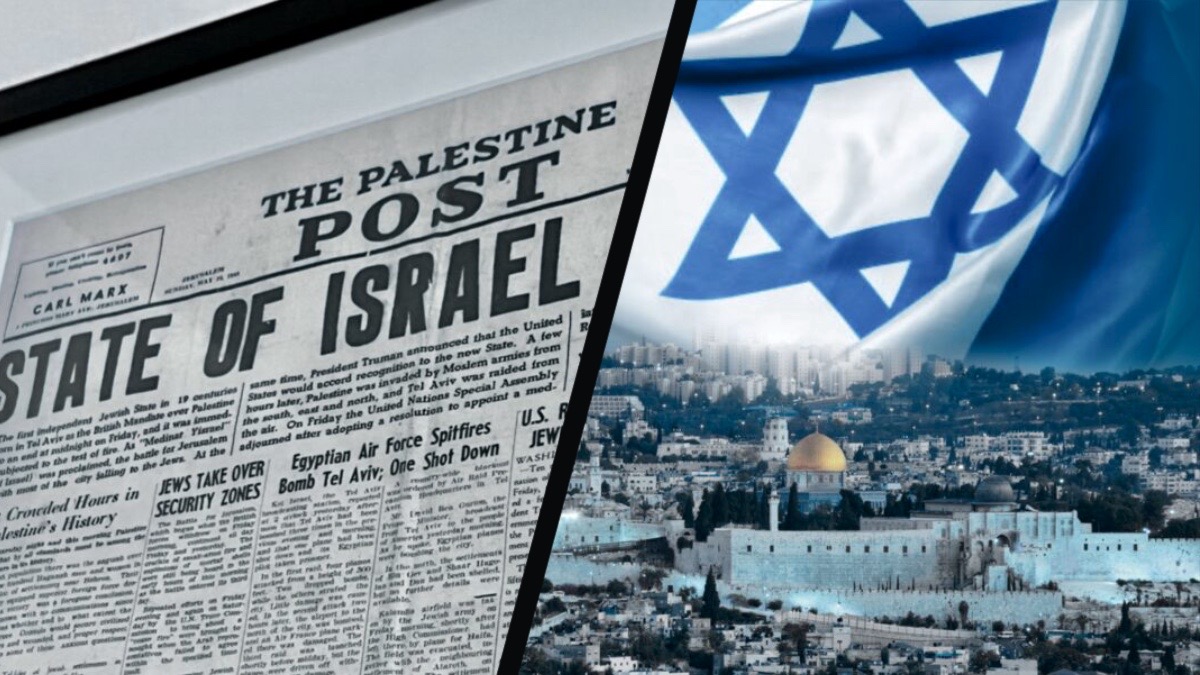

No matter what we think, say, or do, history will happen. History should be nothing more than current events, organized, documented, and carefully archived for later retrieval and analysis by subsequent generations. When we think of historical data, we often quickly refer to the reputable Encyclopedia Britannica.
They published their first edition in 1768, eight years before the American Declaration of Independence (1776). That body of work has had a solid reputation for over 250 years. In a world where most people depend on Wikipedia, the Britannica is still comprehensive, authoritative, and unbiased. Or is it?
There is a department of Encyclopedia Britannica that is tailored for kids and young students. The data seems to be catering to a younger audience, using terminology that is easier to understand. That is a very good approach to educate a younger audience and to give them a greater desire to learn. That is, of course, if the data provided is unbiased. Unfortunately, it looks like Britannica Kids has become a propaganda machine for the Palestinian narrative.
A simple search on the word Palestine will yield some definitions that are dogmatically asserting lies as factual:
“Palestine is a region in the Middle East. It lies between the Jordan River and the Mediterranean Sea. Many different peoples have lived in Palestine over thousands of years. In 1948 most of Palestine became part of the country of Israel. Since then, the region has experienced bitter fighting between Palestinian Arabs, who are mostly Muslims, and Israelis, who are mostly Jews…”
When stating that Palestine lies between the Jordan River and the Mediterranean Sea, it is assumed that the name of that sliver of land in the Middle East is “Palestine,” not Israel. No explanation added!
Speaking of “Palestinian Arabs” and “Israelis” requires a one-sided agenda with flavors of “colonization” and “occupation.” There was a time (from AD 135 – 1948) when the country was described as Palestine and the inhabitants were either Palestinian Arabs or Palestinian Jews. This was a result of the Second Jewish revolt against the Romans.
Emperor Hadrian changed the name Jerusalem to Aelia Capitolina and Israel to Palestina to humiliate the Jewish people and de-Judaize the region. As much as I dislike the word “Palestine,” especially since it picked up a politically charged meaning, I agree that from 135-1948, as it simply described a piece of land in the Middle East, it was not ideal, but acceptable. This is not the way Britannica Kids (BK) is currently presenting it. No explanation added!
Palestine is sometimes called the Holy Land….Palestine is important to Jews because the ancient kingdom of Israel was located there. Jews believe that God promised the land to them. Palestine is important to Christians because Jesus lived and worked there. Palestine also has several sites that are holy to Muslims.
It gets worse. Pay attention. When they state that “Palestine is important to Jews because the ancient kingdom of Israel was located there,” they assume that the biblical kingdom of Israel settled in the land of Palestine. Was it called Palestine before it was called the Kingdom of Israel? NO! In fact, it was never called Palestine. This is not a difference of opinion; it is a lie.
The Kingdom of Israel (in the North) became such after the death of King Solomon between 926 BC – 922 BC. Before that time, it was a united Kingdom, but it then became Israel in the North and Judah in the South. No mention of “Palestine” anywhere, anytime…EVER!
BK wants the young audience to believe that the kingdom of Israel settled in Palestine. No explanation added! Yet, it is still better than Wikipedia, which simply says that the Kingdom of Israel “was an Israelite Kingdom that may have existed in the Southern Levant.”
Then, to add historical insult to biblical injury, the young audience is led to believe that Jesus lived in Palestine, as they write, “During the time that Jesus lived, Palestine was part of the Roman Empire.” This has led some people to even say that Jesus was a Palestinian. This is known as Christian Palestinianism. The Second Jewish Revolt took place about one hundred years after Jesus was crucified and rose again for the sins of the world. Jesus didn’t live in Palestine; He lived in the land of Eretz Yisrael. They even create maps to back up their propaganda, including a simplified map of the Middle East with ONLY PALESTINE instead of Israel, and a map of ancient Egypt going back to about 1400 BC that includes “Palestine.”
But enough about Palestine and Israel. Let’s look at the word “Terrorism” and see how quickly Hamas, Hezbollah, or ISIS are mentioned. How about never once in the entire article? To be sure, many groups and countries are mentioned that have committed acts of terror, such as the Italian Red Brigades (1970s), the Peruvian Shining Path (1980s and 90s), the Basques between Spain and France (1960s-2018), the Ku Klux Klan, Stalin, and even Saddam Hussein. These were all mentioned by name. They also mentioned Al-Qaeda’s involvement in the 9-11 attack, but no Hamas, Hezbollah, or ISIS.
Regarding the Middle East, the most you will get is this vague and plain sentence:” Several Palestinian groups want to start a Palestinian state in the Middle East and to weaken or destroy Israel.” If this is not a case of whitewashing, I don’t know what is?
Regarding Hamas, very little can be found, and it certainly sounds like they are defending themselves against Israel and not the other way around, which is the truth. BK claims that, “Hamas took control of the Gaza Strip in 2007. (Fatah remained in control of the other Palestinian territory, the West Bank.) Israel launched attacks on the Gaza Strip, and Hamas’s forces attacked Israel. In 2011, Fatah and Hamas agreed to work together again.”
This is a far cry from describing Hamas as the bloodthirsty terrorist organization that it continues to be.
At this point, it is very hard to believe that these entries are based on mistakes or faulty research. They belong to a category that we could label willful disinformation. Willful disinformation is what fuels propaganda, and propaganda is what molds and shapes a generation into following a specific ideology and agenda. Our children and young adults are being misguided into believing in a fabricated history that has nothing to do with facts. This makes it very difficult to have an intelligent, let alone civil, dialogue about anything that might be controversial. Can this be fixed?
At the risk of sounding a bit old-fashioned, we need to go back to the Bible. We often speak of Judeo/Christian values or ethics to explain what the foundation of Western Civilization is all about, and rightfully so. Judeo/Christian ethics are taken straight from the Bible.
Concepts like good versus evil, morality, truth, and other virtues can and should only be taught from the biblical record. The challenge is that more and more people do not hold the Bible as the inerrant final authority. People will go as far as claiming that the Bible contains some truth, but will seldom agree that the Bible is The Truth, without error (in the original manuscripts). The Bible will tell us all we need to know about man, God, Israel, salvation, damnation, and eternity.
When we hold the Bible as the final authority, we learn the truth about all things, including Israel and the Jewish people. When people compare that truth to the propaganda found online almost everywhere, they will find out that they have been misled and are being used by God’s enemy (Satan) to fulfill his agenda of demonization, delegitimization, and double-standard against Israel.
We are entering the era of AI, when a truthful printed book on any topic is soon to become a rare commodity. We might have already moved from Encyclopedia Britannica to Encyclopedia Propaganda. Let’s all make sure that we have a printed Bible or two in our possession before the Word of God becomes the altered words of AI gods.