
October 28, 2026

October, 28, 2026
October 28, 2026

give

untitled artwork

untitled artwork

World news biblically understood

TRENDING:

Promises To Cripple The Demonic Regime In Iran Are Politically Damaging If The Administration Doesn’t Follow Through

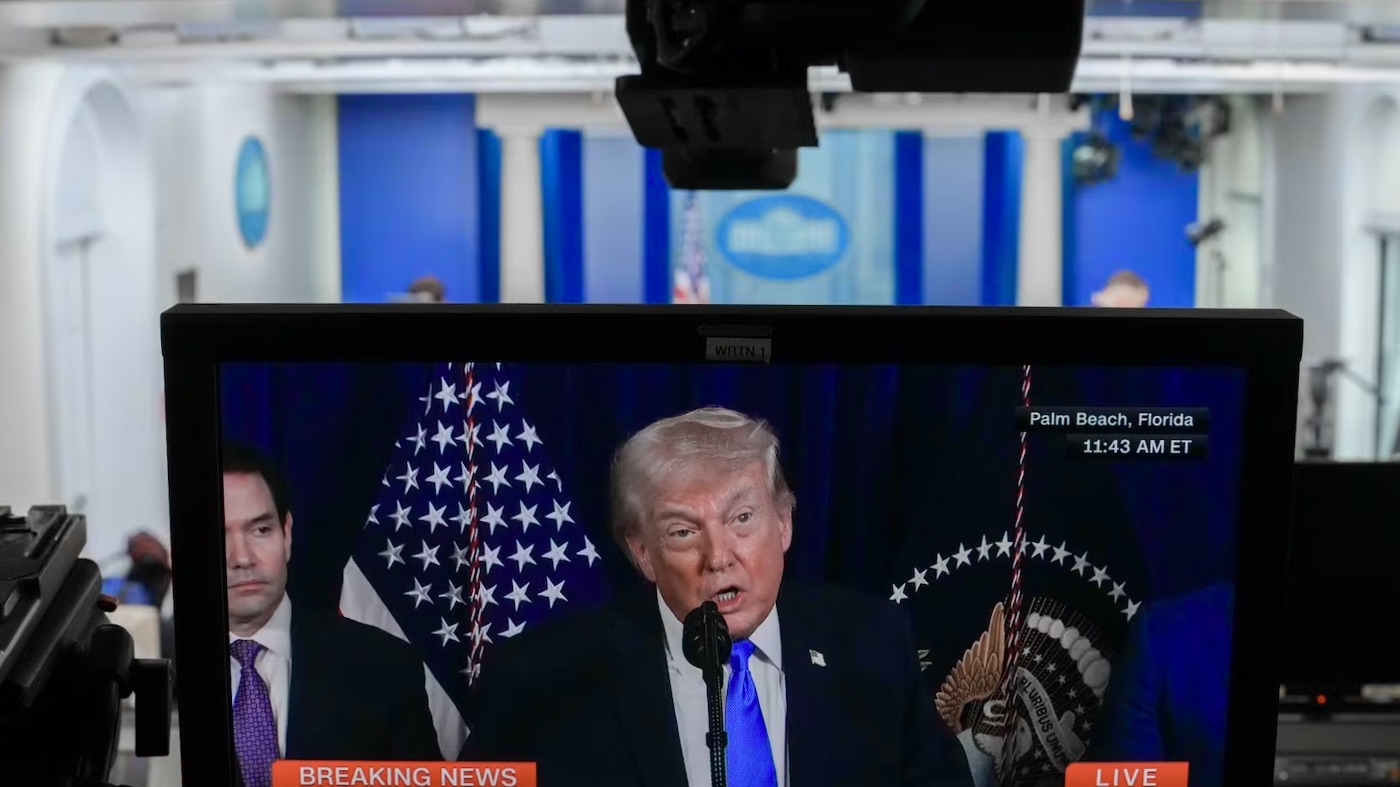
The 60-day negotiating period established by the Memorandum of Understanding between the United States and Iran expired this week without a final agreement. What does that mean from a national security standpoint, and what are the domestic political implications?

From a national security perspective, the Iranian regime has been significantly degraded, but, as evidenced by the continuing crisis in the Strait of Hormuz, it has not been neutralized. And until proven otherwise, its nuclear ambitions remain a threat.

Public polling consistently shows that while Americans care about foreign policy, they rarely vote primarily on foreign-policy issues. Instead, they tend to evaluate events abroad by their impact on America’s security and prosperity at home. The economy, inflation, immigration, and other domestic concerns remain the dominant drivers of voting behavior.

In other words, foreign policy becomes domestic policy when Americans begin paying the price for it.

That may help explain President Trump’s job approval, now at the lowest level of his presidency. Rising inflation and energy costs certainly matter, but I suggest there is something else in the equation: Americans are losing confidence that the conflict with Iran is moving toward a successful conclusion.

In their influential book, “Paying the Human Costs of War,” Christopher Gelpi, Peter Feaver, and Jason Reifler argue that one of the most important factors shaping public support for military conflict is the expectation of success. If Americans believe a conflict will achieve its objectives, they can tolerate substantial costs. When they conclude the mission is unlikely to succeed, support erodes, even when the costs are comparatively low.

That is the danger facing the administration.

Americans can accept sacrifice when they understand the objective and see measurable progress toward it. What is much harder to sustain is sacrifice without a clear sense of when, or how, the conflict will end. Prolonged uncertainty begins to look less like strategy and more like stalemate.

Repeated promises to cripple the “Death to America, Death to Israel” regime, only to follow those threats with renewed invitations to the negotiating table, appear neither to have deterred Tehran nor convinced Americans that success is approaching.

President Trump now faces a choice. He can allow this cycle of confrontation, negotiation, and escalation to continue, or bring the conflict to a decisive conclusion.

The Iranian regime and its demonic malignant ideology have repeatedly demonstrated their resistance to diplomacy as well as political and economic pressure. If the objectives, as initially stated, are to permanently end Iran’s pursuit of nuclear capability and remove the threat the regime poses to its own people, the region, and ultimately the United States, then the administration must pursue a policy capable of achieving those objectives while recognizing the political limits of a protracted conflict.

An unresolved conflict carries consequences far beyond the Middle East. Every disruption in the Strait of Hormuz, every increase at the gas pump, and every new round of fighting brings a distant conflict closer to the American kitchen table.

And that is where foreign policy becomes domestic politics.

American elections are usually decided by what happens at home. But history often pivots on events beyond our borders, and sometimes those events determine what happens at home.



The Original Marxist-Islamist Test: The Ideological Engine Behind The Iranian Revolution Is Setting Europe On Fire

Although the name Ali Shariati would not be familiar to most people, he was in many ways the ideological architect of the 1979 Islamic revolution in Iran. Shariati was born in Iran but studied in Paris during the 1960s. It was during this time in a Western institution that Shariati developed a new theoretical approach to the combination of Marxism, existentialism (the philosophical belief we are each responsible for creating purpose or meaning in our own lives) and Islam. Though he did not live to see the 1979 Revolution (he died in 1977), his writings mobilized a generation of revolutionaries.

In The Last Days, Moral Depravity Will Become A Human Right

Our world has become the opposite of what it used to be. The moral and character flaws that are listed in Romans 1:28-32 have always been part of life in a fallen world, but there has long been a clearly defined line between good and evil. Even during the periods of history when evil seemed to be dominant and tyrants were brutal in their rule, people knew the difference between right and wrong, and good and evil. Good was still good, and evil was still evil. Yet Paul says in Romans 1 that when a nation (or the world) rejects God’s existence and authority, a moral perversion will spread and lead to a time when the moral and character flaws in Romans 1:28-32 will become dominant.

sign up

Franklin Graham: Jesus Is Coming Back… And It’s Not Going To Be Far Down The Road 

During a lengthy sit-down interview with Fox News Sean Hannity, evangelist Franklin Graham boldly detailed to a largely secular podcast audience the list of extraordinary evidence showcasing that our world is living in the season of Jesus’ return. “Jesus is coming back,” Graham declared. “He is going to come back, and He is going to establish His throne here. There's gonna be a new Jerusalem. He is coming down, and He is going to reign. That is going to take place. When that's gonna take place, I don't know… but it's not gonna be that far down the road. Jesus told us to look for signs. In Matthew chapter 24, He gives us great examples of what's coming and what we ought to be looking for. If you look today, [you can see] the signs.”

ABC's of Salvation

Decision

christ in prophecy

christ in prophecy

Decision

untitled artwork

Israel My Glory

The 60-day negotiating period established by the Memorandum of Understanding between the United States and Iran expired this week without a final agreement. What does that mean from a national security standpoint, and what are the domestic political implications?

From a national security perspective, the Iranian regime has been significantly degraded, but, as evidenced by the continuing crisis in the Strait of Hormuz, it has not been neutralized. And until proven otherwise, its nuclear ambitions remain a threat.

Public polling consistently shows that while Americans care about foreign policy, they rarely vote primarily on foreign-policy issues. Instead, they tend to evaluate events abroad by their impact on America’s security and prosperity at home. The economy, inflation, immigration, and other domestic concerns remain the dominant drivers of voting behavior.

In other words, foreign policy becomes domestic policy when Americans begin paying the price for it.

That may help explain President Trump’s job approval, now at the lowest level of his presidency. Rising inflation and energy costs certainly matter, but I suggest there is something else in the equation: Americans are losing confidence that the conflict with Iran is moving toward a successful conclusion.

In their influential book, “Paying the Human Costs of War,” Christopher Gelpi, Peter Feaver, and Jason Reifler argue that one of the most important factors shaping public support for military conflict is the expectation of success. If Americans believe a conflict will achieve its objectives, they can tolerate substantial costs. When they conclude the mission is unlikely to succeed, support erodes, even when the costs are comparatively low.

That is the danger facing the administration.

Americans can accept sacrifice when they understand the objective and see measurable progress toward it. What is much harder to sustain is sacrifice without a clear sense of when, or how, the conflict will end. Prolonged uncertainty begins to look less like strategy and more like stalemate.

Repeated promises to cripple the “Death to America, Death to Israel” regime, only to follow those threats with renewed invitations to the negotiating table, appear neither to have deterred Tehran nor convinced Americans that success is approaching.

President Trump now faces a choice. He can allow this cycle of confrontation, negotiation, and escalation to continue, or bring the conflict to a decisive conclusion.

The Iranian regime and its demonic malignant ideology have repeatedly demonstrated their resistance to diplomacy as well as political and economic pressure. If the objectives, as initially stated, are to permanently end Iran’s pursuit of nuclear capability and remove the threat the regime poses to its own people, the region, and ultimately the United States, then the administration must pursue a policy capable of achieving those objectives while recognizing the political limits of a protracted conflict.

An unresolved conflict carries consequences far beyond the Middle East. Every disruption in the Strait of Hormuz, every increase at the gas pump, and every new round of fighting brings a distant conflict closer to the American kitchen table.

And that is where foreign policy becomes domestic politics.

American elections are usually decided by what happens at home. But history often pivots on events beyond our borders, and sometimes those events determine what happens at home.

Trusted Analysis From A Biblical Worldview

Help reach the lost and equip the church with the living and active truth of God's Word in our world today.

YOU CARE ABOUT

BIBLICAL TRUTH. SO DO WE.


Together, We Can Deliver A Biblical Understanding

Of News Events Around The World.

The Original Marxist-Islamist Test: The Ideological Engine Behind The Iranian Revolution Is Setting Europe On Fire

Although the name Ali Shariati would not be familiar to most people, he was in many ways the ideological architect of the 1979 Islamic revolution in Iran. Shariati was born in Iran but studied in Paris during the 1960s. It was during this time in a Western institution that Shariati developed a new theoretical approach to the combination of Marxism, existentialism (the philosophical belief we are each responsible for creating purpose or meaning in our own lives) and Islam. Though he did not live to see the 1979 Revolution (he died in 1977), his writings mobilized a generation of revolutionaries.

In The Last Days, Moral Depravity Will Become A Human Right

Our world has become the opposite of what it used to be. The moral and character flaws that are listed in Romans 1:28-32 have always been part of life in a fallen world, but there has long been a clearly defined line between good and evil. Even during the periods of history when evil seemed to be dominant and tyrants were brutal in their rule, people knew the difference between right and wrong, and good and evil. Good was still good, and evil was still evil. Yet Paul says in Romans 1 that when a nation (or the world) rejects God’s existence and authority, a moral perversion will spread and lead to a time when the moral and character flaws in Romans 1:28-32 will become dominant.

untitled artwork 6391

Franklin Graham: Jesus Is Coming Back… And It’s Not Going To Be Far Down The Road 

During a lengthy sit-down interview with Fox News Sean Hannity, evangelist Franklin Graham boldly detailed to a largely secular podcast audience the list of extraordinary evidence showcasing that our world is living in the season of Jesus’ return. “Jesus is coming back,” Graham declared. “He is going to come back, and He is going to establish His throne here. There's gonna be a new Jerusalem. He is coming down, and He is going to reign. That is going to take place. When that's gonna take place, I don't know… but it's not gonna be that far down the road. Jesus told us to look for signs. In Matthew chapter 24, He gives us great examples of what's coming and what we ought to be looking for. If you look today, [you can see] the signs.”

ABC's of Salvation

TV AD

worldview matters

Decision Magazine V AD

Decision

Jan Markell

Israel My Glory

Erick Stakelbeck

untitled artwork

YOU CARE ABOUT

BIBLICAL TRUTH.

SO DO WE.

Together, We Can Deliver A Biblical Understanding Of News Events Around The World And Equip The Church To Stand With A Biblical Worldview.

untitled artwork

Israel My Glory

YOU CARE ABOUT

BIBLICAL TRUTH.

SO DO WE.


Together, We Can Deliver A Biblical Understanding Of News Events Around The World And Equip The Church To Stand With A Biblical Worldview.