
December 27, 2025

December, 27, 2025
December 27, 2025

give

untitled artwork

untitled artwork

World news biblically understood

TRENDING:

Using ‘Climate Change’ To Kill Sovereignty And Unite Globalism

As we collectively hurtle into the era of climate change, international relations as we’ve known them for almost four centuries will change beyond recognition. This shift is probably inevitable, but it will also cause new conflicts. Since the Peace of Westphalia in 1648, diplomats — in peacetime and war alike — have, for the most part, subscribed to the principle of national sovereignty. The Charter of the United Nations says foreign countries have no right “to intervene in matters which are essentially within the domestic jurisdiction of any state.”

The concept was born, along with the entire system of modern states, in the physical and psychological rubble of the Thirty Years War. Starting in 1618, European powers intervened in one another’s territories at will. Round after round of war left about one in three dead. It was in that continental graveyard that statesmen stipulated it was best if every state henceforth minded its own business.

Nobody at the Peace of Westphalia was deluded enough to think this realist notion would end war. After all, by acknowledging sovereignty, the system accepted that countries pursue their national interests, which tend to clash. But at least the new consensus offered the chance of preventing additional indiscriminate bloodletting. Even then, the principle of sovereignty was never absolute or uncontroversial. For a long time, the best idealist counterargument was humanitarian — countries have not just the right but the duty to intervene in other states if, say, those are committing atrocities such as genocide.

Now, however, there’s an even more powerful push against sovereignty, put forth by thinkers such as Stewart Patrick at the Council on Foreign Relations. It’s that in a world where all countries collectively face the emergency of global warming, sovereignty is simply no longer a tenable concept.

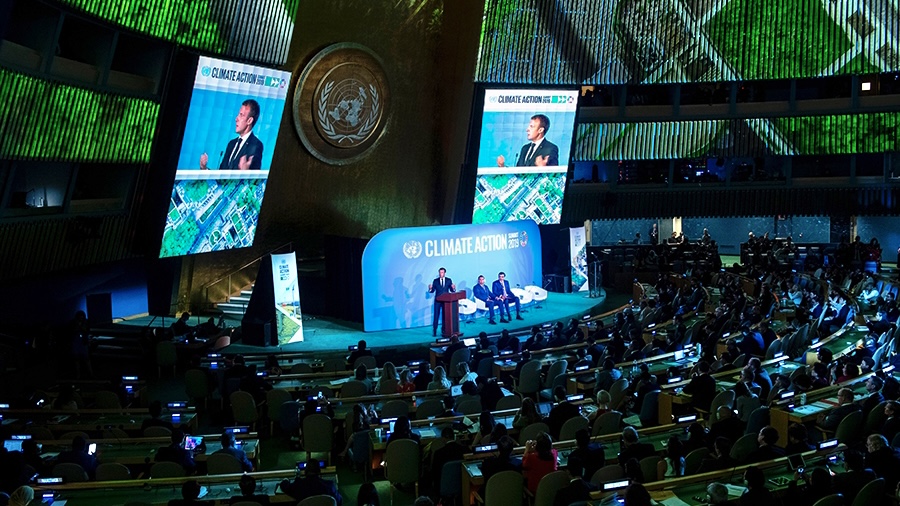
An early demonstration of this shift in international relations was the dust-up in 2019 between Brazilian President Jair Bolsonaro and French President Emmanuel Macron. Bolsonaro was allowing fires to burn wide swathes of the Amazon rainforest. Speaking for many, Macron accused Bolsonaro of abetting “ecocide.” Sounds like the new genocide, doesn’t it? Bolsonaro shot back that Macron was a neocolonialist, a European power again trying to force his ideas on another sovereign nation.

The underlying issue is sovereignty: Is a rainforest located in Brazil the business of Brazil or of the world? Would, in a hypothetical future scenario, an alliance led by France be within its rights to declare war on Brazil to prevent ecocide? This opens a new line of thinking about world affairs. Policymakers are already steeped in analyses of the new types of conflict that global warming will cause within and between countries. Those include wars over access to freshwater, the disappearance of arable land or mass migrations.

Will some powers or alliances contemplate military interventions in other states to end what they will define as ecocide? Others may even go to war if they believe rival countries are taking unilateral measures against climate change that threaten their own interests.

This has caused many to claim national sovereignty should be forfeited and the need for an ecological equivalent to what the World Trade Organization is to commerce: A new international body that makes the conundrum explicit and attempts to maintain order. This sounds very much like a global government that can force individual nations to do whatever it deems “best for the globe”.

Could this push lead to a stronger emphasis on globalism and a one-world government? It certainly looks like it could be a possibility, and something strongly pushed by progressives in the future.

give

untitled artwork

Prime Minister Anthony Albanese Has Been Failing Australia’s Jewish Community For 25 Years

The Australian Jewish News reported that Mr Albanese had also been at a Canberra rally in 2000, referring to him as a “pro-Palestinian Labor MP.” Sadly, as it is now, so it was then. Synagogues were vandalised in both Sydney and Canberra (the locations of the two rallies), and Jewish families were advised to avoid public displays of faith.   Where did Australia go wrong? In part, 25 years ago. Anthony Albanese failed Australia’s Jewish community in 2000, and he failed them again in 2025. By God’s mercy, may this be the last of his failures.

America’s History With Israel And What Lies Ahead

Over the years, Republicans and Democrats have shown both support for Israel and distaste for it. Pro-Jewish history runs side by side with virulent anti-Semitism. Yet despite these problems, Jewish people always have called America the Goldina Medina, Yiddish for the “Golden Land,” because they have been allowed to flourish here. So what is America’s future?

sign up

In A Grief Stricken Australia, A Question Swirls: Why Were All The Warnings Ignored?

By now, I am sure you are all aware of the terrorist act perpetrated against Sydney’s Jewish community on the first night of Hanukkah in the iconic Sydney suburb of Bondi Beach. The warnings issued by Australia’s Jewish community since October 7 had largely been ignored by our ruling class. Now, we see the heartbreaking result of ignoring those warnings. Jewish men, women and children are dead, Jewish shops intend to close permanently for security reasons, and an entire community is in mourning. 

ABC's of Salvation

Decision

UTT

untitled artwork

Israel My Glory

As we collectively hurtle into the era of climate change, international relations as we’ve known them for almost four centuries will change beyond recognition. This shift is probably inevitable, but it will also cause new conflicts. Since the Peace of Westphalia in 1648, diplomats — in peacetime and war alike — have, for the most part, subscribed to the principle of national sovereignty. The Charter of the United Nations says foreign countries have no right “to intervene in matters which are essentially within the domestic jurisdiction of any state.”

The concept was born, along with the entire system of modern states, in the physical and psychological rubble of the Thirty Years War. Starting in 1618, European powers intervened in one another’s territories at will. Round after round of war left about one in three dead. It was in that continental graveyard that statesmen stipulated it was best if every state henceforth minded its own business.

Nobody at the Peace of Westphalia was deluded enough to think this realist notion would end war. After all, by acknowledging sovereignty, the system accepted that countries pursue their national interests, which tend to clash. But at least the new consensus offered the chance of preventing additional indiscriminate bloodletting. Even then, the principle of sovereignty was never absolute or uncontroversial. For a long time, the best idealist counterargument was humanitarian — countries have not just the right but the duty to intervene in other states if, say, those are committing atrocities such as genocide.

Now, however, there’s an even more powerful push against sovereignty, put forth by thinkers such as Stewart Patrick at the Council on Foreign Relations. It’s that in a world where all countries collectively face the emergency of global warming, sovereignty is simply no longer a tenable concept.

An early demonstration of this shift in international relations was the dust-up in 2019 between Brazilian President Jair Bolsonaro and French President Emmanuel Macron. Bolsonaro was allowing fires to burn wide swathes of the Amazon rainforest. Speaking for many, Macron accused Bolsonaro of abetting “ecocide.” Sounds like the new genocide, doesn’t it? Bolsonaro shot back that Macron was a neocolonialist, a European power again trying to force his ideas on another sovereign nation.

The underlying issue is sovereignty: Is a rainforest located in Brazil the business of Brazil or of the world? Would, in a hypothetical future scenario, an alliance led by France be within its rights to declare war on Brazil to prevent ecocide? This opens a new line of thinking about world affairs. Policymakers are already steeped in analyses of the new types of conflict that global warming will cause within and between countries. Those include wars over access to freshwater, the disappearance of arable land or mass migrations.

Will some powers or alliances contemplate military interventions in other states to end what they will define as ecocide? Others may even go to war if they believe rival countries are taking unilateral measures against climate change that threaten their own interests.

This has caused many to claim national sovereignty should be forfeited and the need for an ecological equivalent to what the World Trade Organization is to commerce: A new international body that makes the conundrum explicit and attempts to maintain order. This sounds very much like a global government that can force individual nations to do whatever it deems “best for the globe”.

Could this push lead to a stronger emphasis on globalism and a one-world government? It certainly looks like it could be a possibility, and something strongly pushed by progressives in the future.

Trusted Analysis From A Biblical Worldview

Help reach the lost and equip the church with the living and active truth of God's Word in our world today.

YOU CARE ABOUT

BIBLICAL TRUTH. SO DO WE.


Together, We Can Deliver A Biblical Understanding

Of News Events Around The World.

Prime Minister Anthony Albanese Has Been Failing Australia’s Jewish Community For 25 Years

The Australian Jewish News reported that Mr Albanese had also been at a Canberra rally in 2000, referring to him as a “pro-Palestinian Labor MP.” Sadly, as it is now, so it was then. Synagogues were vandalised in both Sydney and Canberra (the locations of the two rallies), and Jewish families were advised to avoid public displays of faith.   Where did Australia go wrong? In part, 25 years ago. Anthony Albanese failed Australia’s Jewish community in 2000, and he failed them again in 2025. By God’s mercy, may this be the last of his failures.

America’s History With Israel And What Lies Ahead

Over the years, Republicans and Democrats have shown both support for Israel and distaste for it. Pro-Jewish history runs side by side with virulent anti-Semitism. Yet despite these problems, Jewish people always have called America the Goldina Medina, Yiddish for the “Golden Land,” because they have been allowed to flourish here. So what is America’s future?

untitled artwork 6391

In A Grief Stricken Australia, A Question Swirls: Why Were All The Warnings Ignored?

By now, I am sure you are all aware of the terrorist act perpetrated against Sydney’s Jewish community on the first night of Hanukkah in the iconic Sydney suburb of Bondi Beach. The warnings issued by Australia’s Jewish community since October 7 had largely been ignored by our ruling class. Now, we see the heartbreaking result of ignoring those warnings. Jewish men, women and children are dead, Jewish shops intend to close permanently for security reasons, and an entire community is in mourning. 

ABC's of Salvation

TV AD

worldview matters

Decision Magazine V AD

Decision

Jan Markell

Israel My Glory

Erick Stakelbeck

untitled artwork

YOU CARE ABOUT

BIBLICAL TRUTH.

SO DO WE.

Together, We Can Deliver A Biblical Understanding Of News Events Around The World And Equip The Church To Stand With A Biblical Worldview.

Israel My Glory

untitled artwork

YOU CARE ABOUT

BIBLICAL TRUTH.

SO DO WE.


Together, We Can Deliver A Biblical Understanding Of News Events Around The World And Equip The Church To Stand With A Biblical Worldview.