
January 30, 2026

January, 30, 2026
January 30, 2026

give

untitled artwork

untitled artwork

World news biblically understood

TRENDING:

The True Spirit Of Christmas: Worshiping And Adoring Jesus

Mark Hitchcock

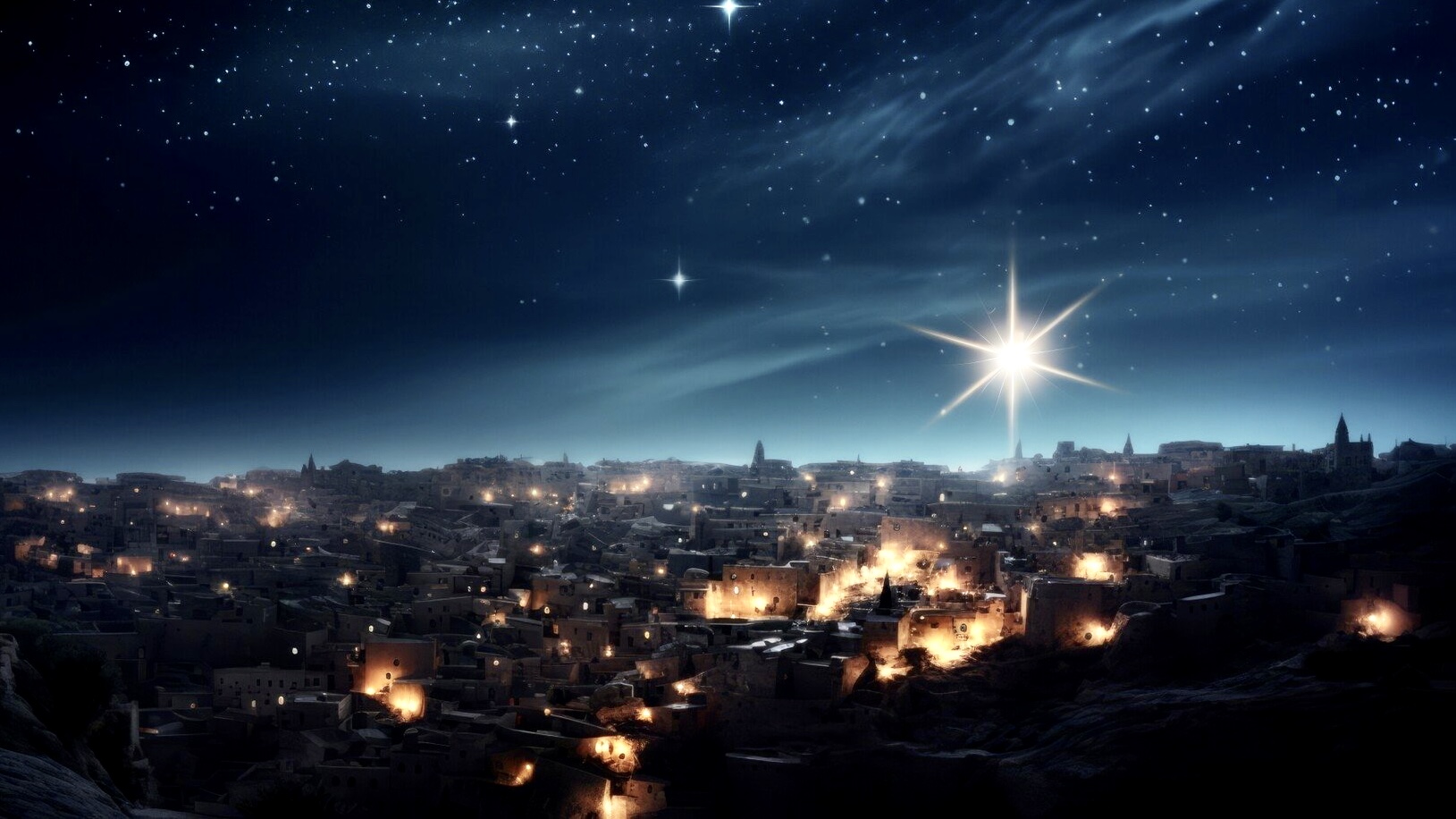
The Bethlehem star appears in the story of the wise men in Matthew 2. This chapter is the only mention of this star in the accounts of Jesus’ Birth recorded in the New Testament. To help us understand the nature of this star, I will begin by filling in the background.

Who are the “wise men” or “Magi” that arrive from the East to Jerusalem, whose only words recorded in Scripture are: “Where is He that is born King of the Jews? for we have seen his star in the East, and are come to worship Him” (Matthew 2:2).

In the Greek, this statement from the Magi is in the present tense, which means that they kept repeating their question. I think when they arrived in Jerusalem, they walked around asking everyone, “Where’s the King of the Jews?” In other words, they are confounded that the people in Jerusalem weren’t excited about the Messiah’s birth.

These Magi were experts in astrology, the secret arts, and are especially noted for their ability to interpret dreams and foretell the future. They are likely related all the way back to the wise men of King Nebuchadnezzar, whom we find in Daniel’s day. Daniel was a part of that group, which functioned as priests and diviners, holding a dual priestly government office. They composed the upper house of the Council, whose duties were to make the absolute choice and election of kings. They are the kingmakers, and they are coming to Jerusalem looking for a King.

Journey of the Magi and Herod’s Response

We don’t know exactly where the Magi are from. They are likely from around Babylon, which is in modern-day Iraq, but they could be from an area called Parthia or Persia, which would be in modern-day Iranโ€”both of which are around an 800-mile journey to Jerusalem.

The traditional picture that we imagine is of three wise men or kings. That idea stems from the fact that they brought with them three gifts: gold, frankincense, and myrrh. Legends, which are not verified within Scripture, claim that their names were Melchior, Balthazar, and Gaspar, and one was old, one was middle-aged, and one was young.

What we do know is that they would have traveled with a large caravan of camels, soldiers, and servants. Jerusalem was the natural place to look for a king, and their arrival caused a significant stir, with even Herod himself being afraid of what was happening.

The wise men inquired, ‘Where is this one, born King of the Jews?’ In response, Herod calls in the Jewish scribes. The most knowledgeable religious leaders of the day provided the answers, but with cold and shallow indifference, unwilling to even travel five miles to Bethlehem to see if the Messiah’s birth was a reality.

It’s a tragic and pitiful scene unfolding. Their Messiah, God in human flesh, had come, and they missed it entirely. This is precisely what we read in John 1:11: “He came to his own, and His own did not receive Him.” They are so caught up in the affairs of their own lives that Jesus meant nothing to them. Sadly, a lot of people today are like those scribes who knew the scriptures but didn’t truthfully have any interest in the Savior.

The religious leaders’ response was apathy. Herod’s response was antagonism, with the goal of tracking down the infant Messiah and killing him. The response of the wise men was adoration. We see all three of those responses in people today.

The Gentile Magi traveled 800 miles, which brings us to the question: why did they come? Generally, it was because of Jewish Scripture. Many Jews still lived in Babylon, and there was an expectation during the time Christ was born that a great ruler would come out of Judea to rule the world. They had all the prophecies of Daniel, including the 70-week prophecy in Daniel 9:24-27, which provided a general timeline for when He was to come.

The Bethlehem Star

There is a prophecy in the Old Testament of a star associated with the coming Messiah in the prophecy of Balaam, which is found in Numbers 24:15-19. This fascinating passage reads: “Balaam the son of Beor hath said, and the man whose eyes are open hath said: He hath said, which heard the words of God, and knew the knowledge of the most High, which saw the vision of the Almighty, falling into a trance, but having his eyes open: I shall see him, but not now: I shall behold him, but not nigh: there shall come a Star out of Jacob, and a Sceptre shall rise out of Israel, and shall smite the corners of Moab, and destroy all the children of Sheth. And Edom shall be a possession, Seir also shall be a possession for his enemies; and Israel shall do valiantly. Out of Jacob shall come he that shall have dominion, and shall destroy him that remaineth of the city.”

There are hundreds of books, articles, and videos surrounding the Bethlehem star.

Some believe it was Halley’s comet. The problem with this theory is that Halley’s comet orbited near the Earth in 12 BC, which is too early for the birth of Christ. A comet called the “Chinese Broom Star” did appear around that period.

Another theory is that it was a supernova. Telescopes haven’t found any evidence for a supernova that syncs up with the timing of the Star of Bethlehem. The only supernova visible from Earth anywhere around that time was in 185 AD, which was far too late for the birth of Jesus.

Some people believe that this was the conjunction of Saturn and Jupiter. Jupiter is the planet of the kings, and that conjunction was in 7 BC. Four years later, in the summer of 3 BC, Jupiter and Venus met at an event that would have looked much like the Christmas star. In June of 2 BC, Jupiter and Venus together would have looked like a single star. The problem is that both of these events occurred too late, as Jesus had to be born before King Herod’s death in the spring of 4 BC.

In my view, this was no ordinary star. Notice how this passage moves as the wise men say, “Where is he that is born King of the Jews? for we have seen his star in the East, and are come to worship him.” The men go to Jerusalem rather than Bethlehem, suggesting that the star they initially saw was no longer visible, and they did not know where they were going. The wise men go to Jerusalem because that’s the place where they assume a king would be born. The scribes of Israel then say He is going to be born in Bethlehem.

In Matthew 2:8-12, we read, “And [Herod] sent them to Bethlehem, and said, Go and search diligently for the young child; and when ye have found him, bring me word again, that I may come and worship him also. When they had heard the king, they departed; and, lo, the star, which they saw in the East, went before them, till it came and stood over where the young child was. When they saw the star, they rejoiced with exceeding great joy. And when they were come into the house, they saw the young child with Mary his mother, and fell down, and worshipped him: and when they had opened their treasures, they presented unto him gifts; gold, and frankincense and myrrh. And being warned of God in a dream that they should not return to Herod, they departed into their own country another way.”

The star that had appeared to them in the East, signaling some great event in the nation of Israel, vanished and then reappeared on their way to Bethlehem, guiding them to a particular house. It would be very difficult for a star in heaven to be over a specific house.

The word that’s used here for “star” is astera,” where the word asteroid comes from. It can also be used for a luminous body that’s visible in the sky. Astera is used symbolically of Jesus when He is called “The Morning Star” in Revelation 2:28 and Revelation 22:16. My view is that this was a supernatural light. It may have even been the Shekinah Glory of God that appeared to them in the East and again on their way to Bethlehem to guide them to the very house where Jesus was staying.

When Did The Wise Men Find Jesus?

The Magi arrived at least six weeks after Jesus was born. Notice that the passage of Scripture says they came “into the house” where Jesus wasโ€”not that the wise men came to the stable where He was born. In fact, they likely arrived several months later.

In Luke chapter 2, Mary goes to present Jesus in the temple, which included her purification, when Jesus was 40 days old. Mary and Joseph offer the sacrifice of “a pair of turtledoves, or two young pigeons,” which under the law was given when a new mother could not afford a lamb (Leviticus 12:8). Had they received the gold, frankincense, and myrrh from the wise men, they would have had the money to offer a better lamb sacrifice.

Worship is the True Spirit of Christmas

When the wise men came, they fell on their faces and worshiped Him. Three times in Matthew 2:1-12, you have the word “worship,” and that’s the true spirit of Christmas, worshiping and adoring Him.  

I once read about a large department store carrying a special doll at Christmas one year in the form of the baby Jesus. It was advertised as being unbreakable, washable, and cuddly, packaged in straw with a satin crib, plastic surroundings, and the appropriate biblical texts added here and there to make the scene complete. The dolls, however, didn’t sell very well. The manager of one of the stores in this department chain panicked and carried out one last-ditch promotion to get rid of the dolls. He put a huge sign outside the store that read: “Jesus Christ marked down 50%. Get Him while you can”.

Every year at Christmas, many people discount Jesus Christ. Many people discount Him in antagonism as Herod did. To see Him as He truly is means that they must end their own kingdom and place Him on the throne of their life. Many people discount Him in apathy because they’re just too indifferent and complacent to find out who He is and follow Him fully.

Let’s not be antagonistic or apathetic. Wise men accepted Jesus. They adored him. They worshiped Him. In their actions, we see what our response to Jesus should be at Christmas. Let’s follow their example as they followed the star that led them to Jesus. Let’s fall at His feet in adoration and worship. That’s my prayer for myself and for all of us this Christmas.



Your support helps Harbinger's Daily propel the boldest and most sound Christian voices of our dayโ€”those unwavering in their defense of the truth and passionate about reaching the unsaved worldโ€”while engaging millions to stand courageously with a worldview grounded in God's Word.ย 

Will you defend the truth and equip others to do the same?

Are Jewish Patients Safe In Australian Hospitals?

Have you ever been in a hospital as a patient? I am sure that most of you have. When being admitted, you are required to provide important details such as your name and your chosen faith. But what if you were taken to a hospital in a democratic Western country and the hospital administrators decided to give you a different name and redact details of your faith without your consent? Would you be upset? If the answer is no, then picture this: what if you were Jewish and the hospital changed your name and redacted your Jewish identity without your consent? Now, you might be thinking that would never happen in a Western nation in the modern day. Well, it just did. In Australia.

Minnesota Is Not An Outlier; It Is A Case Study Of What Happens When Institutions Abondon Moral Restraints

Minnesota is not an outlier; it is a case study of what happens when institutions that once fostered moral restraint abandon that role. The real cause is less obvious because it is far removed from the tragic events we see today in the headlines. It can be traced back decades to what was calledย the long march through the institutionsย โ€” a phrase coined in the late 1960s by Marxist student leader Rudi Dutschke. The phrase deliberately echoed Mao Zedongโ€™s Long March, but Dutschkeโ€™s was not a military campaign. It was a cultural and ideological one, measured in decades rather than battles.

sign up

In An Ever Darkening World, We Can Find Solace In Bible Prophecy

The bright side of the growing evil in the world is that it is a sure sign that we are living in the season of the Lordโ€™s return. If you will check Genesis 6, you will find that Noahโ€™s society was characterized by violence and immorality. This is the reason that the great pastor, Adrian Rogers (1931-2005), once said, โ€œThe world is growing gloriously dark.โ€ How can the acceleration of evil be considered โ€œgloriousโ€? Because it is a sign of the imminent return of Jesus.

ABC's of Salvation

Decision

UTT

untitled artwork

Israel My Glory

Mark Hitchcock

The Bethlehem star appears in the story of the wise men in Matthew 2. This chapter is the only mention of this star in the accounts of Jesus’ Birth recorded in the New Testament. To help us understand the nature of this star, I will begin by filling in the background.

Who are the “wise men” or “Magi” that arrive from the East to Jerusalem, whose only words recorded in Scripture are: “Where is He that is born King of the Jews? for we have seen his star in the East, and are come to worship Him” (Matthew 2:2).

In the Greek, this statement from the Magi is in the present tense, which means that they kept repeating their question. I think when they arrived in Jerusalem, they walked around asking everyone, “Where’s the King of the Jews?” In other words, they are confounded that the people in Jerusalem weren’t excited about the Messiah’s birth.

These Magi were experts in astrology, the secret arts, and are especially noted for their ability to interpret dreams and foretell the future. They are likely related all the way back to the wise men of King Nebuchadnezzar, whom we find in Daniel’s day. Daniel was a part of that group, which functioned as priests and diviners, holding a dual priestly government office. They composed the upper house of the Council, whose duties were to make the absolute choice and election of kings. They are the kingmakers, and they are coming to Jerusalem looking for a King.

Journey of the Magi and Herod’s Response

We don’t know exactly where the Magi are from. They are likely from around Babylon, which is in modern-day Iraq, but they could be from an area called Parthia or Persia, which would be in modern-day Iranโ€”both of which are around an 800-mile journey to Jerusalem.

The traditional picture that we imagine is of three wise men or kings. That idea stems from the fact that they brought with them three gifts: gold, frankincense, and myrrh. Legends, which are not verified within Scripture, claim that their names were Melchior, Balthazar, and Gaspar, and one was old, one was middle-aged, and one was young.

What we do know is that they would have traveled with a large caravan of camels, soldiers, and servants. Jerusalem was the natural place to look for a king, and their arrival caused a significant stir, with even Herod himself being afraid of what was happening.

The wise men inquired, ‘Where is this one, born King of the Jews?’ In response, Herod calls in the Jewish scribes. The most knowledgeable religious leaders of the day provided the answers, but with cold and shallow indifference, unwilling to even travel five miles to Bethlehem to see if the Messiah’s birth was a reality.

It’s a tragic and pitiful scene unfolding. Their Messiah, God in human flesh, had come, and they missed it entirely. This is precisely what we read in John 1:11: “He came to his own, and His own did not receive Him.” They are so caught up in the affairs of their own lives that Jesus meant nothing to them. Sadly, a lot of people today are like those scribes who knew the scriptures but didn’t truthfully have any interest in the Savior.

The religious leaders’ response was apathy. Herod’s response was antagonism, with the goal of tracking down the infant Messiah and killing him. The response of the wise men was adoration. We see all three of those responses in people today.

The Gentile Magi traveled 800 miles, which brings us to the question: why did they come? Generally, it was because of Jewish Scripture. Many Jews still lived in Babylon, and there was an expectation during the time Christ was born that a great ruler would come out of Judea to rule the world. They had all the prophecies of Daniel, including the 70-week prophecy in Daniel 9:24-27, which provided a general timeline for when He was to come.

The Bethlehem Star

There is a prophecy in the Old Testament of a star associated with the coming Messiah in the prophecy of Balaam, which is found in Numbers 24:15-19. This fascinating passage reads: “Balaam the son of Beor hath said, and the man whose eyes are open hath said: He hath said, which heard the words of God, and knew the knowledge of the most High, which saw the vision of the Almighty, falling into a trance, but having his eyes open: I shall see him, but not now: I shall behold him, but not nigh: there shall come a Star out of Jacob, and a Sceptre shall rise out of Israel, and shall smite the corners of Moab, and destroy all the children of Sheth. And Edom shall be a possession, Seir also shall be a possession for his enemies; and Israel shall do valiantly. Out of Jacob shall come he that shall have dominion, and shall destroy him that remaineth of the city.”

There are hundreds of books, articles, and videos surrounding the Bethlehem star.

Some believe it was Halley’s comet. The problem with this theory is that Halley’s comet orbited near the Earth in 12 BC, which is too early for the birth of Christ. A comet called the “Chinese Broom Star” did appear around that period.

Another theory is that it was a supernova. Telescopes haven’t found any evidence for a supernova that syncs up with the timing of the Star of Bethlehem. The only supernova visible from Earth anywhere around that time was in 185 AD, which was far too late for the birth of Jesus.

Some people believe that this was the conjunction of Saturn and Jupiter. Jupiter is the planet of the kings, and that conjunction was in 7 BC. Four years later, in the summer of 3 BC, Jupiter and Venus met at an event that would have looked much like the Christmas star. In June of 2 BC, Jupiter and Venus together would have looked like a single star. The problem is that both of these events occurred too late, as Jesus had to be born before King Herod’s death in the spring of 4 BC.

In my view, this was no ordinary star. Notice how this passage moves as the wise men say, “Where is he that is born King of the Jews? for we have seen his star in the East, and are come to worship him.” The men go to Jerusalem rather than Bethlehem, suggesting that the star they initially saw was no longer visible, and they did not know where they were going. The wise men go to Jerusalem because that’s the place where they assume a king would be born. The scribes of Israel then say He is going to be born in Bethlehem.

In Matthew 2:8-12, we read, “And [Herod] sent them to Bethlehem, and said, Go and search diligently for the young child; and when ye have found him, bring me word again, that I may come and worship him also. When they had heard the king, they departed; and, lo, the star, which they saw in the East, went before them, till it came and stood over where the young child was. When they saw the star, they rejoiced with exceeding great joy. And when they were come into the house, they saw the young child with Mary his mother, and fell down, and worshipped him: and when they had opened their treasures, they presented unto him gifts; gold, and frankincense and myrrh. And being warned of God in a dream that they should not return to Herod, they departed into their own country another way.”

The star that had appeared to them in the East, signaling some great event in the nation of Israel, vanished and then reappeared on their way to Bethlehem, guiding them to a particular house. It would be very difficult for a star in heaven to be over a specific house.

The word that’s used here for “star” is astera,” where the word asteroid comes from. It can also be used for a luminous body that’s visible in the sky. Astera is used symbolically of Jesus when He is called “The Morning Star” in Revelation 2:28 and Revelation 22:16. My view is that this was a supernatural light. It may have even been the Shekinah Glory of God that appeared to them in the East and again on their way to Bethlehem to guide them to the very house where Jesus was staying.

When Did The Wise Men Find Jesus?

The Magi arrived at least six weeks after Jesus was born. Notice that the passage of Scripture says they came “into the house” where Jesus wasโ€”not that the wise men came to the stable where He was born. In fact, they likely arrived several months later.

In Luke chapter 2, Mary goes to present Jesus in the temple, which included her purification, when Jesus was 40 days old. Mary and Joseph offer the sacrifice of “a pair of turtledoves, or two young pigeons,” which under the law was given when a new mother could not afford a lamb (Leviticus 12:8). Had they received the gold, frankincense, and myrrh from the wise men, they would have had the money to offer a better lamb sacrifice.

Worship is the True Spirit of Christmas

When the wise men came, they fell on their faces and worshiped Him. Three times in Matthew 2:1-12, you have the word “worship,” and that’s the true spirit of Christmas, worshiping and adoring Him.  

I once read about a large department store carrying a special doll at Christmas one year in the form of the baby Jesus. It was advertised as being unbreakable, washable, and cuddly, packaged in straw with a satin crib, plastic surroundings, and the appropriate biblical texts added here and there to make the scene complete. The dolls, however, didn’t sell very well. The manager of one of the stores in this department chain panicked and carried out one last-ditch promotion to get rid of the dolls. He put a huge sign outside the store that read: “Jesus Christ marked down 50%. Get Him while you can”.

Every year at Christmas, many people discount Jesus Christ. Many people discount Him in antagonism as Herod did. To see Him as He truly is means that they must end their own kingdom and place Him on the throne of their life. Many people discount Him in apathy because they’re just too indifferent and complacent to find out who He is and follow Him fully.

Let’s not be antagonistic or apathetic. Wise men accepted Jesus. They adored him. They worshiped Him. In their actions, we see what our response to Jesus should be at Christmas. Let’s follow their example as they followed the star that led them to Jesus. Let’s fall at His feet in adoration and worship. That’s my prayer for myself and for all of us this Christmas.


Trusted Analysis From A Biblical Worldview

Help reach the lost and equip the church with the living and active truth of God's Word in our world today.

YOU CARE ABOUT

BIBLICAL TRUTH. SO DO WE.

ย 

Together, We Can Deliver A Biblical Understanding

Of News Events Around The World.

Are Jewish Patients Safe In Australian Hospitals?

Have you ever been in a hospital as a patient? I am sure that most of you have. When being admitted, you are required to provide important details such as your name and your chosen faith. But what if you were taken to a hospital in a democratic Western country and the hospital administrators decided to give you a different name and redact details of your faith without your consent? Would you be upset? If the answer is no, then picture this: what if you were Jewish and the hospital changed your name and redacted your Jewish identity without your consent? Now, you might be thinking that would never happen in a Western nation in the modern day. Well, it just did. In Australia.

Minnesota Is Not An Outlier; It Is A Case Study Of What Happens When Institutions Abondon Moral Restraints

Minnesota is not an outlier; it is a case study of what happens when institutions that once fostered moral restraint abandon that role. The real cause is less obvious because it is far removed from the tragic events we see today in the headlines. It can be traced back decades to what was calledย the long march through the institutionsย โ€” a phrase coined in the late 1960s by Marxist student leader Rudi Dutschke. The phrase deliberately echoed Mao Zedongโ€™s Long March, but Dutschkeโ€™s was not a military campaign. It was a cultural and ideological one, measured in decades rather than battles.

untitled artwork 6391

In An Ever Darkening World, We Can Find Solace In Bible Prophecy

The bright side of the growing evil in the world is that it is a sure sign that we are living in the season of the Lordโ€™s return. If you will check Genesis 6, you will find that Noahโ€™s society was characterized by violence and immorality. This is the reason that the great pastor, Adrian Rogers (1931-2005), once said, โ€œThe world is growing gloriously dark.โ€ How can the acceleration of evil be considered โ€œgloriousโ€? Because it is a sign of the imminent return of Jesus.

ABC's of Salvation

TV AD

worldview matters

Decision Magazine V AD

Decision

Jan Markell

Israel My Glory

Erick Stakelbeck

untitled artwork

YOU CARE ABOUT

BIBLICAL TRUTH.

SO DO WE.

Together, We Can Deliver A Biblical Understanding Of News Events Around The World And Equip The Church To Stand With A Biblical Worldview.

Israel My Glory

untitled artwork

YOU CARE ABOUT

BIBLICAL TRUTH.

SO DO WE.

ย 

Together, We Can Deliver A Biblical Understanding Of News Events Around The World And Equip The Church To Stand With A Biblical Worldview.